Do You Really Need a Manufacturer for Your Shower Products?
2026-07-22
The Obvious Answer Is Yes — Until It Isn'tAsk any sourcing agent and they'll tell you the same thing: go straight to the big factory. The logic is airtight. A large manufacturer owns the entire production line. Their quality control is systematic. Their R&D department churns out new designs every quarter. If something goes wrong, you have one throat to choke.
And honestly — for a certain slice of the market, this advice is spot on.
If you're a high-end brand, a designer specifying for a luxury hotel chain, or a retailer whose entire value proposition rests on innovation and flawless execution, then by all means, go to the Tier-1 names. Think Jomoo in Fujian. Think Solex. These are companies with hundreds of engineers, ISO-certified labs, and innovation pipelines that produce genuinely new technology — air-injection systems, thermostat cartridges with sub-second response times, self-cleaning nozzles that actually work.
You pay a premium, and in return, you sleep well at night. For head buyers at that level, the calculus is simple: the cost of a quality failure dwarfs any unit-price savings.
But here's the thing: that buyer is not most buyers.
The Market Nobody Talks AboutFor every buyer sourcing cutting-edge shower systems for a Milan design fair, there are a hundred buyers asking a much simpler question:
"I need a shower set that works. No leaks. No rust. Five or six years of reliable service. I don't need the latest spray pattern — I just need it to not come back as a return. What's my best price?"
This is the silent majority of the global shower trade. Distributors in the Middle East, hardware chains in Eastern Europe, Amazon private-label sellers in North America, wholesalers in South America. They're not chasing innovation. They're chasing dependable value.
And for them, the big-factory math breaks down fast.
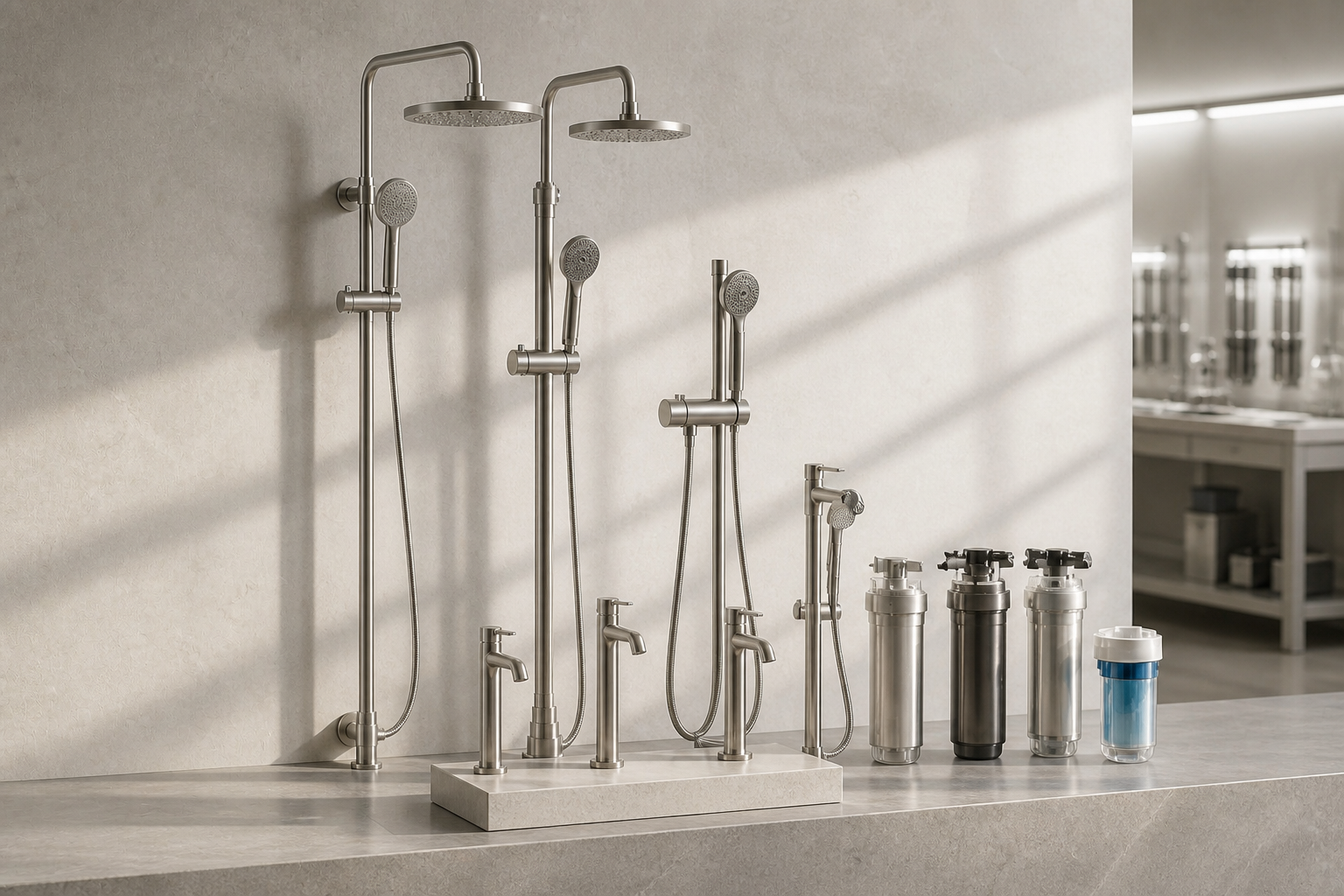
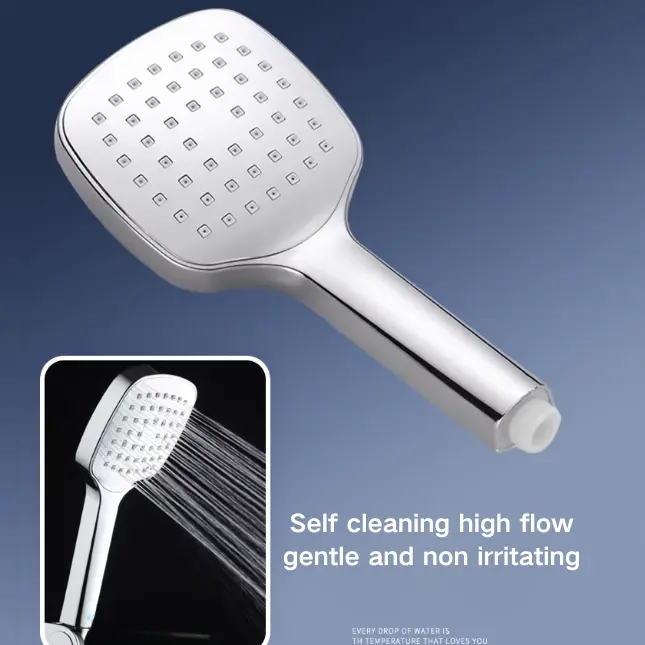
Why? Because a shower is not a smartphone. It is not a car engine. It is, mechanically speaking, a remarkably simple product. A complete shower set — the kind that hangs on millions of bathroom walls worldwide — consists of maybe eight to ten components:
● The shower head itself
● The slide rail or overhead bracket
● The flexible hose
● The hand shower holder
● The wall-mount bracket
● The diverter or mixer
● Small brass or plastic fittings
● Rubber washers and gaskets
Here's the dirty secret of the industry: none of these parts need to come from the same building.
The Specialist EcosystemDrive through any of China's plumbing hardware clusters — Cixi in Zhejiang, Shuikou in Guangdong, Xiamen in Fujian — and what you see is not a handful of mega-factories. It's a dense, hyper-specialized ecosystem that has been self-organizing for thirty years.
There are factories that do nothing but flexible shower hoses. That's it. They extrude inner tubing at volumes that defy unit economics. They braid stainless steel reinforcement faster than anyone. Their entire existence is dedicated to one thing, and they are terrifyingly good at it.
There are factories that do nothing but shower slide bars. They have optimized drilling, polishing, and anodizing aluminum or stainless steel tubes to a point where any general-purpose factory trying to match their cost and consistency would lose money on every piece.
There are factories that specialize in brass fittings — connectors, nuts, swivel joints. There are factories that only make plastic injection-molded holders and brackets. There are electroplating specialists, PVD coating specialists, rubber gasket specialists.
A single complete shower set routinely passes through six, seven, or even eight different factories before it lands in a gift box.
This is not a bug. It is the industry's most powerful feature.
The Hidden Cost of Vertical IntegrationNow consider the alternative: a single large factory that decides to make everything in-house.
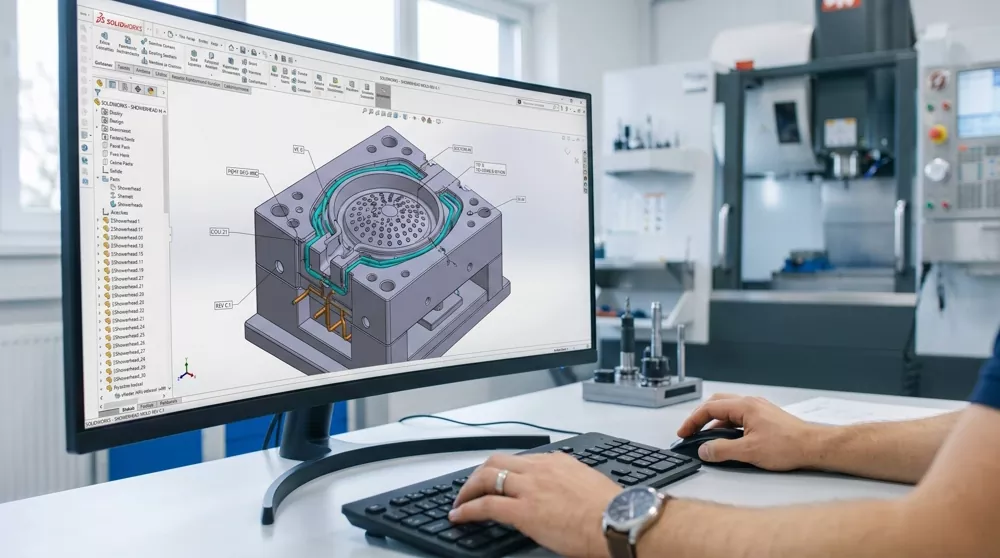
To produce a full shower set under one roof, that factory needs:What They NeedWhat It CostsInjection molding workshop (holders, brackets, shower head parts)Floor space + 10–30 machines + operatorsBrass machining and forging line (fittings, joints)Heavy equipment, skilled labor, waste oil handlingTube cutting and finishing line (slide bars)Dedicated polishing, anodizing, or electroplating setupHose production line (extrusion + braiding + crimping)Completely different equipment — nothing overlapsAssembly line for final packagingManual labor, QC checkpoints, gift-box stationsTooling and mold maintenance for all of the aboveIn-house tool room or constant outsourcingEvery one of these production lines operates on different batch economics. Injection molding favors large continuous runs. Brass machining has longer setup times that demand minimum order quantities. Hose production is high-speed and wants uninterrupted shifts.
When a big factory produces 50,000 identical shower sets, the overhead spreads thin and the numbers work. But when they have to run 500 sets of Model A, 300 of Model B, and 200 of Model C — with different hose lengths, different finishes, different packaging — the hidden cost of vertical integration rears its head. Setup times multiply. Changeover waste accumulates. The factory floor becomes a scheduling nightmare.
The dirtiest word in manufacturing is variety. And small-batch variety inside a vertically integrated factory is the fastest way to destroy margin.
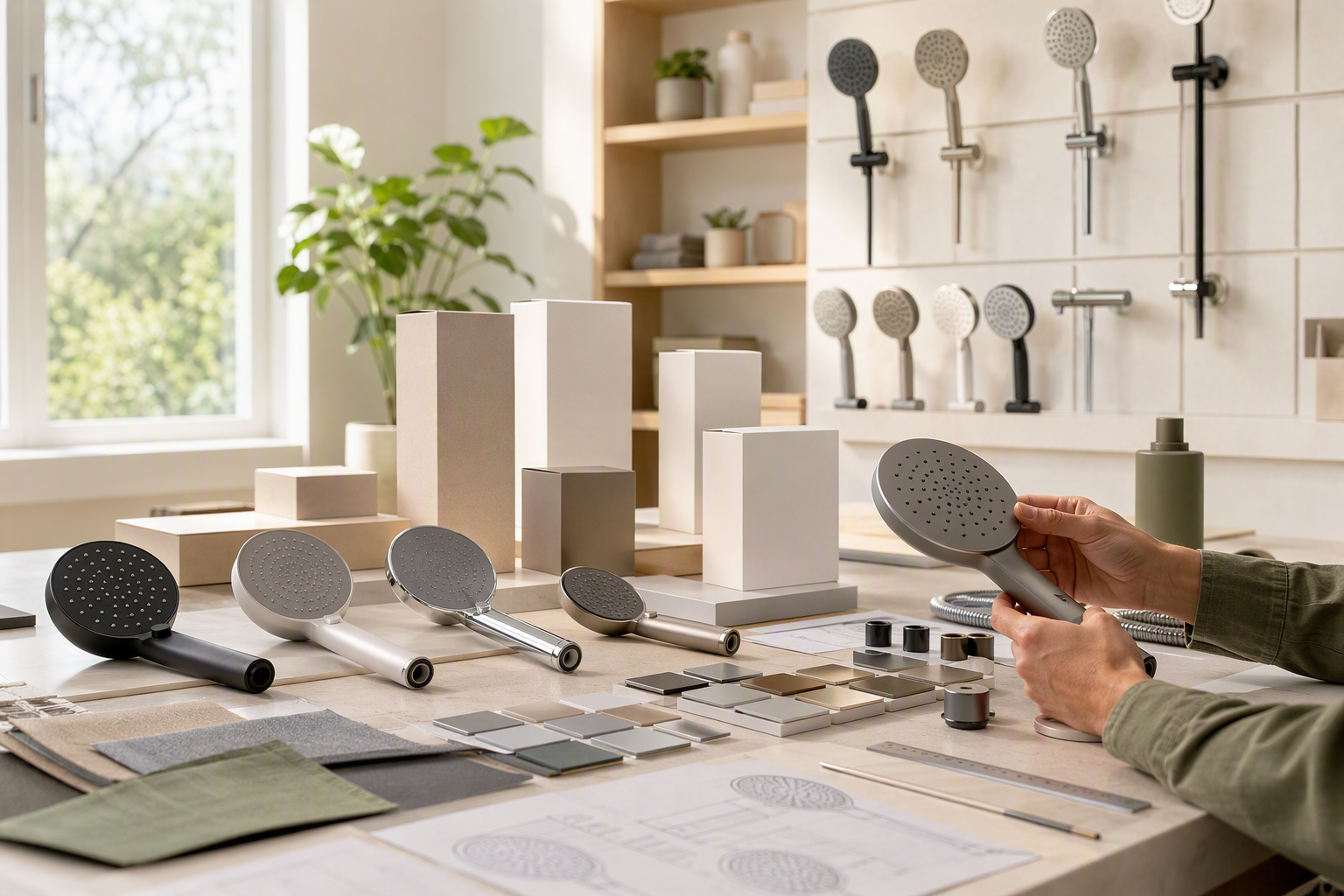
Enter the Orchestrator: The Smarter Supply ChainThis is where a different model starts to make sense — not a factory, but an orchestrator of factories.
Think of it as the difference between a recording studio that owns every instrument and employs every musician (expensive, rigid, hard to change course), versus a producer who knows exactly which session guitarist, which drummer, and which mixing engineer to call for a particular track.
An orchestrator in the shower supply chain does not own injection molding machines. They do not operate a plating line or a brass foundry. Instead, they:
Audit and qualify
● the best specialist in each category — who makes the most reliable hose at the best price? Which plating shop has the most consistent chrome finish?
Define quality standards
● that every specialist must meet, enforced through independent lab testing — not self-inspection by the factory that produced the part.
Compose the final product
● by matching the right components from the right suppliers, handling compatibility, consistency, and final QC in one place.
Absorb variety risk
● — because they are not burdened by fixed asset investment in ten different production lines, they can pivot across SKUs and order sizes without the overhead avalanche that hits a large factory.
The result for the buyer is straightforward:
A product assembled from parts made by the specialist best positioned to make each one, at a total cost lower than a vertically integrated factory can achieve — especially for small-batch, multi-SKU orders.
When to Choose WhichHere is the decision framework, stripped down:Your ProfileBest FitWhyLuxury brand / hotel project / design-forwardLarge Tier-1 factory (Jomoo, Solex, etc.)Innovation, end-to-end quality assurance, single accountability, brand cachetDistributor / wholesaler / e-commerce brandOrchestrator modelCost advantage on multi-SKU orders, specialist quality per component, low-MOQ flexibilityBudget importer / commodity traderDirect factory or orchestrator — whichever offers better landed cost on your specific SKU rangePrice-driven; evaluate case by caseThe first category is small in volume but large in margin. The second category is where the actual tonnage of global shower trade lives.
The Bottom LineThe question "should I buy from a factory?" is the wrong question.
The right question is: "what type of supplier matches my actual business profile?"
If you are buying innovation, brand pedigree, and turnkey quality assurance, then yes — you want a large, vertically integrated manufacturer. Pay the premium and move on.
If you are buying reliable products at competitive prices, with the flexibility to mix SKUs, test new markets, and scale gradually, then the orchestrator model — an expert who selects, qualifies, and combines the best work from multiple specialists — will nearly always give you a better result than a big factory trying to do everything itself.
The factory owns the machines. The orchestrator owns the supply chain intelligence.
One is about producing. The other is about solving.
We use cookies to offer you a better browsing experience, analyze site traffic and personalize content. By using this site, you agree to our use of cookies.
Privacy Policy