
By Ningbo Huanyu Sanitary Warer · Updated August 2026
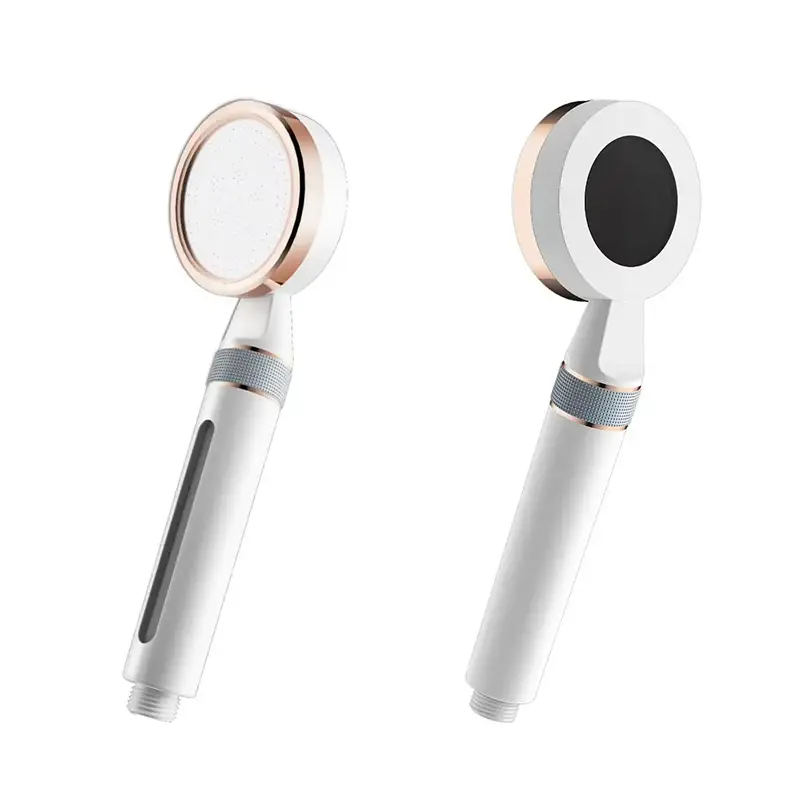
Yes, filtered shower heads really work, but only for the jobs they're built to do. A PP cotton filter removes sediment and rust down to about 5 microns, and carbon or KDF media reduces chlorine. What they can't do is soften water chemically or purify it for drinking. Once you know that line, the answer stops being marketing and starts being useful.
If you've ever bought a bathroom gadget that promised the world and delivered nothing, your skepticism is fair. Shower filters get sold on vague "healthier water" claims, so it's smart to ask what actually happens when tap water passes through one.
Here's the good news: the effect is measurable, and often visible. As a shower head manufacturer that builds these cartridges, we'll show you exactly what a filtered shower head removes, what it doesn't, how to tell yours is working, and how to pick one that performs instead of one that just looks the part.
A filtered shower head passes tap water through one or more media layers before it reaches the nozzles. Each layer targets a different contaminant, so what your head removes depends entirely on what's inside the cartridge. This is why two products that look identical on a shelf can perform completely differently. One might hold a genuine multi-stage cartridge; the other might be an empty-looking housing with a token scrap of cotton. The outside tells you nothing, so learn to read what's inside.
There are three things worth understanding before you judge whether a filter is doing its job: what each media type catches, what it visibly does over time, and where its limits are. Let's take them one at a time.
The workhorse is PP cotton, dense polypropylene fiber that acts as a fine mechanical sieve. It traps sediment, rust flakes and grit down to roughly 5 microns. This is the layer you can literally see working: a white cartridge turns yellow-brown as it fills with the impurities that would otherwise hit your skin and clog your nozzles.
Municipal water is disinfected with chlorine, which is also what dries out skin and hair. Reducing it needs activated carbon or KDF media, not cotton. This is the single most important thing to check before you buy: if the product only lists "PP cotton" and makes chlorine claims, be skeptical.
Be clear-eyed here, because honesty is what separates a useful product from a gimmick. A filtered shower head does not soften water (it won't strip dissolved calcium and magnesium the way a softener does), doesn't make water safe to drink, and won't remove bacteria or dissolved metals beyond its media rating. Set that expectation and the product delivers; oversell it and customers feel cheated.
Partly, and this is where most confusion lives. Hard water causes two separate problems, and a filter solves one of them.
The particles hard water carries, scale flakes, sediment, are caught by the PP cotton stage. That means less gritty residue on skin and, importantly, far less nozzle clogging. But the dissolved minerals that make water technically "hard" pass straight through; removing those needs a water softener, not a shower filter.
So if your complaint is grit, residue and clogged nozzles, a filtered shower head genuinely helps. If it's limescale on the glass from dissolved minerals, you need different equipment. For clog-resistant performance in hard-water areas, pair filtration with self-cleaning silicone nozzles that flex to shed buildup.
You don't need lab equipment or a water-testing kit. The whole point of a well-designed filtered shower head is that it shows you it's working through everyday signals you'll notice without trying. Three of them tell you a filter is doing its job:
If none of these signs appear after a couple of months, don't assume the concept is a scam. First check the obvious: is the cartridge the right one for your water problem, and has it been installed correctly? A chlorine complaint won't improve with a cotton-only filter, and a particle problem won't show on a filter that was never seated properly. Match the media to the problem, install it right, and the signs follow.
Not all filtered shower heads perform equally. If you're buying for a home, a store or a hotel, these five checks separate the real ones from the decorative ones.
| What to check | Why it matters |
|---|---|
| Media type | PP cotton for particles; add carbon/KDF for chlorine. Match the media to the claim. |
| Replaceable cartridge | Sealed filters force you to bin the whole head. Replaceable = years of use and lower cost. |
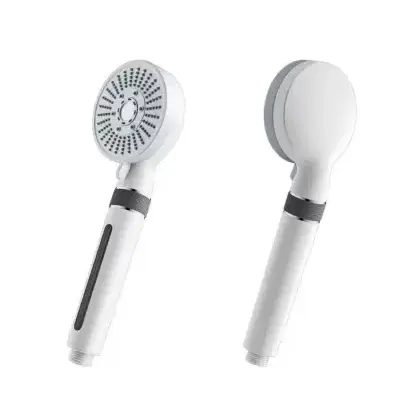
| Transparent window | Lets users see when to change the filter, fewer "it stopped working" complaints. |
| Flow & pressure | A good head keeps a strong spray (around 2.5 GPM at 80 PSI) despite the filter. |
| Nozzle design | Anti-clog silicone nozzles keep performance steady, especially in hard water. |
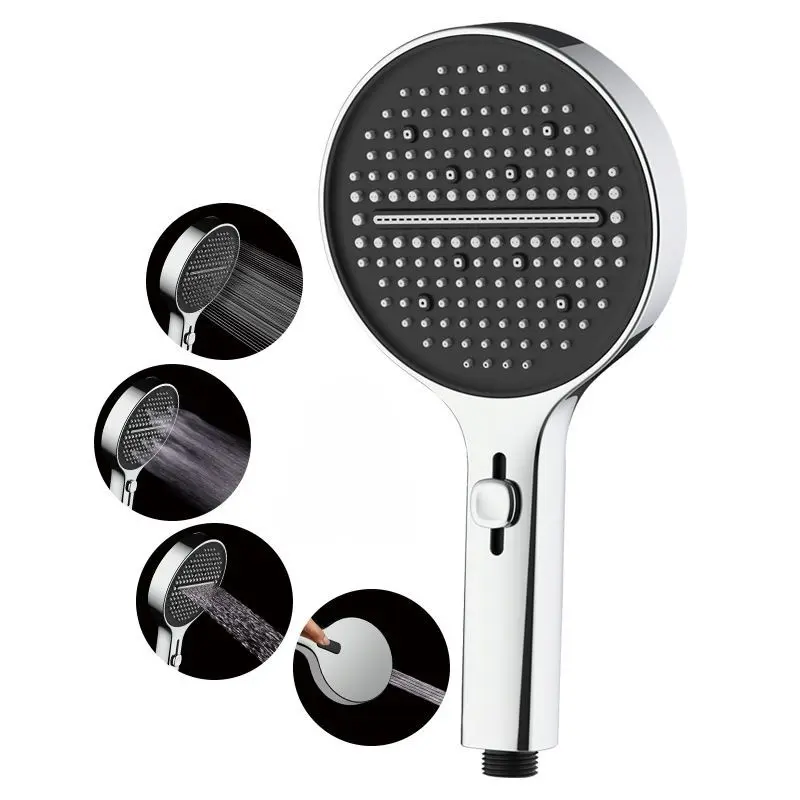
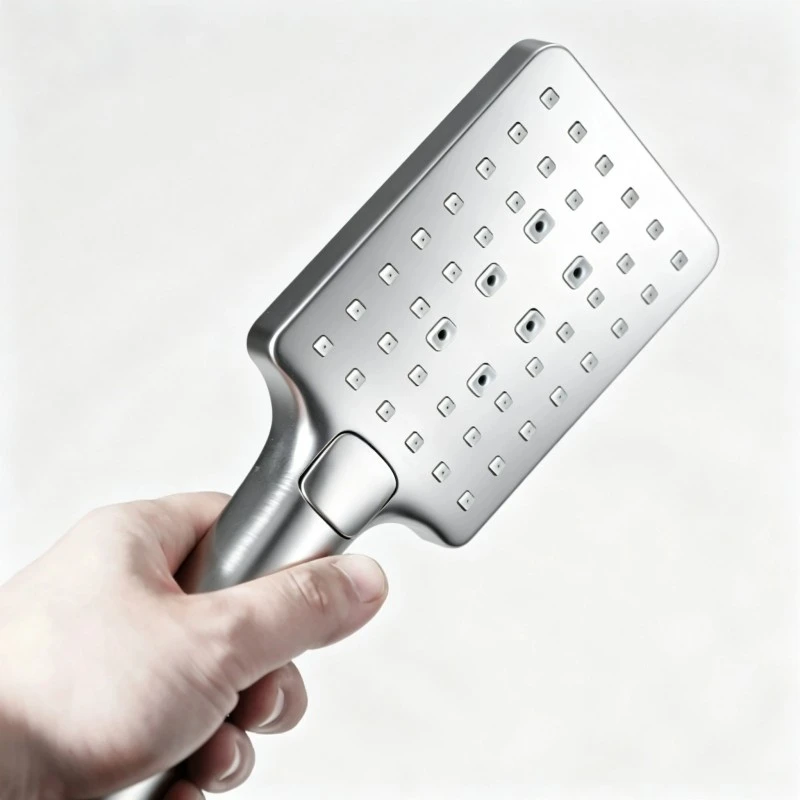
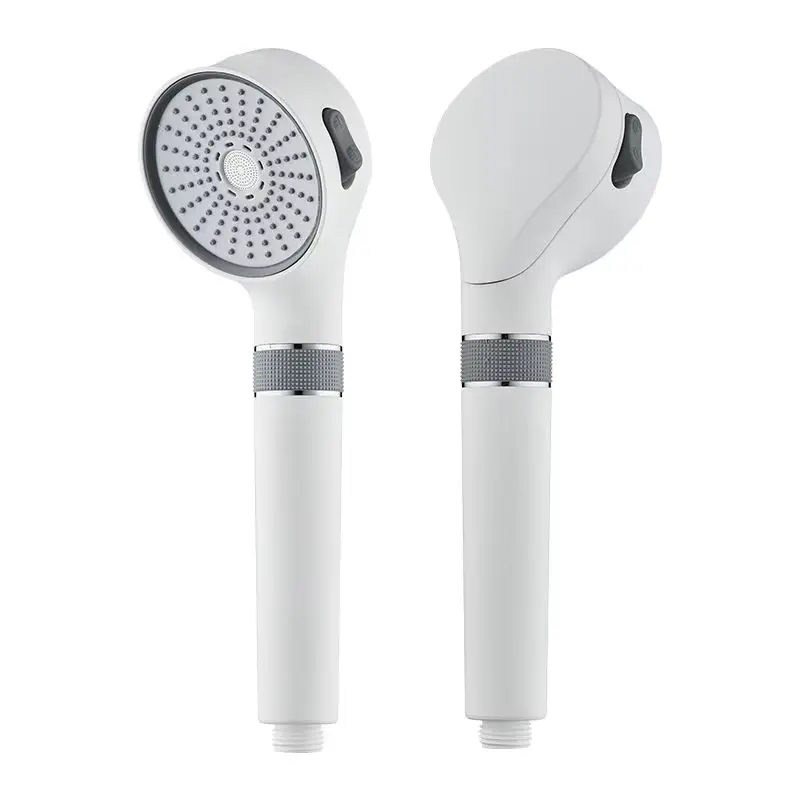
For a head that combines strong pressure with a replaceable PP cotton cartridge, see the Health Filter Handheld Shower with PP Cotton Filter. If you also want a spa element, aromatherapy versions add a scent cartridge after the filter stage.
According to the U.S. Centers for Disease Control and Prevention, chlorine is widely used to disinfect public water supplies, which is exactly why reducing it at the shower makes a noticeable difference to skin and hair for so many people.
For most people in chlorinated or sediment-heavy supply areas, yes. The cost is modest, the maintenance is a cartridge swap every few months, and the benefits, cleaner-feeling water, less dry skin, protected nozzles, are real and often visible.
They're worth it for businesses too. Because filters and scent cartridges are consumables, they turn a one-off sale into repeat revenue, one reason filtered heads have become a fast-growing category for retailers and hotels alike.
The only people who shouldn't expect much are those with genuinely clean, low-chlorine supply, or those hoping to soften hard water. That's a job for different equipment.
Chlorine use in public water supplies: U.S. Centers for Disease Control and Prevention, Drinking Water.
Send your water conditions, sales channel and price point. We'll recommend the right hand shower types, and get samples to you fast.
Request SamplesNingbo Huanyu Sanitary Ware Co., Ltd. is a hand shower manufacturer in Cixi, Ningbo, the centre of China's shower industry. We have exported for over 6 years, on top of two decades of family manufacturing, and we run as a home-factory group: around 140 workers, 30 specialised factories, 80 lines, and an in-house lab with our own inspection team. We have made 600+ shower products for retail and distributor customers including AUCHAN, B&Q, OBI and Leroy Merlin, and we hold CE, RoHS and ACS certification with a 96-hour NSS salt spray standard and a 2-year warranty on every product.
Talk to us: send an inquiry or WhatsApp +86 138 5780 6071.