
By Ningbo Huanyu Sanitary Ware, hand shower manufacturer & exporter, Cixi · Updated August 2026
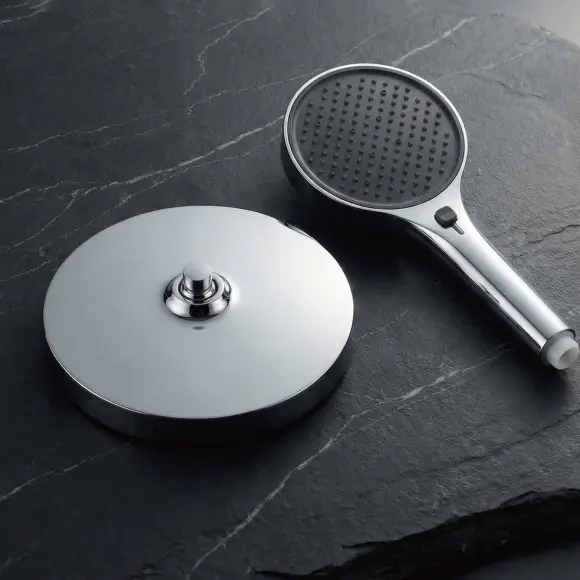
Here is the thing nobody prints on the box. Two shower heads can both be rated 1.8 GPM and give you two completely different showers. One feels strong. One feels like standing under a leaking tap.
The number is the same because the number only measures volume. It says nothing about how that volume leaves the head. And that is where the entire water-saving category succeeds or fails.
Manufacturers have two routes to a lower GPM, and they produce opposite experiences.
The cheap route is a flow restrictor. A small plastic disc sits in the inlet and chokes the water before it reaches the nozzles. Volume drops. Nothing else changes. The spray comes out at the same speed as before, just less of it, so it feels thin and weak. This is why "low-flow" got a bad name in the first place.
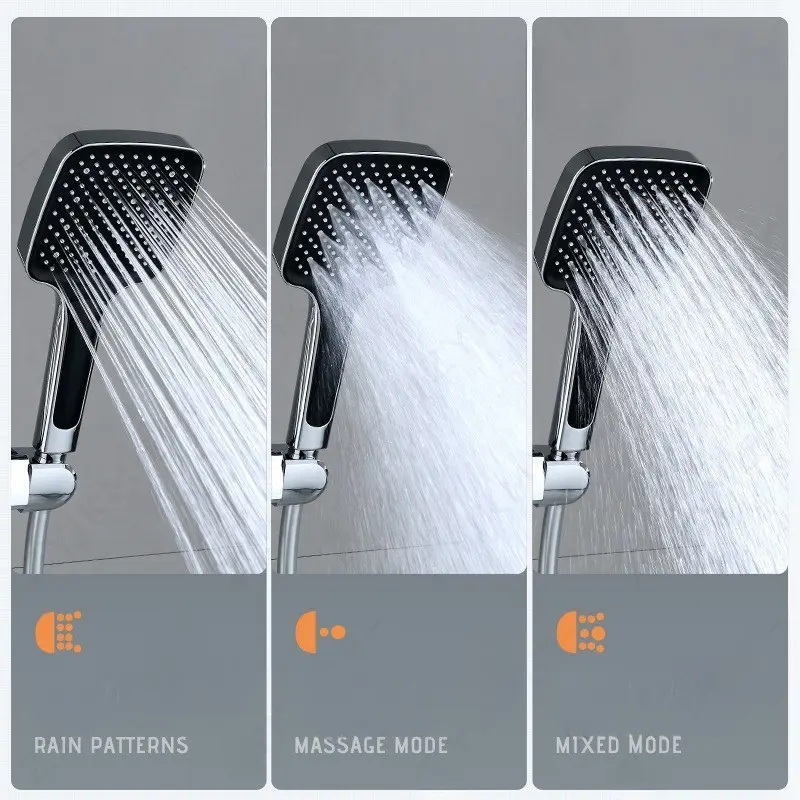
The engineered route is nozzle design. Narrower, shaped outlets accelerate the water as it exits. Less volume leaves, but it leaves faster and hits harder. Some designs also mix in air or split the stream into distinct jets to increase perceived coverage. The shower feels strong because, at the point of contact, it is.
Both approaches can legally print the same figure. When a buyer complains that water-saving heads are weak, they have almost always met the first kind.
If you sell across borders, this is not optional knowledge. Regulations differ, and shipping the wrong rating is an expensive mistake.
| Standard | Maximum flow | Notes |
|---|---|---|
| US federal | 2.5 gpm | In force since 1994 under the Energy Policy Act of 1992 |
| EPA WaterSense label | 2.0 gpm | Voluntary; also requires performance testing |
| California | 1.8 gpm | Mandatory for products sold in the state since July 2018 |
Several other US states and municipalities have adopted the 2.0 gpm level, and some cities go lower still. Outside the US, limits vary by country and by building code. Our own models are built at 2.5 GPM at 80 PSI with a 1.8 GPM option precisely because a single rating cannot serve every market.
Most people read the WaterSense label as "uses less water". That is only half of it.
To carry the label, a shower head must stay at or below 2.0 gpm and pass independent testing on three performance measures: spray force, which is what users perceive as pressure; spray coverage, so the stream is neither too narrow nor too wide; and flow consistency across a range of household water pressures.
That last one matters more than it sounds. A head that performs well at high mains pressure but collapses at low pressure fails. So the label is effectively a guarantee that the manufacturer solved the problem through design rather than by fitting a restrictor and calling it efficient.
The EPA developed those criteria specifically because early low-flow models had left consumers with poor impressions of the whole category. The standard exists because the cheap route was so common.
Ask a factory where the real water saving is and the answer is not the flow rating. It is the pause button.
Think about an ordinary shower. You rinse, then you shampoo, then you soap, then you rinse again. During the soaping stage the water runs down the drain untouched. A pause or stop control on the handle cuts flow to near zero during that stretch. You are not reducing usage; you are eliminating it.
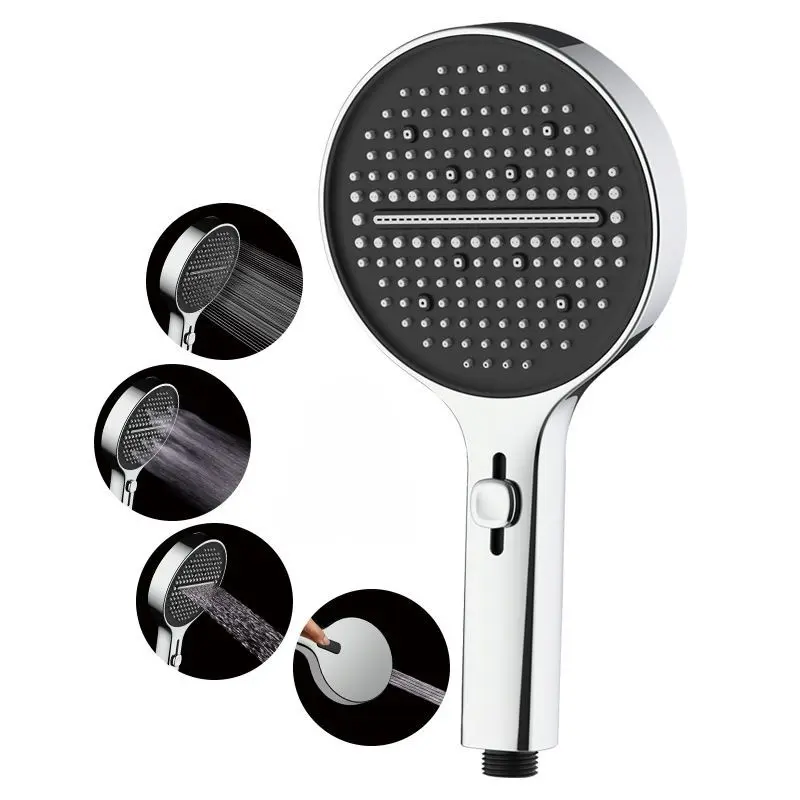
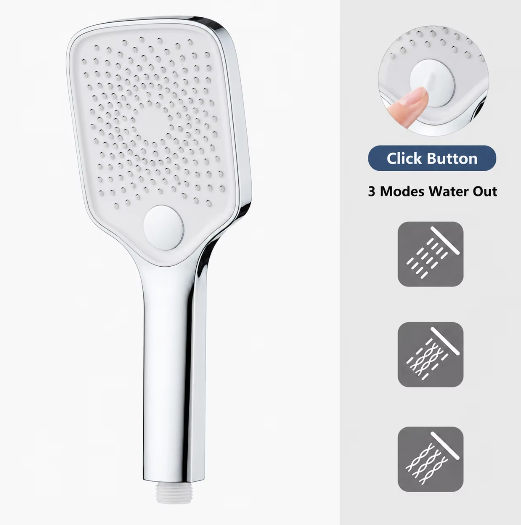
The average American shower runs about 8 minutes. Even a two-minute pause removes roughly a quarter of the water, which is a bigger cut than moving from 2.5 to 2.0 gpm delivers. Our Button Control Water Saving Bathroom Sprayer is built around exactly this, and the wider Button Control Hand Shower range covers the same principle in different formats.
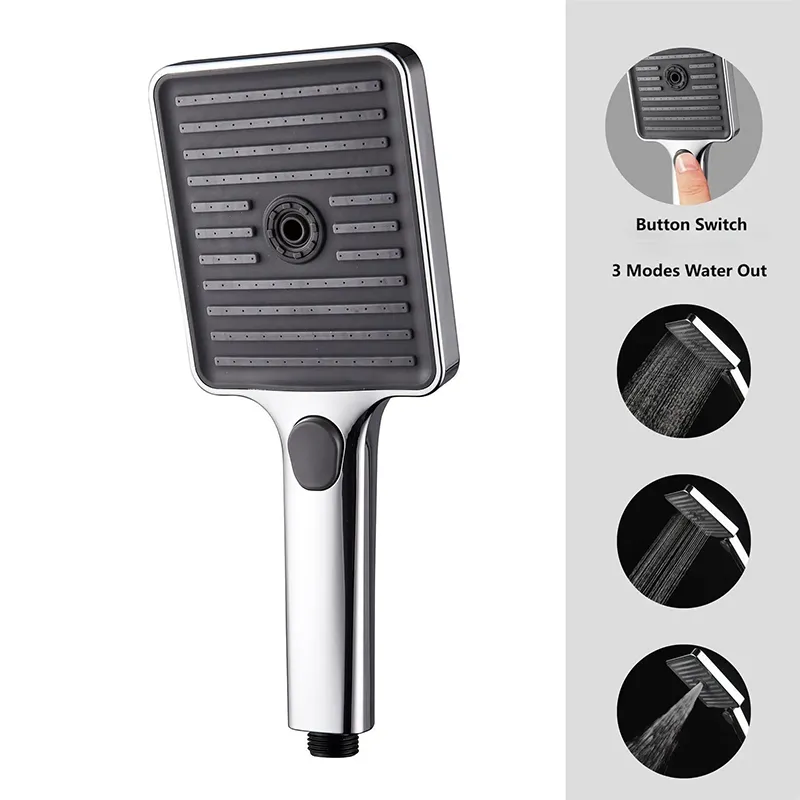
The caveat is honest: this saving depends on the user actually pressing the button. It is a behaviour feature, not a spec. But it is the one that moves the biggest number.
Low-flow heads generally take one of two approaches to making less water feel like more.
Aerating heads mix air into the stream. The spray feels fuller and softer. The trade-off is that air-mixed water loses heat faster, so the shower can feel cooler by the time it reaches you, and it produces more steam.
Laminar-flow heads split the water into individual streams without adding air. They hold temperature better and generate less steam, which suits humid climates and bathrooms with poor ventilation.
Neither is universally better. It is a market decision. If you are selling into a cold climate or a region where people complain about lukewarm showers, laminar is the safer default.
Compare the shower, not the sticker. Three checks do most of the work.
First, ask how the rating is achieved. If the answer is "there is a restrictor", ask what the head does at the same flow with the restrictor removed. A design that only works with a choke fitted is not an efficient design.
Second, ask for the flow behaviour at low inlet pressure, not just at the 80 PSI test point. Plenty of markets have weak mains supply, and that is where a poorly engineered low-flow head falls apart. Our guide on increasing shower water pressure covers the wider problem.
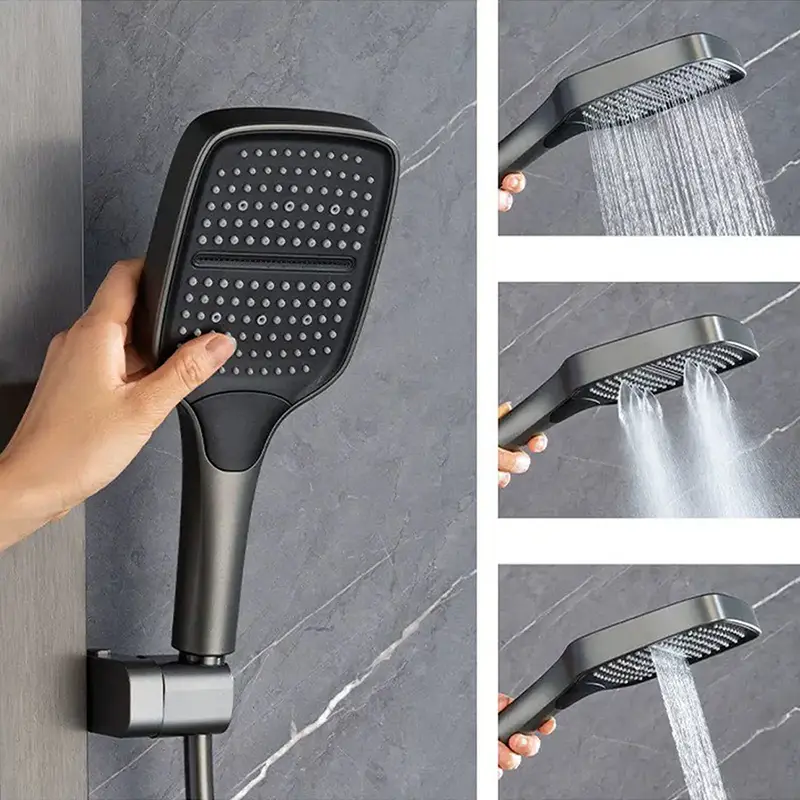
Third, consider adjustability. A stepless speed-change head lets the user dial flow down while soaping and back up to rinse, which combines the pause principle with continuous control. The Multi-functional Stepless Speed Adjustable Water Saving Shower is the version of that we build most often for water-conscious markets.
One more practical point for retailers. Water saving sells on the bill, not on the environment, in most markets. Showering is roughly 17 percent of household indoor water use, and the water you do not use is also water you do not heat. The energy saving is often the larger line on the invoice, and it is the argument that converts.
Flow rate standards, WaterSense criteria and residential water use figures: U.S. Environmental Protection Agency, WaterSense: Showerheads.
Federal maximum flow rate for showerheads: U.S. Department of Energy, Best Management Practice #7: Faucets and Showerheads.
Product specifications (2.5 GPM at 80 PSI, 1.8 GPM option, G1/2 BSP): Huanyu High Pressure Filter Detachable Shower Head.
Send your water conditions, sales channel and price point. We'll recommend the right hand shower types, and get samples to you fast.
Request SamplesNingbo Huanyu Sanitary Ware Co., Ltd. is a hand shower manufacturer in Cixi, Ningbo, the centre of China's shower industry. We have exported for over 6 years, on top of two decades of family manufacturing, and we run as a home-factory group: around 140 workers, 30 specialised factories, 80 lines, and an in-house lab with our own inspection team. We have made 600+ shower products for retail and distributor customers including AUCHAN, B&Q, OBI and Leroy Merlin, and we hold CE, RoHS and ACS certification with a 96-hour NSS salt spray standard and a 2-year warranty on every product.
Talk to us: send an inquiry or WhatsApp +86 138 5780 6071.