
By Ningbo Huanyu Sanitary Ware, hand shower manufacturer & exporter, Cixi · Updated August 2026
Let's start with the part the marketing leaves out. A self-cleaning shower head does not clean itself. Not in the way the name suggests.
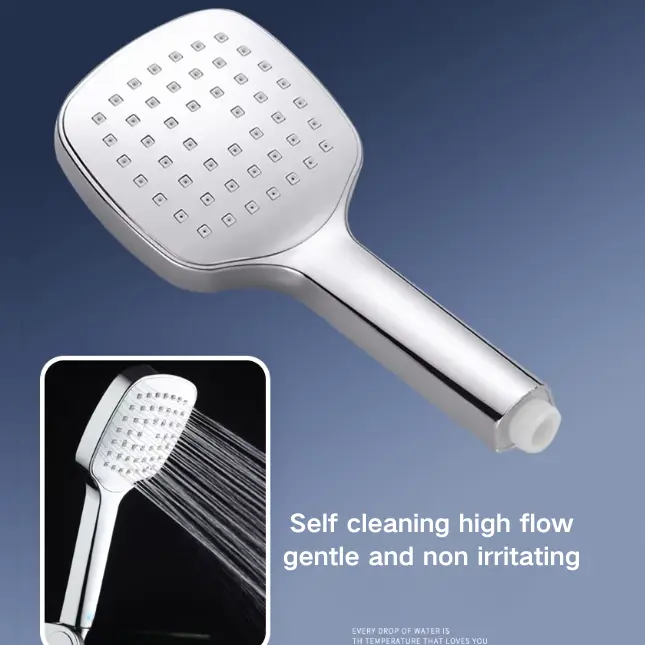
What it does is make cleaning almost effortless. The nozzles are soft silicone, so limescale cannot grip them. One pass of your finger and the deposits flake away. No soaking, no descaler, no cotton bud poking at tiny holes.
That distinction matters, because customers who expect a shower head to maintain itself eventually complain that it doesn't. Customers who understand the mechanism wipe it in five seconds and never think about it again. Same product, opposite outcome.
The mechanism is simple and it happens between showers, not during them.
Hard water carries dissolved calcium and magnesium. When you turn the shower off, a droplet stays at each nozzle opening. It evaporates. The minerals it carried stay behind as a tiny ring of limescale. Repeat that twice a day for a year.
In a rigid brass or ABS nozzle, that deposit bonds to the wall of the hole. The opening narrows. The jet weakens, then skews sideways, then stops. Because nozzles clog unevenly, the spray pattern goes crooked long before the flow feels weak, which is why people notice a "strange" spray before they notice a slow one.
Water hardness varies enormously by region, and the US Geological Survey publishes a standard scale for it. In the hardest supply areas, a rigid-nozzle shower head can develop visible scale within months.
Silicone solves this mechanically, not chemically.
Scale is brittle. Silicone is elastic. When the nozzle deforms, even slightly, the bond between deposit and surface breaks. Water pressure alone flexes the jets a little during use, which sheds some buildup. A fingertip does the rest properly.
This is why the honest label is anti-clog, not self-cleaning. The design removes the difficulty of cleaning, not the need to ever touch it.
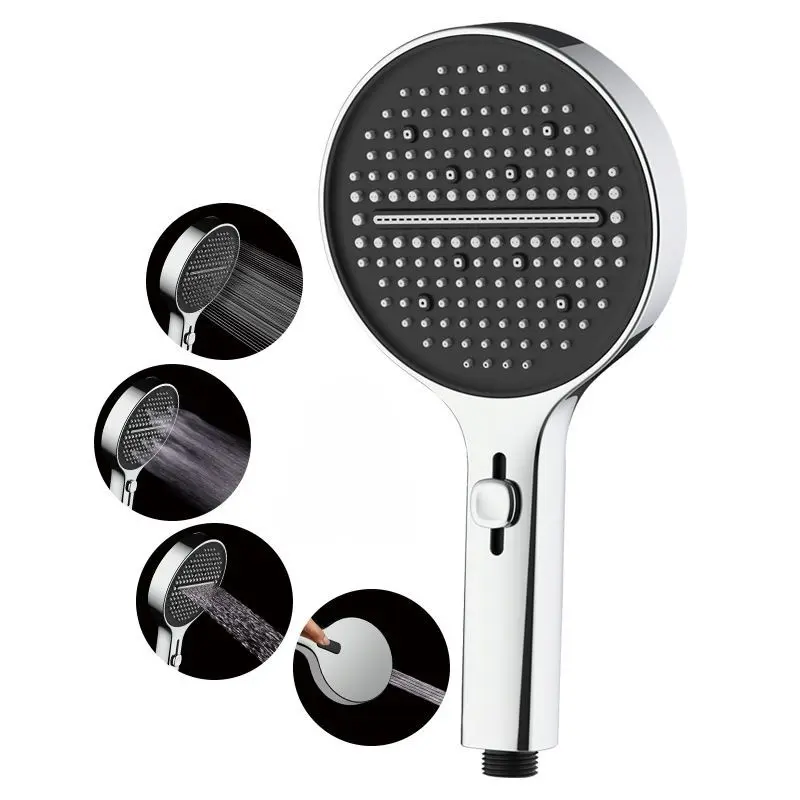
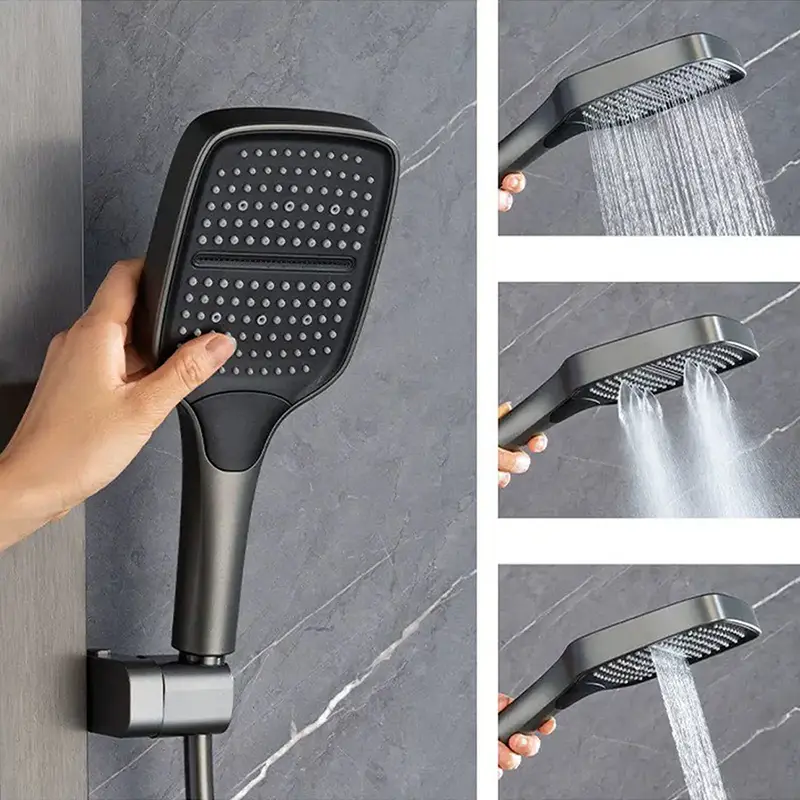
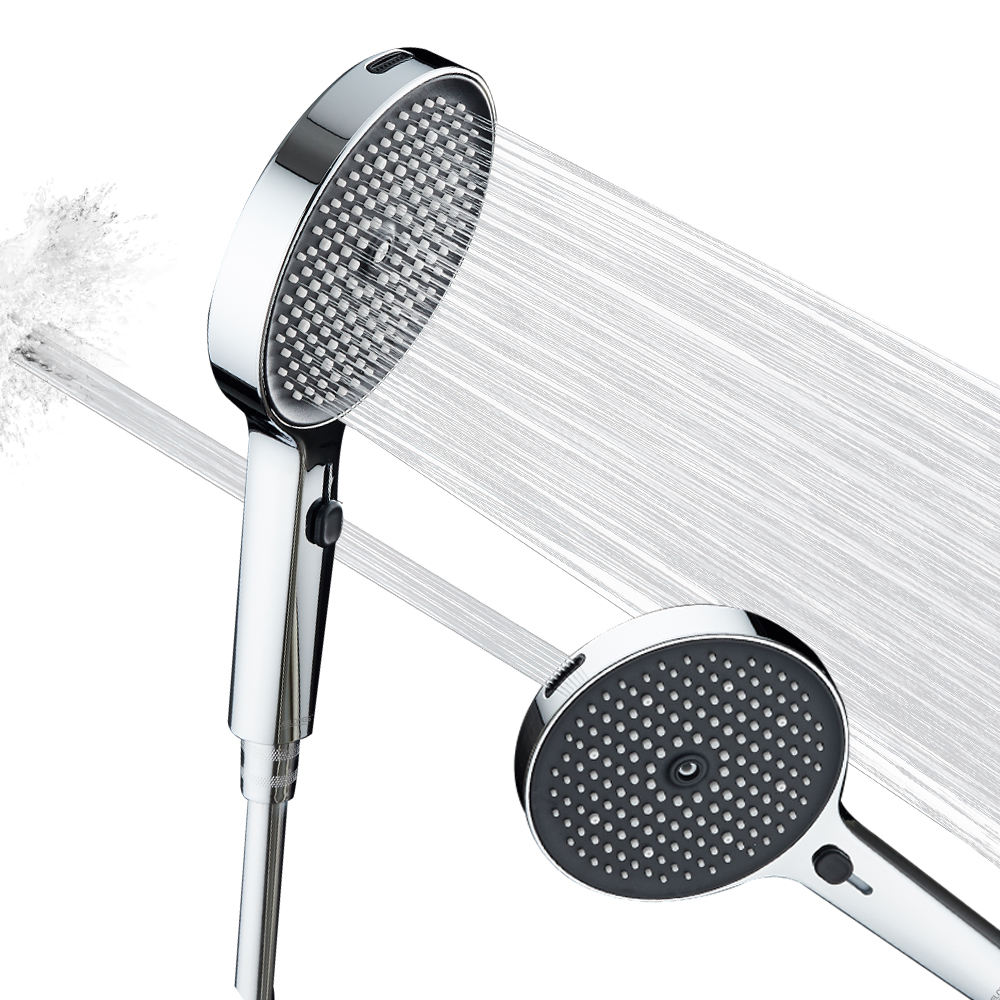
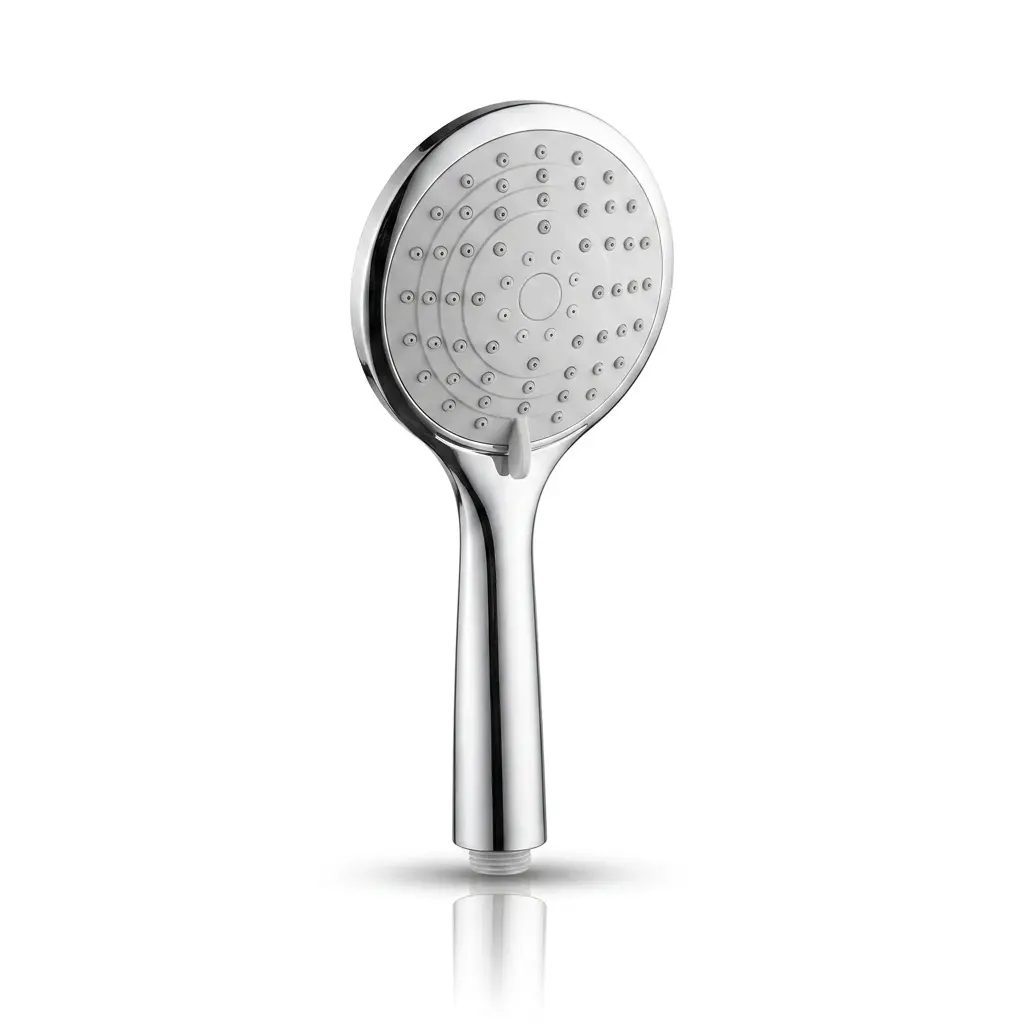
Our face plates carry roughly 70 to 80 silicone jets in a circular pattern on a stainless steel panel, as on the High Pressure Filter Detachable Shower Head. Stainless steel matters alongside the silicone: it will not crack or yellow, and it wipes clean without scratching.
More jets sound better. In hard water they are not automatically better.
Finer, denser nozzles give a softer, more enveloping spray. They also present more openings for scale to form in, and each opening is smaller. A very fine rainfall face in hard water will show problems sooner than a coarser one.
This is a design balance, not a flaw. What matters is that the nozzle material and the count are chosen together. Dense silicone jets are fine. Dense rigid jets in hard water are a service call waiting to happen.
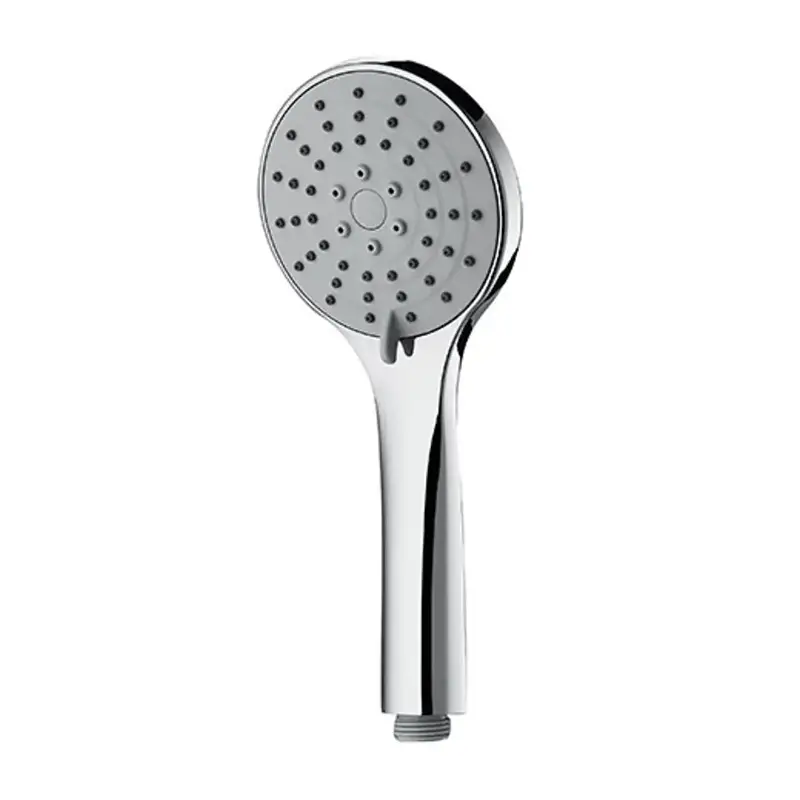
Some of our models split the face into two zones, an inner circle and an outer ring, as on the Regular Hand Shower range. That layout was designed for spray control, but it has a maintenance benefit too: you can wipe each zone separately and see immediately which one is affected.
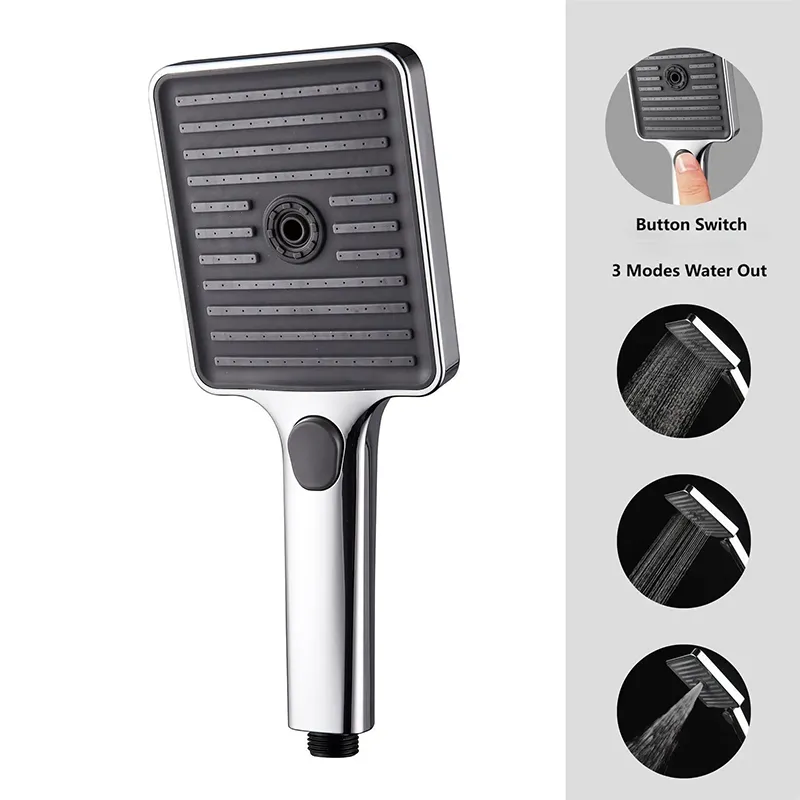
For routine maintenance, run the shower and pass your thumb firmly across the nozzles. The silicone flexes, the scale flakes off, the flow evens out. Ten seconds, once a week or so in hard water.
For heavier buildup, soak the face plate in white vinegar for a few hours, then wipe and rinse. Vinegar dissolves limescale without attacking silicone or plated finishes.
What to avoid matters just as much. Strong chemical descalers can degrade silicone over time and dull electroplated surfaces. Abrasive pads scratch the plating, and once the finish is scratched, scale grips the roughened surface faster than before. Wire and pins can tear a silicone jet outright.
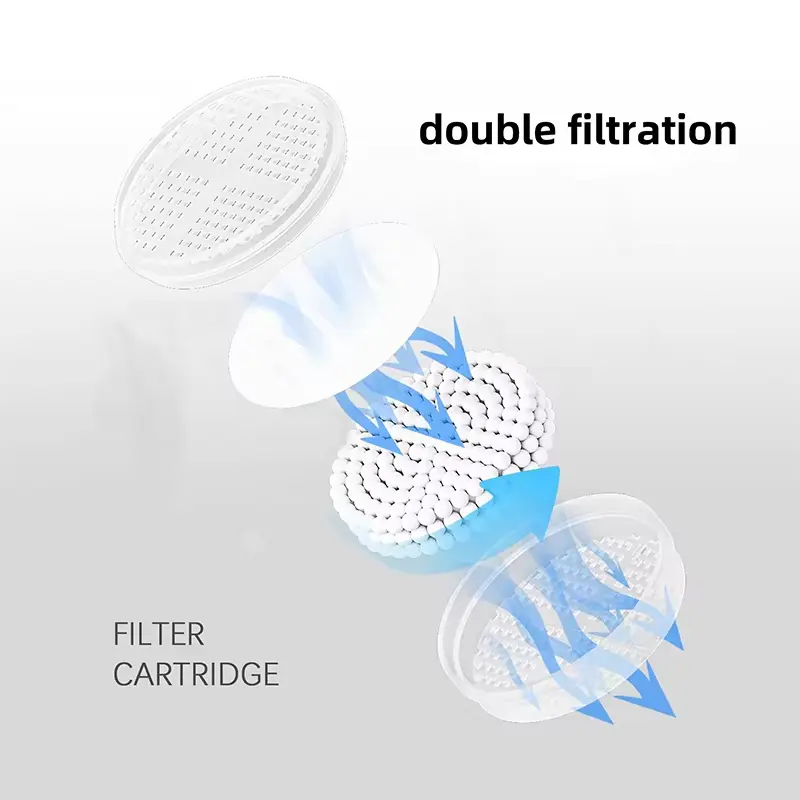
Filtering upstream helps too. A filter that captures sediment and rust stops those particles reaching the jets, which means the nozzles only ever deal with dissolved scale rather than scale plus grit. Our guide to shower filters for hard water covers what that filtration can and cannot do.
For a household, a clogged shower head is an annoyance. For a distributor or a hotel group, it is a cost line.
Returns and warranty claims in this category cluster around two complaints: leaks and weak or crooked spray. Silicone jets take a large share out of the second one. For hotel maintenance teams, it is the difference between a wipe by housekeeping and a service call.
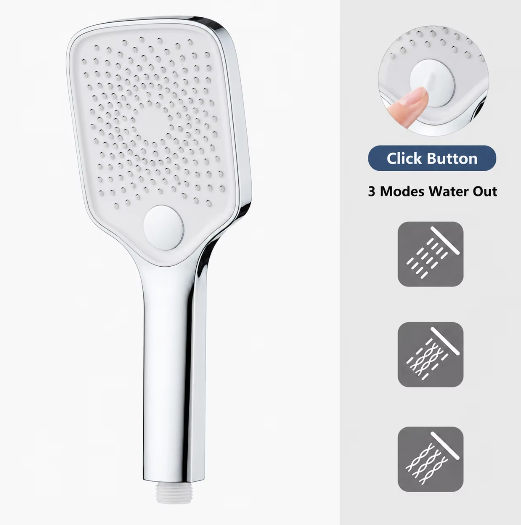
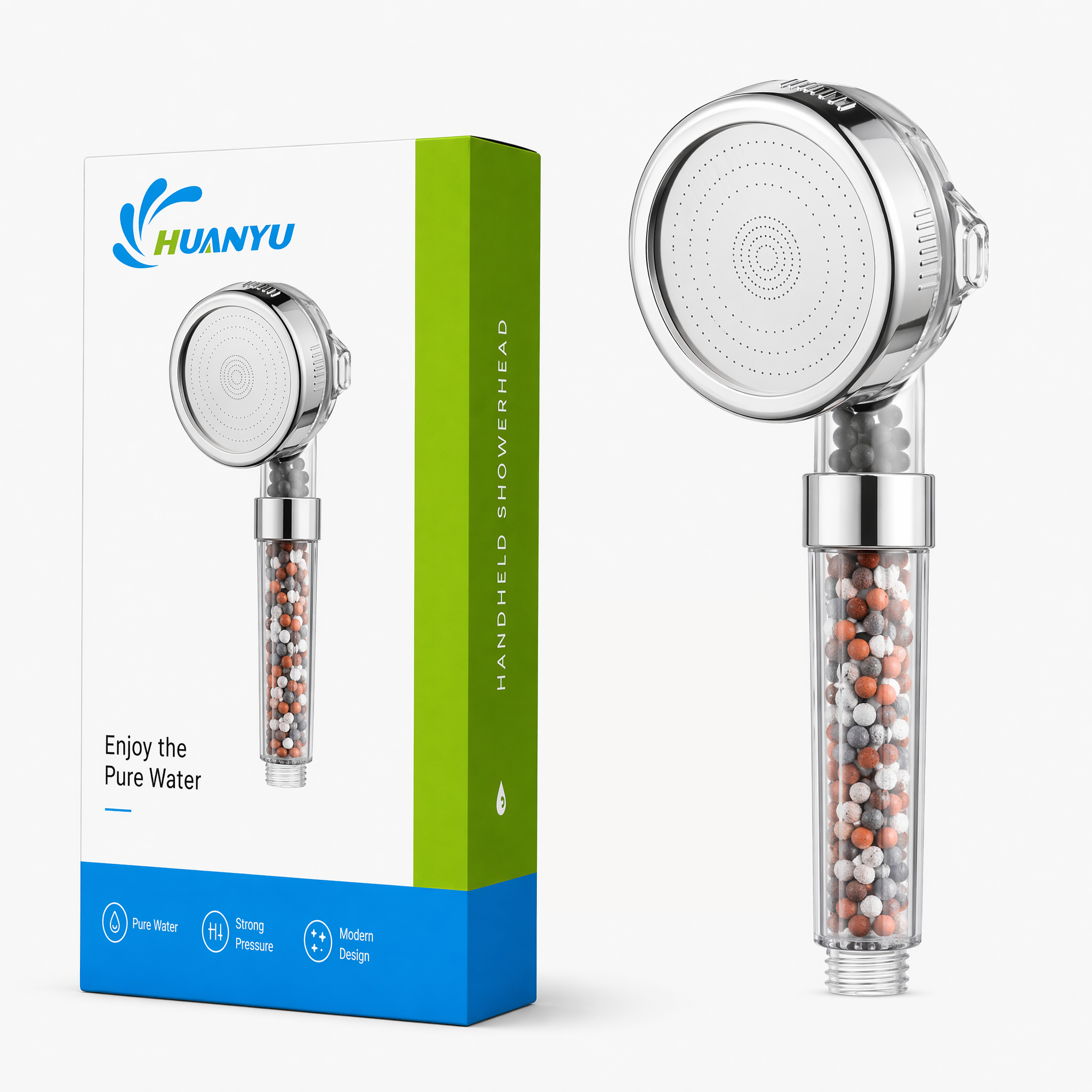
Two things are worth specifying when you order. First, confirm the nozzles are genuinely silicone across the whole face, not a silicone-look moulding. Second, pair them with a stainless steel or well-plated face plate, because a face that scratches or yellows undermines the benefit. Our self-cleaning hand shower range is built around that combination, and the Self-Cleaning High Pressure Shower Head is the straightforward high-pressure version of it.
One more piece of practical advice: say the quiet part in your own product copy. Telling customers to wipe the jets occasionally costs you nothing and prevents the review that says the self-cleaning feature does not work.
Water hardness classification and measurement: U.S. Geological Survey, Water Science School, "Hardness of Water".
Product specifications (70 to 80 self-cleaning silicone jets, stainless steel face plate, 2.5 GPM at 80 PSI, G1/2 BSP): Huanyu High Pressure Filter Detachable Shower Head.
Send your water conditions, sales channel and price point. We'll recommend the right hand shower types, and get samples to you fast.
Request SamplesNingbo Huanyu Sanitary Ware Co., Ltd. is a hand shower manufacturer in Cixi, Ningbo, the centre of China's shower industry. We have exported for over 6 years, on top of two decades of family manufacturing, and we run as a home-factory group: around 140 workers, 30 specialised factories, 80 lines, and an in-house lab with our own inspection team. We have made 600+ shower products for retail and distributor customers including AUCHAN, B&Q, OBI and Leroy Merlin, and we hold CE, RoHS and ACS certification with a 96-hour NSS salt spray standard and a 2-year warranty on every product.
Talk to us: send an inquiry or WhatsApp +86 138 5780 6071.
-