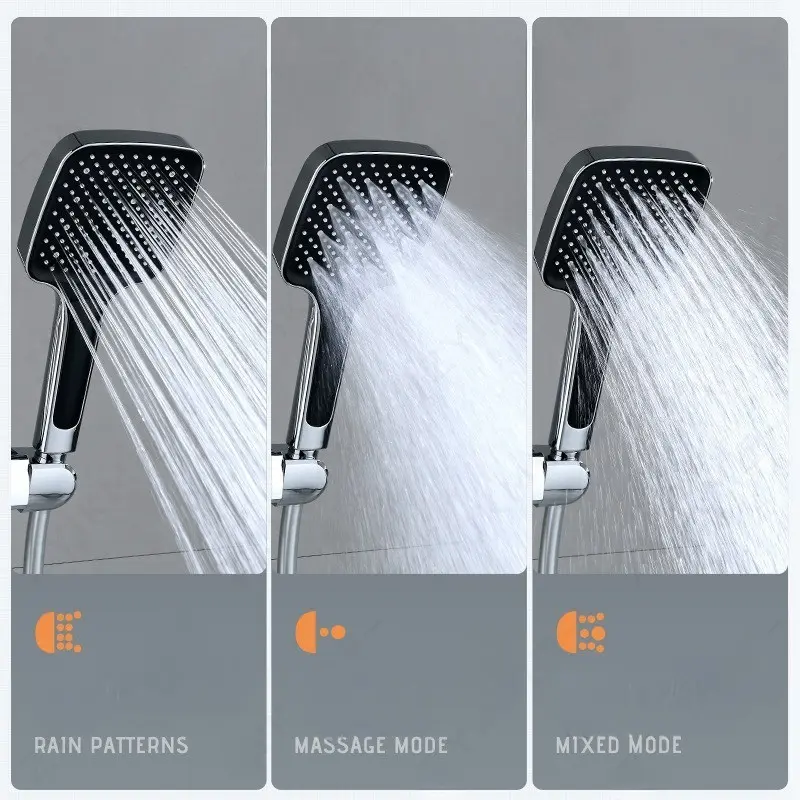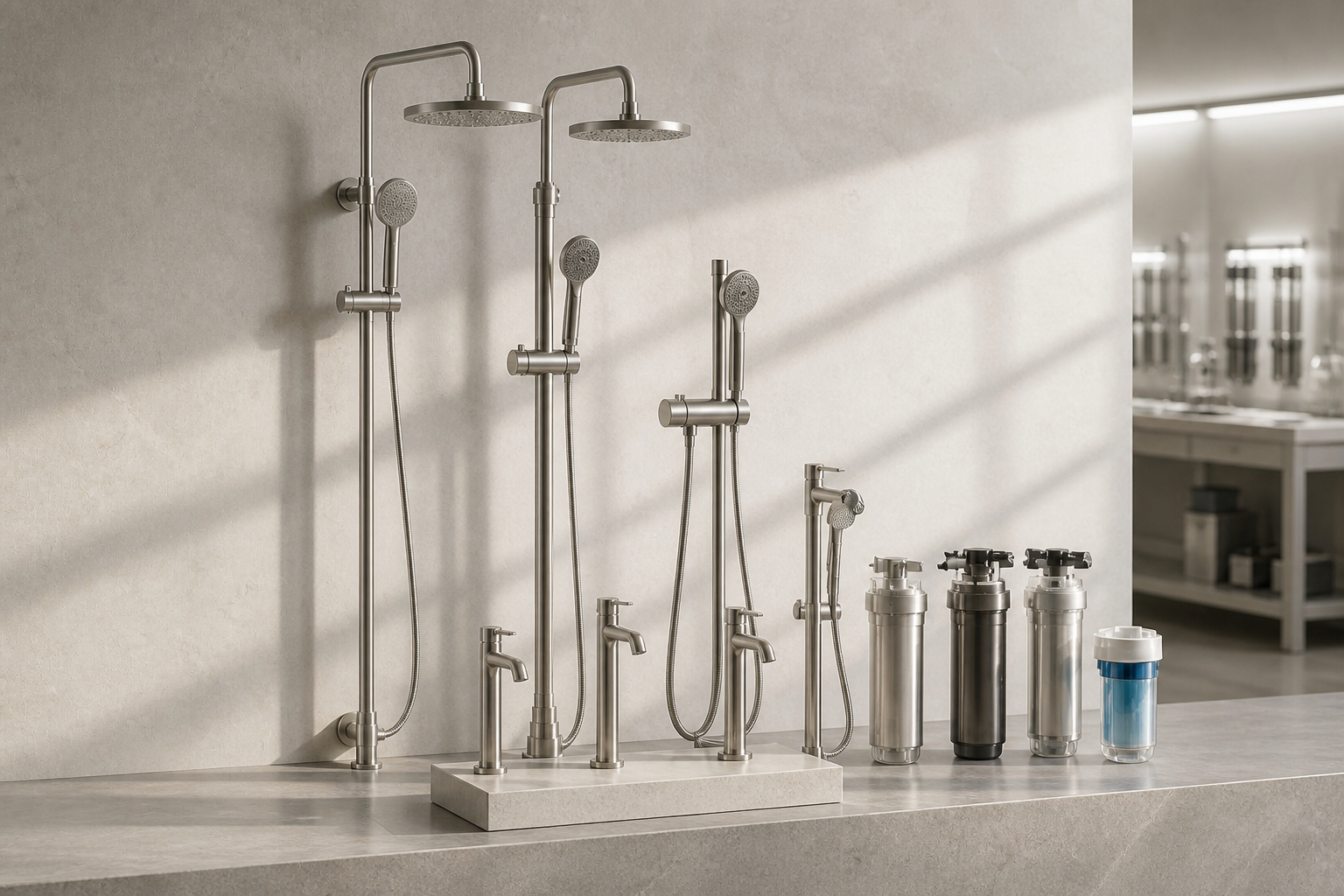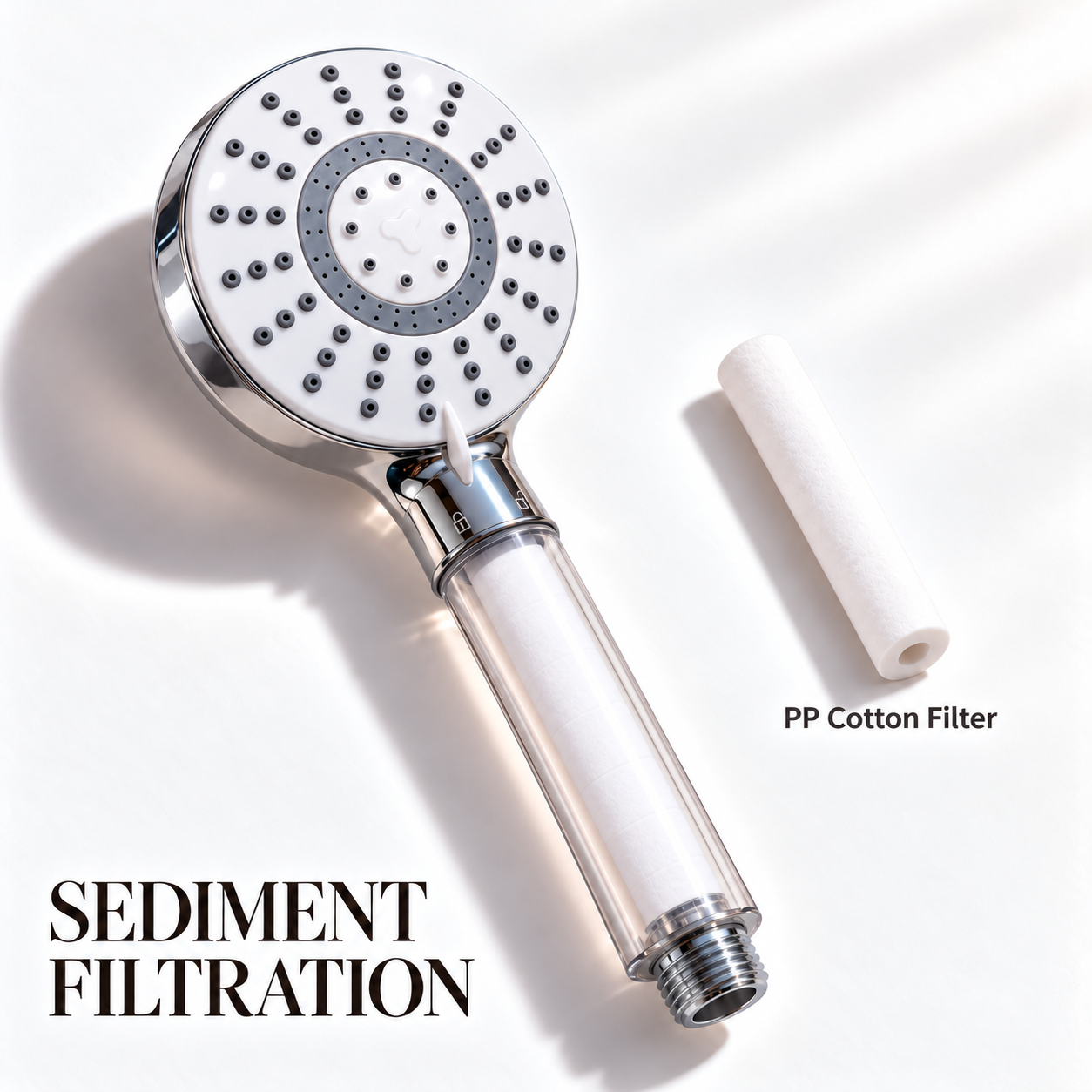

A fixed head keeps the shower simple. A handheld brings the water to the person, the tub edge and the corners. The useful comparison starts with reach, then moves to plumbing and spray performance.
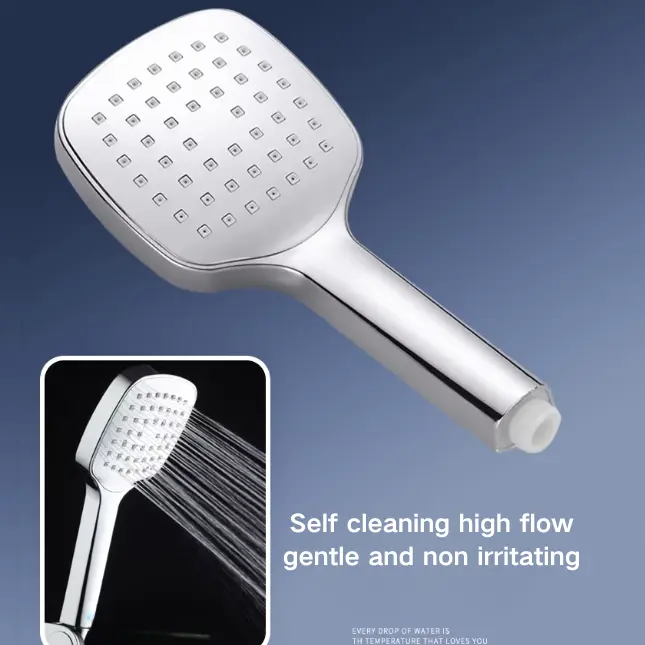
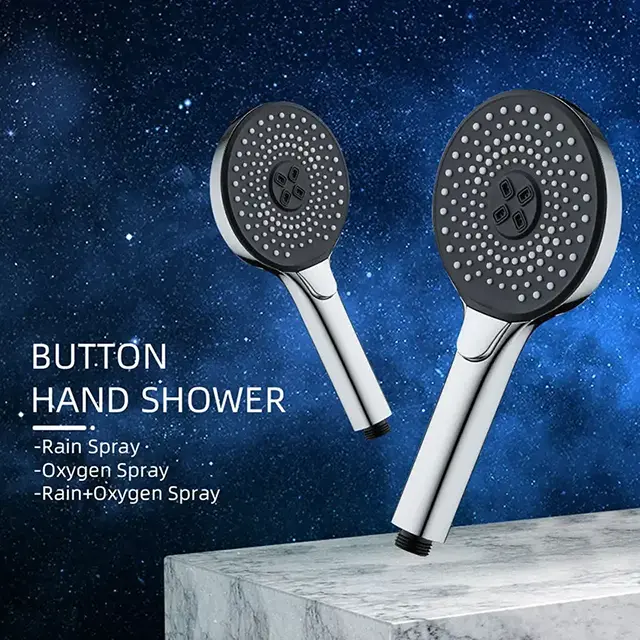 Handheld example: Huanyu BHS11005
Choose a fixed shower head for a clean, hands-free setup with fewer exposed parts. Choose a handheld shower head when directed rinsing, cleaning the enclosure, bathing children or pets, or seated use matters. A dual system solves both jobs, but it adds a diverter, more joints and a higher flow-planning burden. Neither format is naturally stronger or more water efficient. The model's flow path, nozzle layout and supply conditions decide that.
Most comparisons make this sound like a style choice. It is really a reach choice. A fixed head asks the user to move into the spray. A handheld lets the user move the spray.
That one mechanical difference changes how you rinse hair, clean the shower tray, help another person bathe and inspect a blocked nozzle. It also introduces a hose, a holder and extra sealing points. Those parts create utility, but they need space and sensible placement.
We manufacture hand showers, so our preference is easy to guess. Still, a handheld is not the right answer for every bathroom. A simple guest shower may work better with a fixed head. A family bath often gains much more from a movable spray. Start with the repeated task, not the showroom photo.
The 30-second decision test
Which sentence sounds like your bathroom?
The spray must reach beyond one standing position
You rinse a bathtub, wash a child or pet, clean corners, shower seated, or need to keep hair dry.
The shower has one user job
Adults stand under the same spray, the enclosure is easy to clean, and you want fewer visible components.
Height and angle change between users
A wall holder or slide bar can place the hand shower for hands-free use, then release it for targeted rinsing.
The hardware must stay put
A fixed installation avoids a loose hose and removable handset. That can suit simple guest or public shower layouts.
If you chose one answer from each side: compare a dual system, but confirm how the diverter works and whether both outlets can run together.
Handheld and fixed shower heads, compared by consequence
A long list of generic pros and cons hides the decision. This table connects each difference to what it changes in use.
| Decision | Handheld shower head | Fixed shower head | Better fit |
|---|---|---|---|
| Directed reach | The hose brings the spray to feet, hair, tub walls and corners. | The user or object must move under the installed spray direction. | Handheld |
| Hands-free showering | Works hands-free when the holder angle and height suit the user. | Always ready in its installed position, with nothing to dock after use. | Fixed |
| Visible hardware | Adds a hose and holder or slide bar to the wall area. | Can present a cleaner outline with fewer exposed parts. | Fixed |
| Cleaning the enclosure | Directs rinse water toward glass, joints and the shower tray. | Leaves some surfaces outside the useful spray angle. | Handheld |
| Service points | Head, hose ends, washers and holder all need inspection. | Usually has a shorter exposed path and fewer movable accessories. | Fixed |
| Different users | Can work in the hand or in a correctly placed fixed position. | One mounting height and angle must serve everyone. | Handheld |
| Spray strength | Depends on flow rate, hose condition, internal restriction and nozzle design. | Depends on flow rate, internal restriction and nozzle design. | Model specific |
| Water efficiency | Efficient and inefficient versions both exist. | Efficient and inefficient versions both exist. | Check rated flow |
The mechanical difference that matters
A handheld is a small system, not a head with a handle
The hose creates reach. It can also kink, twist, rub against the wall or restrict flow if its internal bore is poor. The holder decides whether the hand shower is comfortable when nobody is holding it.
This is where thin comparisons fail. They compare two spray faces and ignore the parts that make one of them movable.
Water outlet or diverter
Provides the supply connection and, in a combination system, selects which outlet receives water.
Hose and end washers
Add reach while carrying the full shower flow through the joints at both hose ends.
Holder or slide bar
Sets the resting height, angle and ease of removal. A badly placed holder wastes much of the benefit.
Hand shower
Controls the final spray through its selector, chambers, faceplate and nozzles.
Choose by the job you repeat, not by a showroom label
Fast standing shower
A fixed head is ready without handling or docking. A handheld can do the same job from a well-placed holder, but the holder angle matters.
Long or thick hair
Moving a concentrated rinse around the scalp can clear shampoo without asking the user to bend toward one fixed stream. Compare the actual spray setting, since a very soft hand shower may still rinse slowly.
Bathing a child or pet
Controlled direction and distance reduce the need to move the person or animal under a high spray. A pause control can help while repositioning, but the main valve remains the final shutoff.
Cleaning tile and glass
A hose can carry rinse water to the lower wall, door track and tray. Check that its reach covers the farthest corner without pulling hard on the holder.
Large rain coverage
A fixed overhead head can dedicate its full shape and mounting position to broad, downward coverage. Available flow still has to fill the face evenly.
Keeping hair dry
A hand shower can direct water below the shoulders. With a fixed overhead head, the user must move around the stream or lower the flow.
The pressure myth
A fixed shower head is not automatically stronger
Mounting format tells you where the head can move. It does not tell you the pressure, flow rate, spray force or coverage.
Check the supply path
A handheld adds a hose. A kink, blocked washer or narrow passage can reduce flow, but that is a component problem rather than a rule about handheld products.
Compare rated flow
Water use comes from the product's flow-control design and the operating conditions. The presence of a hose does not establish the rated flow.
Judge the spray
Nozzle count, active outlet area and outlet geometry change force and coverage. Two heads using the same amount of water can feel different.
The U.S. EPA WaterSense program applies its showerhead specification to fixed and handheld products. It evaluates flow across pressure conditions, spray force and spray coverage as separate performance questions. A WaterSense-labeled showerhead uses no more than 2.0 gpm.
Count the connections before calling either option easy to install
A simple head replacement and a new multi-outlet shower are different projects. Identify what stays on the wall before choosing parts.
Fixed replacement
- Confirm the existing shower-arm connection.
- Check whether the new head needs a separate arm, flange or adapter.
- Follow the model's sealing instructions for that thread and joint.
- Set the angle, then check the connection under running water.
Handheld conversion
- Confirm the wall outlet or shower-arm connection.
- Choose a holder position that works in the hand and hands-free.
- Allow the hose to hang without a tight bend or floor contact.
- Check both hose washers and every joint under running water.
- Add a diverter if the fixed head will remain in service.
If you are replacing an existing hand shower, Huanyu's guide to shower-head compatibility explains why a familiar thread label does not settle every fit question. For the physical sequence, follow the instructions supplied for the selected head, hose, holder and diverter.
Useful is not the same as compliant
A handheld can improve access, but the whole layout decides accessibility
A movable spray helps when the user sits or needs assistance. That benefit is real. It does not mean that any hand shower, hose and bracket form an accessible installation.
The U.S. Access Board's bathing-room guide also addresses reach, control operation, slide-bar placement and interference with grab bars. These rules apply to covered accessible facilities in the United States. Other countries and projects use different requirements.
No Huanyu model is claimed here as ADA compliant. For a regulated project, check the complete assembly, hose, mounting position, controls and adopted local code.
When one outlet cannot do both jobs
A dual system removes the reach compromise
The fixed head stays ready for broad hands-free use. The hand shower handles targeted rinsing and cleaning. The tradeoff is hidden in the control path: one more outlet needs a diverter, and simultaneous use can demand more available flow.
Do not assume that two heads will both feel the same when opened together. The valve, diverter, supply and outlet ratings have to support that operating mode.
Ask these before choosing a dual setup
- Can the outlets run separately, together, or both?
- Where will the diverter sit, and can every user operate it?
- Does the hand shower dock at a useful height and angle?
- Can the hose reach the cleaning and bathing zones without dragging?
- What is the rated flow in every permitted operating mode?
- Which exposed joints can be inspected after installation?
For a broader layout comparison, see Huanyu's guide to different shower-system types.

BHS11002 turns reach into a set of useful water paths
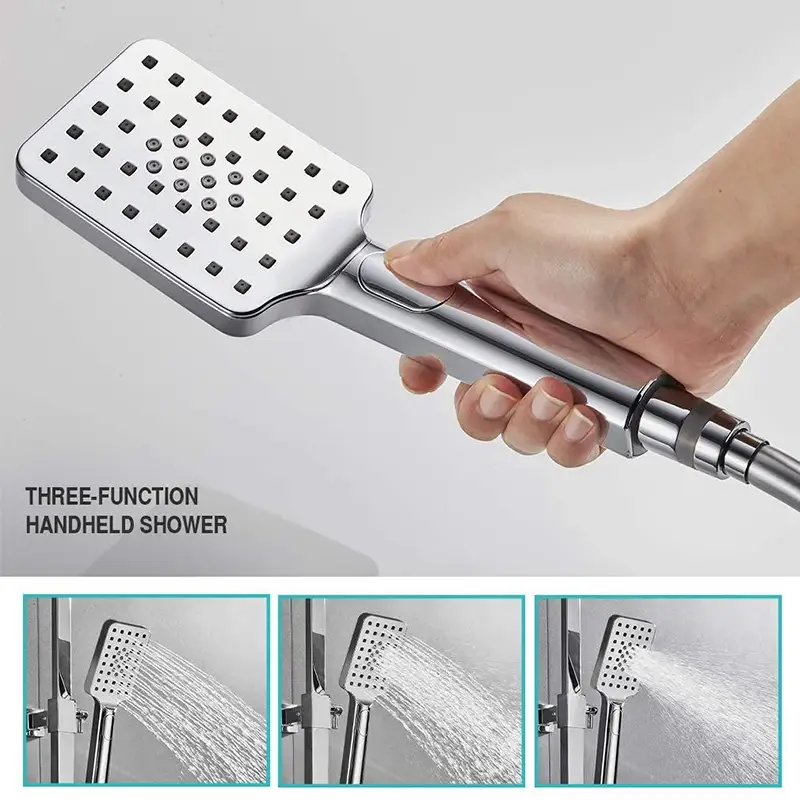
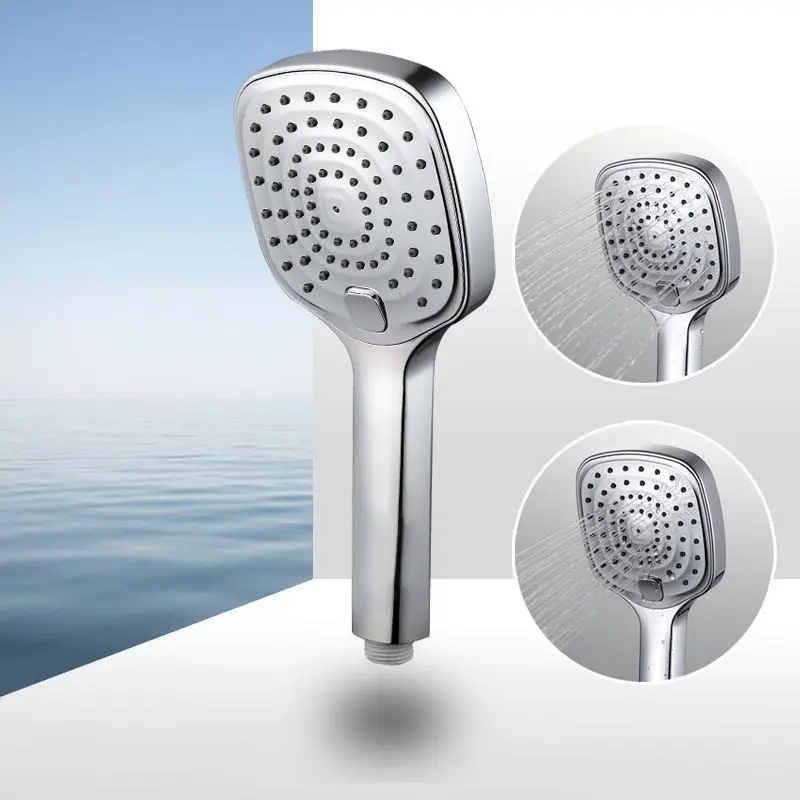
Huanyu's current BHS11002 page lists a chrome-surface ABS hand shower sized 110 x 130 mm with button control. Its face uses horizontal outlet bars around a central pulse zone. The page identifies rain, pulse and mixed modes.
That layout suits the tasks that make a handheld worth choosing. The broad zone covers routine showering. The central zone gives a more focused rinse. The handle lets the user aim either pattern at hair, a tub edge or the enclosure.
The same page lists a G1/2 connection and silicone outlets. Those details belong to this model. They should not be assumed for every handheld shower.
Our factory view
For a handheld, the spray face is only half the product
When a customer brief says only "three-function hand shower," too many decisions remain open. We need to understand the mounted position, hand-held tasks, control method, hose and holder arrangement, required flow and target market.
A hand-shower system adds hose connections. Washer fit, thread condition and assembly control affect whether reach comes with a leak.
A button or selector must direct water to the intended outlet zone and return consistently under the specified operating conditions.
A strong center and a wide rain zone do different work. Each mode needs a usable pattern, not merely a different icon.
A hose, inlet or selector can expose whistle and vibration that a dry appearance check will never find.
Huanyu's published Equipment page lists sealing and pressure equipment that simulates 0.3 to 1.0 MPa, along with water-flow and noise testing equipment. The purpose of those checks is practical: the complete water path must remain stable, sealed and usable.
Tell Huanyu where the water needs to reach
Huanyu's hand-shower range includes button-control, stepless, self-cleaning, 3D, spa and regular products. For a useful recommendation or OEM/ODM discussion, send the target market, bathroom layout, hose and holder arrangement, required spray jobs, control method, flow target, finish and package.
That gives our team enough context to discuss a product as part of the shower, rather than treating the faceplate as the whole decision.
Handheld vs fixed shower head: common questions
Is a handheld shower head better than a fixed shower head?
A handheld is better for directed rinsing, cleaning, bathing children or pets, and seated use. A fixed head is better when you want a simple hands-free shower with fewer exposed parts. The better choice depends on the repeated job, not the format alone.
Do handheld shower heads have less pressure?
Not inherently. A kinked or restricted hose can reduce flow, but pressure and spray feel also depend on the supply, flow-control parts, nozzle layout and active spray area. Compare model specifications and inspect the whole water path.
Can a handheld shower head be used like a fixed one?
Yes, when it sits securely in a wall bracket or slide-bar holder at a useful height and angle. The mounted experience depends on the holder position, handset shape and hose movement.
Is a handheld shower head suitable for an accessible shower?
It can improve access, but a handheld product alone does not make the shower compliant. U.S. ADA provisions for covered facilities address hose length, fixed-position use, controls, reach and placement. Check the complete installation against the rules adopted for the project.
Should I install both a fixed and handheld shower head?
A dual system makes sense when users want broad hands-free coverage and movable rinsing. Confirm the diverter operation, permitted outlet combinations, available flow, hose reach and mounting positions before choosing the set.
Which type is easier to maintain?
A basic fixed head usually has fewer exposed components. A handheld adds a hose, washers and holder, but it is easier to bring close for nozzle cleaning and inspection. Material, finish and water quality still influence maintenance.