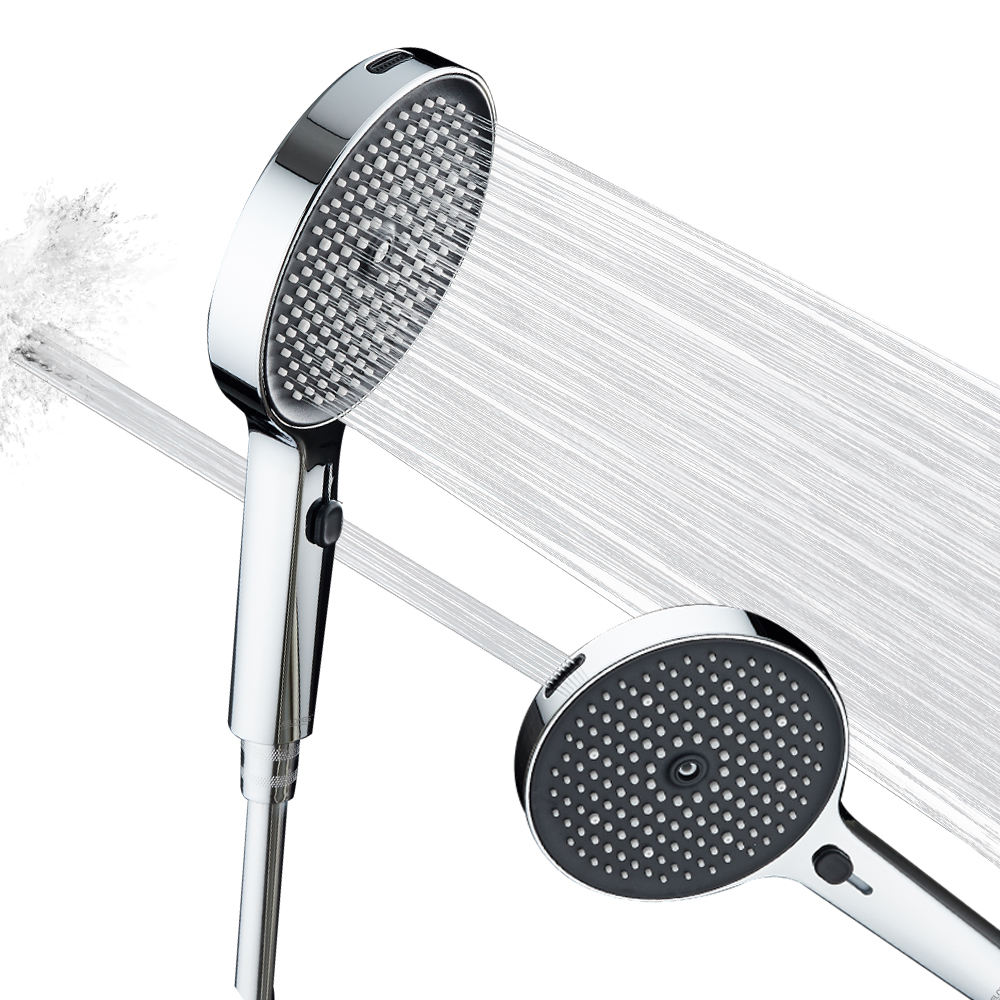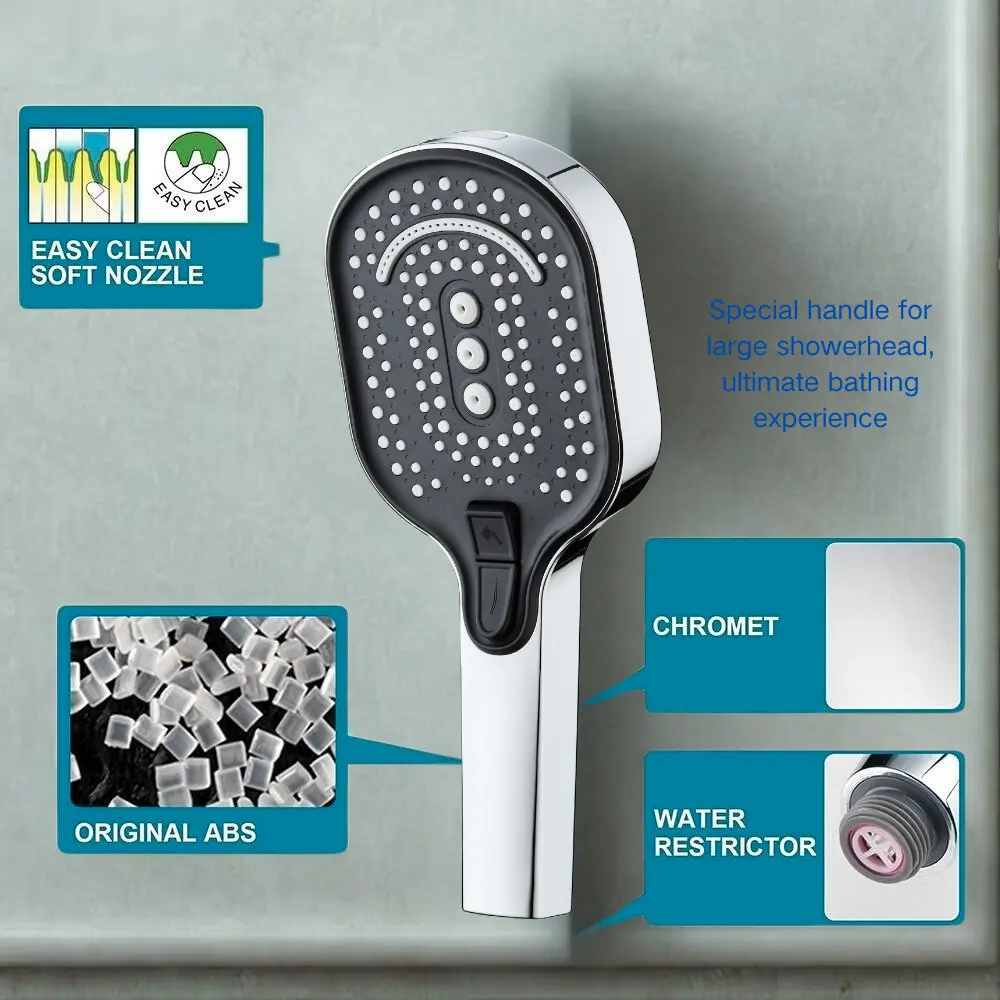

A 140 mm shower head can use the same water per minute as a 110 mm model. The larger face changes where the water lands. The rated flow and the time under the spray decide how much water leaves the pipe.
No. A bigger shower head does not automatically use more water. If two heads deliver the same measured gallons per minute, they use the same volume over the same shower time. A wider face can spread that flow across more active outlets, so the spray may cover more skin and feel softer. It uses more water only when its actual flow rate is higher, more outlets run at once, or you shower longer.
The common shortcut is easy to understand: a larger face has more holes, so it must release more water. That conclusion skips the part inside the shower head.
Water first passes through the inlet and internal waterways. A regulator or flow-control structure may limit the total volume before the water reaches the spray plate. The spray plate then divides that available flow among the outlets selected by the current mode.
This is why a size comparison should never begin with diameter alone. Begin with measured flow. Then judge how the head distributes that flow.
The number that reaches the bill
Water use is flow rate multiplied by time
A shower head rated or measured at 2.0 gallons per minute uses 16 gallons in eight minutes. At 2.5 gpm, the same eight minutes uses 20 gallons. Diameter never appears in that calculation.
The U.S. EPA WaterSense program says standard showerheads use 2.5 gpm. A product that earns the WaterSense label must use no more than 2.0 gpm and meet separate performance requirements for spray force, coverage and pressure compensation.
That separation matters. Efficiency tells you how much water moves. Coverage and force tell you what that water does after it leaves the face.
Do not collapse these into one number
Four values describe four different jobs
The outside diameter or width of the spray face. It affects product scale, grip, holder clearance and the space available for outlet zones.
A 140 mm face is not a 140 mm opening. Most of the face is solid material.
The outlets that release water in the selected mode. A multi-function face may use the center, outer ring, several zones, or a combination.
The visible face can stay the same while the working spray area changes.
The water volume delivered per unit of time, usually shown in gpm or L/min. This is the value used in the water-use calculation.
Compare ratings only when the test pressure and operating mode are also clear.
Force describes the impact of the spray. Coverage describes its distribution across the target area. Two equal-flow heads can differ on both.
Nozzle size, layout, internal resistance and pressure all contribute.
Same inlet flow, different distribution
A larger face can feel softer without using less water
Imagine two shower heads receiving the same total flow. One concentrates its active outlets near the center. The other sends water across a wider zone. The second can wet more of your shoulders, but each part of the spray may feel less concentrated.
This is not a rule that every big head feels weak. Outlet diameter, the number of working nozzles, channel resistance and the chosen spray mode can change jet speed and distribution. Internal structure matters as much as the face outline.
In a published laboratory study, two showerheads had identical external dimensions and the same number and diameter of nozzles, but different internal structures. Their jet velocities and spatial distribution differed at the same tested flow rates. The useful lesson is narrow: outside size cannot predict spray performance.
What better testing separates
Coverage and force deserve their own checks
The search results for this question often stop at "more holes means lower pressure." That is too crude. A hole that exists on the face may be inactive in one mode. Two outlets with different diameters do not divide water in the same way. The supply pressure may also change the delivered flow.
EPA treats performance as more than GPM
The EPA WaterSense showerhead guidance lists spray force, spray coverage and pressure compensation as separate requirements. The specification tests maximum flow at flowing pressures of 20, 45 and 80 psi. A single high-pressure reading does not describe the whole pressure range.
Researchers measure the working nozzle area
A Hong Kong Polytechnic University study examined 18 spray patterns from five showerheads. It measured the ratio of total working-nozzle area to the faceplate area, along with water pressure and resistance. That is far more informative than measuring the shell alone.
Real product sizes from one manufacturer
Huanyu's hand shower range shows why diameter is only one field
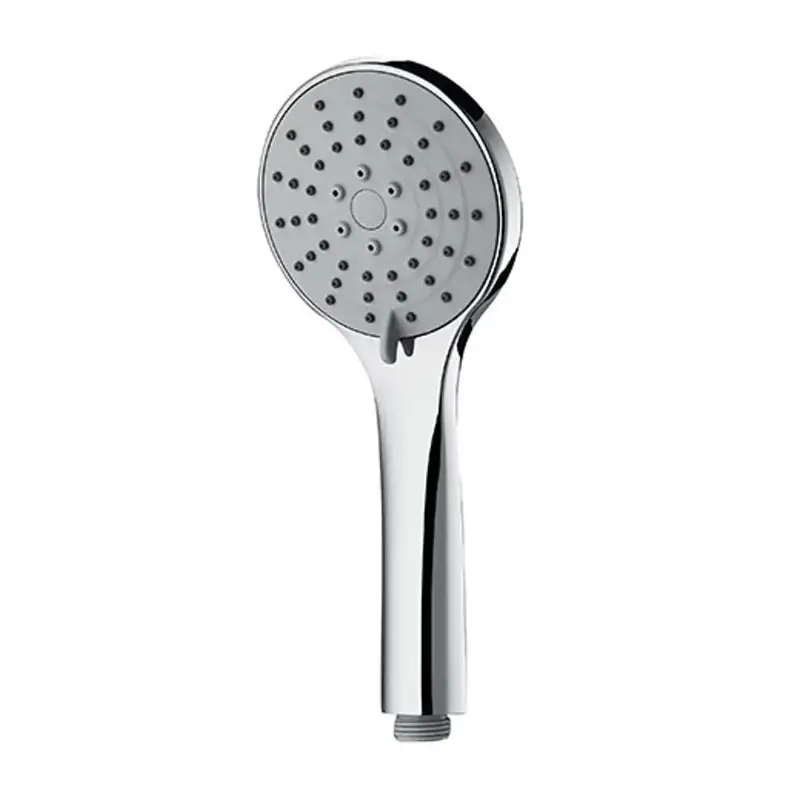
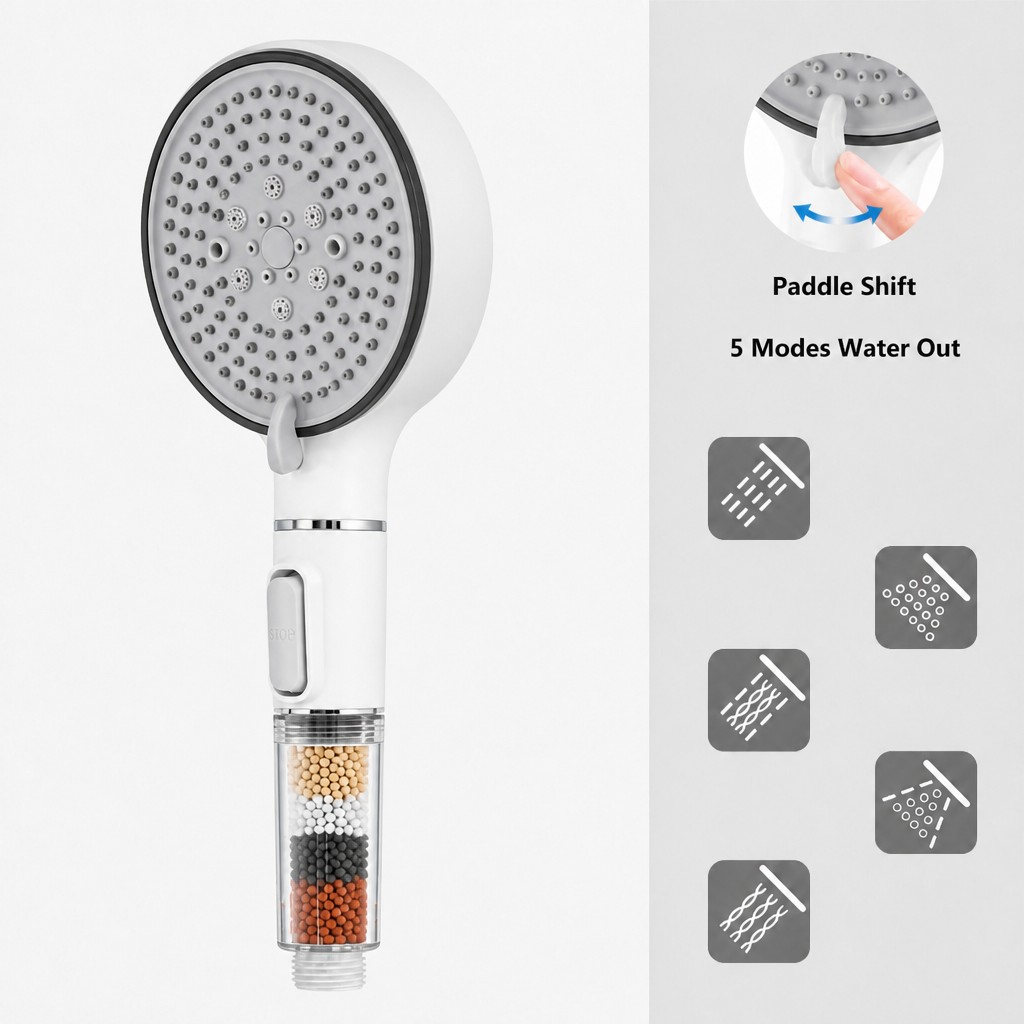
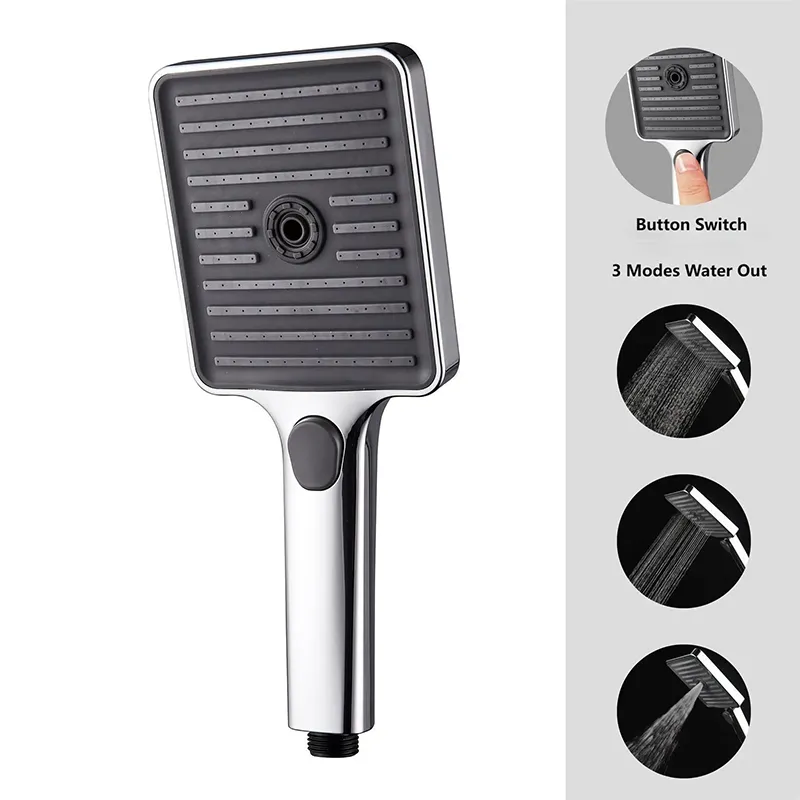
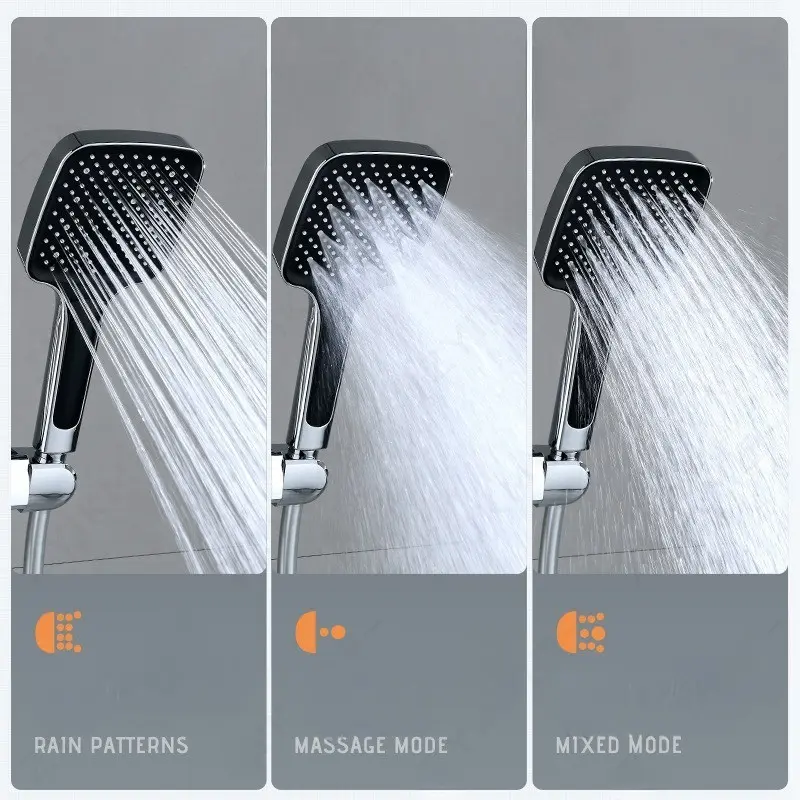
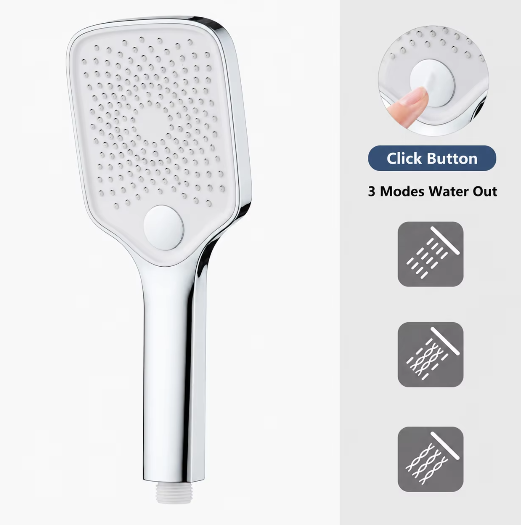
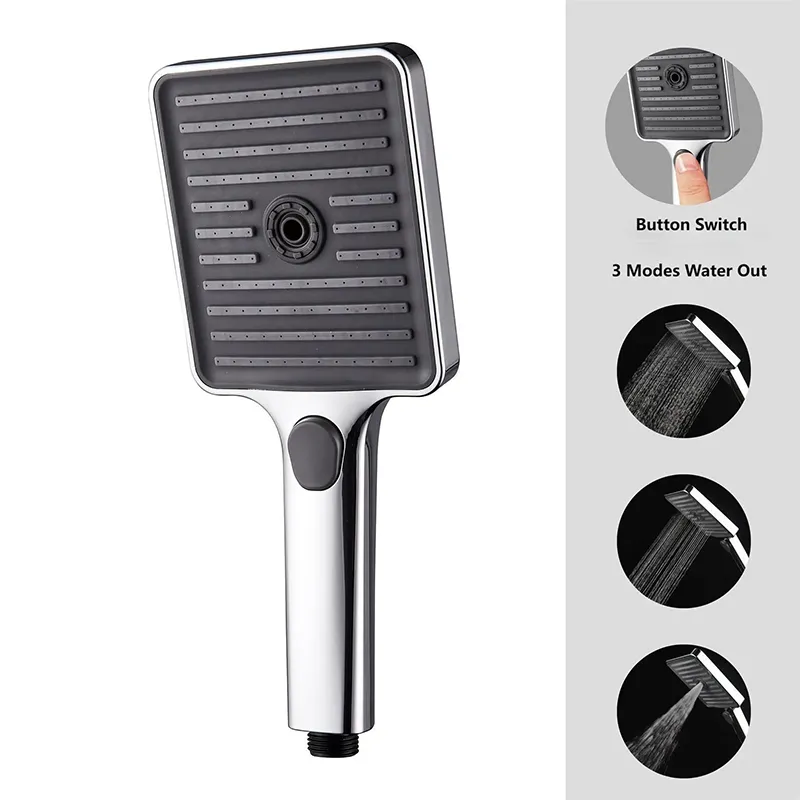
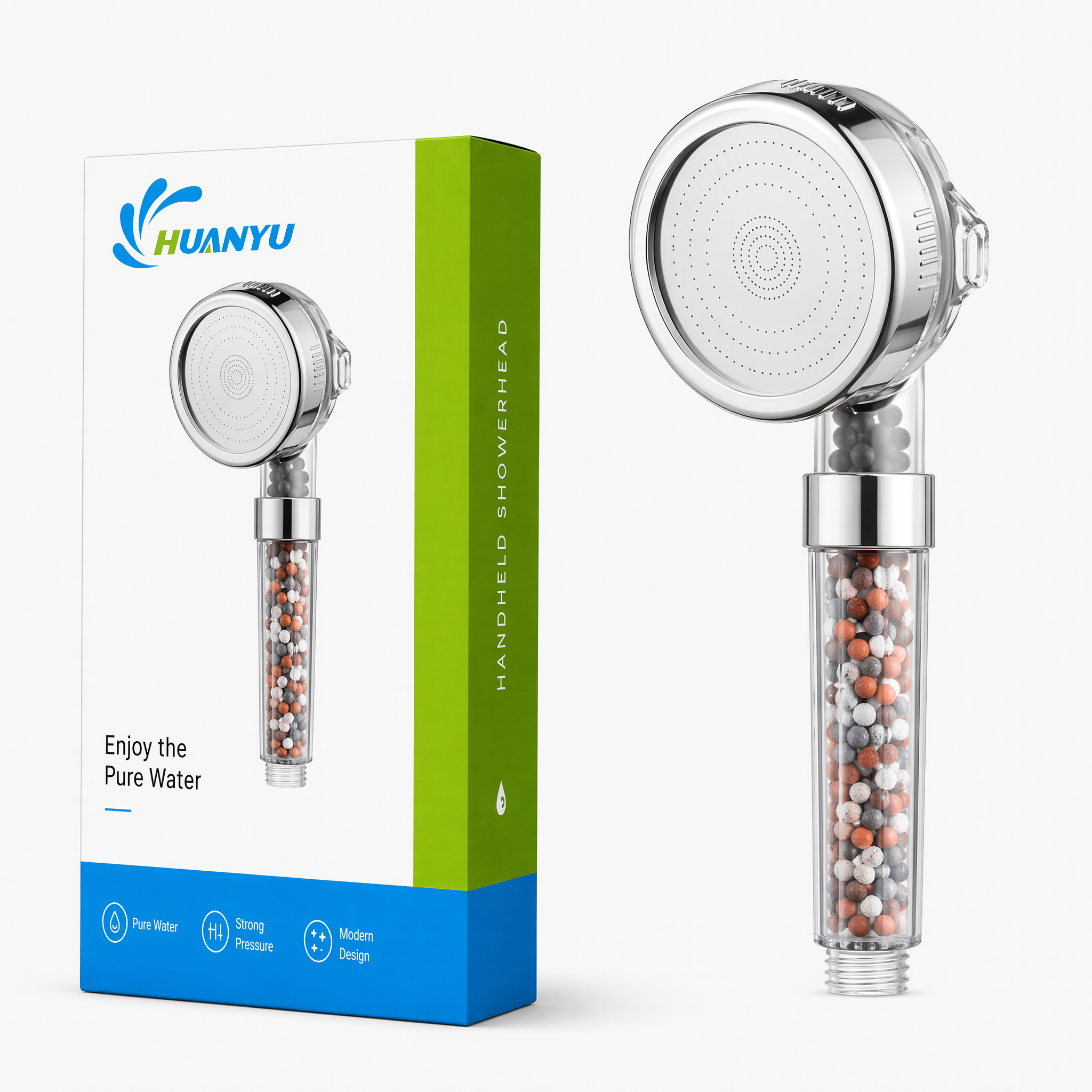
These four current Huanyu product pages list faces from 110 mm to 140 mm. The change in size comes with changes in control and spray architecture. None of those diameter figures, by itself, states how many liters or gallons the shower uses.
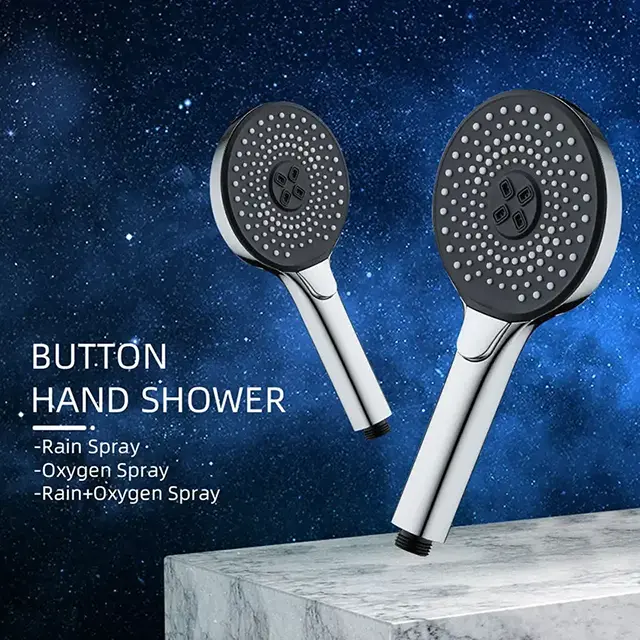

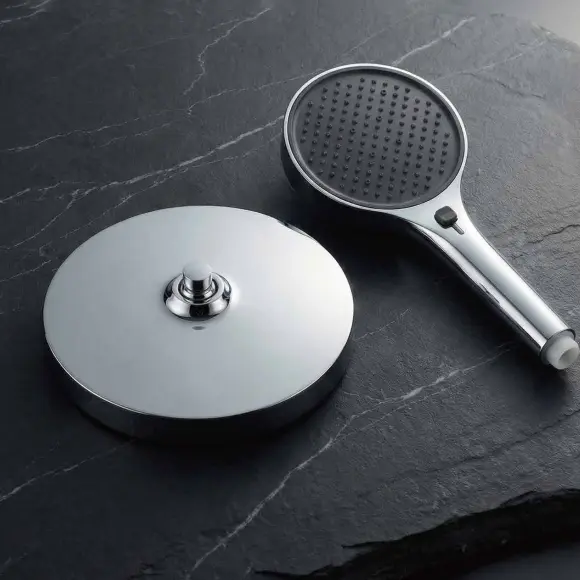
Read each specification in its own model context. The SFC-HS0107 page describes a dynamic flow-limiting and stabilizing device for operation across 0.1 to 0.8 MPa, plus water-saving performance of over 30 percent. Those statements belong to SFC-HS0107. They should not be copied onto the other three products just because the faces look related.
A factory owner's view
I would not approve a larger face from a beauty photo
When a buyer asks us to enlarge a hand shower, the useful question is not, "Can you make this look bigger?" It is, "What must the spray still do after the face becomes bigger?"
Our published equipment list includes sealing and pressure testing that simulates 0.3 to 1.0 MPa. It also lists water-flow, spray-uniformity and noise testing. Those checks expose problems that a dimension drawing cannot show.
Fix the test condition
Set the target inlet pressure, selected spray mode and flow requirement. A comparison without controlled conditions is just an impression.
Watch the whole face
Check whether the intended outlet zone stays active and whether edge streams remain clean instead of dribbling or turning sideways.
Measure flow and noise
Confirm the delivered volume and listen for noise that appears when resistance, channels or switching parts interact with pressure.
Repeat across pressure
A large face that looks full at one condition may behave differently when supply pressure changes. The useful result is a range, not one photograph.
My own preference is simple: do not chase the largest diameter the handle can carry. Choose the smallest face that gives the coverage and mode layout your user needs, then verify it under the supply conditions of the target market. Extra face area has no value if the outer zone cannot produce a clean spray.
Huanyu describes its current testing capabilities on the production and testing equipment page.
The exceptions are practical
When can a bigger shower head use more water?
The new head delivers more gpm
If the larger model measures 2.5 gpm and the smaller one measures 1.8 gpm, the larger model uses more water each minute. The cause is the flow difference, not the diameter label.
A combination system opens two water paths
A fixed head and handheld may run separately or together. Check the combined rating and every operating mode. The WaterSense specification requires a qualifying combination device to meet its maximum flow requirement in all possible modes.
The shower runs for more minutes
At the same 2.0 gpm, a 12-minute shower uses 24 gallons while an eight-minute shower uses 16. Comfort can change behavior, but only a timer tells you what happened in your home.
Choose the spray job before the diameter
Which shower head size fits you?
You want a more concentrated rinse
Look for a focused spray mode or a smaller active outlet zone. Do not assume a compact shell guarantees force. Compare the actual flow and test the chosen mode at your supply pressure.
You want wider shoulder coverage
A larger face can spread water across a broader zone. Check whether the outer outlets remain active at the rated flow and whether the wider pattern stays inside your enclosure.
Your home already has weak flow
Diagnose the supply before buying by diameter. Remove mineral deposits, check the hose and valve path, and compare flow with and without the head. Huanyu's shower-pressure troubleshooting guide explains the order.
You want both soft coverage and a stronger rinse
A multi-function head can change the active zone without changing the face. Inspect the function sequence. A clearly separated center and perimeter design is easier to understand than a mode list with no spray map.
You are choosing a handheld model
Face size also changes handling. Check weight, balance, holder clearance and how the head turns when the hose pulls. Water use is only one part of the decision.
You are comparing water-saving claims
Ask for the rated flow, test pressure and applicable mode. A percentage with no baseline cannot tell you the delivered gpm. A recognized label or a model-specific test record gives you more context.
A five-minute reality check
Measure what your installed head uses
- Select the mode you normally use. A multi-function head may deliver differently by mode.
- Place a marked bucket under the full spray. Catch all water for exactly 15 seconds. Keep the temperature at a safe normal setting.
- Measure the captured volume. Multiply gallons by four to estimate gpm. Multiply liters by four to estimate L/min.
- Repeat the test. If the results differ, collect for 30 seconds and multiply by two. A longer capture reduces timing error.
- Compare old and new heads under the same conditions. Use the same valve position, mode and test method. This reveals whether the larger face changed actual flow.
For a fuller calculation, including missing water and shower duration, use Huanyu's guide to measuring shower water use.
A better product-page checklist
Seven fields tell you more than "large shower head"
- Face diameter or width in millimeters or inches
- Rated flow in both gpm and L/min
- Flow test pressure and any pressure range
- Active outlet zone for every spray mode
- Coverage or spray-distribution test information
- Whether combined outlets can operate together
- Model-specific water-saving label, report or baseline
For a product line, not a guessing game
Compare face size and spray behavior under the same test brief
Huanyu's current hand shower pages include 110 mm, 120 mm, 130 mm and 140 mm examples with button, multi-function and stepless controls. Our equipment page lists sealing and pressure testing from 0.3 to 1.0 MPa, plus water-flow, spray-uniformity and noise testing.
Send the target face size, flow requirement, pressure range and spray-mode sequence. We can discuss the model or custom structure against the same four fields instead of treating diameter as a performance promise.
Questions people ask next
FAQ about shower head size and water use
Does a bigger shower head use more water?
Not automatically. If a big shower head and a small one deliver the same measured gpm, they use the same water per minute. The larger face changes distribution and coverage. Water use rises only when actual flow or shower duration rises.
Does a larger shower head reduce water pressure?
A shower head does not set the plumbing pressure upstream. A larger active spray area can make the spray feel softer because the available flow is distributed more widely. Nozzle layout, internal resistance, spray mode and supply pressure determine the result.
Do more shower head nozzles mean more GPM?
No. The inlet and flow-control structure may limit the total flow before water reaches the nozzles. More visible nozzles can change coverage, but some may be inactive in a selected mode. Read the rated or measured flow instead of counting holes.
Can a 140 mm shower head use the same water as a 110 mm model?
Yes. The two sizes can use the same volume per minute if their actual flow rates match under the same test conditions. They may still feel different because the active outlet area and spray distribution differ.
What shower head size is best for low water pressure?
There is no universal diameter. A compact active zone or focused mode often feels stronger than a very wide spray, but the internal design matters. Measure the existing flow, clear restrictions and compare candidate heads at the pressure available in your bathroom.
How do I check how much water my shower head uses?
Catch the full spray in a marked bucket for 15 seconds, measure the volume, then multiply by four. The result estimates gpm if you measured gallons or L/min if you measured liters. Repeat the test in the mode you normally use.