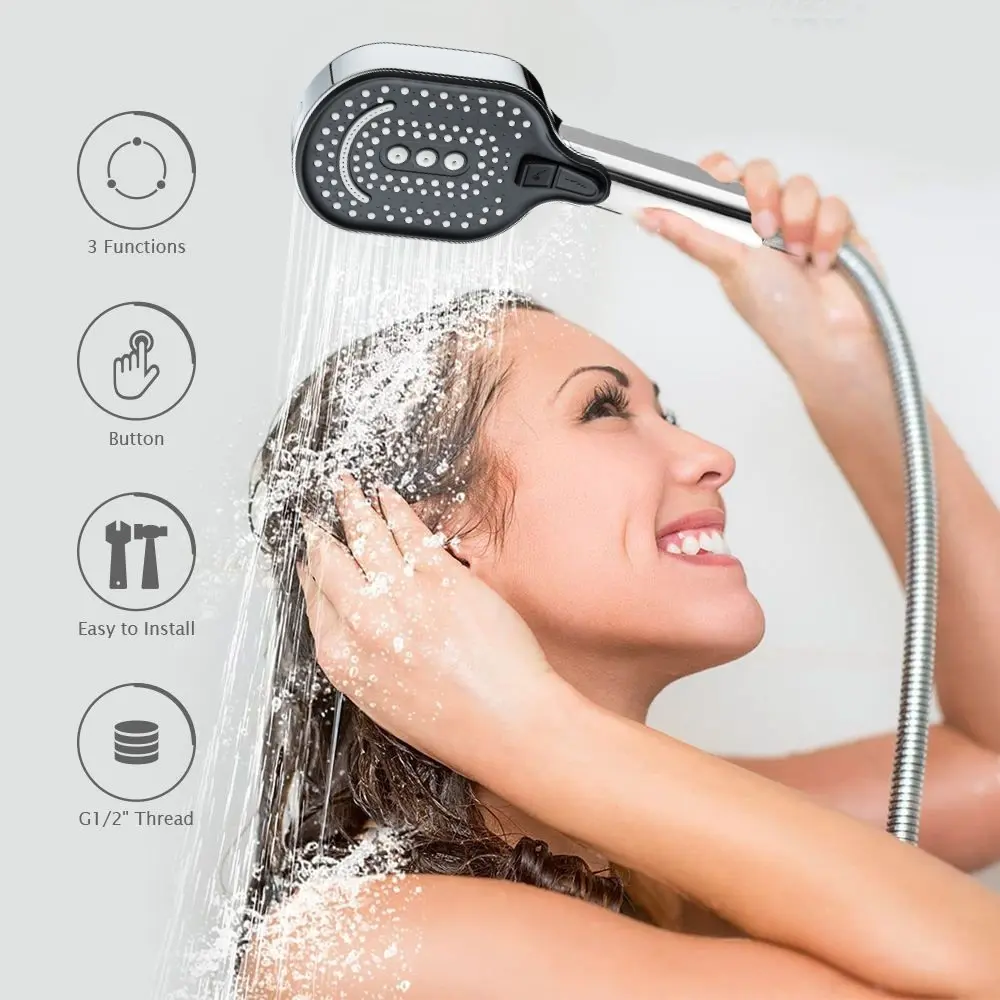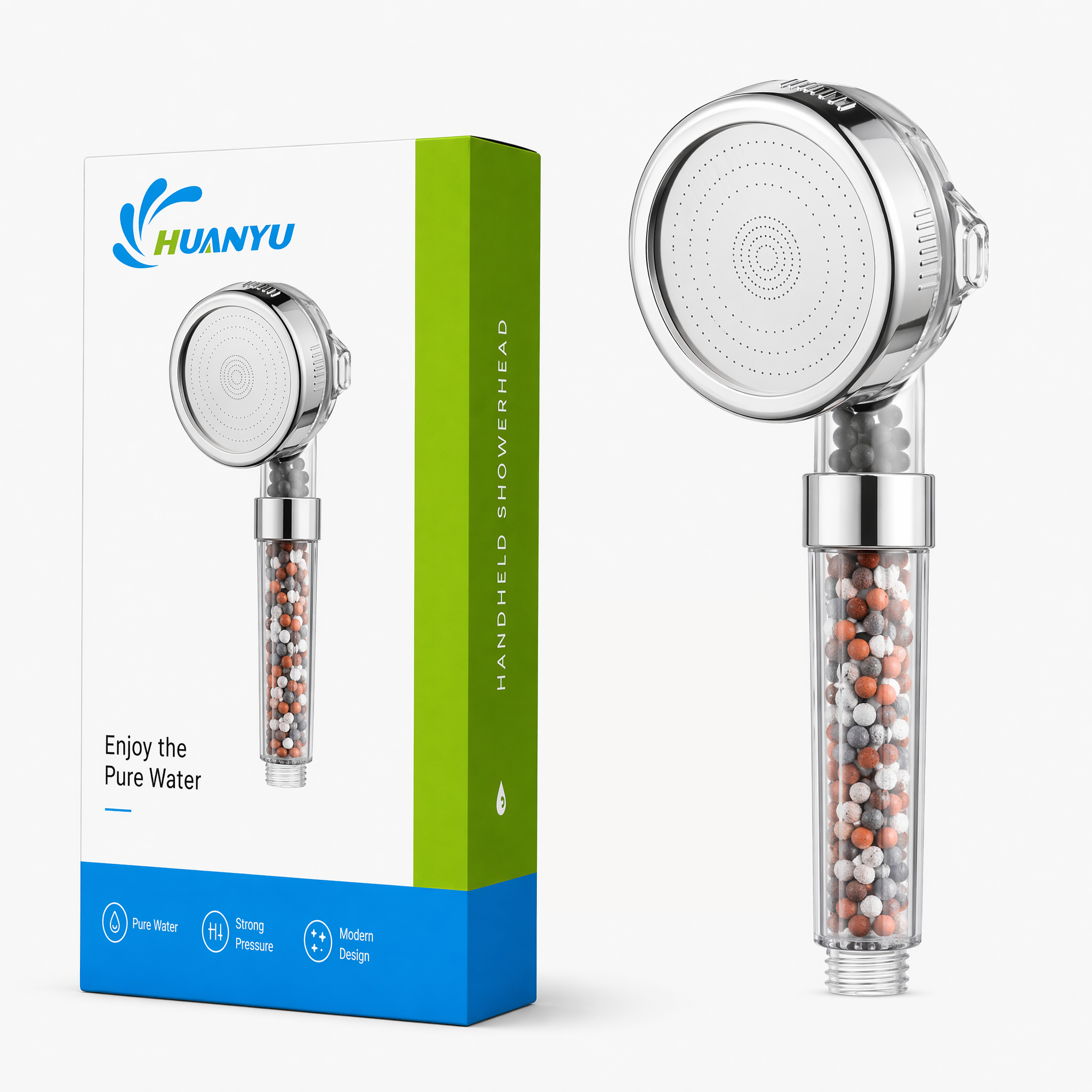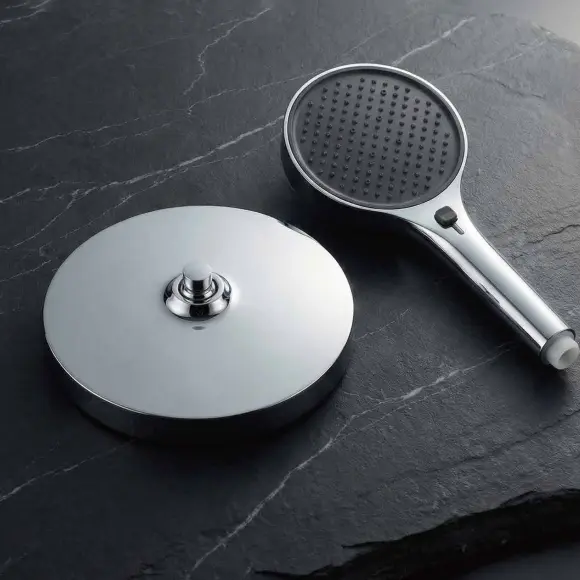

Are shower heads universal? The thread may fit, but the system might not
Most replacements begin with a nominal 1/2-inch connection. That is useful, but it is not a complete fit check. Thread form, sealing washer, hose nut, holder shape and physical clearance can still stop an otherwise “universal” shower head from working.
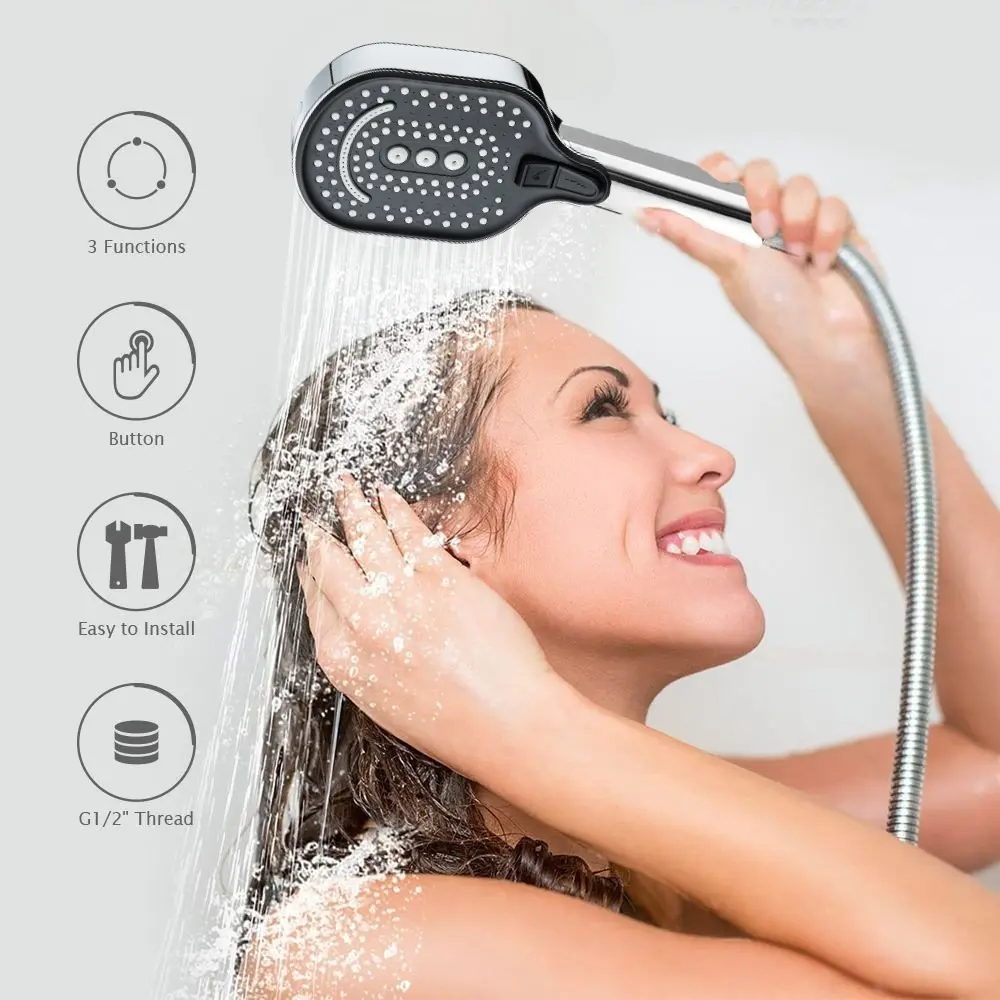
Most modern shower heads are standardized enough to replace, but they are not universal in every situation. Confirm the connection standard, where the joint seals, hose and holder geometry, available clearance and destination-market requirements before buying.
Search results usually answer this question in one sentence: most shower heads use a 1/2-inch connection. That answer is broadly helpful. It explains why many fixed heads can be unscrewed from a wall arm and replaced without changing the plumbing.
It can also create the wrong expectation. A fixed head has one obvious joint. A handheld shower may have a wall outlet, diverter, hose, two sealing washers, a hand shower and a holder. A rain head adds arm length, weight and ceiling or wall clearance. One fitting can match while another part of the system does not.
From a factory perspective, we do not approve compatibility from the words “half inch” alone. We ask which joint is being connected, what thread standard is specified, and what surface creates the seal. That three-part check prevents most avoidable fit mistakes.
SERP finding
The one-line answer is right, but incomplete
Across manufacturer articles, retailer guides, FAQs, videos and community discussions on the first Google results page, the common advice is consistent: modern fittings are usually nominally 1/2 inch, conventional replacement is often simple, and older or proprietary systems may need an adapter.
The weak point is scope. Most answers discuss the shower arm and head, then stop. They rarely separate NPT from G1/2 or BSPP, explain when a washer makes the seal, or check whether a handheld shower sits securely in the existing holder. They also tend to treat mechanical connection as proof of good performance.
This guide closes those gaps. Instead of asking whether the product is universal, identify each joint and decide what must match at that joint.
A handheld shower is a chain, not one fitting
Start at the water supply and follow the parts in order. If every connection is known, compatibility becomes a practical check rather than a guess.
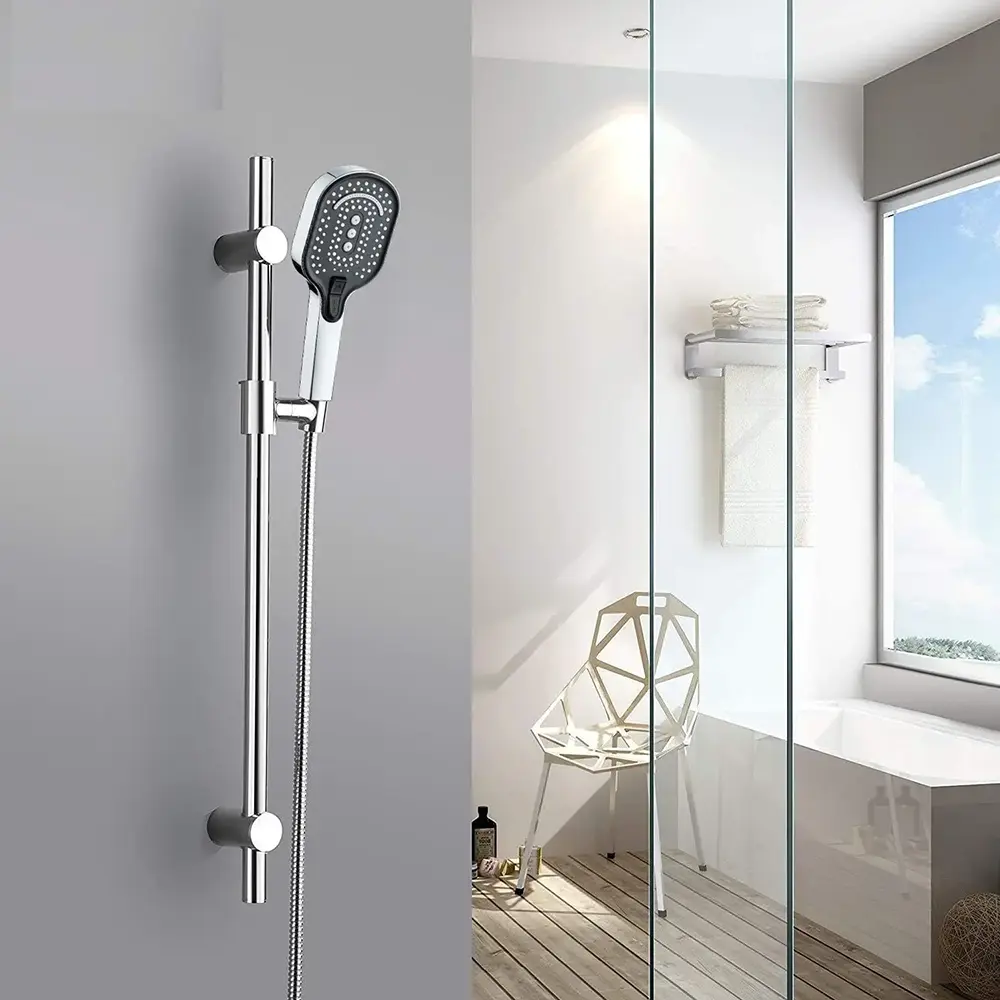
The holder does not carry water, but it still decides whether the handheld shower can be parked safely and at a useful angle.
What “universal” means at five common connections
The useful question is not “Is this shower head universal?” It is “Which interface should this product connect to?”
| Connection | Usually standardized? | What can fail | Check before buying |
|---|---|---|---|
| Fixed head → wall arm | Often | Different thread standard, old arm, proprietary joint or damaged threads | Arm thread specification, joint condition and required sealing method |
| Hand shower → hose | Often | Wrong thread, missing washer, shallow nut or proprietary quick-connect | Thread label, washer seat and nut depth |
| Hose → outlet or diverter | Check | Outlet standard differs from hose, adapter is missing or diverter port is wrong | Both hose ends and the exact outlet port |
| Hand shower → holder | Check | Handle or conical hose nut is too wide, too narrow or held at a poor angle | Holder opening, handle profile, hose-nut taper and parking angle |
| Rain head → extension arm | Check | Thread fits but arm length, head weight, rotation or ceiling clearance does not | Thread, support, diameter, swivel range and finished height |
Why “1/2 inch” is not the full thread specification
One-half inch is a nominal plumbing size. It is not a direct measurement of the thread's outside diameter. A ruler reading that looks larger than half an inch does not automatically mean the part is wrong.
Common North American pipe reference
NPT is a tapered pipe-thread system. Many North American shower arms and installation guides use 1/2-inch NPT terminology.
Common straight shower interface
G1/2 is a parallel BSPP designation used on many hoses and handheld showers, including Huanyu BHS11010 and BHS11001.
A family, not one loose synonym
UK shower guidance commonly refers to 1/2-inch BSP. Confirm whether the product documentation specifies a parallel or tapered form and how the joint seals.
Factory rule: never force two threads because they start for one turn. NPT and G1/2/BSPP can appear close to an untrained eye, but their geometry and sealing approach are not the same. Use a specified adapter when the two sides differ.
The thread holds the parts together; the seal may be somewhere else
Many leaks blamed on “incompatible threads” are really sealing errors. Before adding tape, find the surface designed to stop the water.
Tapered pipe-thread joint
The male and female threads tighten progressively. Follow the product instructions for the approved thread sealant and assembly method. Do not assume the same treatment applies to every hose joint.
Straight hose or hand-shower joint
The nut commonly compresses a flat washer or gasket against a flat seat. If that washer is missing, folded or hardened, wrapping the outside threads may not repair the real sealing surface.
How to identify an unknown connection without guessing
Do not identify a thread from one outside-diameter measurement. Nominal pipe sizes do not equal the measured outside diameter, and two thread systems can be close enough to start but not close enough to seal or carry load correctly.
Look for a model number, installation sheet, stamped marking or product page. A written callout such as G1/2 or 1/2 NPT is stronger evidence than a visual comparison.
Record which part has external threads and which has internal threads. Also note whether the end face contains a flat washer seat, an O-ring groove or no separate sealing surface.
Use a caliper for the major diameter and a thread-pitch gauge for thread spacing. Compare both measurements with a reliable thread chart; diameter alone is not a thread identification.
Measure near the first and later threads, or use the correct gauge. A visible change in diameter suggests a tapered form, but documentation or a gauge should make the final call.
A correct clean connection should engage without a wrench at the start. If it binds, rocks or crosses after a partial turn, stop. Do not use tool force as a compatibility test.
For a one-off home replacement, a plumbing supplier can often identify the removed part. For production or retail programs, use controlled drawings, gauges and approved samples. A photo is excellent for screening, but it should not replace dimensional approval for a volume order.
Take these six photos before ordering a replacement
A clear photo set is more useful than saying “standard size.” Place a ruler beside the part when scale matters, but keep the thread visible.
Exposed wall connection
Photograph the shower arm or wall outlet after removing the old part. Show whether the thread is male or female.
Both ends of the hose
Capture each nut face and side profile. The two ends may look similar while serving different joints.
Washer inside each nut
Show the washer, gasket or O-ring and the flat seat it contacts. A missing washer changes the diagnosis.
Holder opening and angle
Include the conical hose end if it supports the hand shower. Measure the narrow and wide ends of the holder.
Installed clearance
Show nearby walls, shelves, controls and ceiling. Add the old head's face size for a useful comparison.
Label or manual
Photograph the model number, thread callout and target market. These are stronger evidence than appearance alone.
Check what the word “shower head” includes
Compatibility questions often begin before the thread check because sellers use the same product name for different package scopes. A head-only listing may contain no hose, washer, holder, wall outlet or diverter. A handheld set may include some of those parts but still rely on the buyer's existing valve and supply connection.
Read the component list line by line. If you are converting a fixed head to a handheld shower, the hand shower itself cannot connect directly to a fixed shower arm without the required hose and outlet or diverter arrangement. If you want to keep both outlets, confirm the diverter type and port connections as part of the system.
Our preference for a new retail program is to define the interface at every package boundary. List the included washers and adapters, identify the thread at both hose ends, and show which holder geometry was tested with the hand shower. That prevents “universal” from becoming a substitute for an actual bill of materials.
Two Huanyu products show what a real compatibility claim should contain
Both examples use a G1/2 bottom interface, yet their heads and control layouts are different. The shared thread helps with hose connection. It does not make face shape, holder fit or user preference irrelevant.
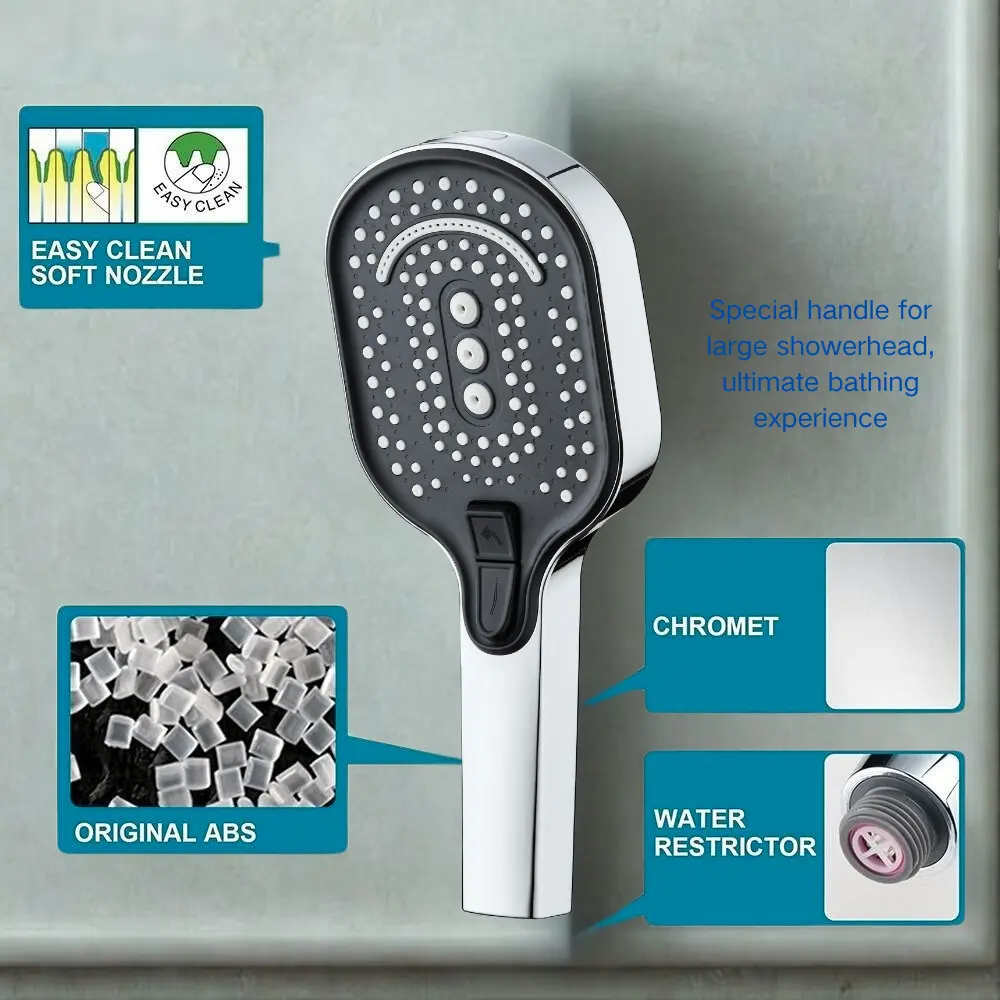
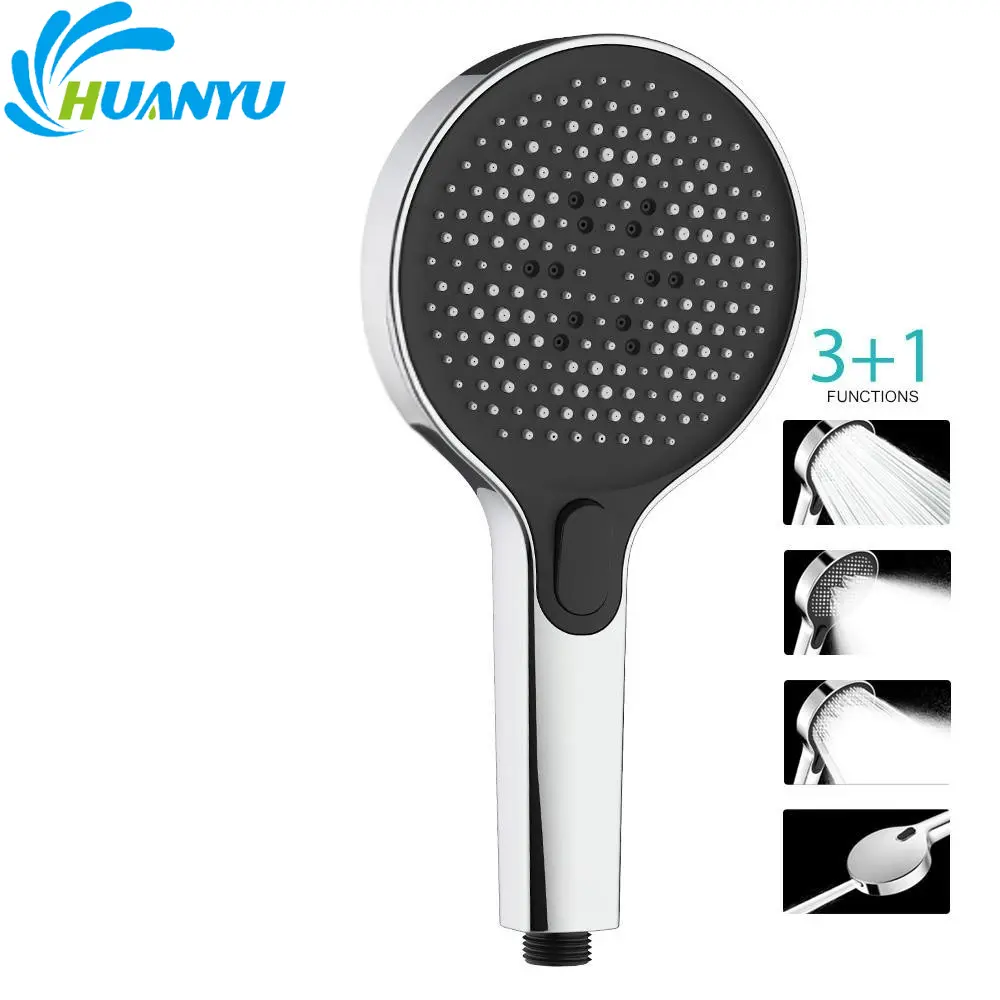
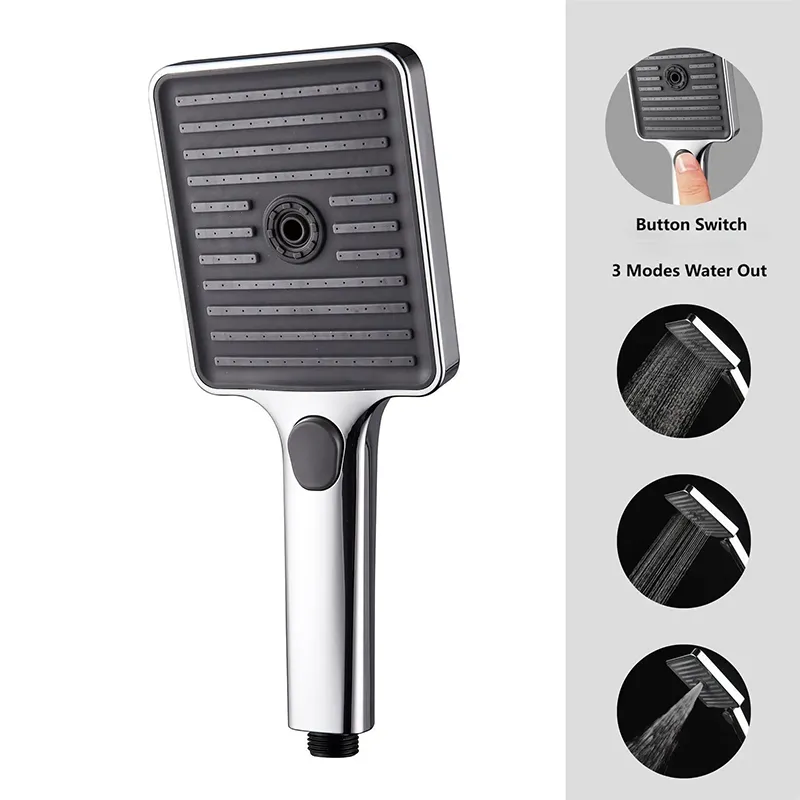
BHS11010 button-control hand shower
The product page identifies a standard G1/2 threaded interface at the bottom and describes compatibility with the vast majority of shower hoses. The specification also identifies a 140 mm ABS body with a chrome finish and button control.
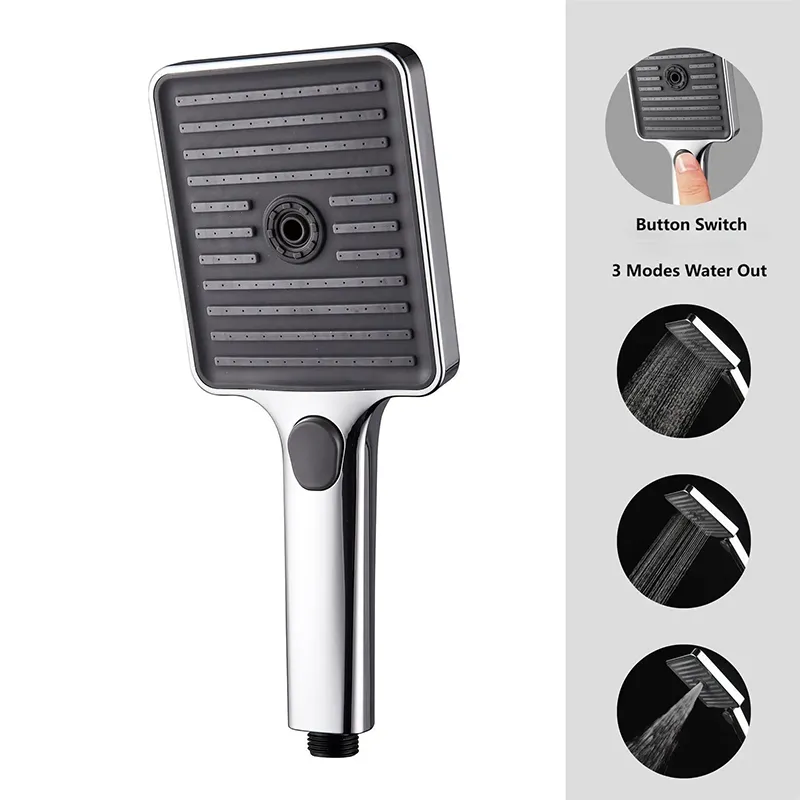
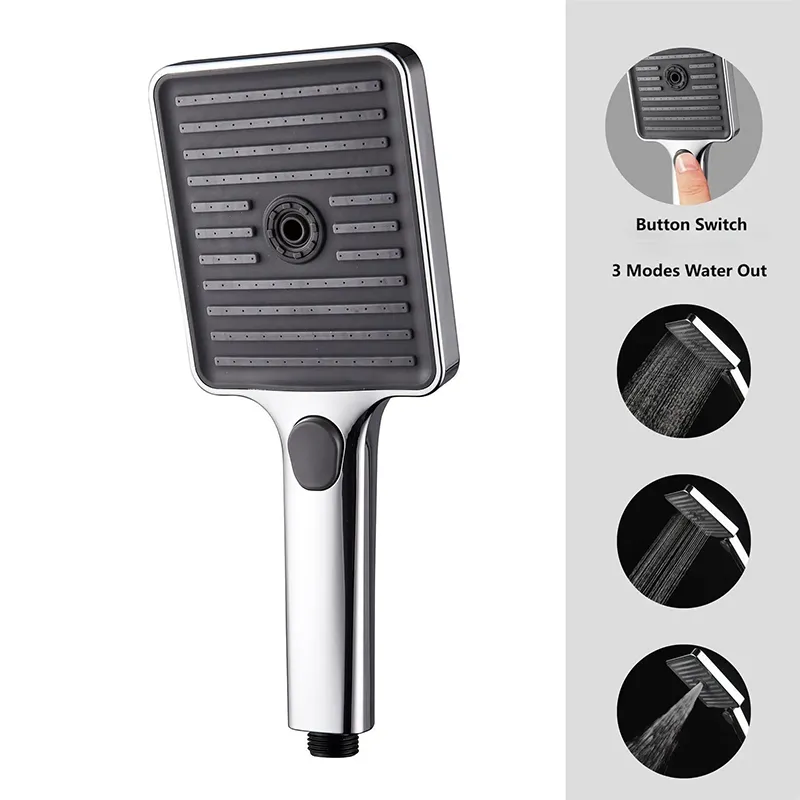
BHS11001 square hand shower
This model also specifies a standard G1/2 external thread at the bottom and compatibility with the vast majority of shower hoses and faucets. Its 140 mm square face and handle profile create a different physical package from BHS11010.
Four ways a connected shower head can still be the wrong fit
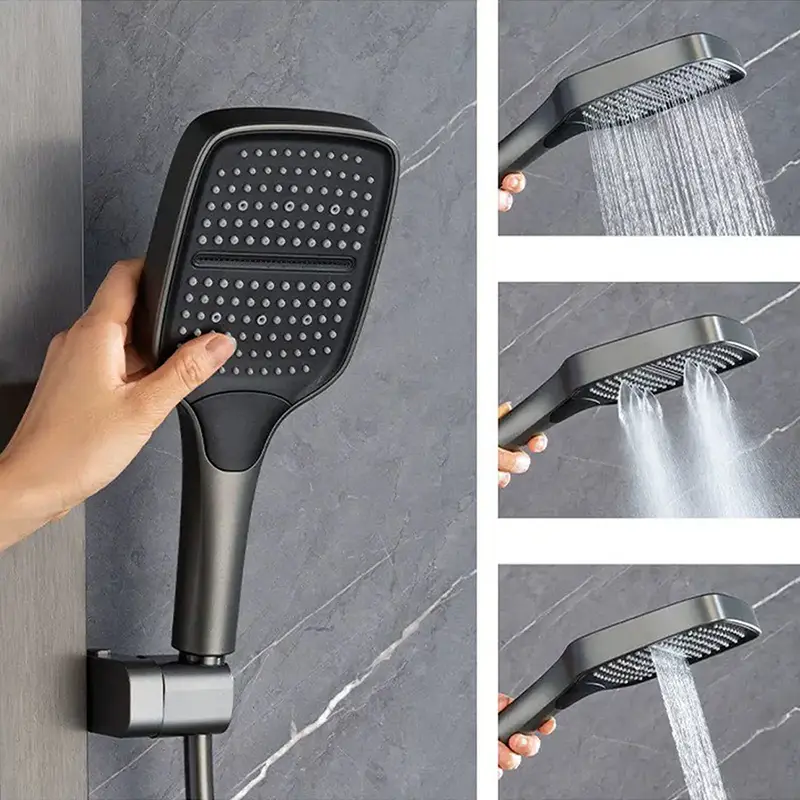
The handle may be too slim, too wide or the wrong taper. Sometimes the holder supports the conical hose nut rather than the hand-shower handle.
A larger round or square face needs room to rotate and park. Check the distance from the holder centerline to nearby surfaces.
A connection can be watertight while the hose nut presses against a shelf, valve or holder. Repeated tight bending can shorten hose life.
Button and selector access matters in a holder. Confirm the parked angle if the user changes modes while the hand shower is mounted.
Mechanical fit is not performance approval
A shower head can connect without leaking and still deliver an unsuitable result. Available pressure, flow-control components, spray plate design and local market requirements affect the experience.
Huanyu's equipment page describes sealing and pressure testing that simulates 0.3–1.0 MPa, together with equipment for flow, noise and spray-uniformity checks. Those checks answer different questions from thread fit. We treat interface verification and performance verification as two separate gates.
For a replacement at home, check the product's stated operating conditions and local rules. For a commercial range, test the exact model and configuration intended for the destination market.
Use an adapter, replace the set, or call a plumber?
Choose this when both thread standards are known, the adapter is intended for that conversion, and the resulting assembly has enough support and clearance.
This is often cleaner when the old hose uses a proprietary quick-connect, the washers are unavailable, or the new hand shower will not park securely.
Get professional help if the shower arm moves inside the wall, threads are cracked or heavily corroded, the valve keeps passing water, or the change involves concealed plumbing.
For retail or private-label programs, send interface drawings, target-market requirements, hose and holder dimensions, pressure conditions and the complete bill of materials. Confirm the assembled set, not an isolated head.
Frequently asked questions
Will any shower head fit my existing shower arm?
Many modern fixed shower heads fit a conventional nominal 1/2-inch shower arm, but not every product is interchangeable. Confirm the arm's thread standard, condition, sealing instructions, available clearance and whether the old system uses a proprietary connection.
Are all handheld shower hoses the same size?
Many handheld shower hoses use G1/2 or another nominal 1/2-inch connection, but the ends, nut depth, washer seat and proprietary quick-connect designs can differ. Check both hose ends rather than assuming the hose is universal.
Is G1/2 the same as 1/2-inch NPT?
No. G1/2 is a parallel BSPP thread designation, while 1/2-inch NPT is tapered. They may look similar, but their geometry and sealing methods differ. Use product documentation and the correct specified adapter instead of forcing them together.
Do I need thread tape when replacing a handheld shower head?
Not always. A straight-thread connection between a hose and hand shower commonly seals with a flat washer inside the hose nut. Follow the manufacturer's instructions. Tape cannot replace a missing or damaged washer at a washer-sealed joint.
How can I check compatibility before ordering?
Identify every connection in the system, photograph the exposed threads, both hose ends, washers and holder, then record the old model, target market and available clearance. For a volume order, provide drawings and test the complete assembled configuration.