
By Ningbo Huanyu Sanitary Ware Co., Ltd.
Shower head flow control changes how much water passes through the head; spray settings change how that water leaves the outlets. One control can also change both together, so a stronger-feeling spray does not by itself prove that water use has increased. Choose by identifying what the control changes, then comparing the resulting coverage and rinse at the setting you will use.
- Separate water volume, spray distribution and temporary pause.
- Check whether a slider adjusts flow independently or blends different outlet zones.
- Record collected flow and active spray areas separately.
- Judge water use over the complete rinse, including how long the water runs.
1. What do shower head settings actually change?
Start with the result of an adjustment, rather than the shape of the control. A button may select a spray, pause the water or move a mechanism through a continuous range. A dial can perform more than one of those jobs too. The visible control is an interface; its water response tells you what function you have selected.
Flow rate measures the amount of water
Flow rate is volume delivered per unit of time, commonly expressed as liters per minute (L/min) or US gallons per minute (GPM). It does not describe where the water lands. A rated flow figure also differs from a measurement at your chosen position, with your hose, mixer and supply conditions.
A spray setting changes the distribution
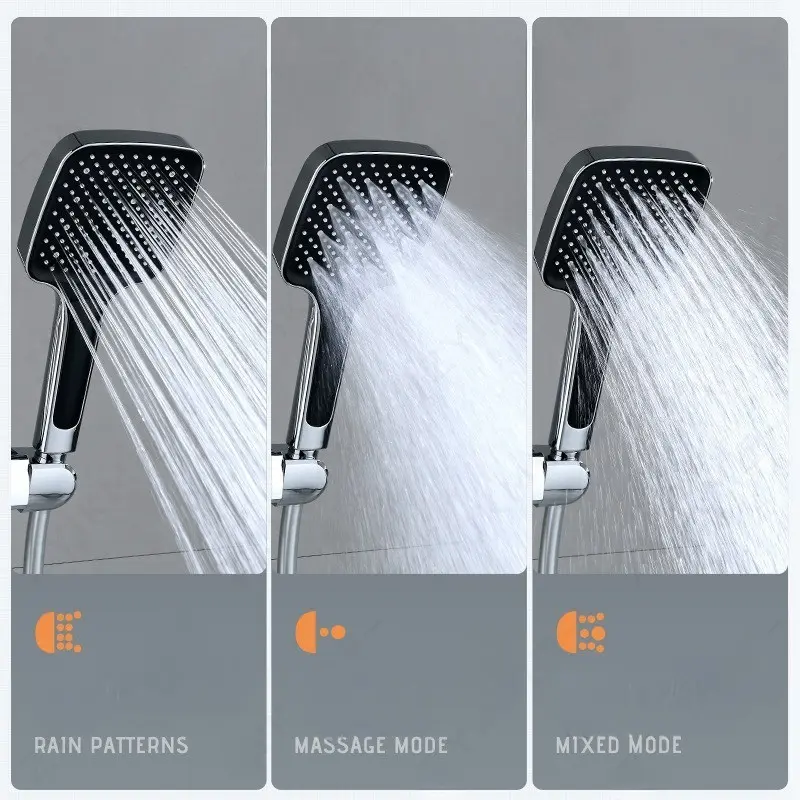
Rain, jet and mist describe different ways of delivering water. A selector may direct water toward a broad outlet area, a concentrated group or a combination. Two settings can feel different even when their collected flow is similar. Conversely, a change of mode can alter both the distribution and the total flow.
| Function | Main question | What to observe | What it does not establish |
|---|---|---|---|
| Flow adjustment | How much water passes through? | Collected volume over a measured time | Coverage or rinse quality by itself |
| Spray selection | Where and how does it leave? | Active outlets, direction and distribution | A particular water-saving percentage |
| Pause | What happens during a temporary interruption? | The intended remaining flow and restart behavior | The normal working flow or a replacement for the main shutoff |
Pause is an operating state
Some showerhead settings include a reduced-flow pause. Treat it separately from the patterns used for rinsing. Follow the equipment's instructions, check the water temperature before resuming contact and close the main faucet after use. For the differences between rain, pulse, jet and mixed patterns, use our shower spray settings guide; the decision here is which variable you want to change.
2. What kind of flow control does your shower actually have?
The phrase shower head flow controller can refer to a fixed component, a pressure-responsive regulator or a control you operate. Those devices solve different problems. Establish which one a specification describes before comparing its benefits with a spray selector.
Fixed restriction and pressure compensation
A fixed restriction limits the passage available for water. It does not actively respond to changing supply conditions in the way a pressure-compensating device does. A regulator designed for pressure compensation responds to incoming pressure changes to control flow within its intended operating range. Neither description means that the component raises the building's supply pressure or controls water temperature.
Matching matters. In WaterSense at Work, Section 3.4, EPA cautions that retrofitting inefficient showerheads with flow-control inserts can give inadequate performance in some facilities. That is a reason to evaluate the combination, not a claim that every restrictor or retrofit performs poorly.
User adjustment is another function
A manual volume control lets the user vary the water delivered. A spray selector changes the selected outlet arrangement. A continuously moving selector can also blend water paths as it travels. These functions can coexist in one head, so the useful comparison is not simply adjustable versus non-adjustable.
| Arrangement | What it responds to | What to establish |
|---|---|---|
| Fixed restriction | A fixed passage in the water path | Whether the complete head performs usefully at the resulting flow |
| Pressure compensation | Changes in incoming pressure | The specified operating conditions and flow response |
| Independent manual flow adjustment | The user's volume-control action | Whether the desired pattern remains useful as flow changes |
| Spray selection or continuous distribution | The user's choice of outlet path or blend | Whether active zones and total flow change together |
Our stepless hand shower range belongs in this discussion because continuous operation needs a closer description than a mode count. A single-function head can still include a flow-control component, while a multi-function head may only offer preset spray choices. Function count and flow-adjustment capability are separate specifications.
3. A slider can change the spray, the flow or both
If you want to keep a preferred pattern and use a little less water, look for independent volume adjustment. If you want to move from broad coverage to a concentrated rinse, you need a change in distribution. A slider that blends water paths may satisfy the second need without behaving like a separate volume valve.
What the Huanyu examples show
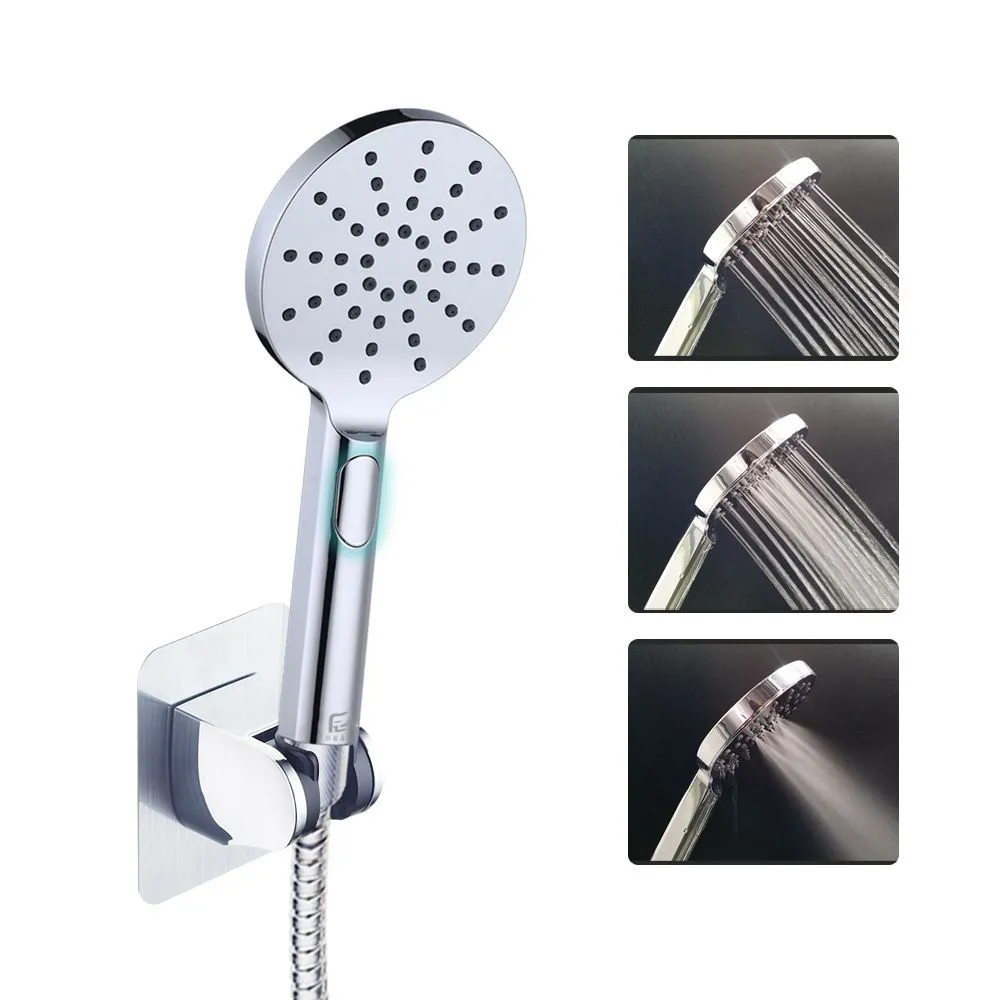
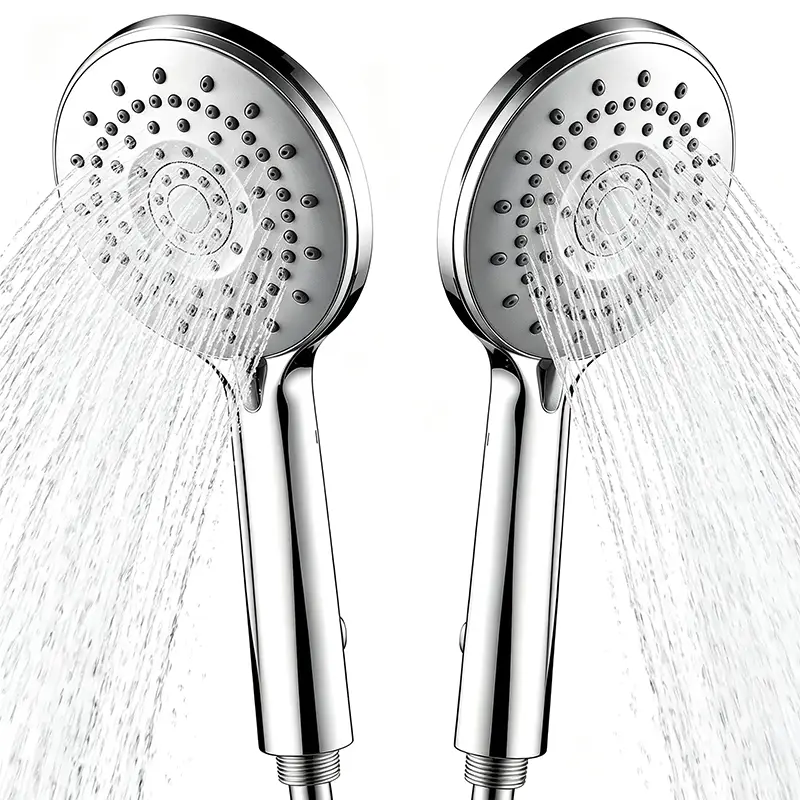
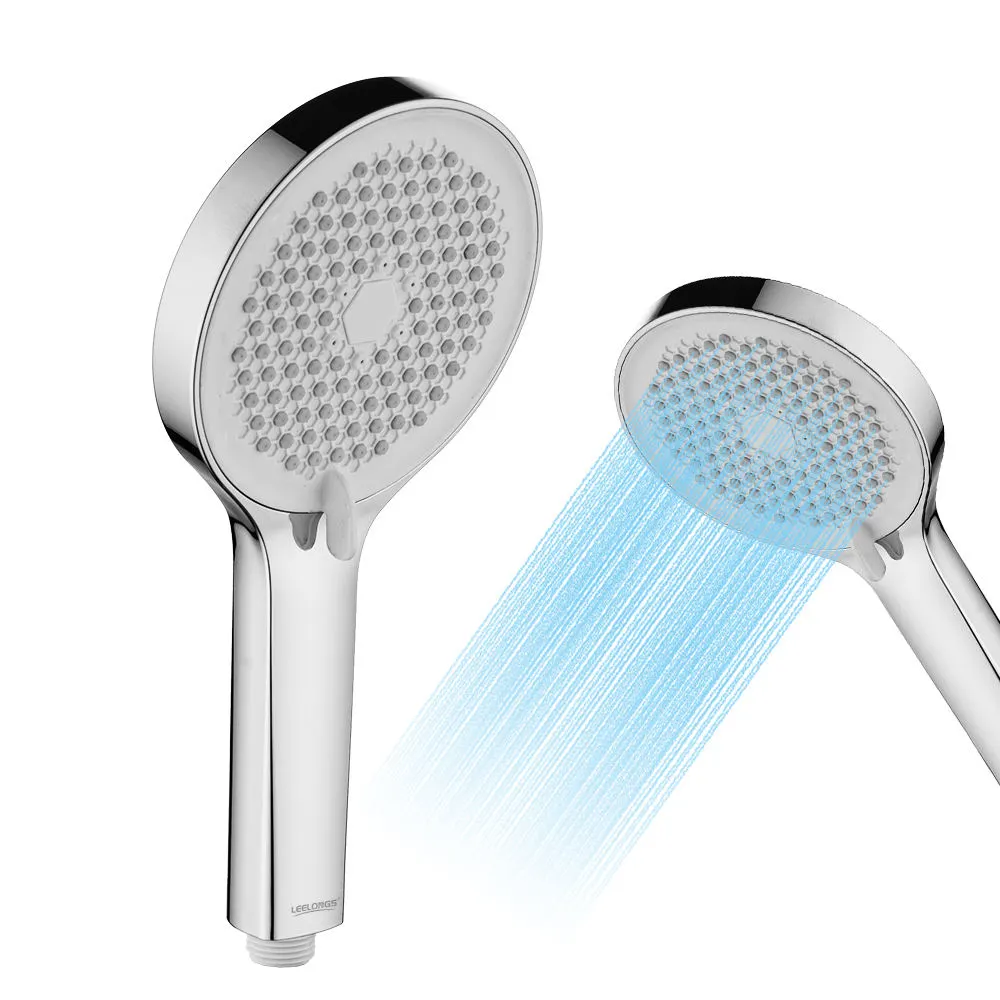
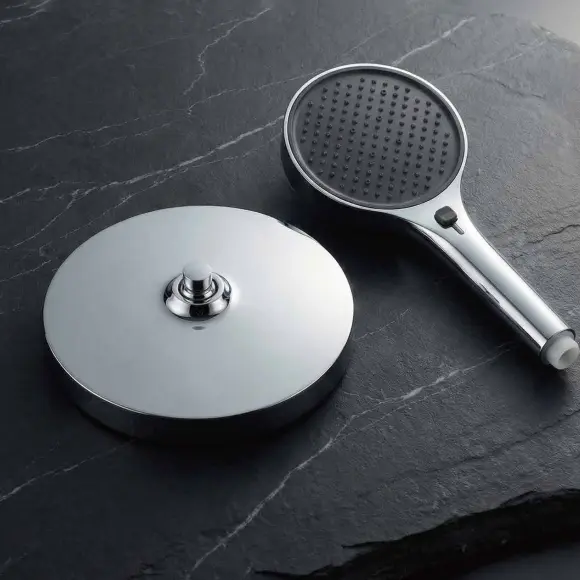
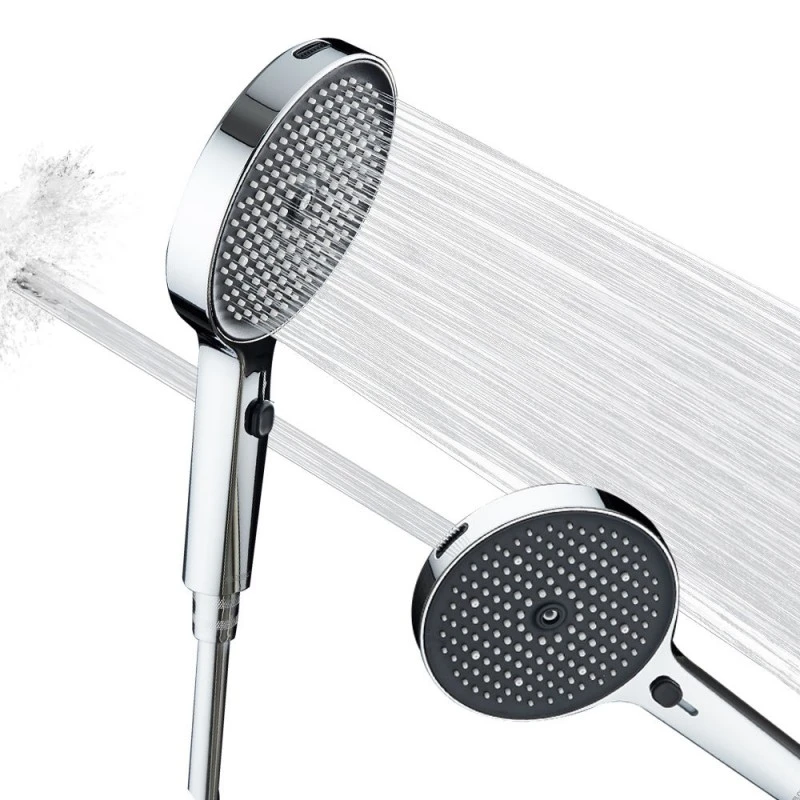
The SFC-HS0107 product description identifies a 140 mm ABS handset with a chrome surface and handle-operated sliding adjustment. It describes continuous changes in water form and intensity. That makes the relationship between the control position and the resulting spray worth checking, rather than assuming that every movement only turns the same spray up or down.
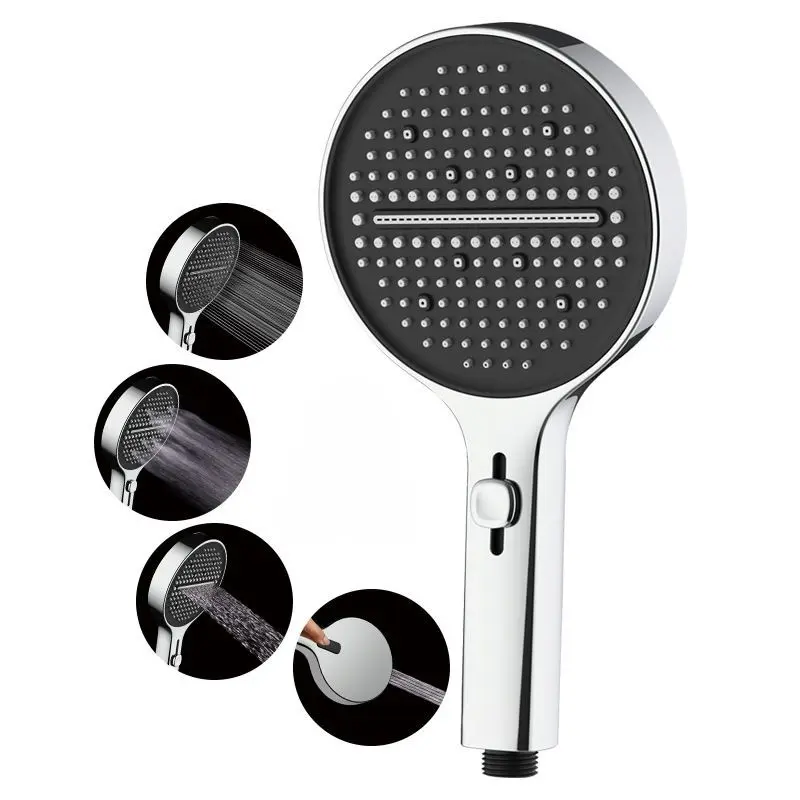
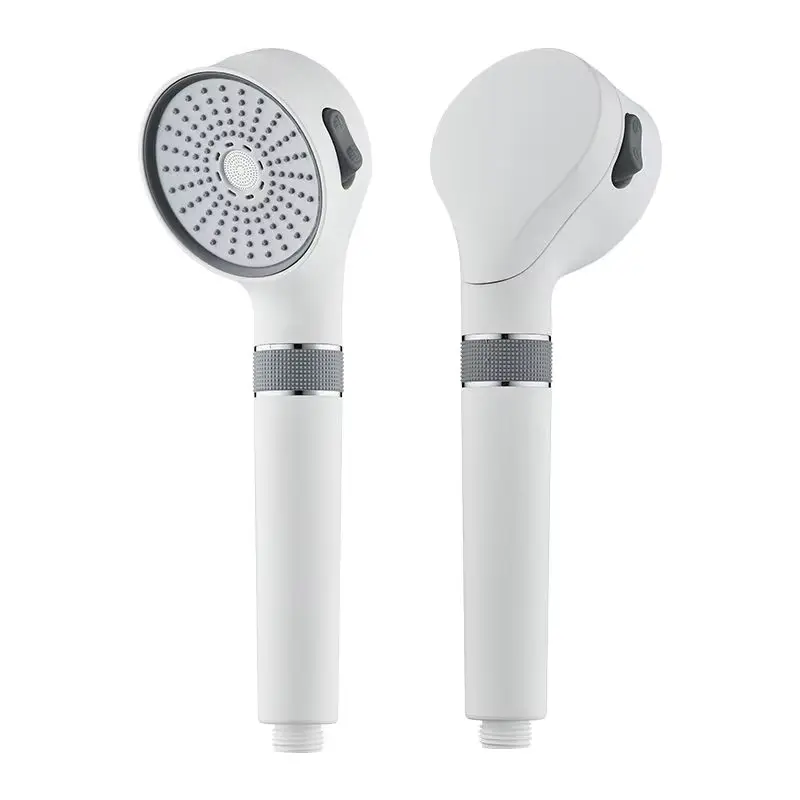
The SFC-HS0001 describes a mechanical stepless switching mechanism and a change from indexed steps to linear sliding. Linear sliding describes the control movement; it does not establish a straight-line relationship between travel and liters per minute.
Our factory view: judge the water response through the travel
When assessing a stepless hand shower, my first question is whether moving the control changes the amount of water or its distribution. On our SFC-HS0107, the sliding adjustment changes water form and intensity continuously. I would not treat every position as a separate flow level with an otherwise unchanged pattern.
If a reduced setting no longer rinses well, I recommend keeping the main valve setting and observation distance consistent, then recording collected flow and active outlets separately. If the amount is similar but the water shifts toward the outer area, assess coverage and rinse direction. If the amount also falls, decide whether that position still suits the task.
I prefer a control that makes a useful setting easy to find and return to. Smooth movement is only part of that judgment. A focused rinse for hair and the coverage needed for everyday washing give the adjustment a practical purpose.
4. Shower head flow rate vs pressure: why settings feel different
Flow rate answers how much water arrives over time. Supply pressure describes the pressure available to move water through the system. Spray force and coverage describe aspects of what the user receives. Using the word pressure for all three makes product comparisons needlessly confusing.
Focused water and broad coverage serve different tasks
A narrow rinse directs water toward a smaller target. A broad pattern distributes it across a wider area. Compare those patterns at a consistent distance: a strong sensation in one small spot is not evidence that the whole body receives better coverage, and a wide pattern is not automatically an efficient way to clear one patch of shampoo.
Nor is nozzle size a universal shortcut. The active outlet area, water path and supply conditions work together. A passive shower head shapes the available water delivery; it does not create additional building supply pressure. If the whole shower is weak, our shower pressure diagnostic guide addresses the upstream checks.
Why one performance number is not enough
EPA's showerhead performance guidance separates spray force, spray coverage and pressure compensation. That is a useful comparison framework: a flow figure alone cannot show whether the resulting spray suits the user.
The WaterSense Specification for Showerheads, Version 1.1, sets a rated maximum of 2.0 GPM and evaluates maximum flow at flowing pressures of 20, 45 and 80 psi. Those are conditions within that certification program, not measurements of the Huanyu products pictured here. A model's WaterSense status must be established for that model; the presence of a slider or a low-flow setting does not establish it.
5. How to control the flow without losing a useful spray
Use a short record of control position, collected flow and active outlets. This separates a change in amount from a change in pattern. It also gives a supplier more useful information than a description such as weak in the middle.
Keep the installation, main valve setting, comfortable water temperature and observation distance consistent. Avoid intentional changes at other water outlets during the comparison. An unchanged valve position does not prove that flowing inlet pressure stayed identical; record that pressure when suitable instrumentation is available. Follow the equipment instructions and stop if temperature becomes unstable.
Compare the settings on your shower head
-
Identify the controls
Use the product instructions to identify spray selection, flow adjustment and pause. Photograph the starting position. Do not assume that a slider provides independent volume control.
-
Choose a normal working position
Select the everyday rinse you want to assess. Keep the hose, holder and main valve setup unchanged during the comparison. Use water at a safe, comfortable temperature and keep the surrounding floor clear of spills.
-
Collect and time the water
Capture the complete spray in a container and measure the collection time and volume. Calculate L/min as collected liters multiplied by 60, divided by seconds. Repeat the collection if spray escaped or the supply changed.
-
Compare other intended positions
Repeat at clearly recorded positions within the control's intended travel. If the design changes the pattern and flow together, record both changes. Do not force it into a same-pattern comparison that its mechanism cannot provide.
-
Observe the outlets and useful coverage
At the same observation distance, record which outlet zones operate and whether water reaches the area needed for the rinse. Note unwanted spray direction or obvious unevenness. Keep these observations separate from the collected-flow figure.
-
Choose and record the useful setting
Select the position that completes your intended rinse comfortably, and check whether you can return to it. Assess pause separately according to the instructions. Close the main faucet after use and retain the position photo and observations for future comparison.
For a calculation example, collecting 2 liters in 15 seconds gives 2 × 60 ÷ 15 = 8 L/min. This illustrates the conversion, not a test result for either model. EPA describes timed collection in a known-volume container or flow bag in its showerhead operation and maintenance guidance. A home comparison is not a certification test.
Read the flow and pattern results together
If the collected amount stays close while the sensation changes, look at the active zone and the target area before concluding that the control has increased water use. If both flow and the active area change, evaluate the position as a combined setting. When one position feels unsuitable, compare its intended job with your task before treating the behavior as a defect.
A useful record includes the position photo, collection volume, elapsed time, calculated flow and active outlet area. Add what happened during the actual rinse. You can then distinguish insufficient delivery from water simply going somewhere less useful. Persistent temperature changes, leakage or abnormal operation call for an equipment check rather than a more forceful adjustment.
6. Choose the control for the job you need to do
Compare shower head options by the adjustment you expect to make. Keeping a broad everyday spray while trimming water delivery is a different request from switching to a narrow rinse for hair. A continuous selector may give useful intermediate patterns, but it is not automatically the right answer to both requests.
| Your task | What you need to change | What to compare |
|---|---|---|
| Keep a preferred spray, use less water | Amount while retaining useful distribution | Independent flow adjustment and coverage at the chosen reduced position |
| Direct a rinse at a small area | Active zone and direction | A focused pattern, useful reach and comfortable contact |
| Find an intermediate everyday spray | The balance between outlet zones | Whether the intermediate result is useful and easy to find again |
| Share the shower with different preferences | Repeatable access to each person's setting | Clear adjustment behavior in the holder as well as in the hand |
For a shared bathroom, a setting is more useful when the next person can understand and recover it. Continuous travel can help someone fine-tune a blend, while clear preset choices may suit someone who wants the same rinse every time. Compare the actual actions rather than assuming either arrangement is universally easier. Our push-button versus dial comparison covers operation in more detail.
A documented project: retain the design or choose a replacement
In a project involving a partner's batch-quality concern, we began with dimensional analysis of the existing mold and identified a structural defect. We then offered two routes: modify the mold to retain the design, or select a compatible replacement. The published Huanyu project record describes the options and their proposed schedules.
The mold route included CNC adjustments, trial samples and three rounds of quality validation, with an estimated 12 to 15 working days from confirmation to revised-batch delivery. For the faster replacement route, our team pre-screened three candidates against installation dimensions, flow rate and finish, with a proposed stock-shipment window of 3 to 5 working days. These were the offered routes and estimated schedules.
For a stepless product replacement, I would extend that comparison to the control's water response. Matching the connection and rated flow answers part of the selection question. You still need to establish whether the preferred spray state is easy to obtain and whether the replacement changes volume independently or changes the outlet distribution as well.
7. Does turning the flow down actually save water?
At the same running time, a lower measured flow uses less water. A complete shower comparison also needs the time spent at each setting. A flow control gives you an adjustment; the volume used depends on how you operate it throughout the routine.
Compare the complete rinse
Use flow multiplied by running time when flow is steady. If you change settings, calculate each stage separately and add the volumes. Include warm-up or other running periods when they are part of the comparison you want to make. Do not apply the lowest selectable flow to the whole shower if you only use it briefly.
Water used at steady flow = flow rate × running time.
Consider a hypothetical comparison: 8 L/min for 6 minutes uses 48 liters; 6 L/min for 8 minutes also uses 48 liters. The lower rate has a smaller per-minute demand, but the longer running time cancels that volume advantage. This does not predict that a lower-flow setting will make you shower longer. It shows why the time matters.
Find the setting that completes the task
If you want to retain a particular spray while reducing volume, first establish whether the control permits that adjustment. Then check that the reduced position still gives you useful coverage and a practical rinse. Measure the position you keep using, rather than the lowest position on the slider.
I would choose a setting that completes the intended rinse comfortably before chasing the smallest flow figure. That gives the adjustment a repeatable purpose. Use our shower water-use guide and calculator for a fuller routine calculation using your measured flow and running time.
8. Questions about shower head flow control and spray settings
Is a shower head flow controller the same as a flow restrictor?
Sometimes the names overlap, but they do not identify one universal mechanism. A fixed restrictor limits a water passage, a pressure-compensating regulator responds to supply changes, and a manual flow control lets the user make an adjustment. Identify which function the product provides before comparing it with a spray selector.
Do different showerhead settings use different amounts of water?
They can, but a different spray sensation does not prove a different flow rate. A setting may redirect a similar amount through another outlet group, or change both distribution and total flow. Compare collected volume over the same measured time under consistent conditions, then consider how long you use each setting.
Does a stepless slider adjust flow independently of the spray pattern?
Not necessarily. Stepless describes continuous adjustment rather than a series of fixed positions. The mechanism may vary volume, blend outlet paths or change both together. SFC-HS0107 describes continuous changes in water form and intensity, so do not assume that every position retains an identical pattern at a different flow.
Is a higher shower head flow rate the same as higher pressure?
No. Flow rate is volume per unit of time, while supply pressure is a different system condition. The spray's distribution and force also affect what you feel. Compare actual delivery and useful coverage; do not use a GPM figure alone as a score for shower comfort or rinsing performance.
Does a pause button replace a flow-adjustment control?
No. Pause provides a temporary interruption or reduced-flow state; flow adjustment selects a working delivery level. A head may include either or both. Follow the equipment instructions for remaining flow and resuming use, check the water temperature before contact, and close the main faucet when you finish.
Can an adjustable shower head fix low household water pressure?
An adjustable head can change the delivery pattern, but it cannot create building supply pressure. If several fixtures are weak, investigate the supply or shower system rather than expecting a new selector to fix it. If the problem affects only one head or mode, compare the local water path and maintenance condition.
Tell us what you want the control to change
Huanyu's published production and testing capabilities include sealing, pressure, water-flow and spray-uniformity checks. For a useful discussion about a stepless handset, send the spray you want to retain or change, your intended flow requirement, the available supply information and the installation arrangement.
Start with the SFC-HS0107 or SFC-HS0001 details, then compare a suitable sample by its control response. The useful question is whether each adjustment helps you obtain the rinse you need.
Contact Huanyu · Email: info@nbhuanyu.com · Phone: +86-13857806071