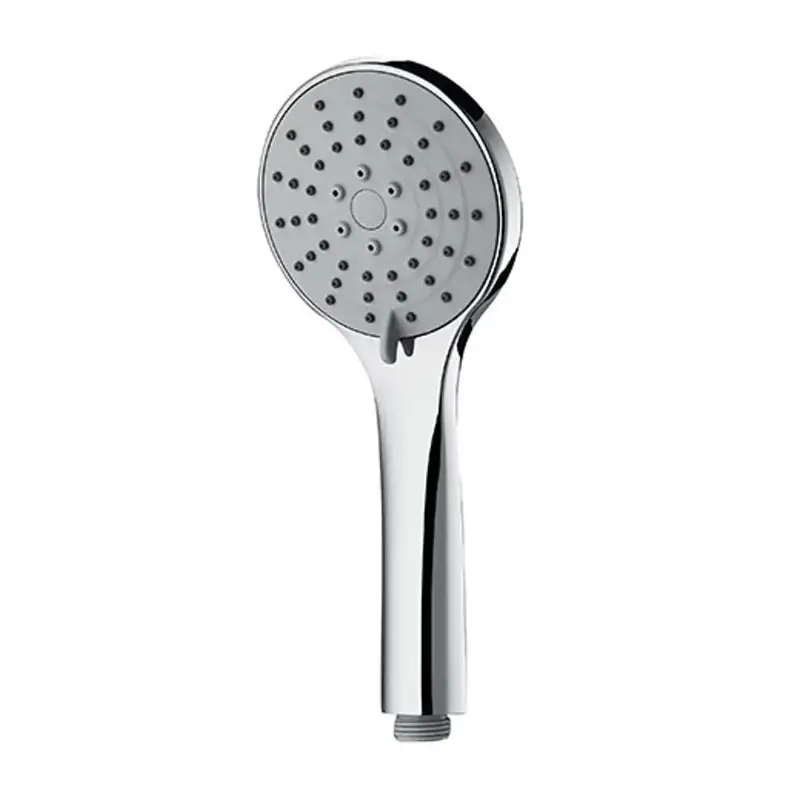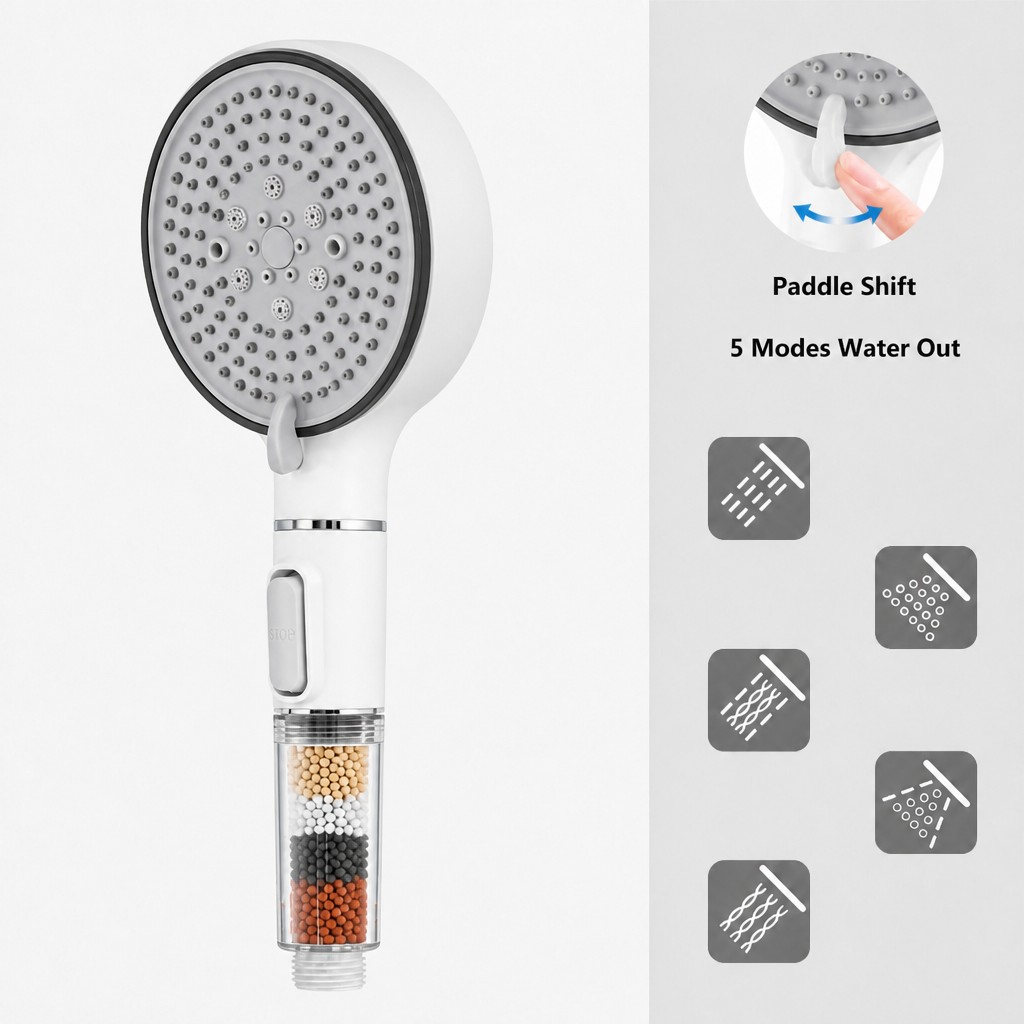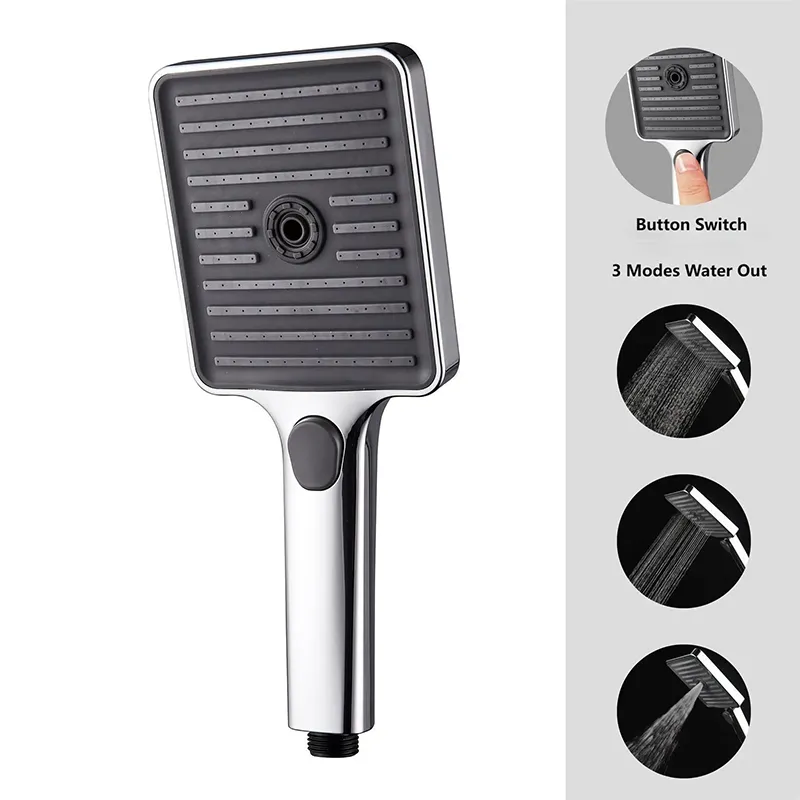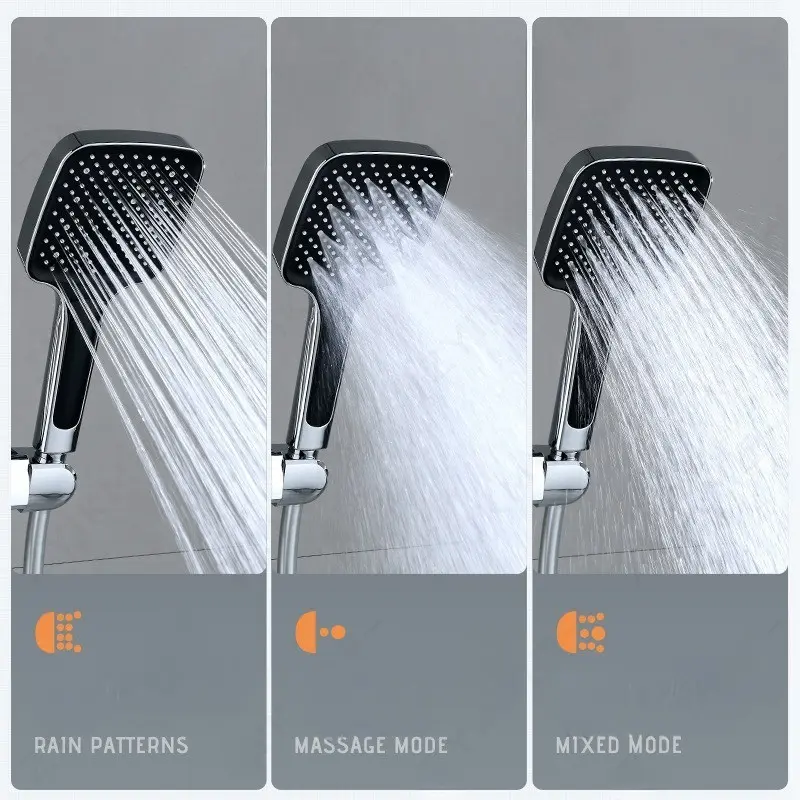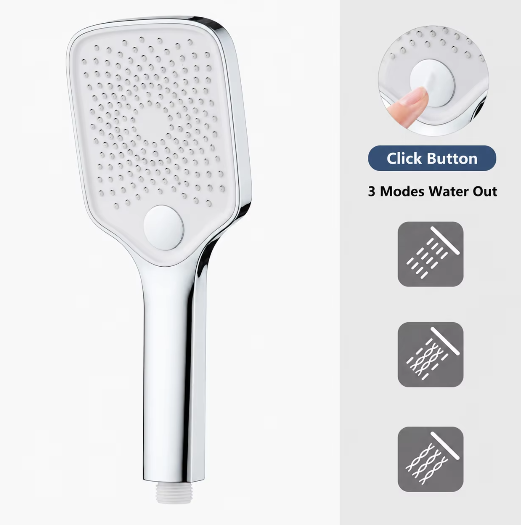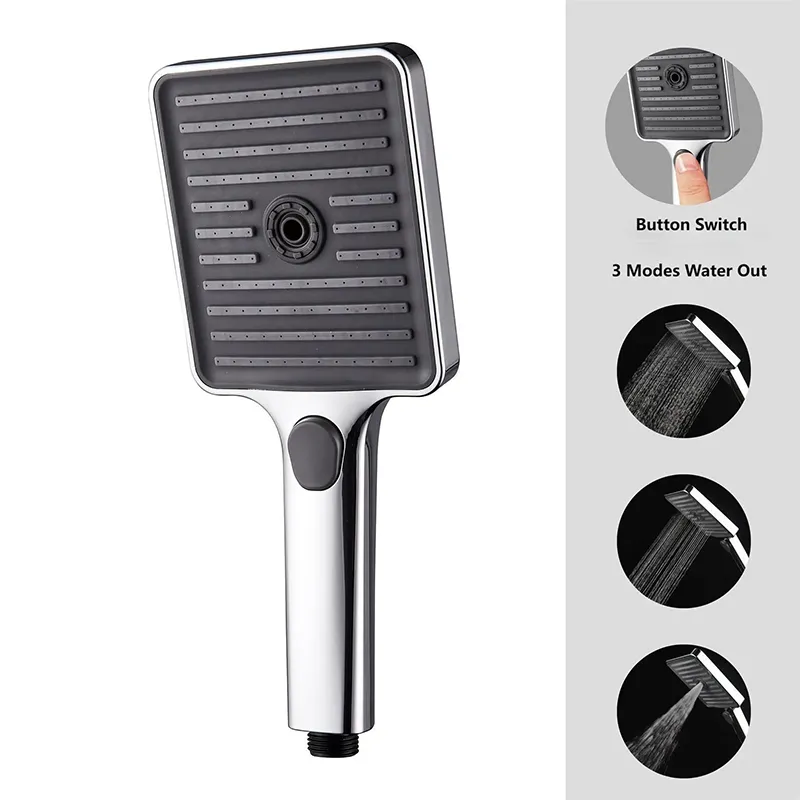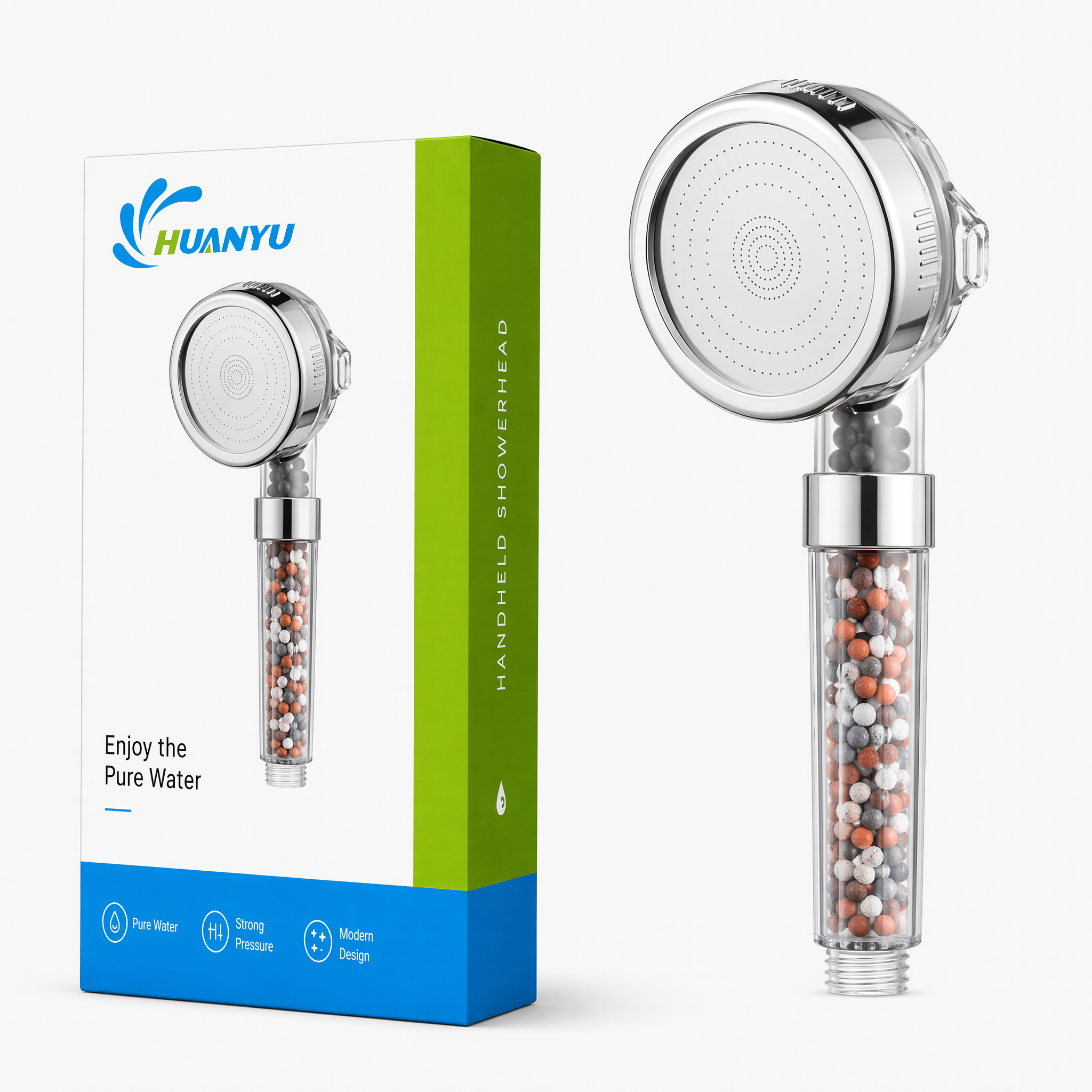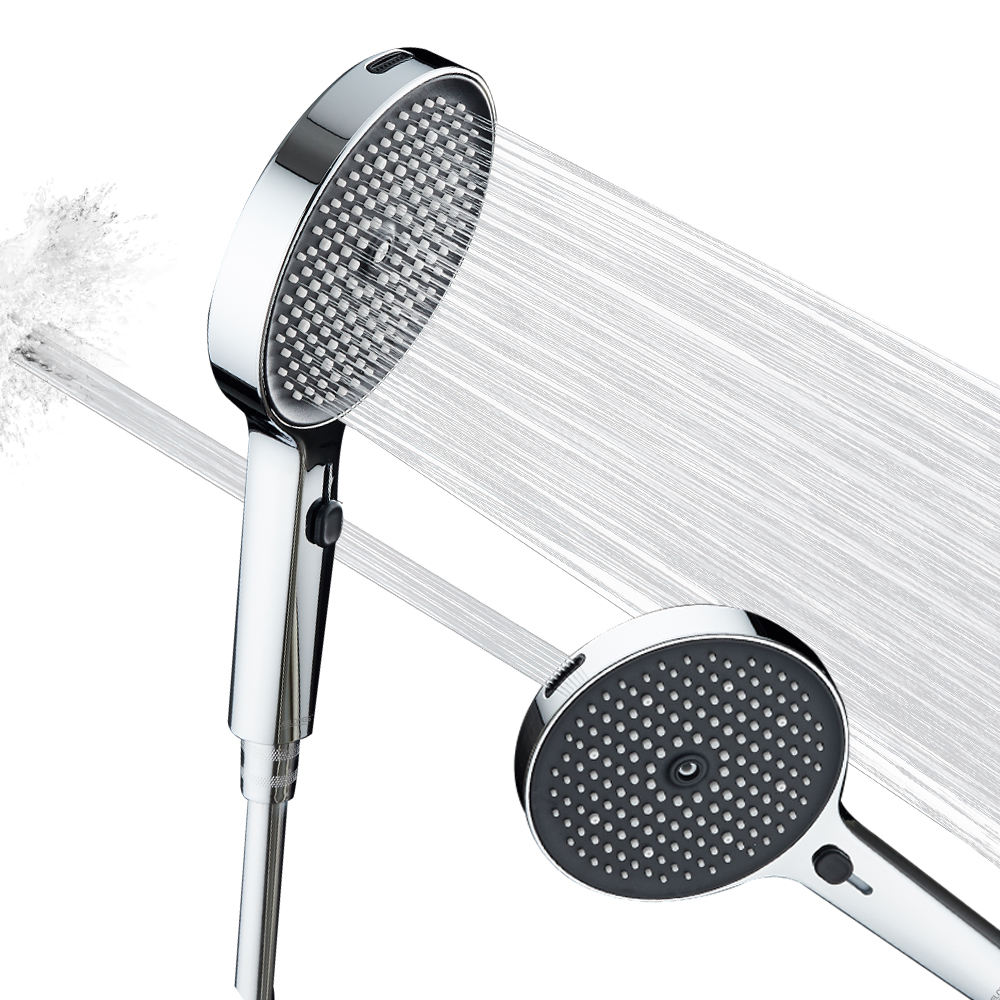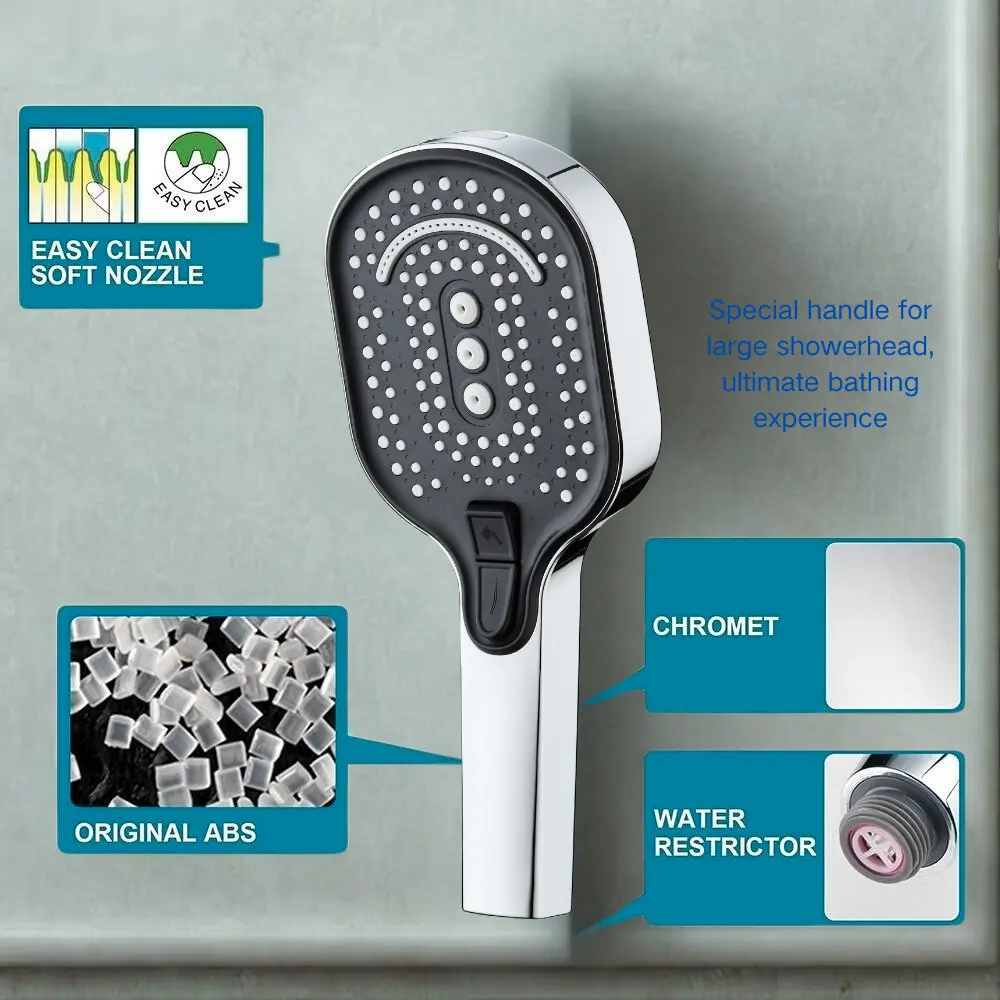

Choose easy-clean nozzles when your main concern is maintaining the spray outlets. Choose a filtered shower head when its cartridge addresses a specific water-treatment need. These features can work together: our FHS50001 combines a replaceable PP cotton filter with easy-clean silicone nozzles.
I would not pay for a cartridge to solve a problem that nozzle maintenance already addresses. Equally, I would not expect flexible nozzles to perform the job of a water filter. Start with the problem you can identify, then compare the relevant parts of the product.
- Self-cleaning describes nozzle maintenance; it does not automatically mean water filtration.
- Filtered shower head benefits depend on the cartridge and its supported treatment claims.
- Particles, dissolved hardness and disinfectants require different evidence.
- A combination model still needs both nozzle care and cartridge maintenance.
- Compare replacement supplies and operating costs before approving a product range.
1. Self-cleaning vs filtered: compare the job, not the label
A self-cleaning shower head and a filtered shower head are not necessarily alternatives. One description concerns the outlets where water leaves the spray face. The other concerns a treatment stage through which the water passes. Comparing them as basic and premium versions hides that distinction.
| Question | Easy-clean nozzle feature | Filter feature |
|---|---|---|
| Where does it act? | At the spray outlets. | At a cartridge or other treatment stage in the water path. |
| What do you evaluate? | Access to the nozzles and the permitted cleaning method. | The treatment target, supporting evidence and replacement requirements. |
| What maintenance remains? | Nozzle cleaning according to the product instructions. | Cartridge maintenance plus any outlet cleaning the shower head needs. |
| What does the name not prove? | That the water is filtered or that deposits can never form. | That every contaminant or dissolved mineral is reduced. |
| Can both be fitted? | Yes. Huanyu FHS50001 is a published example of a filtered handset with easy-clean silicone nozzles. | |
For example, our FHS50001 product specification lists both features. Buying that configuration does not mean choosing filtration instead of nozzle maintenance. It means taking on two different maintenance tasks within one handset.
The practical question is therefore not which label wins. Ask whether you need easier outlet cleaning, a defined treatment function, or both. Keep that answer separate from appearance, spray modes and the number of layers described on the packaging.
2. What self-cleaning nozzles actually do
With an easy-clean silicone nozzle design, the useful feature is access to flexible outlets that can be maintained using the approved method. “Self-cleaning” should not be read as permission to ignore the spray face indefinitely.
Our EC-HS60007 is listed as a 110 mm ABS hand shower with silicone nozzles. Its product description explains cleaning the outlets by gentle rubbing. That is a concrete maintenance feature: the user can act at the point where deposits affect individual jets.

Judge the recovery of the affected outlets
If only a few jets have changed direction, I would observe those same outlets before and after permitted cleaning. A useful comparison keeps the hose, water supply and spray setting unchanged. Comparing a different mode after cleaning can make it difficult to tell what improved.
Do not turn that observation into a water-treatment claim. A restored spray pattern does not show that a cartridge has removed a dissolved substance. Likewise, a nozzle that remains blocked needs further attention rather than harder rubbing, a sharp probe or an improvised chemical soak.
For a hotel or rental property, I would make access and repeatability part of sample approval: can staff identify the affected outlet area and follow the same maintenance instructions? For a household, the simpler decision is whether nozzle care addresses the complaint before adding another component. Our self-cleaning shower head guide explains this feature in more detail.
3. Do filtered shower heads work? Match the benefits to the cartridge
Filtered shower heads can make a difference when their treatment function matches the problem. The word “filtered” alone does not establish what changes, by how much, or for how long. Start with the target, then read the specification and supporting evidence for that configuration.
Filtered shower head benefits are target-specific
Our FHS50001 description lists replaceable PP cotton filtration with a 5-micron particle specification. Read that number as a particle-related parameter, not a chlorine percentage or a measure of dissolved hardness. To compare a chemical-reduction claim, I would look for the target substance, incoming concentration, temperature, flow and the capacity or point in the cartridge's service interval. A result for a new cartridge under one condition cannot, on its own, describe the entire replacement interval.

| Your concern | Useful information to request | Insufficient on its own |
|---|---|---|
| Sediment or rust particles | Particle specification, cartridge identity and maintenance instructions. | A claim that the filter has many layers. |
| Free chlorine | A relevant reduction claim for the exact configuration, with flow, temperature and capacity conditions. | Nozzle material, cartridge color or a particle-size figure. |
| Chloramine | Evidence addressing chloramine specifically. | A free-chlorine result presented as covering both disinfectants. |
| Dissolved hardness | A stated hardness-reduction function and matching measurements. | A cleaner spray face or clearer-looking water. |
Read the scope of a standard, not just its number
NSF's water-treatment standards overview describes NSF/ANSI 177 shower filtration in terms of free available chlorine reduction. It also explains that certification does not mean reduction of every contaminant. A relevant standard is a way to check a particular claim, not a universal performance badge.
Free chlorine and chloramine also need separate attention. EPA explains that chloramines commonly form when ammonia is added to chlorine. Identify the disinfectant used by your utility before deciding which treatment evidence matters. EPA also states that chloraminated water meeting its regulatory standards is safe for bathing; the presence of a disinfectant is not, by itself, evidence that your shower water is unsafe.
My buying rule is to match the observation to the component: distorted individual jets make nozzle care the first task; a defined treatment target makes the cartridge relevant. A darker cartridge shows that its appearance changed, not which dissolved substance changed in the outlet water. Our filtered shower head guide covers the wider treatment options.
4. Do shower filters work for hard water? Why limescale can remain
A shower filter should not be assumed to reduce dissolved hardness simply because it captures particles. If you are comparing showerhead filters for hard water, ask what happens to dissolved calcium and magnesium, rather than treating all visible residue as the same problem.
USGS explains that hardness mainly concerns dissolved calcium and magnesium, and that heating hard water can produce calcium carbonate deposits. Capturing material already present as particles and changing the dissolved minerals that can later form deposits are different treatment tasks.
Use local hardness information
Read the local water report or obtain an appropriate measurement, keeping the reported unit. USGS expresses its hardness classifications in mg/L as calcium carbonate. It also warns that its national historical map is not designed for individual household decisions. A country, city or product label is not a measurement at your shower.
NSF's overview separately describes NSF/ANSI 44 softeners using cation exchange to reduce calcium and magnesium hardness. That is a distinct mechanism from the particle specification of a PP cotton cartridge.
Keep nozzle care in the plan
This distinction explains why a filtered shower head can still benefit from easy-clean outlets. Treatment upstream and cleaning at the face are not interchangeable. If your objective is lower hardness across several fixtures, investigate treatment intended for that job rather than expecting a handset label to settle it.
My recommendation is to give “hard-water performance” a specific acceptance question. Are you evaluating captured particles, the ability to clean outlets, or an actual change in measured hardness? Keeping those questions separate prevents a filter purchase from becoming an expensive answer to the wrong complaint.
5. Uneven spray or weak flow: which part needs attention?
Start with the pattern of the change. A handful of sideways jets and a uniformly weaker shower are different observations. Neither is a complete diagnosis, but the distinction helps you choose a sensible first check.
| Observation | First checks | What it does not establish |
|---|---|---|
| A few jets spray sideways | Observe that outlet area; follow the approved nozzle-cleaning instructions. | That the cartridge needs replacement or the handset is internally damaged. |
| All settings feel weaker | Check the supply, hose condition, inlet and cartridge maintenance status. | That nozzle deposits are the only restriction. |
| Spray improves after outlet cleaning | Record which jets changed and keep the other conditions constant. | That water hardness or disinfectant concentration changed. |
| Deposits return after maintenance | Review local water information, treatment targets and the maintenance schedule. | That a more expensive filter will automatically solve the problem. |
Before touching a cartridge or connection, stop the water and follow the product instructions. Do not assume that running the handset without its cartridge is an approved comparison. Avoid metal probes and unapproved cleaning chemicals; a check should not introduce damage that was absent at the start.
If cleaning the permitted area does not restore the affected jets, or the entire spray remains weak, record the unchanged symptom and seek model-specific support. Photographs of the spray face, a short video at the normal setting and the cartridge identification are more useful than describing the shower as “low pressure” without further detail.
For buyers comparing samples, also record whether the change follows a different hose, holder position or supply setting. Otherwise, it is easy to attribute a difference to filtration when more than one part of the setup changed.
6. Are filtered shower heads worth it? Compare maintenance and refill costs
A filtered shower head is worth considering when its supported treatment function addresses a need you actually have and its consumables fit your budget. If the only task is cleaning accessible outlets, a cartridge adds an ongoing commitment without automatically being the solution.
FHS50001's published maintenance guidance gives a typical PP filter interval of 3 to 6 months, depending on water quality and use. Its aroma cartridge has a separate stated interval of 2 to 3 months. Keep those supplies separate: changing a scent cartridge is not the same job as replacing a water-treatment cartridge.
Count included cartridges before counting replacements
Use the actual package contents and replacement schedule in your calculation. For a transparent planning example, assume one household starts with one installed cartridge, no spare and a fixed three-month change schedule. During the first 12 months, replacements fall at months 3, 6 and 9; the change at month 12 starts the next operating year.
At a six-month schedule, the same assumptions require one replacement within that first 12-month period.
Those counts are planning arithmetic, not a prediction of cartridge life. Included spares reduce the number you need to purchase, while actual maintenance instructions and usage can change the schedule. Aroma supplies, if used, belong on another line. Do not invent a saving by leaving recurring supplies out of one option.
Check supply continuity, not just cartridge visibility
A transparent handle window can help you observe the filter's appearance. It does not replace the maintenance instructions or verify every chemical-treatment claim. Before purchasing, identify the replacement part and how it is obtained. Retailers should make that information available with the handset, not only after the first replacement is due.
Our shower filter replacement guide covers the maintenance decision in more depth. For this comparison, the important difference is that easy-clean outlets require care, while a replaceable filter also requires a replenishment plan.
7. Our factory view: compare the water path and the maintenance path
I would not recommend a filtered shower head simply because a buyer reports blocked or uneven jets. My first question would be whether a few outlets are spraying sideways or the whole shower has become weaker. Replacing a cartridge without examining the outlet condition can leave the original problem unresolved.
EC-HS60007 gives us an easy-clean nozzle example. FHS50001 gives us a combination of replaceable filtration and easy-clean outlets. I would not compare their spray feel and attribute every difference to the filter: they are different handset designs, not a controlled before-and-after experiment.
How I would compare the maintenance requirements of two samples
Use each sample's instructions and record the same observations. The purpose is to understand the work each configuration requires, not to infer chemical treatment from spray appearance.
-
Record the configuration
Identify the handset model, spray setting, cartridge reference and supplied accessories. Keep optional aroma components separate from the water-treatment cartridge.
-
Establish the starting condition
Record the supply setting, hose and holder position. Observe the outlet face and note whether the change affects a few jets or the whole spray. Keep water temperature comfortable and safe.
-
Follow the permitted maintenance method
Stop the water before handling connections or a cartridge. Clean outlets or replace the matching cartridge only as the product instructions allow. Do not improvise disassembly or bypass components.
-
Repeat the observation
Restore the same supply, hose, position and spray setting. Record which outlets changed, whether the overall spray changed and whether any leakage appeared. If leakage occurs, stop the water and obtain support.
-
Approve the maintenance plan separately
Confirm the replacement part, permitted cleaning instructions and how future supplies will be obtained. Assess water-treatment claims from their matching evidence, not from the spray video or cartridge color.
My recommendation is to keep nozzle recovery, treatment performance and replacement convenience as separate approval items. A sample can be easy to clean yet lack the treatment function a buyer needs. Another can have a relevant filter but still require outlet care. Treating either observation as an overall score conceals the tradeoff.
8. Which option fits your home, hotel or retail range?
Choose the feature against the job, then decide whether the extra maintenance is acceptable. A home user may prioritize a simple cleaning routine. A hotel also needs a procedure staff can repeat. A retailer must explain both the product and its future consumables.
| Situation | What I would prioritize | Before approval |
|---|---|---|
| Home: outlet maintenance is the main concern | Accessible easy-clean nozzles, such as the feature shown on EC-HS60007. | Confirm the cleaning method and whether it addresses the observed symptom. |
| Home: a defined filtration need also exists | A matching treatment configuration, with outlet care retained. | Check the claim, cartridge identity and replacement route. |
| Hotel or rental operation | A repeatable maintenance procedure and appropriate consumables stock. | Separate nozzle checks, cartridge changes and optional aroma changes. |
| Retail or distributor range | Clear feature descriptions and a sustainable refill offer. | Avoid selling “self-cleaning” as purification or “filtered” as every form of water treatment. |
A purchasing lesson from our Russian distributor project
In our published Russian distributor project, the buyer needed a mid-range offer without abandoning its quality expectations. We proposed configurations and small trial batches to support that decision. The products were priced at approximately 60% of the high-end products the buyer had previously sourced.
In the first quarter of cooperation, the new mid-range shower heads' sales volume was 35% higher than the previous high-end product sales volume. The buyer subsequently placed additional orders. The purchasing lesson is to retain functions customers need and define the specification around the intended market.
I apply that lesson here by asking what an additional cartridge must achieve before adding it to the range. For a maintenance-led offer, I would evaluate easy-clean outlets first. For a combined requirement, I would evaluate FHS50001 together with its matching consumables. Its SPA hand shower category position should not replace the actual configuration check.
Decide on the treatment target and maintenance plan before choosing between built-in and separate inline layouts. Those layouts concern installation and component placement; they do not change the need to verify the filter's job.
9. Frequently asked questions
Is a self-cleaning shower head the same as a filtered shower head?
No. Self-cleaning describes an outlet-maintenance feature, while filtered describes a water-treatment feature. A handset can include either feature or both. Compare the actual nozzle design and cartridge specification rather than treating the two labels as a quality ranking.
Can a shower head be both filtered and self-cleaning?
Yes. Huanyu's FHS50001 specification lists replaceable PP cotton filtration and easy-clean silicone nozzles in the same handset. The combination still requires separate attention to the cartridge and spray outlets. One feature does not remove the other feature's maintenance requirements.
Will a shower filter stop limescale from forming?
Do not assume so from the filtered label or a particle-size specification. Hardness concerns dissolved minerals, and any hardness-reduction claim needs matching evidence. Easy-clean nozzles can remain useful for outlet maintenance even when a filter is installed. Check the treatment target before expecting less scale.
Do filtered shower heads still need nozzle cleaning?
Follow the model's nozzle-maintenance instructions even when it has a filter. The cartridge's treatment job and the condition of the outlets are separate checks. If a few jets change direction, observe the affected area instead of assuming that replacing the cartridge will fix it.
Does a dark filter cartridge prove chlorine reduction?
No. Appearance alone does not establish chlorine-reduction performance or remaining treatment capacity. Assess the relevant claim and its conditions, and follow the cartridge's maintenance guidance. A viewing window is an observation aid, not a chemical test or a substitute for the replacement instructions.
Which setup needs less ongoing maintenance?
A handset without a replaceable filter has no filter cartridge to replenish, but it still needs appropriate cleaning. A filtered setup adds cartridge maintenance; an optional aroma cartridge may add another schedule. Compare the exact supplied configuration and replacement availability rather than assuming a combination model maintains itself.
Specify the problem before specifying the upgrade
For a Huanyu sample discussion, send your target market, the nozzle-maintenance or water-treatment need, preferred configuration and refill plan. Our published services include technical drawings, product photographs and videos, packaging customization, assembly checks for leakage and function, and pre-shipment inspection records. Use those materials to define what the buyer will receive and how it will be maintained.
Discuss your hand shower configuration
Ningbo Huanyu Sanitary Ware Co., Ltd.
Email: info@nbhuanyu.com
Telephone: +86-13857806071