
How high should a shower head be? Measure the spray face, not just the wall outlet
Eighty inches is a useful starting point. It is not a promise that the shower will fit your users, your enclosure or the shower head you actually buy.
The final height belongs to the water, not the pipe.
A common starting height for a wall-mounted shower head is about 80 inches (203 cm) above the finished shower floor. Do not drill from that number alone. Mock up the actual head and arm, keep the spray face above the tallest regular user, check where the spray lands, and confirm that a handheld unit can be reached and docked without pulling the hose tight.
Ask the internet how high a shower head should be and the answer arrives quickly: 80 inches. That number appears so often that it starts to look like a universal standard.
It is better understood as a residential convention. The correct installation depends on the finished floor, the tallest user, the shower-head body, the arm or holder angle, the enclosure and the intended spray path.
We see the practical side of this as a hand-shower manufacturer. A buyer may approve one wall coordinate, then change the hand shower, bracket or hose. The connection still fits, but the user's experience moves. The face sits lower. The spray reaches the door. The handset becomes difficult to lift out of its holder.
A dimension on the wall is not yet a comfortable shower. You have to test the assembled geometry.
The phrase "shower head height" hides four different measurements
Most costly placement mistakes begin before a hole is drilled. Two people use the same phrase while measuring different points.
Finished floor
The zero point is the surface a user stands on after the tray, mortar and tile are complete. It is not the subfloor and not the bathroom floor outside a raised tray.
Rough-in outlet
This is the wall connection behind the arm, elbow or hose outlet. It is easy to mark during construction, but it may not be the point that controls head clearance.
Holder or bracket
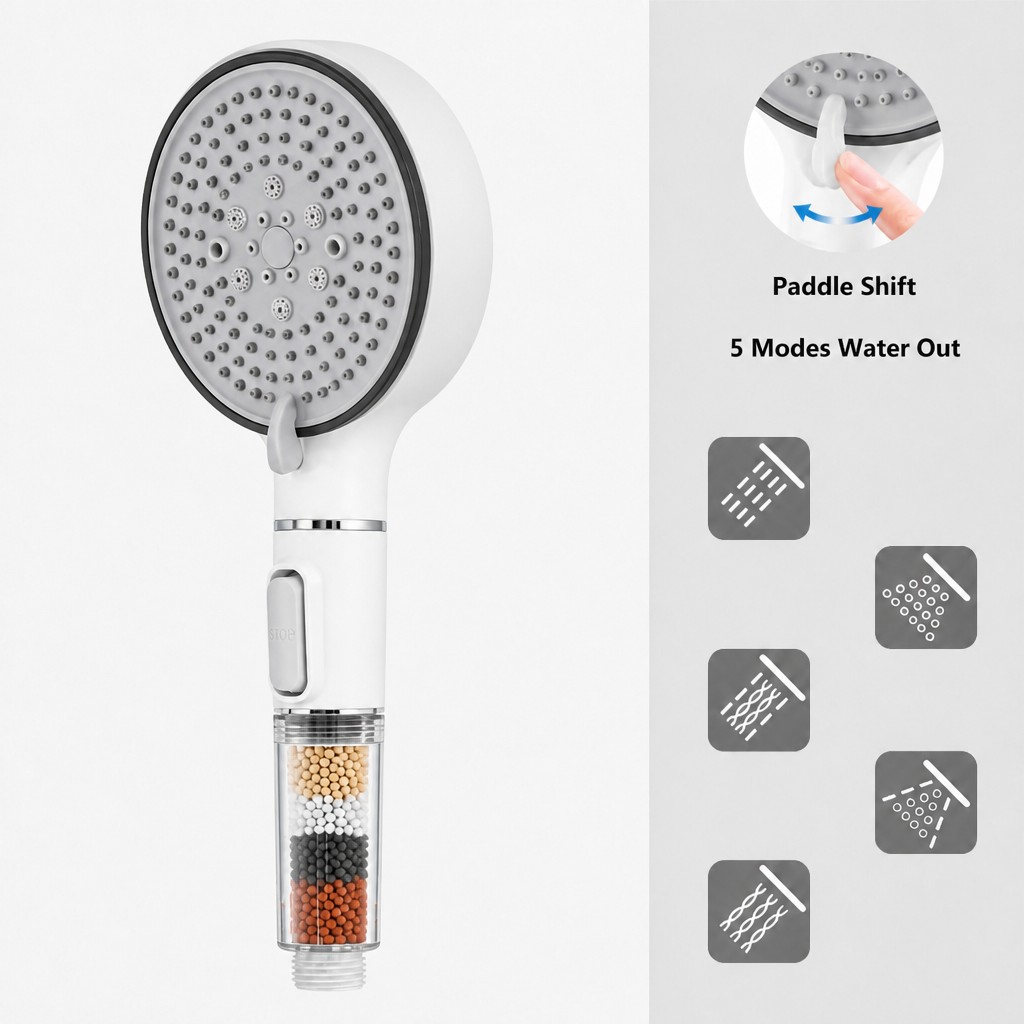
A hand shower docks into a holder at an angle. The bracket center can sit well above or below the spray face, depending on the handle and cradle geometry.
Spray face
This is where the water leaves the product. Its height, angle and distance from the wall decide head clearance and where the spray footprint lands.
Write the reference into the drawing. "Outlet center 82 inches AFF" is useful. "Shower head 82 inches" is not. AFF means above finished floor, but the drawing should still identify which floor surface and which component centerline.
Use standard heights as mock-up points, not final answers
The ranges below reflect common residential guidance, including the 80-inch reference seen across current search results. They are planning starts, not code requirements. Product instructions and local rules take priority.
| Shower arrangement | Useful starting point | What can change it | What to verify |
|---|---|---|---|
| Fixed wall head | About 80 in / 203 cm above the finished shower floor | Tall users, arm drop, head diameter and face angle | Clearance above the tallest user and spray landing point |
| Overhead rain head | Often higher than a wall head | Ceiling, arm length, head thickness and desired fall distance | Face is level, user has clearance and water stays inside the wet zone |
| Hand shower in fixed holder | Place from reachable docking position, not a borrowed pipe number | Handle length, holder angle, user reach and hose length | Easy removal, stable docking and relaxed hose at full reach |
| Hand shower on slide bar | Set a usable adjustment range | Standing and seated users, children, grab bars and wall structure | Both extremes are reachable and the hose does not bind |
| Tub-shower combination | Measure from the tub floor where the user stands | Tub depth, wall height, glass or curtain and shorter users | Headroom without throwing spray over the enclosure |
The common 80-inch figure is also described in Angi's current placement guide, which notes that there is no single standardized shower-head height.
The five-minute mock-up we would do before drilling tile
A tape mark is better than a guess. A taped-up outline of the actual product is better than a tape mark. This short check catches problems that an elevation number cannot.
Mark the true zero
Start at the finished surface inside the shower or tub. If the finish is not installed, add its build-up to the construction drawing.
Trace the actual assembly
Use the shower head, arm, holder or a cardboard outline at full size. Include the distance from the connection to the spray face.
Put the tallest user under it
Check normal posture, not a stiff measurement pose. Make room for washing hair and for reaching the face to clean the nozzles.
Project the spray
Follow the face angle toward the floor. Make sure the main spray lands on the user, not the door seam, shelf or dry side of a partial screen.
Move every moving part
Rotate the head, slide the holder and remove the handset. Test the high and low positions with the hose connected at both ends.
Mark structure and drilling limits
Locate pipes, waterproofing limits, studs or approved anchors. Follow the mounting instructions for the selected product and wall construction.
The right height changes with the shower type
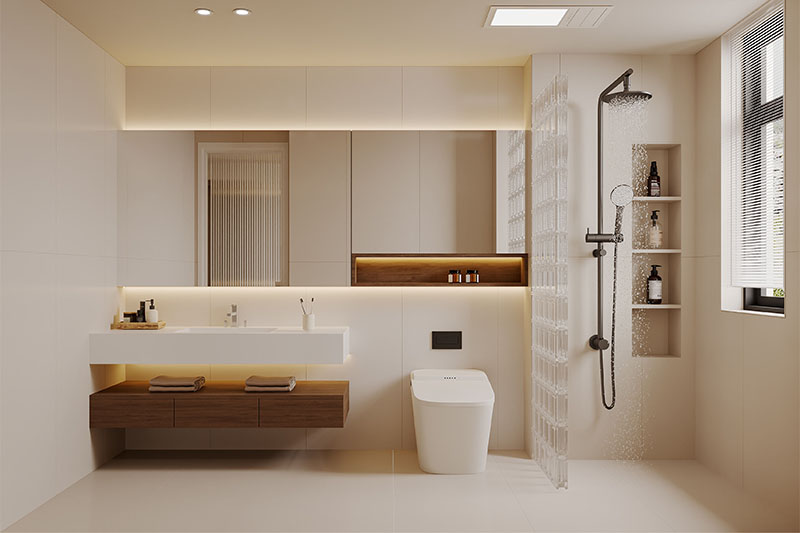
Fixed wall-mounted head
Start near the common 80-inch reference, then locate the actual spray face. A downward arm or a thick head can put the face several inches below the rough-in outlet.
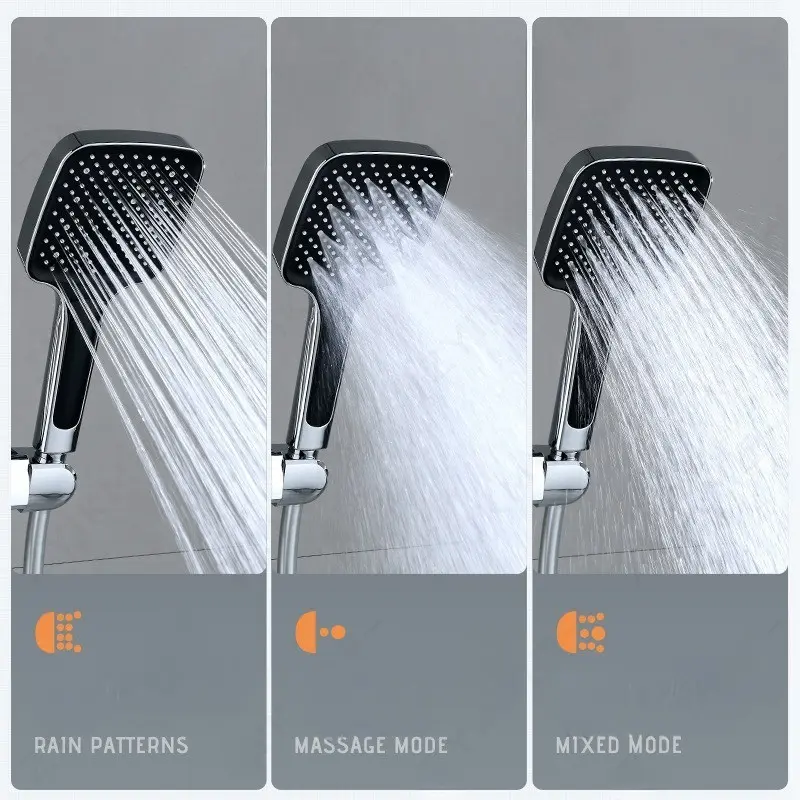
Height is only half the placement. A steep face angle can make a high head behave like a lower one because the spray meets the user's upper body sooner. A shallow angle can send water toward the opening. Check both clearance and trajectory.
If your replacement head uses a different connection or joint, read our guide to whether shower heads are really universal before assuming the old position will behave the same way.
Ceiling or overhead rain head
An overhead head needs room above the tallest user, but "higher" is not automatically better. The farther water falls, the more the pattern can spread and the more sensitive the result becomes to head size, flow behavior and air movement.
Set the spray face level. Then check the wet footprint against the enclosure. A large head near a short glass panel may look generous on a plan and still throw water outside the shower.
Also leave practical access for cleaning. A head that nobody can reach without an unsafe improvised step will not stay clean for long.
Hand shower in a fixed holder
Do not set the holder by copying a fixed-head dimension. First decide whether the handset will work mainly as a docked shower, a close-range rinse tool or both.
For docked use, the spray face should sit above the regular users and point into the wet zone. For handheld use, the shortest intended user must be able to grip the handle and lift it clear of the cradle. A long handle placed too high can turn removal into an awkward two-handed motion.
Hand shower on a slide bar
Design the range before choosing the bar position. Put the handset at the proposed top and bottom points. Dock it at the real operating angle. Then connect the hose and rotate the holder through the positions users will need.
A hose that reaches the low position on paper may pull tight after its loops, fittings and bend radius consume part of the length. The Moen slide-bar instructions are a useful reminder that model-specific hardware, anchors, hose, washer and handset all form one installed assembly.
Tub-shower combination
Measure from the inside floor of the tub, because that is where a standing user is supported. Measuring from the bathroom floor makes the installed shower feel lower by the height of the tub base.
Then check the enclosure. A higher head may improve clearance for a tall user, but the spray still needs to remain behind the curtain or glass. With a short screen, angle control may matter more than another inch of height.
Accessibility is a system, not an "ADA height" copied from a blog
Private-home comfort planning and an ADA-compliant shower are not the same task. If a project is covered by accessibility rules, use the applicable standard, project type and local authority. Do not pull one number out of context.
Section 608.6 of the U.S. Access Board ADA Standards requires a shower spray unit with a hose at least 59 inches (1500 mm) long that can serve as both a fixed-position and handheld shower. The unit needs an on/off control with a non-positive shut-off. If an adjustable-height head uses a vertical bar, that bar must not obstruct grab bars.
Can the intended user reach, release, aim and return the handset from the required position?
Does the installed hose provide the required usable reach without snagging or tightening around fittings?
Does the slide mechanism stay clear of the grab bar and preserve its usable gripping surface?
Can doors, screens and accessories operate without blocking controls, transfer or spray-unit access?
The same section contains a limited exception allowing a fixed head at 48 inches maximum in certain facilities. That exception does not turn 48 inches into a universal ADA shower-head rule.
From a factory perspective, "standard height" is not enough for a product drawing
When a brand, developer or shower-set buyer asks us about layout, we want coordinates that survive a product change. A useful elevation should define the interface and the user's result.
Put these five items on the elevation
This is the handover that keeps the architect, installer, product team and factory talking about the same assembly.
- 01Finished floor datum: identify the shower pan, tub interior or finished tile surface used as zero.
- 02Water interface: show the centerline of the shower arm outlet or hose outlet and name the thread/interface.
- 03Holder geometry: give the fixed bracket center or the usable slide range, not only the total bar length.
- 04Product envelope: show the handset or fixed head at its operating angle, including its projection from the wall.
- 05Spray reference: mark the spray-face plane and the intended center of the wet footprint.
This is also why changing the product late in a project deserves a new mock-up. The pipe can stay at the same coordinate while the spray face moves.

A real geometry example
The holder center is not the spray-face center
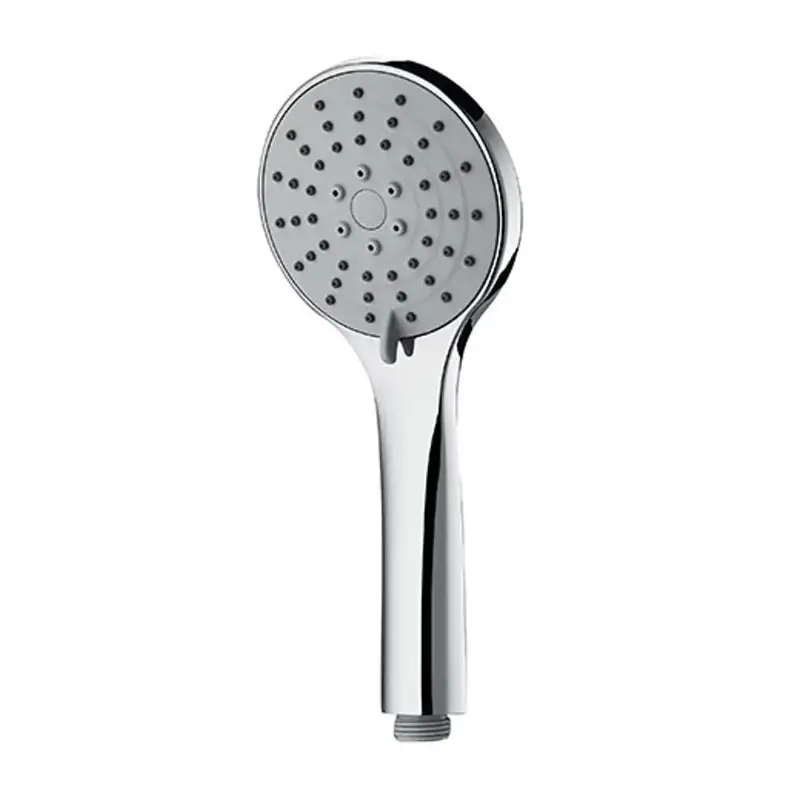
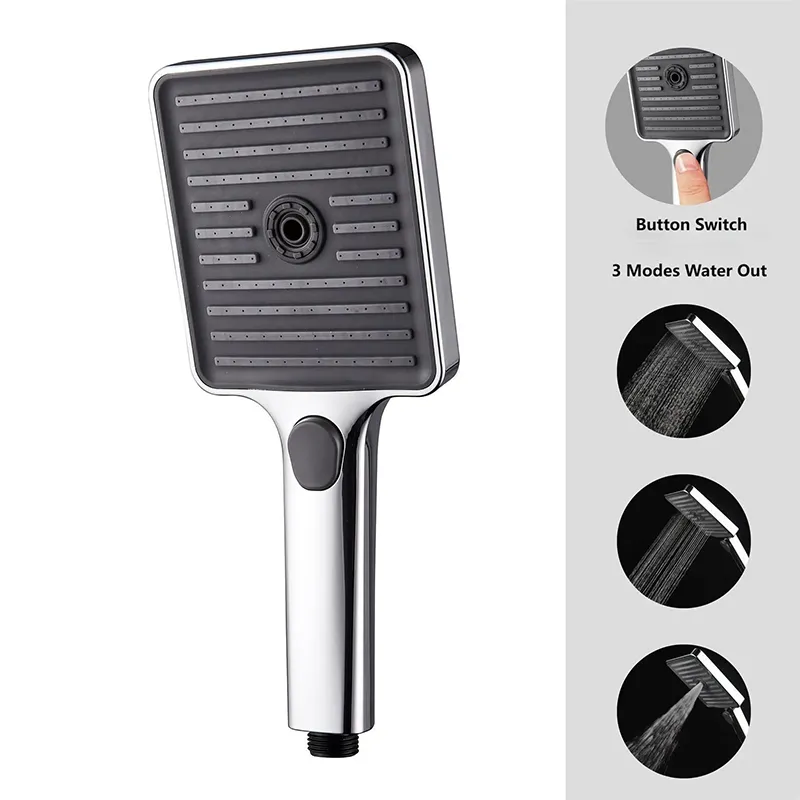
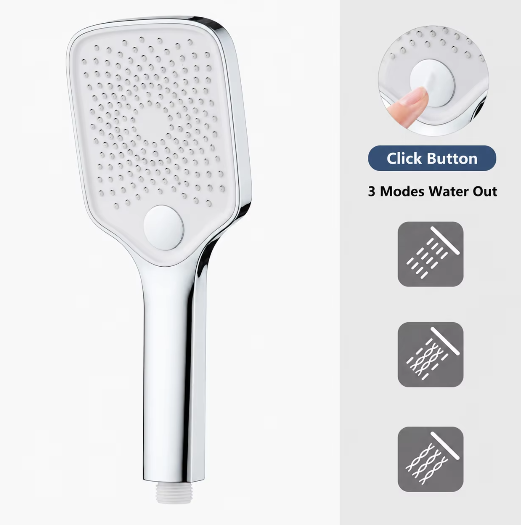
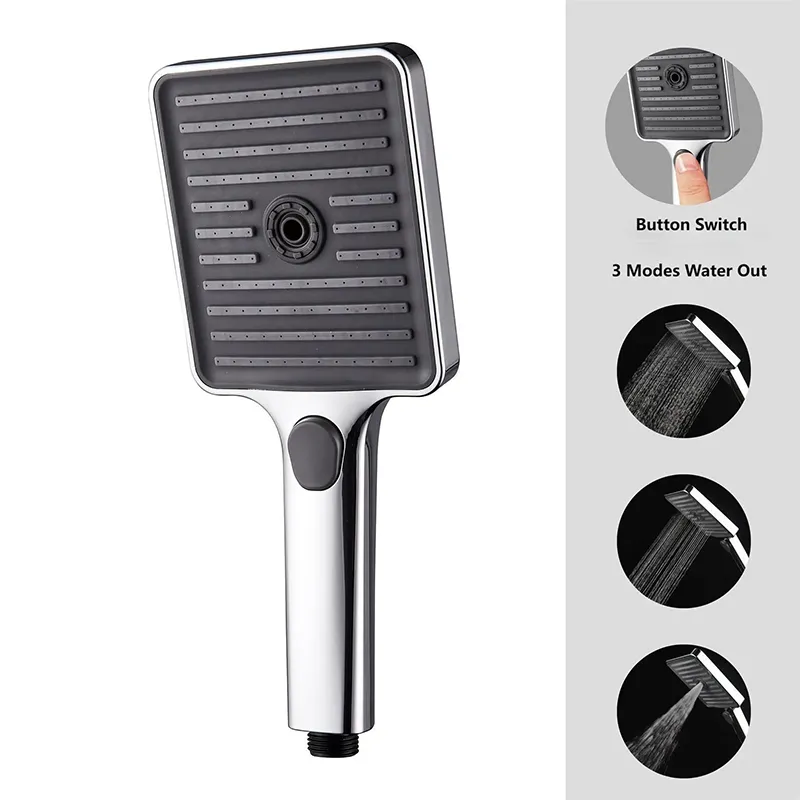
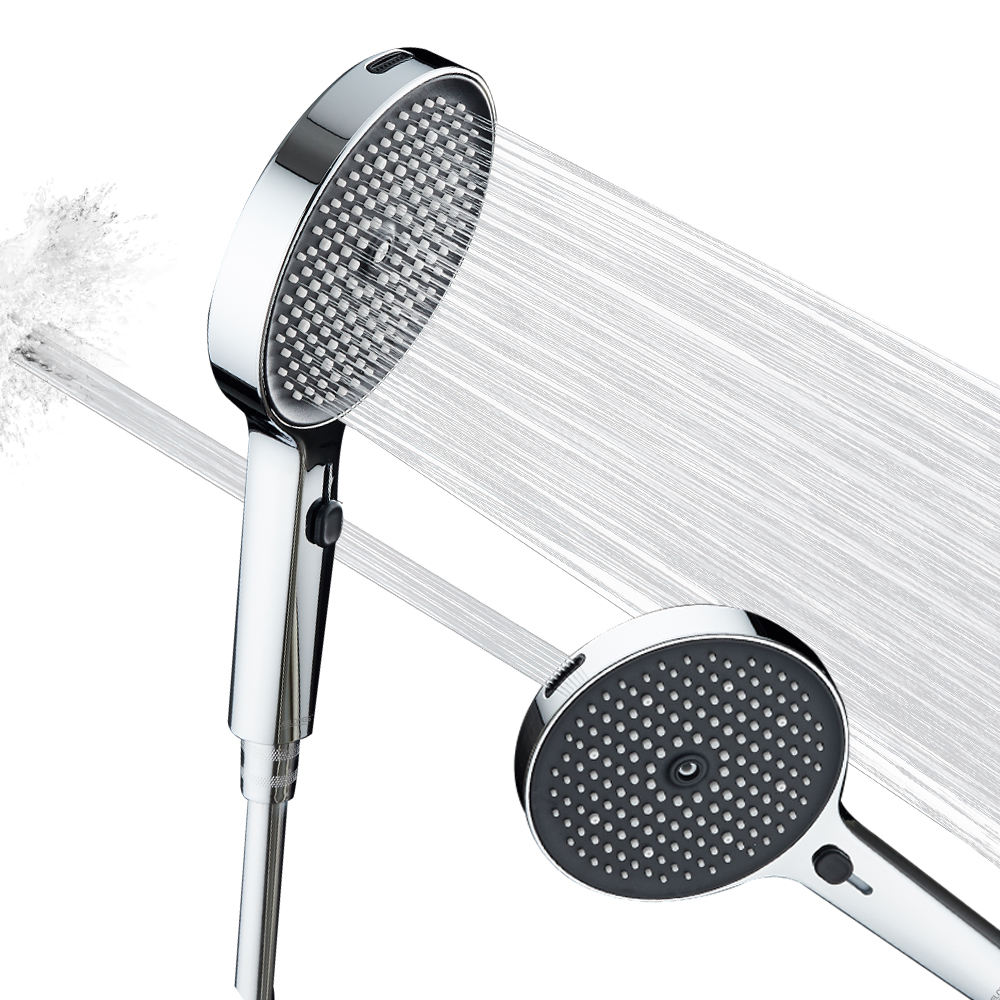
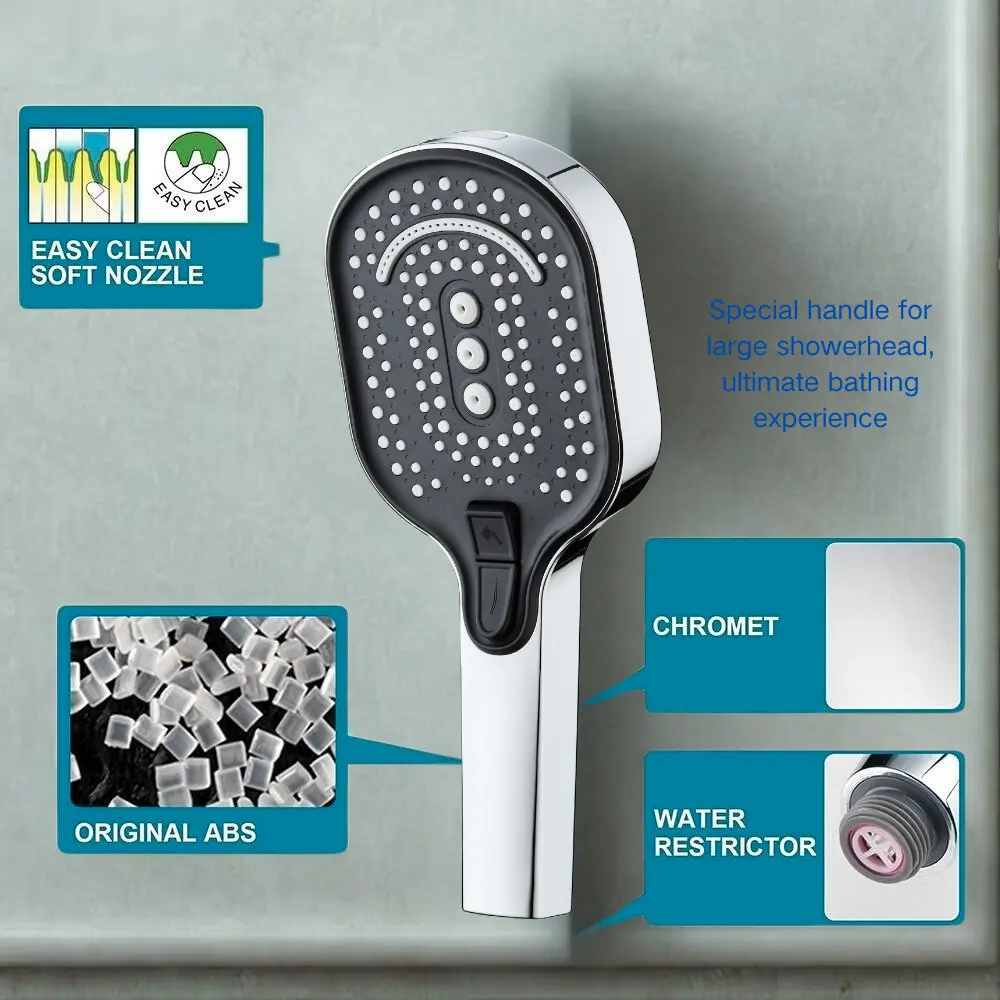
Huanyu's LHS12024 3D hand shower is listed at 120 x 260 mm, with an ABS body and chrome surface. That 260 mm product envelope matters when it sits in a wall holder.
Move the holder, change its angle or replace the handset, and the final outlet plane can move even if the plumbing stays untouched.
For this reason, we would not approve a height from the holder screw center alone. We would check the complete handset in the intended bracket, at the intended angle, with the hose attached.
The same thinking applies to spray performance. Our equipment page shows sealing and pressure testing plus water-flow and noise testing. A product should be evaluated as an operating water path, not as a decorative object floating on a bathroom elevation.
Six placement failures worth catching on paper
The rough-in looks correct until the tray, mortar and tile raise the standing surface.
A dropped arm or angled holder puts the real face below the approved dimension.
There is head clearance, but the angle sends the main pattern toward the neck or door.
A shorter user can touch the handle but cannot lift it far enough to release it.
The nominal hose length ignores loops, connection position and bending at the fittings.
The bar, slider or hose crosses a grab bar or lands where the wall cannot support the fixing method.
Choosing a hand shower or shower set? Send the elevation with the product request
Huanyu develops hand showers and related shower products, including hoses, holders and sliding-bar accessories. Send us the finished-floor reference, outlet position, intended users, enclosure drawing and preferred product. We can review the product geometry before you freeze the visible mounting points.
Our published production setup includes injection molding, assembly, sealing and pressure testing, and water-flow and noise testing. That lets the discussion move beyond a catalog image to the installed water path that your customer will actually use.
Shower head height FAQ
What is the standard height for a shower head?
About 80 inches (203 cm) above the finished shower floor is a common starting point for a wall-mounted head. It is a convention, not a universal requirement. User height, shower-head geometry, enclosure and local rules can change the final position.
Do I measure shower head height from the bathroom floor or shower floor?
Measure from the finished surface where the user stands inside the shower or tub. Do not measure from the subfloor, the tub rim or a lower bathroom floor outside a raised shower base.
How high should a rain shower head be?
A rain head is often placed higher than a wall-mounted head, but there is no single correct number. Mock up the actual head, leave comfortable clearance above the tallest user, level the spray face and confirm that the spray footprint stays inside the wet zone.
Where should a handheld shower holder or slide bar go?
Place it from the required user reach and operating range. Check the handset in its real holder at the highest and lowest positions, then confirm easy removal, stable docking and enough hose slack. Do not treat an ordinary slide bar as a grab bar.
Is 48 inches the ADA shower head height?
No. The ADA shower requirements are a system, and the 48-inch figure appears in a limited exception for certain facilities. Section 608.6 generally addresses a fixed and handheld spray unit, a hose at least 59 inches long, controls, water temperature and clearance from grab bars.
Can a shower head be installed too high?
Yes. Excess height can make a handset or spray face hard to reach for adjustment and cleaning. It can also change the spray footprint. Test user reach, head clearance, spray direction and enclosure containment before fixing the location.