
How often should you replace a shower head? Use evidence, not a calendar
A weak spray does not automatically mean the shower head is worn out. A cracked pressure body does. This guide shows you how to tell the difference in five minutes.
There is no universal replace-by date for a standard, unfiltered shower head. Keep it while cleaning and simple service restore normal spray and sealing. Replace it when the housing or inlet is cracked, a body seam or swivel keeps leaking, an internal control has failed, corrosion or contamination remains inside, or performance stays poor after you have ruled out the hose, valve and water supply. A filter cartridge has its own schedule and is not the same thing as the shower head.
The calendar is the wrong diagnostic tool
Search for a shower head replacement schedule and you will find answers measured in months, years and even decades. The disagreement is not surprising. Those pages are trying to give one date to products that contain very different materials, seals, spray plates and control mechanisms.
From a manufacturing point of view, a shower head does not age as one object. The face plate sees mineral deposits. The inlet washer is compressed. A selector or push button accumulates operating cycles. A plated surface faces cleaner, moisture and abrasion. A filter cartridge loads with captured material. Each part has a different failure mode.
A six-month-old head can fail after cross-threading or chemical damage. A much older head can remain serviceable when its nozzles, inlet and seals are sound. Age gives context, but condition gives the decision.
Do not ask, "How old is it?" first. Ask, "Which part is no longer doing its job?"
This distinction also prevents needless replacement. A new shower head will not fix a restricted mixing valve, a kinked hose or low supply pressure. It will not stop a dripping valve cartridge. It may hide the symptom for a day, but it does not remove the cause.
Five minutes, no guesswork
Inspect six places before buying anything
Run the shower, turn it off, and observe each location. You are looking for the first place performance changes, not the last place water falls.
Look for sideways jets, dry nozzles and a white mineral ring. Rub flexible nozzles under running water. Clean the inlet screen if the model allows it.
The full pattern returns after cleaning.
Dry both hose connections, run the water and watch for the first bead. A leak at a nut often points to a missing, pinched or hardened washer.
Replace the washer or hose, not the hand shower.
Check seams, the back shell, swivel and handle for a hairline crack or water appearing through the body under pressure.
A pressure-side body crack is not a cleaning problem.
Unscrew the head only if it is safe to do so. Look for split plastic, distorted threads or a brass insert that has moved in the handle.
Damaged load-bearing threads can fail again after tightening.
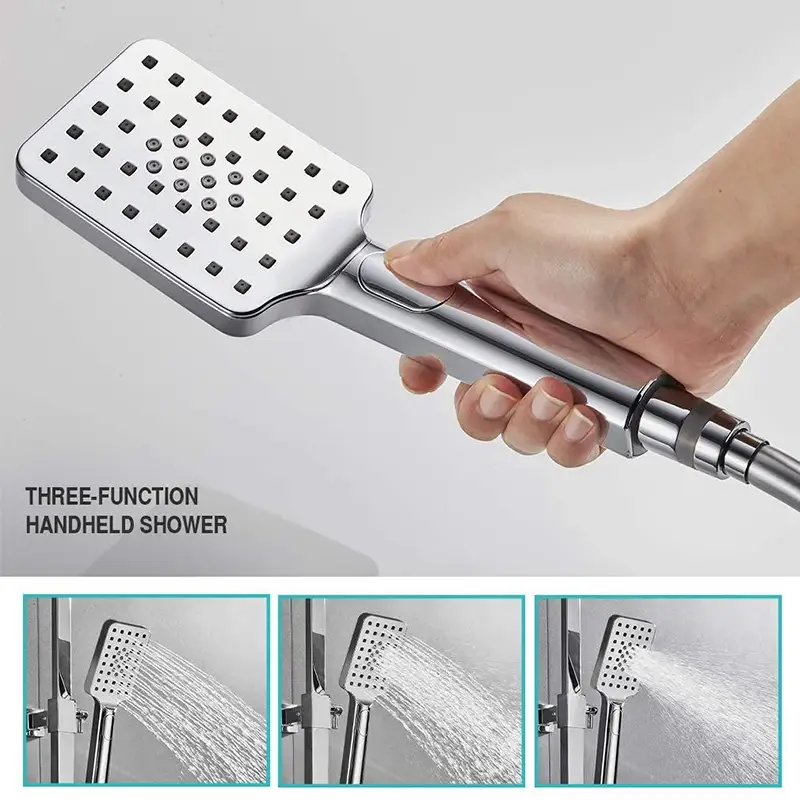
Cycle every mode with water running. Note a jammed button, a selector that will not index, or two modes bleeding together after cleaning.
Service a replaceable part. Replace a failed sealed mechanism.
Notice particles, persistent discoloration or an unusual smell. Test another outlet before blaming the shower head.
If the issue exists at several outlets, the fixture is not the root cause.
Symptom to action
What to clean, what to repair, and what to replace
| What you see | Most useful first check | Likely action | Replace the whole head? |
|---|---|---|---|
| Sideways or missing jets | Rub flexible nozzles and clean the screen washer according to the product instructions. | Remove mineral scale or debris. | No, if the spray pattern recovers. |
| Weak flow from every nozzle | Compare flow with the head removed. Then check the hose, screen, valve and other outlets. | Clear the restriction or diagnose the supply. | Only if the head remains restrictive after cleaning. |
| Leak at the hose nut | Check that the flat washer is present, seated and undamaged. | Replace the washer or hose. Hand-tighten first. | Usually no. |
| Leak through a shell seam | Dry the body and confirm the first drop appears from the seam under pressure. | Stop using the damaged head. | Yes. |
| Drips after shutoff | See whether retained water stops after the head drains. If dripping continues, check the shower valve. | Drain the head or service the valve cartridge. | Not until the valve is ruled out. |
| Button will not switch modes | Clean scale around the moving part and test with normal flow. | Replace a serviceable control part or the sealed head. | Yes, if the internal mechanism is sealed and failed. |
| Cracked inlet or stripped threads | Inspect the threaded connection and any molded-in insert. | Remove the head from service. | Yes. |
Three different clocks
The fixture, moving parts and consumables do not share one lifespan
Body, face and inlet
Replace these when damage, persistent leakage or irreversible internal deterioration appears. Their age alone is not the verdict.
Buttons and selectors
Every press or rotation loads a moving mechanism. Product design, material pairing, water scale and use frequency all matter.
Filter cartridges
A cartridge is consumed as it captures material or exhausts its media. Replace it by the model instructions and observed water conditions.

A factory view
Durability starts with the failure mode, not a marketing lifespan
When we review a hand shower structure, we do not ask only how many years it should last. We ask where scale can narrow a water path, where pressure loads a seam, how a control transfers force, and whether an inlet can be assembled without damaging the seal or thread.
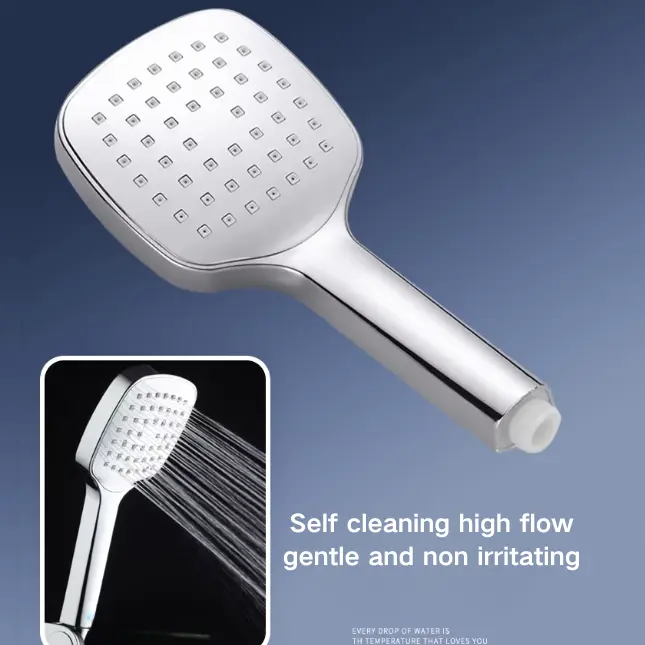
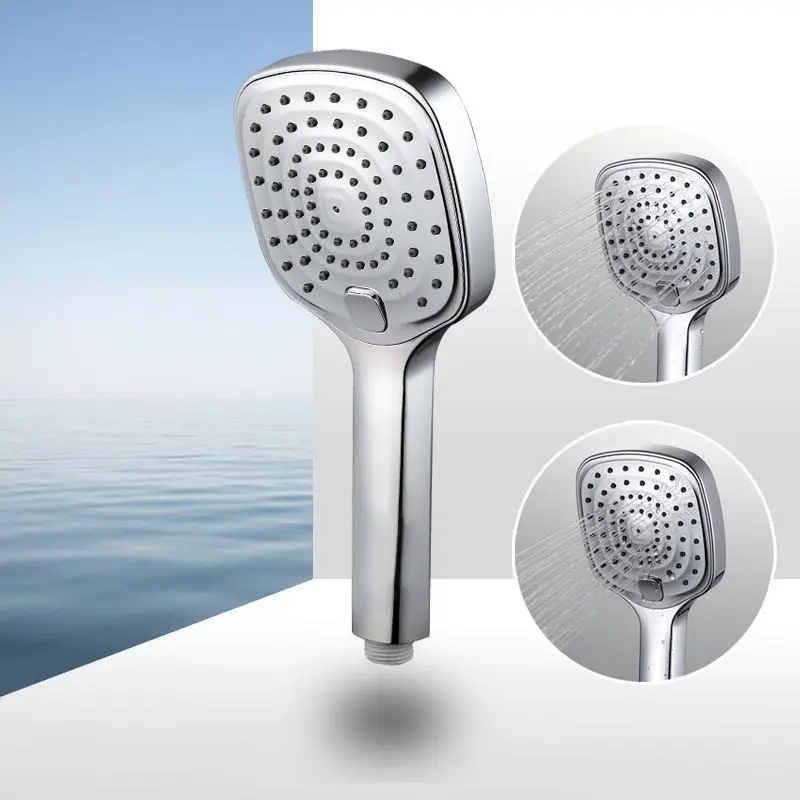
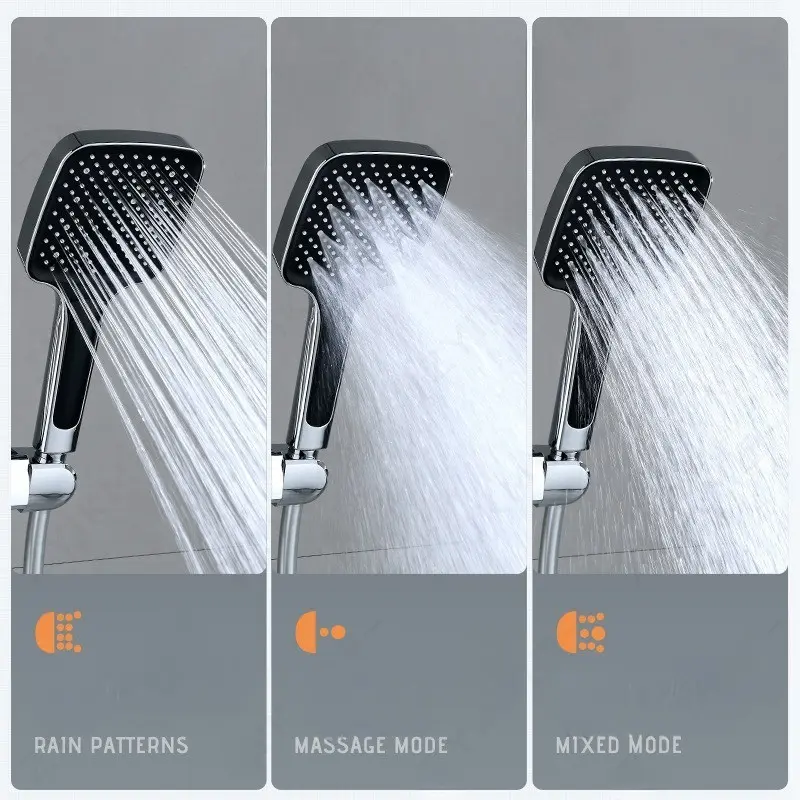
The EC-HS60002 shows why this matters. Huanyu's current product page describes a 120 mm chrome-plated ABS hand shower with 36 flexible silicone nozzles in the outer ring, finer outlets in the inner zone, a bottom paddle for mode switching and a multi-layer rubber sealing structure.
A cycle-test result is useful for comparing a mechanism under a stated test. It is not a promise that every installation will last the same number of calendar years. Water chemistry, pressure, use frequency, cleaning and assembly still change real service life.
Huanyu's equipment page lists sealing and pressure testing plus water-flow and noise testing. The company site also shows life, salt-spray, hose burst, high-temperature and plating checks. Those tests target specific failure risks. They are more useful than printing one unsupported replacement date on every product.
See the EC-HS60002 product structure or review Huanyu's testing equipment.
Why two homes get different results
Six factors that change shower head service life
Water hardness
USGS defines hardness mainly by dissolved calcium and magnesium. As droplets evaporate, deposits can narrow nozzle openings and load moving parts. Flexible nozzles make removal easier, but they do not turn hard water into soft water.
Use frequency
A guest bathroom and a six-person household do not put the same cycles on a selector, pause button, hose or bracket. Count how the product is used, not only the date it was installed.
Pressure and temperature
Pressure loads seals and joints. Temperature affects plastics, elastomers and dimensional fit. A product should be matched to the intended plumbing conditions.
Cleaning chemistry
Abrasive pads can scratch a plated surface. Strong or unsuitable cleaners can attack finishes and elastomer parts. Follow the model's care instructions instead of assuming every finish tolerates the same treatment.
Installation
Cross-threading, a missing washer and excessive wrench force can create an early leak that has nothing to do with the design lifespan. Start connections by hand and protect finished surfaces.
Drainage and geometry
Large heads and complex waterways retain more water after shutoff. A short period of drainage is not the same as a valve that keeps feeding water or a seam that leaks under pressure.
Do not replace the wrong object
A filtered shower head has two replacement decisions
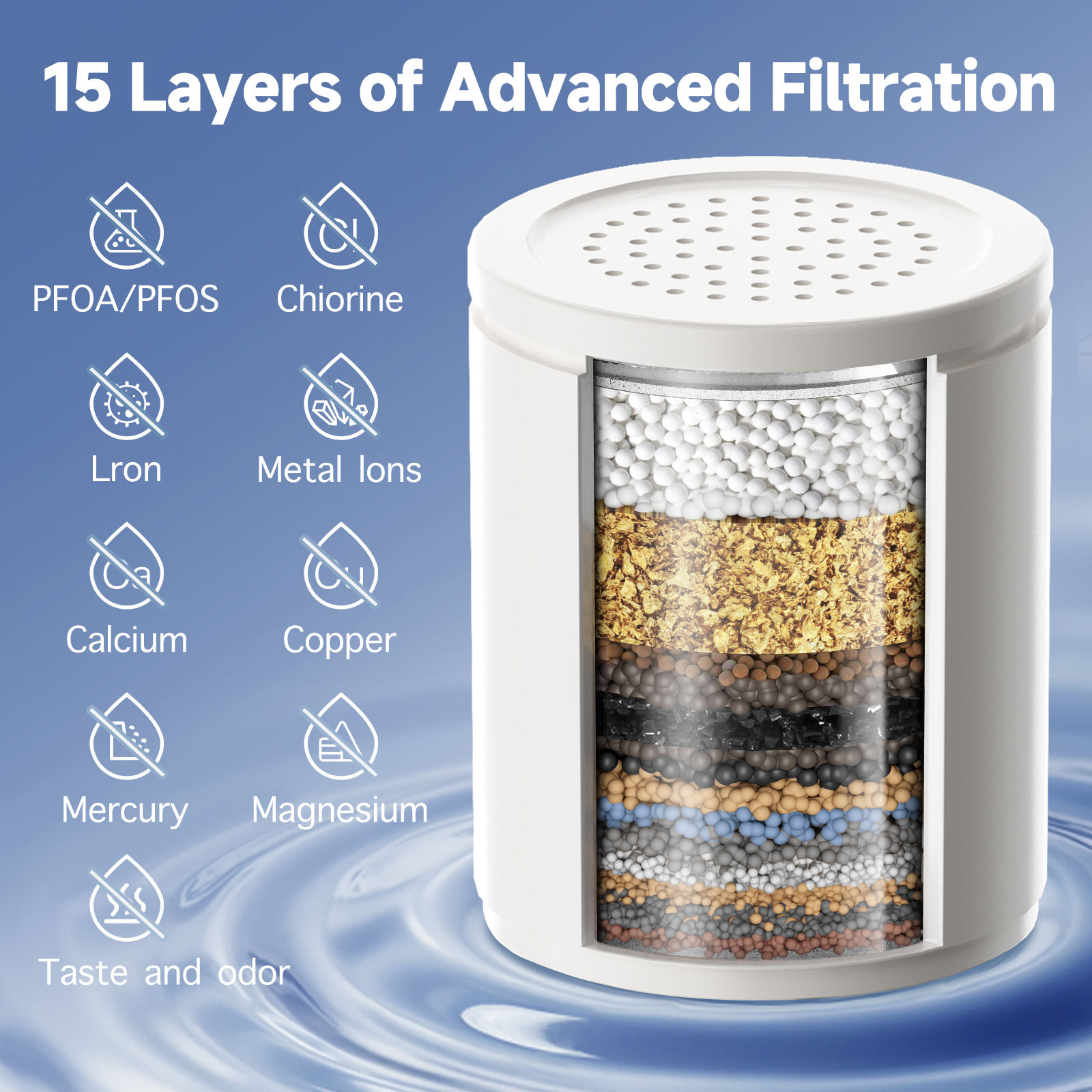
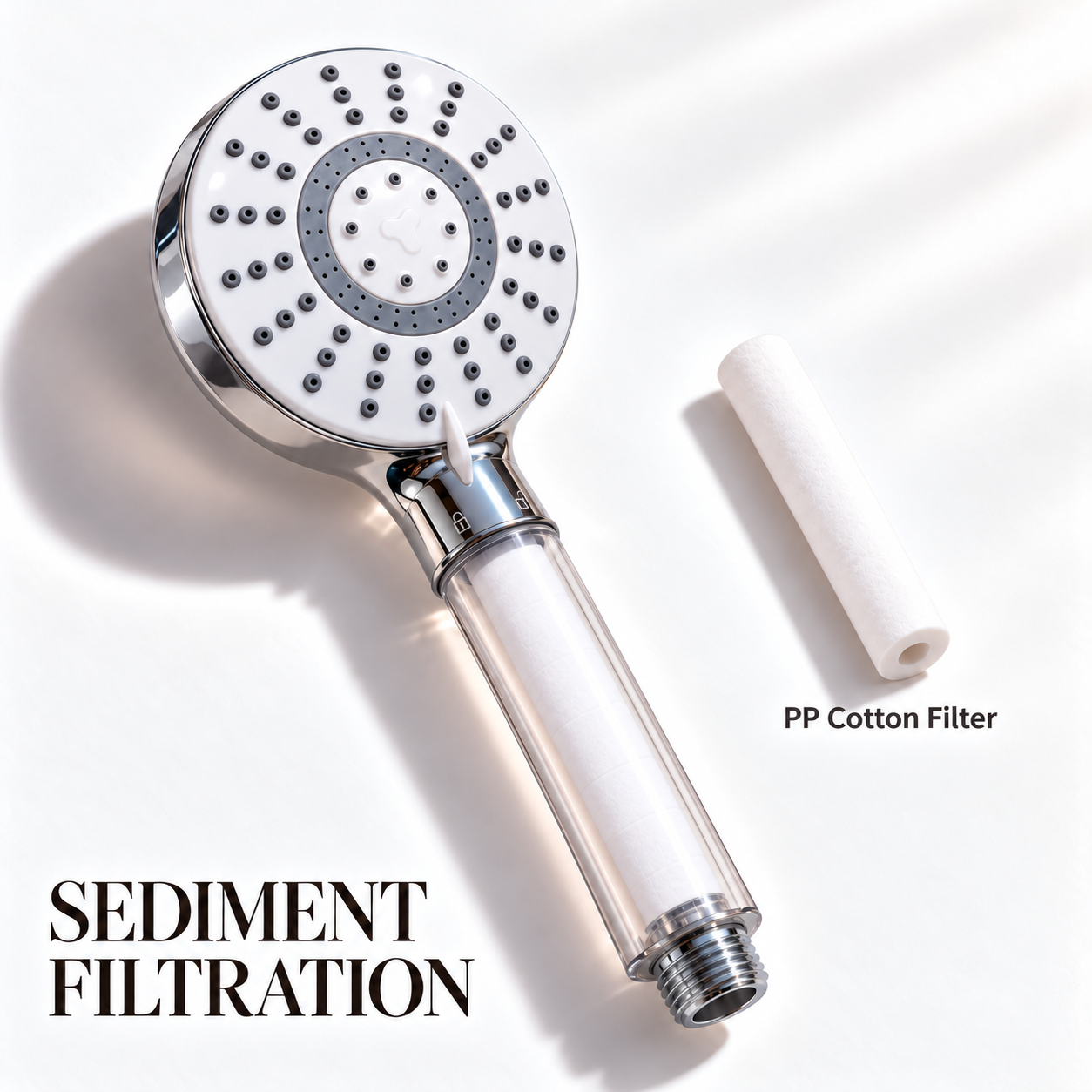
The filter cartridge is a consumable. The housing, spray face and handle are the fixture. A cartridge can reach its service limit while the fixture remains sound.
Use the cartridge maker's stated interval as the starting point, then account for water quality, volume and visible loading. A pressure drop can indicate a loaded filter, but it can also come from the hose, inlet screen, valve or supply. Diagnose before discarding the complete head.
A sediment or carbon filter also does not function as a conventional ion-exchange water softener. If dissolved hardness is the cause of scale, easy-clean nozzle design still matters. Read what a shower filter can and cannot fix in hard water.

If replacement is justified
Choose the next shower head around the problem that ended the last one
Scale kept blocking the spray
Choose flexible silicone outlets that can be rubbed clean. Avoid treating a dense nozzle count as automatically better in hard water. Read our plain-language guide to anti-clog silicone nozzles.
The previous control became stiff
Compare button, paddle, dial and stepless mechanisms by actual hand movement and service access. Ask how the selector is cycle-tested and how scale reaches the moving interface.
The household has weak flow
Measure the problem first. A smaller outlet area can feel more forceful, but no shower head creates supply pressure. Use our shower pressure diagnostic before choosing a so-called high-pressure model.
You want lower water use
Match the flow rating and certification to the destination market. In the United States, the EPA states that WaterSense-labeled showerheads use no more than 2.0 gpm and must meet performance criteria for spray force and coverage.
The old inlet leaked or cracked
Check thread standard, insert material, washer seat and hose compatibility. A familiar thread name does not guarantee that every connection detail or sealing surface matches.
Sources checked
Product-specific statements keep the context shown on each source page. External sources support water science, cleaning and market guidance.
- Huanyu EC-HS60002 product page: product structure, material, size, nozzle layout and control details.
- Huanyu equipment page: sealing, pressure, water-flow and noise testing equipment.
- U.S. Geological Survey, Hardness of Water: the role of dissolved calcium and magnesium.
- U.S. EPA WaterSense showerheads: U.S. flow and performance criteria for labeled products.
Frequently asked questions
Shower head replacement questions
Do I need to replace my shower head every 6 to 12 months?
No. A standard, unfiltered shower head does not need replacement merely because six or twelve months have passed. Inspect its spray, housing, inlet, controls and seals. Clean or repair the affected part first. Filter cartridges are separate consumables and may have much shorter model-specific schedules.
How long do shower heads normally last?
There is no single normal lifespan that covers every design and installation. Water hardness, use cycles, pressure, temperature, cleaning chemistry, materials and assembly all change the result. Condition-based signs are more useful than a generic year count.
Does low shower pressure mean I need a new shower head?
Not by itself. Clean the nozzles and inlet screen, then compare the flow with the head removed. Check the hose, valve and other outlets. Replace the head only when it remains the confirmed restriction after those checks.
Can I replace a washer instead of the whole shower head?
Yes, when the first drop forms at a threaded hose or arm connection and the washer is missing, pinched or hardened. Use the correct flat washer and avoid over-tightening. A leak through a cracked body seam needs a different response: replace the damaged head.
Should I replace a shower head with mineral buildup?
Clean it first according to the manufacturer's care instructions. Flexible nozzles often recover after a firm fingertip wipe. Some designs also allow the screen washer to be cleaned. Replace the head if accessible cleaning cannot restore the water path or if mineral damage is combined with cracks, failed controls or internal deterioration.
Do filtered shower heads need more frequent replacement?
The filter cartridge usually needs more frequent attention than the fixture. Replace the cartridge by its model instructions and actual loading conditions. Keep the shower head body if it remains structurally sound, cleanable and leak-free.
For brands, distributors and retail programs
Tell us what failed in the old model
A useful replacement brief starts with the real failure. Send Huanyu a product photo, the destination market, water conditions, inlet standard, target spray and the problem you want the next design to prevent.
- Self-cleaning, button-control, stepless, 3D, spa and regular hand shower ranges
- Independent laboratory and in-house inspection team
- Sealing, pressure, flow, noise, life, salt-spray, burst, high-temperature and plating checks shown on the current website
- OEM and ODM development from requirement review through samples and mass-production preparation