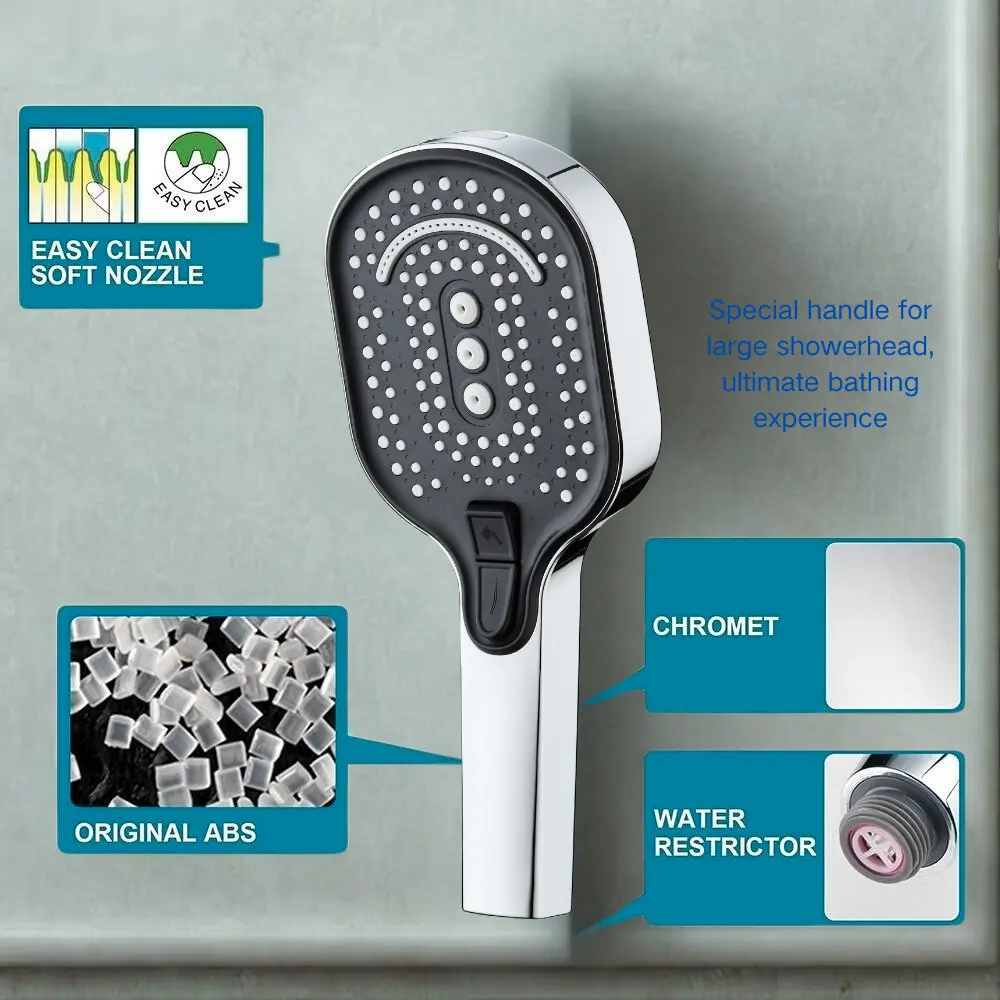

How to increase shower pressure: find the restriction before buying a pump
A stronger shower starts with one comparison: is the flow weak before the shower head, or only after water enters it?
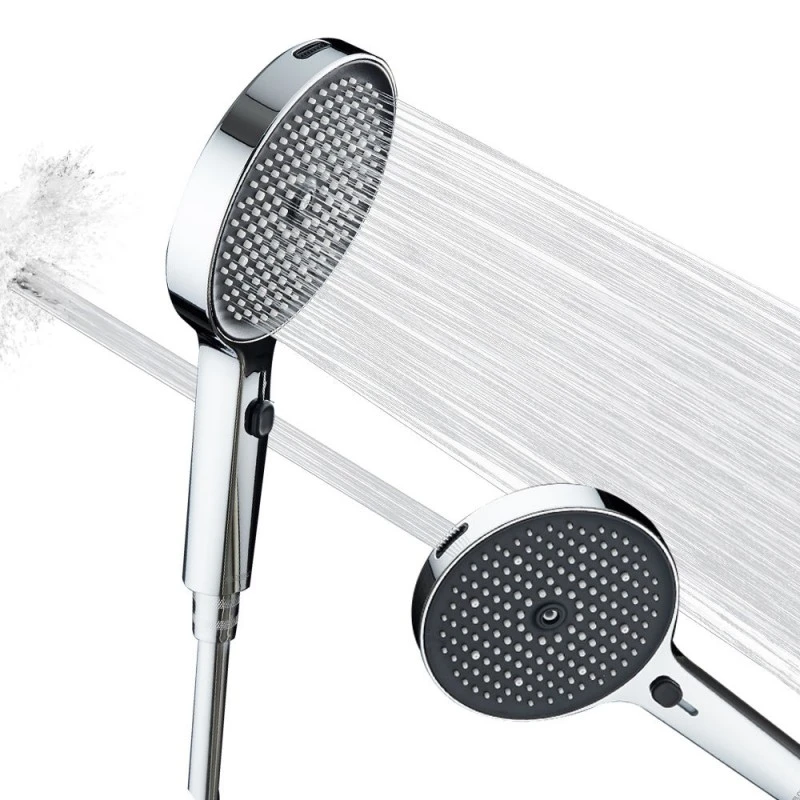
Google's first page gives plenty of remedies: soak the shower head, remove the flow restrictor, check for leaks, adjust a regulator, fit a pressure booster or buy a high-pressure model. The list is not useless. The order is.
Low shower pressure is a location problem before it is a product problem. If every outlet in the home is weak, cleaning one shower head will not help. If the hose delivers a strong stream and the fitted head does not, a pump is an expensive answer to a small restriction.
Do not ask "Which fix is strongest?" Ask "At which connection does the flow collapse?"
Start with the geography of the symptom
The pattern across fixtures is the fastest first filter. Make these comparisons at roughly the same time and with no intentional changes to the main supply.
| What you observe | Most useful first suspicion | What to prove next |
|---|---|---|
| Only one spray mode is weak | Selector port, spray channel or that mode's outlet group | Compare every mode at the same valve position. A shared inlet restriction should affect them all. |
| All modes on one head are weak | Spray face, inlet screen, internal flow path or restrictor | Measure head-on flow, then compare it with hose-only flow. |
| Hand shower and overhead shower are both weak | Diverter, mixing valve, service stops or upstream supply | Check whether other bathroom fixtures are also weak and whether the problem changes with temperature. |
| Cold is strong; mixed or hot is weak | Hot-water path, heater, check valve, cartridge or temperature-control valve | Compare cold and warm flow safely. Do not blame the shower face first. |
| Pressure drops when another tap opens | Available dynamic supply, shared piping, regulator or pipe sizing | Repeat the same bucket test with other fixtures off and on. |
| Every fixture is weak | Main valve, pressure regulator, well/pump, service pipe or utility supply | Ask a plumber or utility to verify the supply and flowing pressure. |
A simplified shower water path
Move from left to right. The first point where a good flow becomes weak is the useful boundary.
This is a diagnostic map, not an exploded drawing of a specific shower system. Fixed heads omit the hose; thermostatic and multi-outlet systems may add check valves, filters and diverters.
Run this 12-minute branch test
Use lukewarm water, a bucket with known volume and a timer. Keep the valve position the same for comparable measurements. Control splashing when a hand shower is disconnected.
Compare the nearest outlets
Check the basin tap and another shower. Note whether cold and warm behave differently. This separates a fixture-specific problem from a bathroom or whole-building problem.
Measure the fitted shower head
Collect water for 15 or 30 seconds. Record the volume, spray mode, valve position and temperature. "Weak" is a feeling; a measured flow gives you a baseline.
For a handheld shower, test the hose
Turn the control off, disconnect the wand at its normal service joint, aim the hose into the bucket and repeat the test. Do not remove concealed valve parts.
Repeat with another fixture running
Open a nearby tap and watch what changes. A large drop under simultaneous demand points upstream, not toward one group of spray nozzles.
Photograph the inlet before inspection
Record the washer, screen and visible insert in order. Look for debris, a folded washer or a restricted opening. Do not pry out an unidentified retained part.
L/min = collected litres × 60 ÷ seconds

GPM = collected gallons × 60 ÷ seconds
The restriction is in the hand shower
Inspect the inlet screen, serviceable flow-control parts, selector path and spray outlets. Clean according to the product instructions.
Look between the valve and hose end
Check the hose for kinks or internal collapse, then the outlet, bracket, diverter and shower valve path.
Follow the hot-water side
The heater, isolation valve, balancing device, cartridge or hot pipe is a better suspect than the shower head.
Stop changing shower-head parts
Move to the main valve, pressure regulator, well/pump, service pipe and utility supply with a qualified plumber.
For a more detailed measurement example, use Huanyu's shower water-use and flow calculator.
Pressure, flow and spray force are not the same result
The driving force
Pressure pushes water through the system. It changes with the supply, elevation, demand, pipe losses and control components. Ofwat notes that local demand, property height and network conditions can affect available pressure.
The delivered volume
Flow is the amount of water delivered per unit of time. A small passage, blocked screen, long narrow hose or partly closed valve can reduce flow even when static supply pressure looks acceptable.
What reaches the user
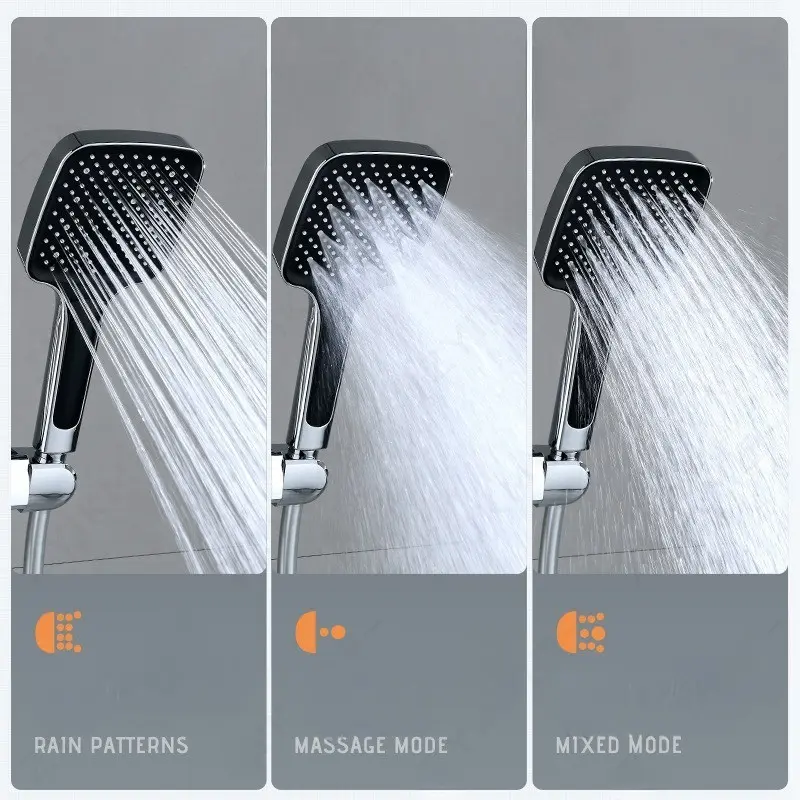
Nozzle diameter, active outlet count, spray angle, droplet form and coverage distribute the available flow. A concentrated mode may feel stronger without increasing the building pressure.
Apply fixes in the order the evidence supports
The sequence below moves from easy, local checks to work that needs a plumber or utility. Skip any disassembly the product manual does not classify as serviceable.
Open the controls fully
Confirm the household main valve and accessible fixture service stops are fully open. A partly closed stop can pass enough water for a basin tap but starve a shower under higher demand. Do not force a seized valve.
Straighten and isolate the hose
Remove sharp bends and test the hose without the hand shower. Replace a hose that remains restrictive when straight, shows swelling or has an internally collapsed liner. A prettier shower head cannot recover flow lost before its inlet.
Clean the spray outlets
Mineral deposits narrow the active openings and disturb the spray pattern. Flexible silicone outlets can often be wiped, but finishes and internal materials differ. Follow the manufacturer's care method instead of soaking every product in the same chemical.
Inspect the inlet screen
Sand, pipe scale and installation debris often stop at the first screen. Photograph the stack, clean only removable service parts and reinstall the washer and screen in their original order. A folded sealing washer can also obstruct the opening.
Check every spray mode
If one mode is weak while another is normal, the fault is probably after the common inlet. The selector, distribution plate or one spray channel deserves attention. If the control button is stiff or does not index cleanly, stop forcing it.
Flush after plumbing work
A new valve, heater or pipe repair can release debris. Delta's low-pressure guidance includes checking the shower head, hose and plumbing system rather than assuming the original pressure disappeared by itself. Follow the valve manufacturer's flushing procedure.
Investigate the valve and hot side
A blocked cartridge, check valve, thermostatic element or partly closed isolation valve can reduce shower flow. Hot-only weakness may come from the water heater or hot supply. Concealed valve service and temperature-control work belong with a qualified plumber.
Verify the building supply
If several fixtures are weak, check the pressure regulator, main valve, well system and service pipe. Ofwat's water-pressure guidance also identifies demand periods, elevation and network faults as possible causes. A utility can confirm whether the problem reaches the property.
When a high-pressure shower head helps, and when it cannot
A different shower head can improve the result when usable flow reaches the connection but the existing head distributes it poorly. It is a spray-design solution, not a universal pressure repair.
A new head can help when…
- hose-only flow is clearly stronger than head-on flow;
- the current face is oversized for the available flow;
- the useful spray mode activates too many outlets at once;
- nozzle scale returns because the outlets are hard to clean;
- a more concentrated or selectable spray better fits the task.
A new head cannot repair…
- weak flow already present at the open hose;
- a kinked or collapsed hose liner;
- a blocked shower cartridge or partly closed stop;
- a hot-water system that cannot deliver the required flow;
- low dynamic pressure throughout the building.
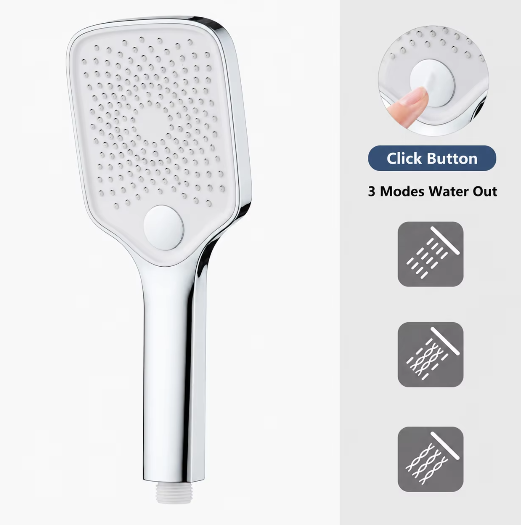
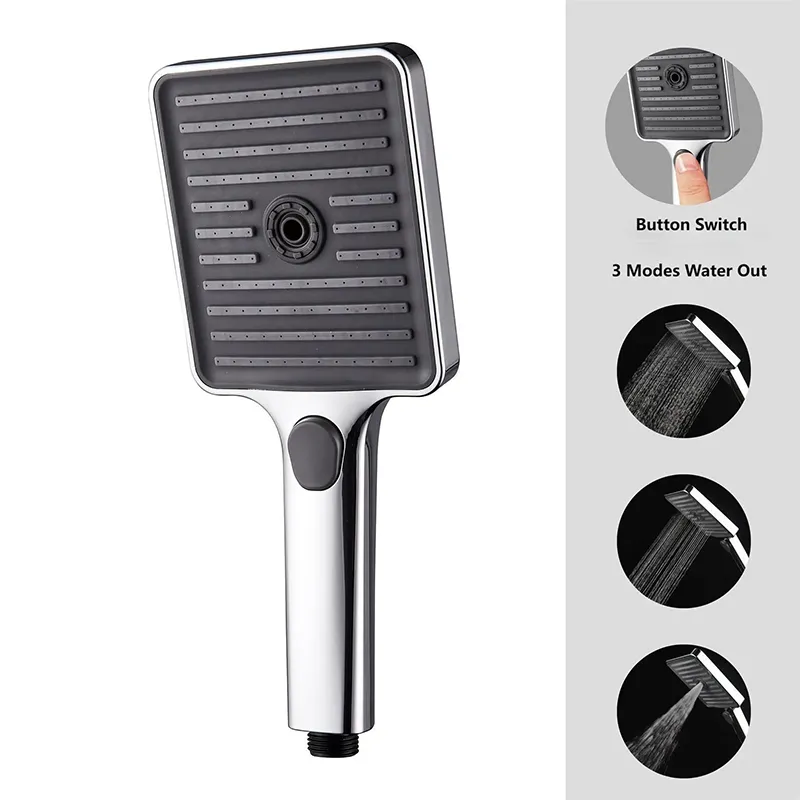
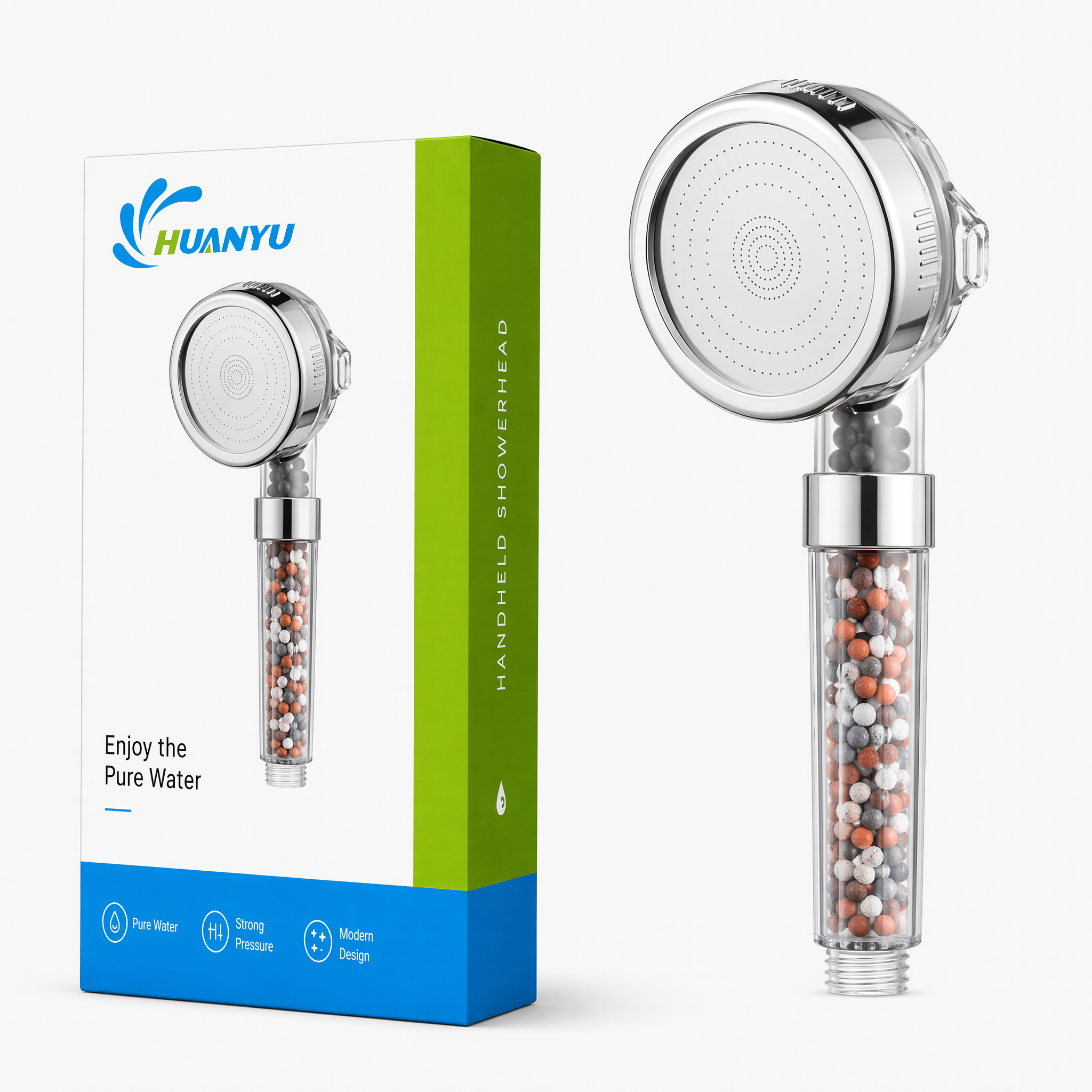
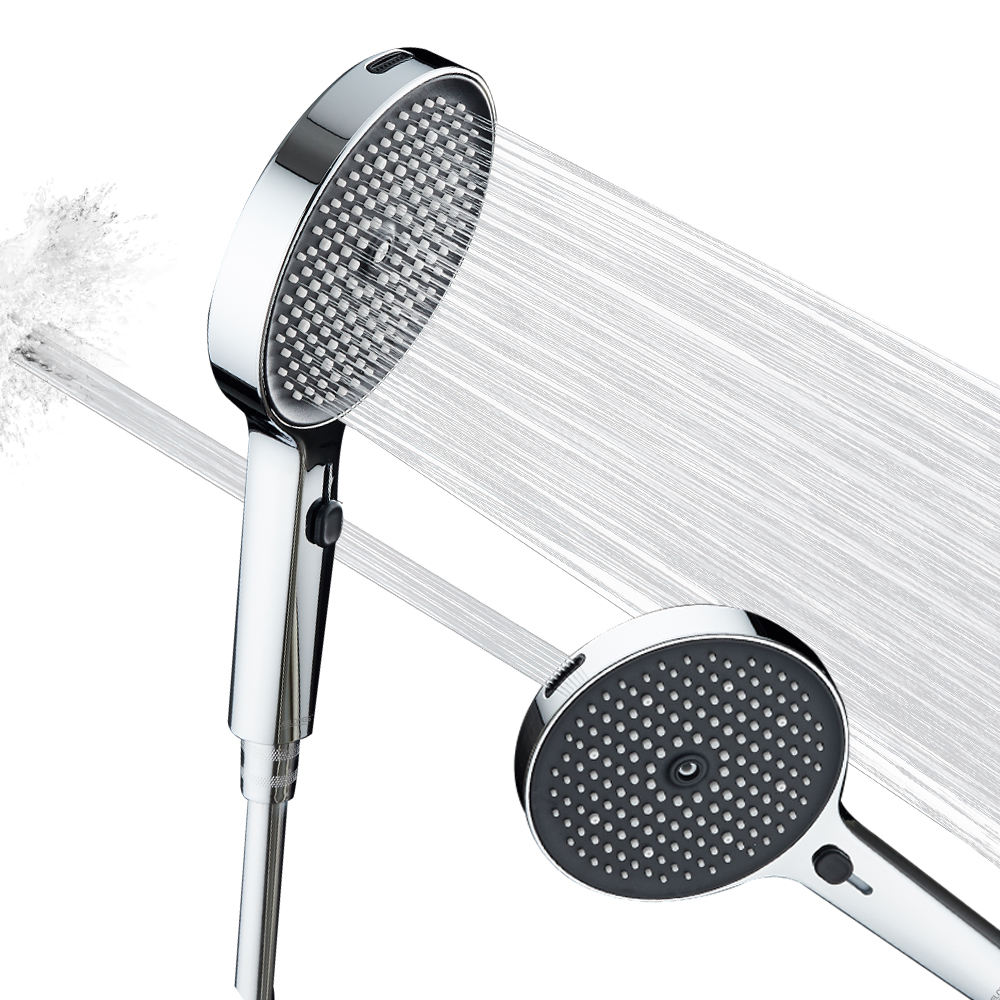
Three Huanyu products show three ways to manage spray strength
These are not interchangeable "pressure boosters." Each uses the available flow differently, and each product page gives a different design context.

SFC-HS0001: stepless distribution control
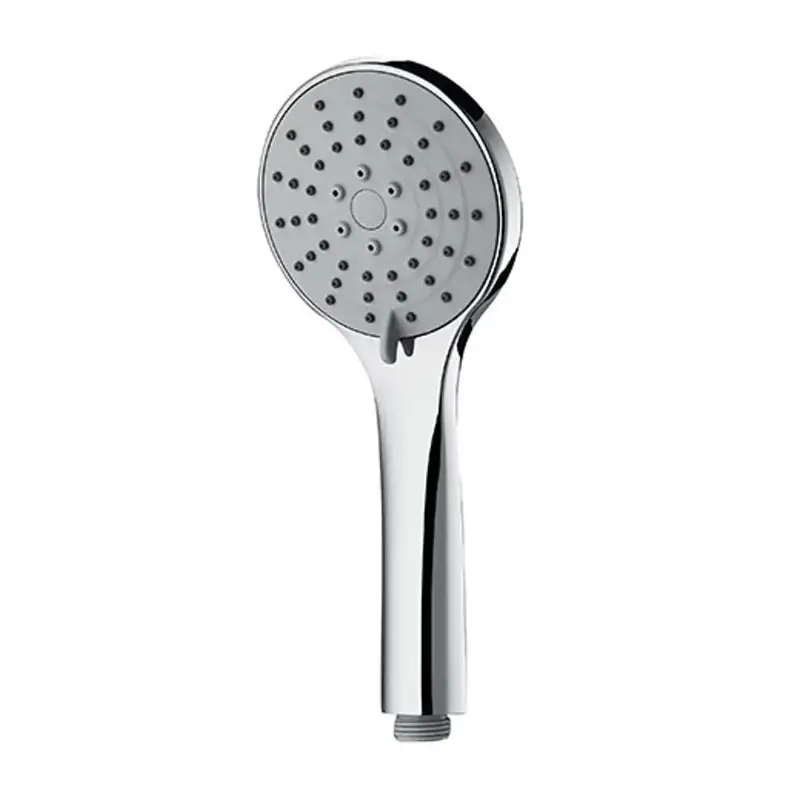
This 140 mm chrome ABS hand shower uses a rack-and-gear linkage to move the water-distribution plate. Huanyu's model page publishes 10,000 button presses, 100 hours of continuous water-flow testing and a 96-hour neutral salt-spray test for this product.

SFC-HS0003: adjustable flow range
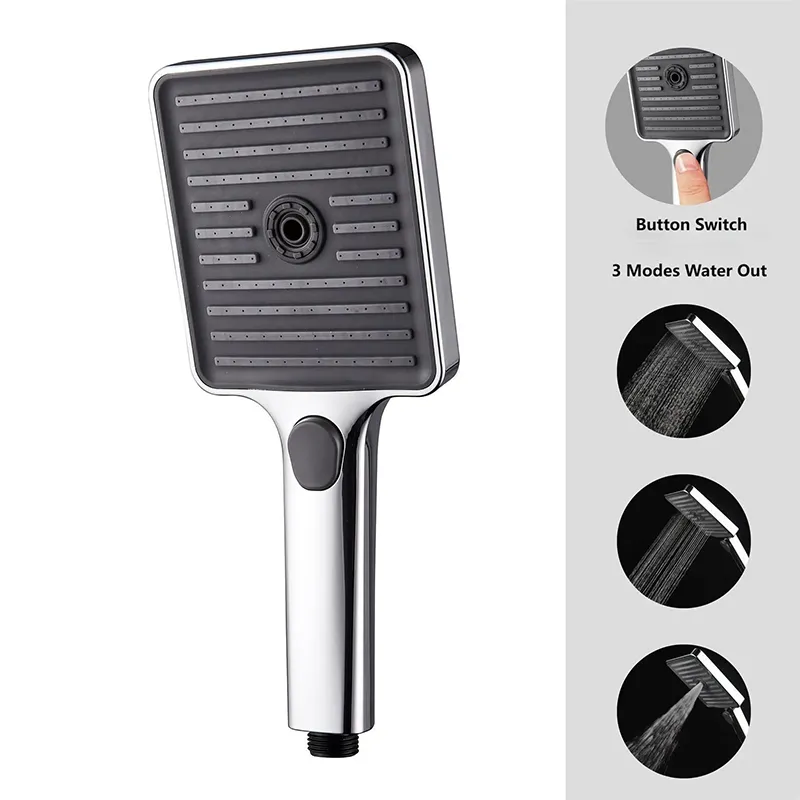
The SFC-HS0003 page specifies a published 4-12 L/min adjustment range. The 135 mm chrome ABS hand shower uses a 110 mm round panel with fine silicone outlets, larger outlets and a G1/2 brass inlet.
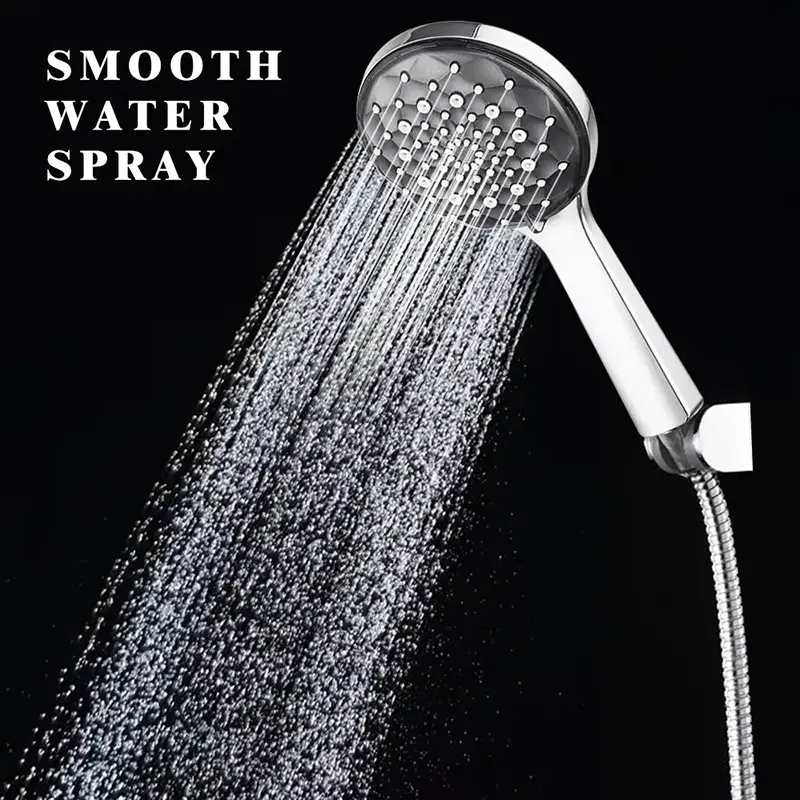
LHS12024: targeted jets plus rain coverage
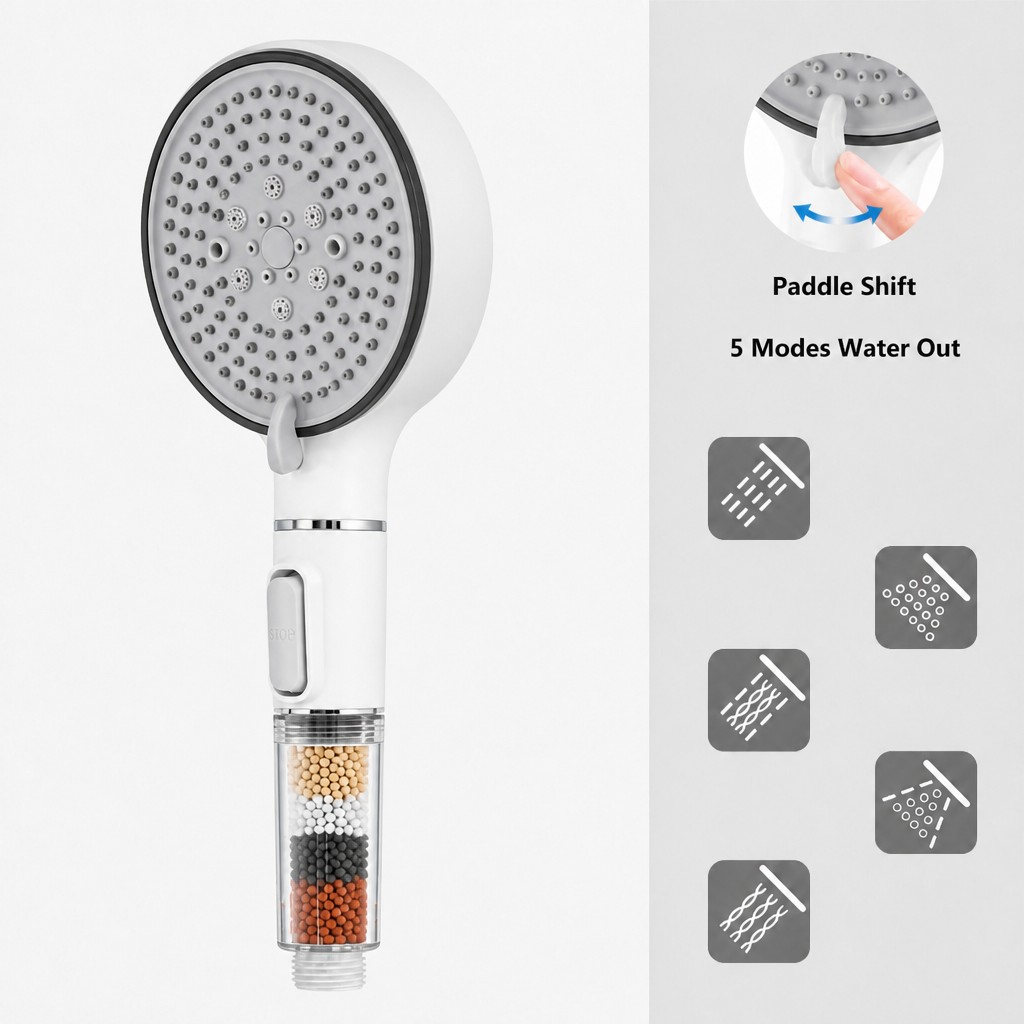
This 120 × 260 mm chrome ABS model combines four central jet nozzles with surrounding rainfall outlets. Its prominent product description lists four adjustable modes, so the user can choose targeted force or broader coverage from the same hand shower.
Four cases where the usual advice changes
A diagnosis must account for the system around the hand shower.
Apartment or rental
Do the non-invasive comparisons and keep the measurements. Ask the landlord or building manager about shared pressure, planned works and permitted fixture changes before touching a regulator or concealed valve.
Weak only at busy times
Repeat the same bucket test at a quiet time. A time-dependent drop points toward shared demand, utility supply or a building distribution limit rather than mineral scale appearing and disappearing.
Tankless water heater
If cold is strong but mixed flow falls or temperature cycles, check the heater's required activation flow, filters and capacity with its manual or service technician. Do not solve temperature instability by modifying the shower head blindly.
Thermostatic shower
Thermostatic cartridges and inlet checks can restrict one side. If flow changes sharply with temperature setting, service the valve according to its manufacturer rather than enlarging spray-face openings.
Give Huanyu four measurements, and the product discussion gets useful
Do not send only "we need a high-pressure shower head." For product matching, samples or private-label development, send the measured head-on flow, hose-only flow, available pressure or supply description, and target market. Add the spray job you want: broad rain, concentrated rinse, pulse, mist or stepless adjustment.
Huanyu's equipment page lists sealing and pressure testing plus water-flow and noise testing. That lets the conversation move from a vague "strong spray" claim to a defined model, inlet condition and test point.
Send your flow readings to HuanyuFrequently asked questions
How can I increase shower pressure without a pump?
First restore flow lost locally: straighten or replace a restrictive hose, clean serviceable spray outlets and the inlet screen, re-seat a folded washer, check that accessible valves are fully open, and flush debris according to the valve instructions. A high-pressure shower head may improve spray sensation when good flow already reaches the connection.
Will a high-pressure shower head increase water pressure?
It cannot raise the building's supply pressure. It can reduce internal losses or direct the available flow through a different outlet area, producing faster or more concentrated jets. Test the open hose first; if hose flow is weak, solve the upstream restriction.
Should I remove the shower head flow restrictor?
Not as the first step. Measure the current flow, identify the exact model and part, and check the manufacturer's instructions, warranty and destination-market requirements. A blocked screen or spray face can imitate an overly restrictive limiter, while removing an unidentified insert can cause leaks, noise or unbalanced spray.
Why is my shower strong on cold but weak on hot?
The restriction is likely in the hot-water or mixing path rather than the spray face. Possible locations include a heater filter, isolation valve, check valve, balancing device or shower cartridge. Compare flows safely and use a qualified plumber for concealed valve or heater service.
What is the quickest way to find a shower restriction?
Compare nearby fixtures, then measure the shower head and the open hose under the same conditions. Strong hose flow but weak head flow isolates the hand shower. Weak hose flow sends the diagnosis upstream to the hose, outlet, valve or building supply.
Why does shower pressure drop when another tap opens?
The system cannot maintain the same flowing pressure under the combined demand. The cause may be shared pipe sizing, a pressure regulator, a well or pump limit, a partly closed main valve, or the utility supply. Repeat measured tests with other fixtures off and on, then give the results to a plumber or utility.