
News

Shower head button not working? Diagnose the water path first

2026-08-28


Shower head button not working? Diagnose the water path first

A stiff button is not always a broken button. Scale, debris, incomplete button travel, excessive flow, a weak return part, or an internal selector fault can produce similar symptoms.

Quick answer

Turn the water to a moderate flow. Press the button through its full travel and note which nozzle zones stay active. Clean the external nozzles and the inlet screen only as the product manual allows. If the button still sticks, fails to return, or sends water through two modes at once, stop forcing it. The sealed selector or return mechanism may need service or replacement.

The first question we ask is not, "Does it click?"

It is, "Where does the water go after the click?"

A button can move normally while the internal water path fails to move with it. The reverse also happens. A button may feel stiff because mineral deposits or debris increase resistance, while the selector parts are still intact.

From a factory point of view, feel alone is weak evidence. We compare button travel, return, active nozzle zones, flow level, leakage, and repeatability. That combination tells us much more than one press in a dry product.

Identify what the button actually controls

Three products can all be sold as "push-button showers" while the button performs a different job. Troubleshooting starts with this distinction.

01

Spray cycle button

Each full press advances the internal selector to another outlet zone, such as rain, pulse, then a combined pattern.

02

Pause or stop button

The button restricts or stops flow. It may not be the same part that changes the spray pattern.

03

Electronic touch control

A battery, sensor, solenoid, or powered valve may be involved. The mechanical checks in this guide do not cover that system.

If a product page, carton, and sample use different labels, confirm the button function on the actual sample. Do not assume that "one-key," "pause," and "mode switch" describe the same internal action.

Read the symptom before opening anything

What you observe First suspects Useful next check
Button is hard to press Scale around the button, debris, misalignment, or a dry or damaged return part Inspect the button edge. Test at moderate flow. Do not add lubricant unless the product instructions identify a serviceable part.
Button clicks, but the spray does not change Incomplete travel, selector not engaging, or internal damage Press fully once. Watch whether any outlet zone changes, even briefly. A click without a water-path change is the important clue.
Two spray patterns run together Button not fully pressed, blocked nozzles, excessive flow, or poor port separation Reduce flow, clean the affected nozzles as instructed, then make one deliberate full press.
Button stays down Return spring or plunger problem, deposits, or physical damage Turn off the water. If the button does not return without force, check the model's service instructions or replace the head.
Pause function leaks a steady stream Debris at the shutoff surface, seal wear, or a pause design that intentionally leaves residual flow Confirm the intended function in the manual. Separate a few residual drops from continuous pressurized flow.
Switching works only at low flow Flow-sensitive selector, excess supply flow, or restriction creating unstable pressure Compare low, moderate, and high flow. Check the inlet screen and hose for restriction before blaming the button.

The TOTO manual we checked gives a useful example of this logic. For water coming from nozzles outside the selected mode, it asks users to check clogged nozzles, excessive flow, and whether the mode button was pressed fully. That does not diagnose every hand shower, but it shows why mixed spray is not automatically proof of a broken button.

Simplified push-button spray selector A button moves a plunger or cam, which indexes a diverter plate. Open ports then direct water to one or more spray zones. Thumb button Plunger, cam or index part Diverter plate and sealing face Spray zone A Spray zone B Combined

What happens behind the button

In a typical mechanical selector, the visible button transfers motion to an indexing part. That part moves or rotates a diverter so water reaches a different group of outlets.

If the button does not complete its travel, the diverter may stop between ports. Water can then reach two spray zones. Internal construction varies by model, so treat this as a functional map, not a service drawing.

The six checks we would make at the factory

These checks move from external evidence to internal risk. They help avoid destroying a serviceable hand shower just to find a blocked inlet screen.

Record the exact model and button job

Is it a spray selector, pause button, or both? Photograph the current spray and the button position. A vague report such as "the button is bad" removes the evidence needed to reproduce the fault.

Map the active nozzle zones

Run the shower at moderate flow. Press once, release, and wait. Note which groups of nozzles remain active. Repeat for every position.

Change the flow before changing parts

Compare low, moderate, and high flow. If the fault appears only at one condition, the mechanism may be reacting to flow or upstream restriction rather than a completely failed button.

Check the cleanable restrictions

Inspect the inlet screen, gasket position, and exposed nozzles according to the model manual. The TOTO handshower manual checks its strainer for debris and advises gently rubbing mineral buildup from nozzles.

Separate the hand shower from the system

Confirm that the hose and water supply are not causing weak or unstable flow. A dirty screen between the hose and hand shower can reduce flow and let debris reach internal mechanics, as hansgrohe notes in its service guidance.

Decide whether the selector is serviceable

If a sealed unit still sticks, fails to return, or mixes modes after external checks, do not pry it open. Use the manufacturer's parts route or replace the hand shower.

Stop immediately if: the plated body is cracked, the button has physical damage, water leaks through the housing seam, or the product includes an electronic control. Shut off the water before disconnection.

What we look for when developing a button hand shower
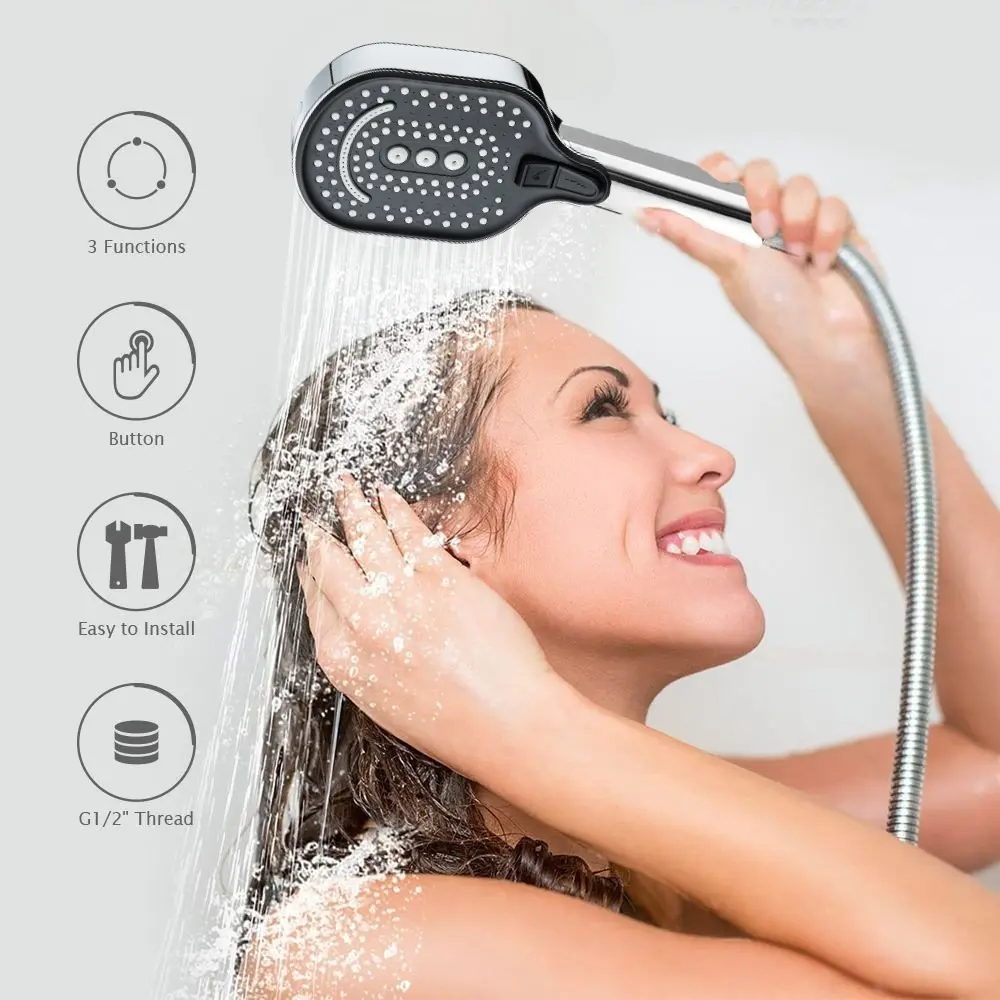
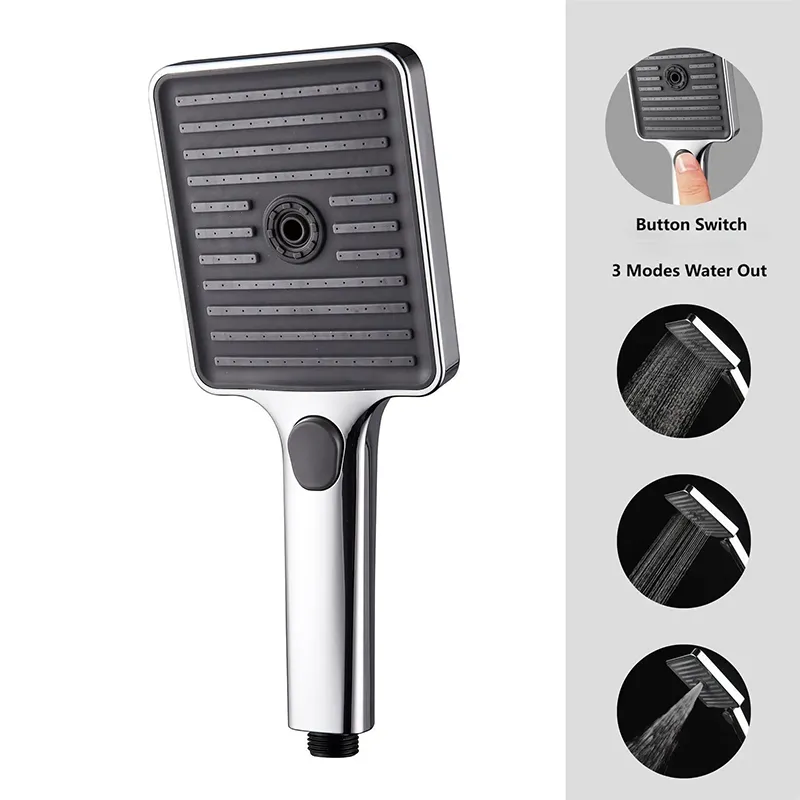
Huanyu BHS11010 one-button multi-spray hand shower
Huanyu BHS11010, shown on its current product page.

A button is only useful when the entire water path changes cleanly.

For us, button feel is one part of the design review. We also look at whether the mechanism returns, whether one spray zone closes before another opens, whether the sealing structure stays dry, and whether nozzle or inlet restrictions change the switching result.

The current BHS11010 product page describes a 140 mm ABS hand shower with a chrome surface, standard G1/2 connection, and three outlet modes: rain, pulse, and hybrid. Its soft silicone outlets and anti-blocking design matter to this discussion because nozzle condition can affect the pattern a user sees after pressing the button.

Our opinion is simple: a strong click is not a quality target by itself. The useful target is a repeatable press followed by a clean, predictable change in water distribution.

Pressure and sealingHuanyu's equipment page states that its sealing and pressure equipment simulates 0.3 to 1.0 MPa.
Spray observationThe same page lists equipment for water-flow performance, spray uniformity, and noise testing.
Button cyclingThe BHS11001 page specifically states that its button sealing structure was verified through 10,000 press tests.
Model-specific pressure testThe BHS11001 page separately states a 0.2 to 0.8 MPa water-pressure test for that model.

Three Huanyu button-control examples

BHS11010

140 mm ABS hand shower with chrome surface, one-button switching, rain, pulse, and hybrid modes, soft silicone outlets, and G1/2 connection.Useful when the project needs visible mode separation through distinct outlet zones.

BHS11001

140 mm ABS hand shower with chrome surface, one-key water-stop positioning, more than 100 outlets, and rain, pulse, and mixed modes on the current product page.The page also records 10,000 button presses, 0.2 to 0.8 MPa pressure testing, and a 48-hour salt-spray test for this model.

BHS11004

130 mm ABS hand shower with chrome surface and push-button multi-function control.Confirm the selected sample's button sequence and packaging specification before a bulk-order approval.

Four "fixes" that can make the diagnosis worse

Forcing the button repeatedlyThis can damage a return or indexing part that was only obstructed.
Pouring strong acid into the headCleaning chemistry can damage finishes and internal materials. Follow the exact care instructions for the model.
Adding thread tape everywhereTape may help a specified threaded joint. It cannot repair an internal selector or clear a restricted inlet.
Opening a sealed body firstYou may destroy clips, seals, or evidence that would have shown whether the fault came from debris, flow, or the selector.

Clean, service, or replace?

Clean

Choose this route when the button still returns, the housing is intact, and the symptom changes after inspecting an accessible screen or cleaning external nozzles according to the manual.

Service

Choose model-specific service when the manufacturer identifies a replaceable spring, plunger, seal, or selector part and provides instructions. hansgrohe, for example, notes that calcification or a defective spring can cause a stuck push button on certain products. That guidance should not be transferred blindly to another model.

Replace

Replace the hand shower when the plated body is cracked, the sealed selector has failed, the button will not return, modes continue to mix after the allowed cleaning steps, or no approved spare-part route exists.

If weak flow is the main symptom, diagnose the supply, hose, inlet screen, and nozzles first. Huanyu's guide to increasing shower water pressure covers the wider system checks.
Need a button-control hand shower that matches your market?

Huanyu develops button-control hand showers in different panel sizes, spray layouts, and control formats. Our current site shows pressure and sealing equipment, water-flow and spray-uniformity testing, injection molding, assembly lines, and model-level button-cycle verification. Send us the target spray sequence, pressure range, finish, connection, and packaging. We can compare it with an existing model or review an OEM/ODM direction.

Frequently asked questions

Why is my shower head button hard to press?

Mineral deposits, debris, misalignment, or a problem with the button's return or indexing parts can increase resistance. Test the shower at moderate flow, inspect the accessible areas, and follow the model's cleaning instructions. Do not force the button.

Why does my shower head not change settings when I press the button?

The button may not be completing its travel, or the internal selector may not be engaging. Press it fully once and watch the outlet zones. If the button clicks but the water path never changes after allowed cleaning checks, the selector may need service or replacement.

Why are two shower spray modes running at the same time?

A partially completed button press, clogged nozzles, excessive flow, or an internal diverter that has stopped between ports can produce mixed spray. Reduce the flow, clean the nozzles as instructed, and test one full button press.

Can I lubricate a stuck shower head button?

Only if the manufacturer identifies a serviceable part and specifies a compatible lubricant. Lubricant cannot remove an inlet blockage or repair a damaged selector. Applying an unknown product may affect seals or contaminate the water path.

Should I replace a push-button shower head if the button will not return?

Turn off the water and check the model's service instructions. If the body is sealed, the return parts are not serviceable, or the button has physical damage, replacement is usually safer than forcing the mechanism open.

About the author: The Huanyu Shower product team develops hand shower products for international markets. This guide combines current Huanyu product and equipment information with model-specific manufacturer service documentation.

Related News
X
We use cookies to offer you a better browsing experience, analyze site traffic and personalize content. By using this site, you agree to our use of cookies. Privacy Policy
Reject Accept