
Why is my shower head whistling?
A high-pitched whistle usually means water is passing through a narrow, unstable, or partly blocked path. The restriction may be in the nozzles, inlet screen, flow control, hose, valve, or pipework. Find where the sound begins before replacing the shower head.
Lower the flow slowly. If the pitch changes immediately, the sound is flow-related. If it remains after the hand shower is removed, the head is probably not the source.
Do not start by buying a new shower head
The sound may travel along the hose and metal fittings. What seems to come from the faceplate can begin at a valve several feet away.
Our factory approach is to change one condition at a time. We change flow, spray mode, and the connected component. That gives us a repeatable symptom instead of a guess.
The sound itself gives you a useful first clue
Steady whistle
Often follows a narrow restriction. The pitch usually changes as flow rises or falls.
Squeal on one mode
Points toward that mode's outlet path, selector position, or active nozzle zone.
Rattle or buzz
May indicate a vibrating screen, flow control, selector part, loose fitting, or valve component.
Knock at shutoff
More often involves rapid pressure change, a valve, or pipe support than the nozzle face.
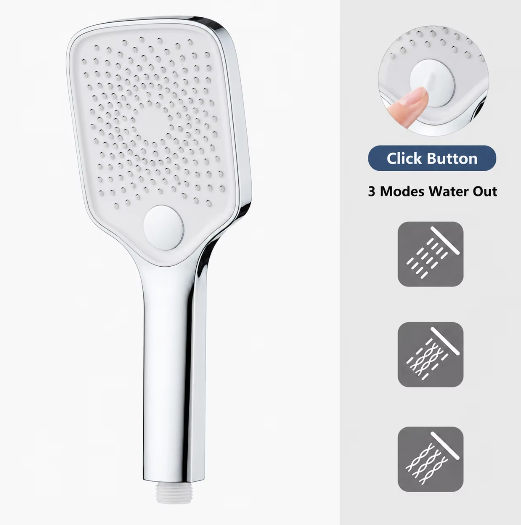
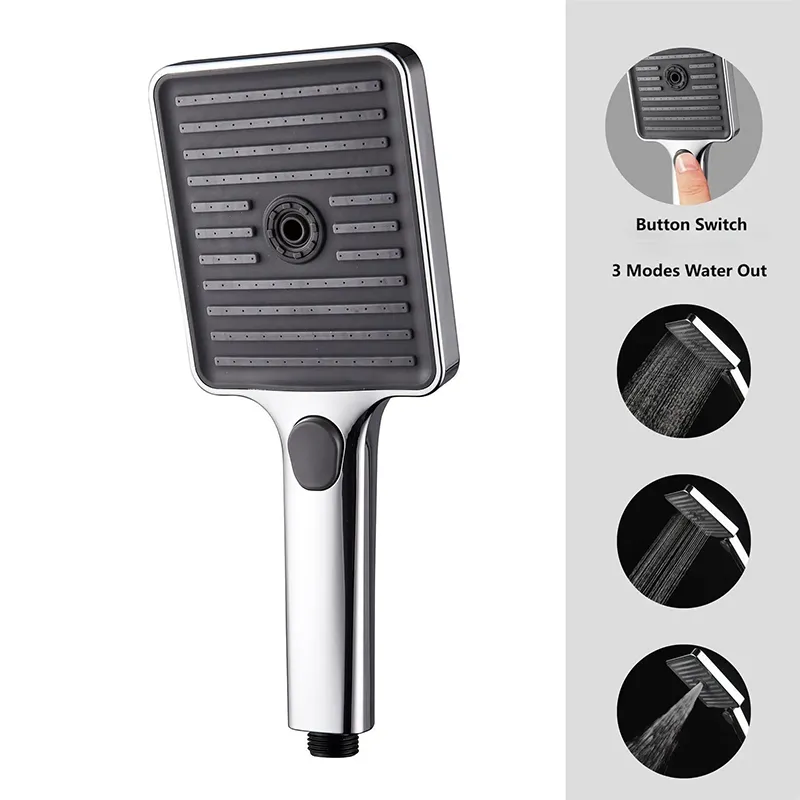
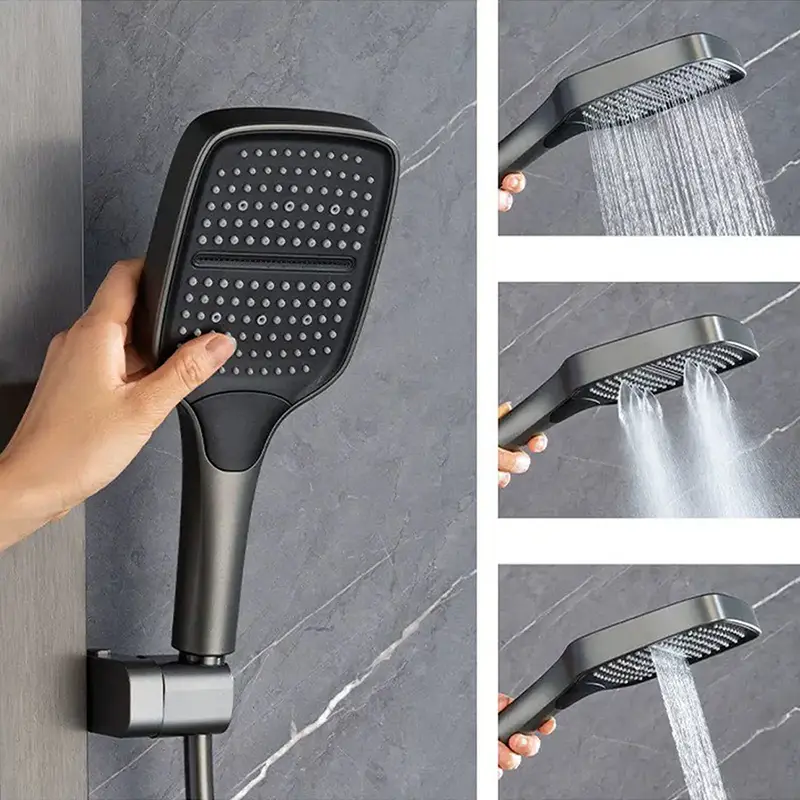
Aerated, bubble, mist, and pulse modes do not have to sound identical. A stable sound that appears only with one designed spray pattern may be normal. A new sharp tone, unstable spray, reduced flow, or vibration deserves inspection.
Follow the sound upstream
Water passes through several restrictions before it becomes a spray. Test them in an order that leaves the plumbing intact.
The first four points are usually accessible without opening the wall. Stop at the valve or pipework unless you are qualified to service it.
A six-step test that preserves the evidence
Use cool or comfortably warm water
Run the shower at low flow, then increase it gradually. Record when the whistle begins and whether its pitch rises.
Change every spray mode
Keep the supply flow similar. Note whether the sound appears on rain, pulse, mist, bubble, or a mixed setting.
Inspect the visible nozzles
Look for side-spraying jets, uneven flow, and mineral deposits. Clean only with the method allowed by the product manual.
Check the inlet screen and gasket
Turn off the water, disconnect the hand shower, and inspect the connection. Keep the original screen and gasket arrangement.
Run the hose without the hand shower
Aim the hose safely into the tub or shower tray. Open the flow briefly. Do not use hot water for this check.
Swap one known-good component
If available, test another compatible hand shower or hose. Change only one part, then repeat the same flow sweep.
Six likely causes, ranked by where the noise appears
Partly blocked nozzles
A narrowed outlet increases local water velocity. KOHLER's current Rite-Temp support page states that clogged showerhead nozzles can cause a high-pitched squeal or whistle.
Dirty inlet screen or flow control
A screen can collect debris while still passing water. The result may be lower flow, a concentrated jet, or a vibrating restriction.
Selector stopped near a port edge
If only one mode whistles, the active outlet path matters. Press or slide the control fully before deciding that the internal part has failed.
Pressure and flow mismatch
A product can become noisy when a narrow passage receives more flow than the rest of the path can discharge steadily. Reduce flow and compare. If weak flow is the main symptom, use Huanyu's separate guide to increasing shower water pressure.
Twist, kink, or loose internal layer
Straighten the hose and check whether the tone changes as the hand shower moves. Replace a damaged hose rather than trying to open it.
Valve or pipe vibration
hansgrohe identifies loose parts or high water pressure as possible causes of noisy water flow or knocking in a shower faucet. This is a job for a local specialist.
How we think about shower noise at the factory

We do not judge noise from one dry sample or one fully open tap.
Huanyu's Equipment page lists water-flow and noise-testing equipment for flow performance, spray uniformity, and noise level. It also states that sealing and pressure equipment simulates 0.3 to 1.0 MPa.
Those checks belong together. A quiet product with unstable spray is not a good result. Neither is an even spray that develops a sharp tone at a different flow condition.
When we review a noisy sample, the useful questions are:
- Does the pitch follow pressure or flow?
- Does the sound belong to one spray path?
- Do the nozzles remain uniform when the sound starts?
- Does the selector, screen, or hose vibrate?
- Can the symptom be repeated after reconnecting the same parts?
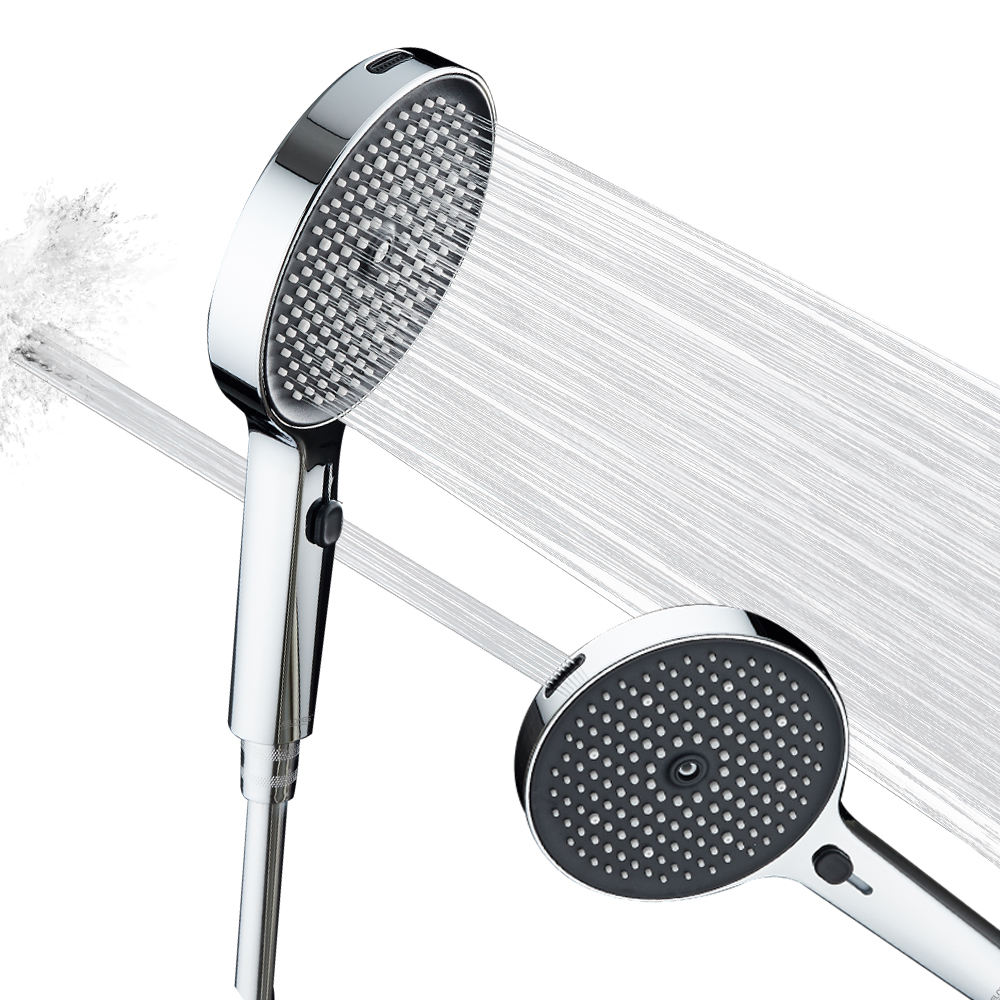
A product example where noise control is part of the mechanism
The current SFC-HS0001 product page describes a rack-and-gear linkage that moves its water-distribution plate. The page states that optimizing the gear structure maintains stable engagement during pressure fluctuation and reduces sharp whistling and vibration under high pressure.
This is the design decision we prefer: control the moving water path, not just add material around a noisy part.
What to clean, what to replace, and what to leave alone
Accessible silicone nozzles, a removable inlet screen, and mineral deposits around the faceplate. Use the exact care method for the finish and model. The Huanyu self-cleaning hand shower range uses flexible silicone nozzles designed for easier deposit removal.
A kinked or internally damaged hose, a deformed gasket, a damaged inlet screen, or a sealed hand shower that still whistles after the external checks.
A noisy mixing valve, pressure imbalance, vibrating pipe, water hammer, or any noise that continues after the shower head and hose are isolated.
Do not drill nozzles, remove an unknown flow-control part, or pour strong acid into a sealed shower head. hansgrohe's care guidance warns against several aggressive cleaners and tells users to follow the instructions for the specific product.
For a noisy sample, send evidence we can reproduce
Huanyu develops and supplies hand showers with different spray paths, button mechanisms, self-cleaning nozzles, and stepless controls. When you contact us about a noise issue or a new OEM/ODM project, a short recording plus the operating conditions is more useful than the word "whistle."
Frequently asked questions
Why does my shower head whistle only at high pressure?
Higher flow can increase velocity through a narrow nozzle, screen, flow control, or selector passage. Lower the flow gradually. If the pitch follows the flow, inspect the accessible restrictions before replacing the hand shower.
Can limescale make a shower head whistle?
Yes. Limescale can narrow or partly block shower nozzles. KOHLER identifies clogged nozzles as one cause of a high-pitched shower squeal or whistle, while hansgrohe lists whistling among possible signs of limescale buildup.
Why does only one shower spray setting make noise?
Each spray mode can use a different outlet zone and internal path. A whistle on one setting points toward that zone, its selector position, or a flow condition specific to the mode.
How can I tell whether the shower head or valve is noisy?
Turn off the water, remove the hand shower, aim the hose safely into the shower tray, and run cool water briefly. If the noise disappears, the hand shower is the likely source. If it remains after the hose is also isolated, ask a plumber to inspect the valve or pipework.
Should I remove the flow restrictor to stop the whistle?
Not unless the product instructions allow it. The part may also act as a seal or be required for the intended flow. First clean the nozzles and inlet screen, compare flow conditions, and confirm where the sound begins.