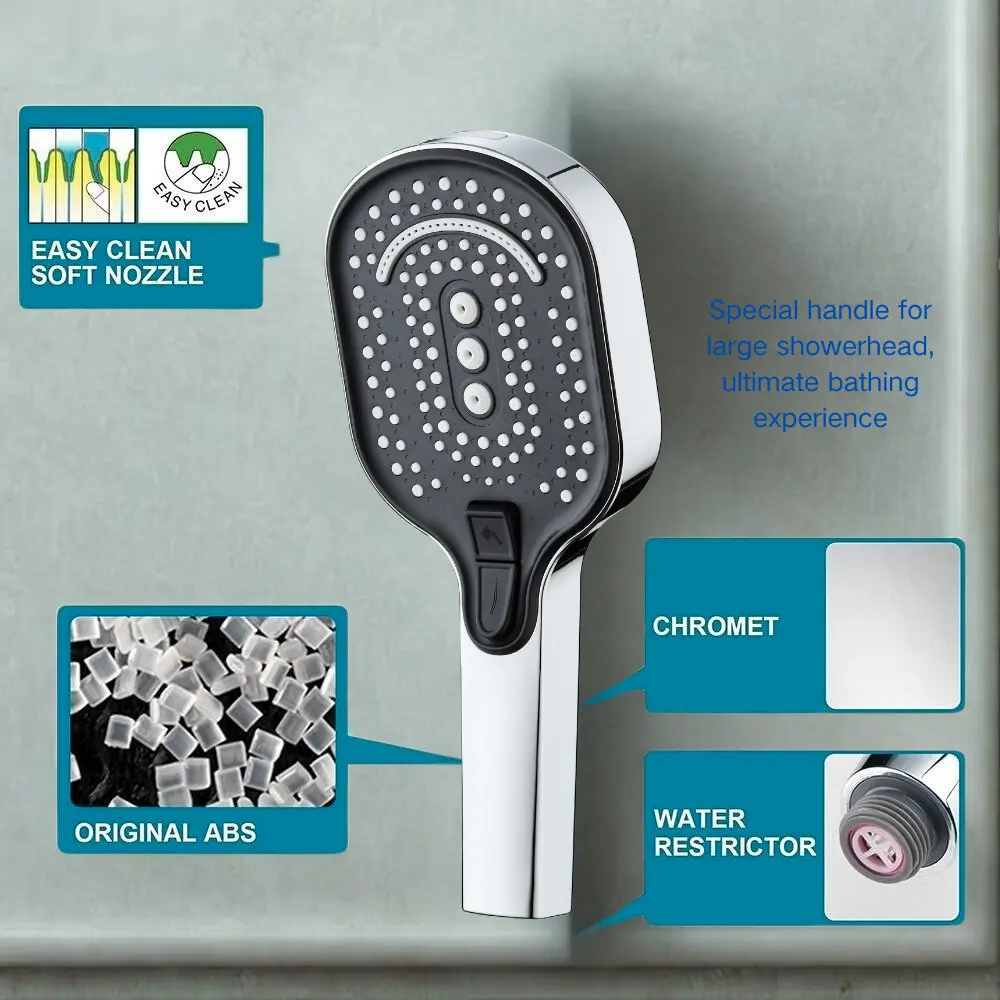

One crooked jet, one empty section and one weak spray mode are different faults. Mark the shape of the problem before you soak, open or replace the shower head.
A shower head usually sprays sideways because mineral scale or debris disturbs one nozzle. Wipe flexible nozzles while the water runs and follow the maker's cleaning method for harder deposits. If a whole section stays weak, or only one mode is affected, inspect the selector and internal distribution path instead. When every jet is weak but still points correctly, test the hose or shower arm because the problem may be flow, not spray direction.
First check whether the water is leaving the nozzles at the wrong angle or whether the entire shower head is simply aimed badly. A loose swivel can point the whole cone toward the wall. That is an aiming problem. A few thin streams crossing the rest of the spray point to the face, nozzle lips or deposits.
This sounds obvious until water is running. Splash makes a single stray stream look like a leak, while a tilted hand shower can make a normal spray look uneven. Stand to the side and observe the water close to the face. The first few centimeters show where each stream begins. Water that starts at a body seam, inlet or joint belongs to a leak diagnosis, not a nozzle diagnosis.
Do not judge a multi-function shower head while it sits between modes. Move the selector fully into each position. A partially indexed distribution plate can feed two zones poorly and imitate a blockage.
Our working rule: follow the first wrong stream back to the smallest affected zone. One nozzle suggests an outlet problem. One ring suggests a distribution problem. Every mode suggests a common inlet or supply problem.
The shape narrows the cause
Match your shower to one of these spray maps
The dots below are diagnostic patterns, not a drawing of a particular Huanyu model. Compare the affected area, not the exact nozzle count.
One jet goes sideways
Start at that nozzle lip. Scale, grit, a nick or a deformed outlet can steer one stream without changing the others.
One section is weak
Check a cluster of outlet deposits, a shifted face plate or a restricted channel feeding that section.
One mode is wrong
The common inlet still feeds another mode. Inspect the selector, distribution plate and passages for the affected mode.
Everything is weak
Look before the face: inlet screen, hose, washer, flow-control part, valve or building supply. Weak is not the same as crooked.
Run a quick spray-map test
- Let the flow settle.Run the shower briefly. A momentary sputter after plumbing work is different from a stream that stays crooked.
- Watch near the face.Find where the first wrong stream begins. Ignore water after it hits another jet, your hand or the wall.
- Photograph every mode.Use the same angle and valve setting. A photo makes a weak ring or empty sector easier to compare.
- Wipe only flexible outlets first.Rub the suspect silicone tip with a finger while water runs. Do not push a pin into it.
- Compare head-on and hose-only flow if all modes are weak.Strong hose flow moves the fault into the hand shower. Weak hose flow sends the check upstream.
Fix the smallest affected zone
Five patterns and the next useful check
Clean the nozzle lip, not the inlet
A thin stream changes direction when water leaves one side of an outlet faster than the other. A crust on the lip, a grain of debris or a misshapen opening can do this. Flexible silicone tips are useful because you can roll the tip between a finger and thumb, which breaks the deposit's grip.
If the same jet stays crooked after approved cleaning, compare its shape with neighboring outlets. A torn silicone tip or damaged hard outlet may need a replaceable face part or a new head.
Clean the affected cluster and check what changed
Several neighboring sideways jets usually justify a face-level check first. The U.S. Geological Survey explains that hard water contains dissolved calcium and magnesium. When hard water is heated, calcium carbonate deposits can form. A shower face gives that residue many small wet edges where water can evaporate.
A sudden cluster after pipe, heater or valve work suggests released debris rather than slow scale growth. Wipe serviceable outlets and inspect the model's removable inlet screen if its instructions allow this.
Look beyond individual nozzles
A clean-looking quarter or ring that remains weak may not receive enough water from its internal channel. Test every mode. If the same physical sector is weak in all modes that use it, the local face or channel is suspect. If the weak area moves when the mode changes, follow the selector path instead.
Do not pry open a sealed face plate because a diagram on another model shows clips. Shower heads that look similar can use ultrasonic welding, snap fits, screws or permanently sealed structures.
Cycle the control without forcing it
A normal rain mode proves that water reaches the common inlet. If pulse or mixed mode alone scatters, the fault lies farther downstream. Move the control fully through its intended positions and note whether the pattern changes cleanly at each stop.
A stiff button, incomplete click or mode that bleeds into its neighbor can point to deposits or wear in the selector. Follow the service instructions for the exact model. Forcing a jammed button can turn a cleaning problem into a broken part.
Test the shared water path
When every outlet shortens together but remains roughly parallel, the restriction is probably shared. Check the hose for a kink, then compare flow with the hand shower removed. Photograph the washer, screen and visible insert before touching serviceable parts.
Strong flow from the open hose isolates the restriction to the head. Weak flow from the hose means the face is not the first place to work. Huanyu's guide to diagnosing low shower pressure follows that water path in more detail.
Product structure changes the diagnosis
Three Huanyu faces show why you should compare modes and zones
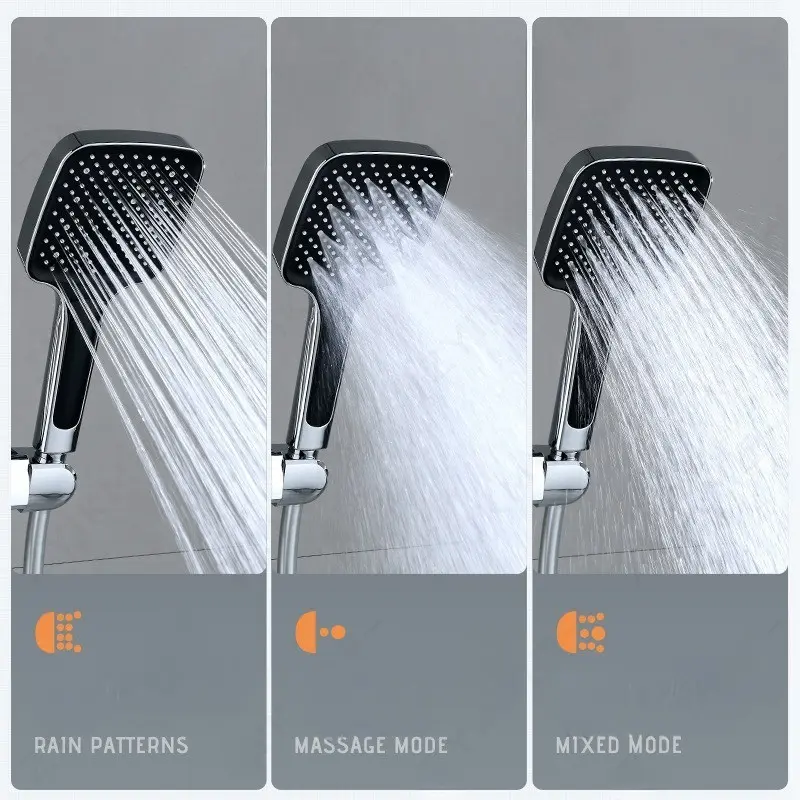
Different outlet groups are supposed to behave differently. A concentrated pulse is not an uneven rain pattern. Identify which group the selected mode should feed before deciding that a nozzle is blocked.

Outer ring and inner zone
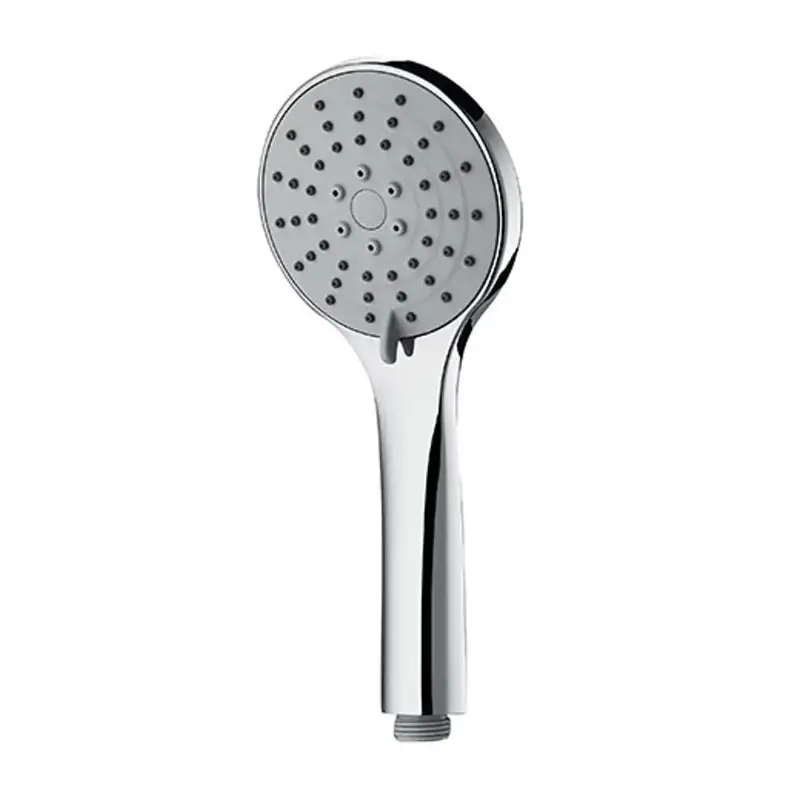
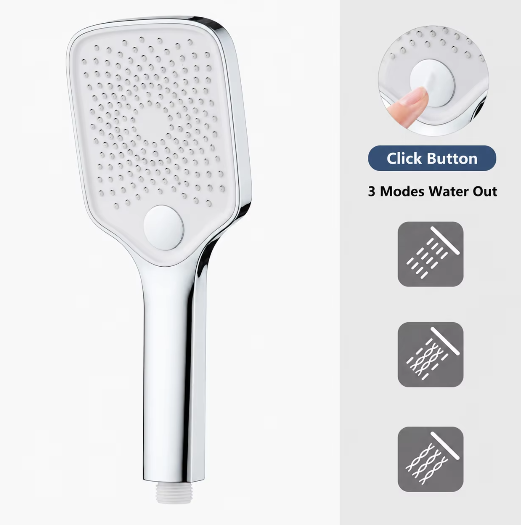
The product page describes 36 flexible silicone nozzles in the outer ring and a finer inner outlet structure. A weak outer ring and a weak inner zone lead to different checks.
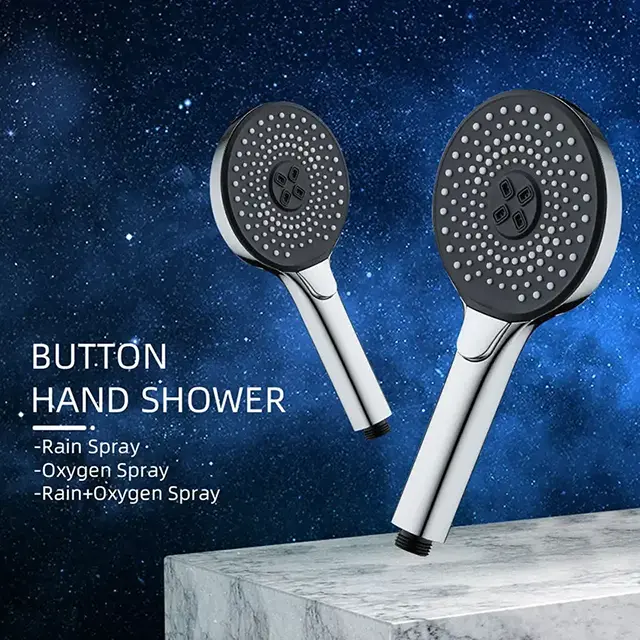
Central pulse and peripheral rain
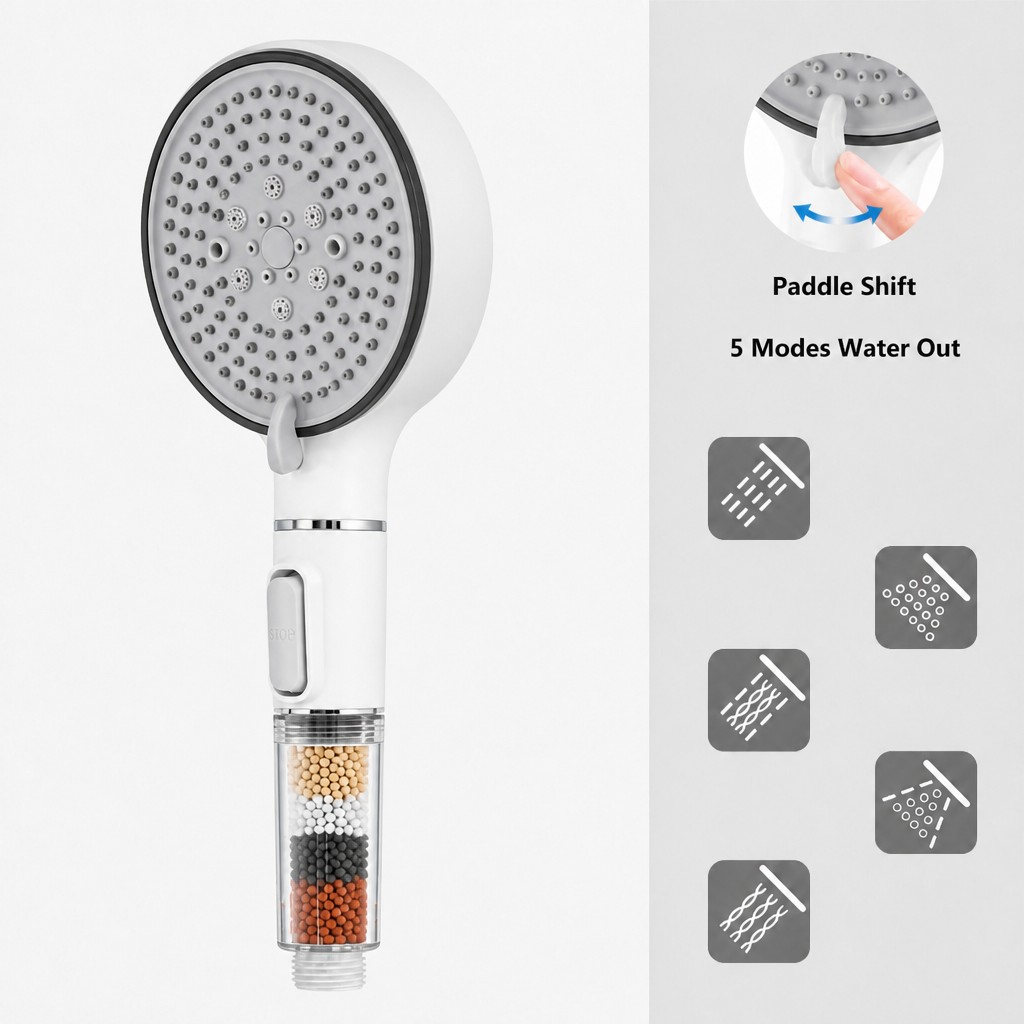
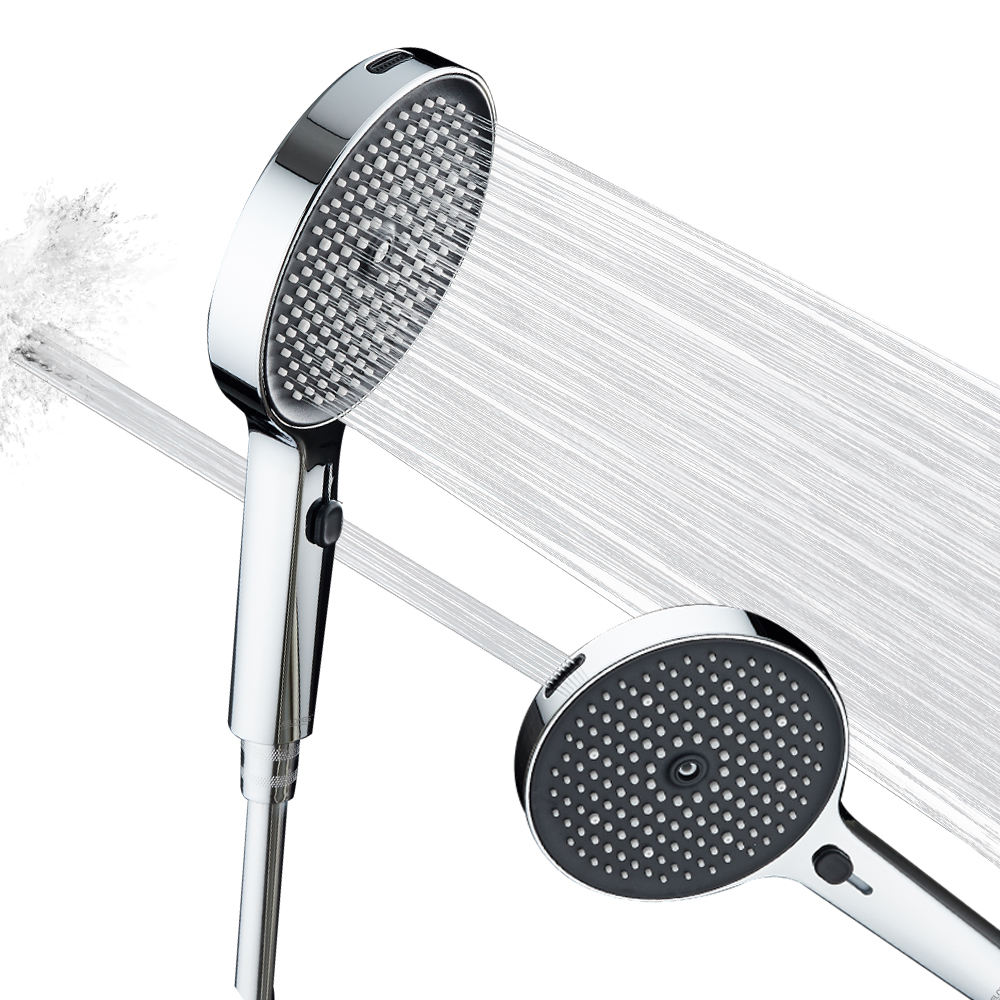
Huanyu lists a central four-hole pulse area and surrounding rain outlets, with rain, pulse and hybrid modes. Compare each mode before calling the center or perimeter defective.

Several outlet types on one face
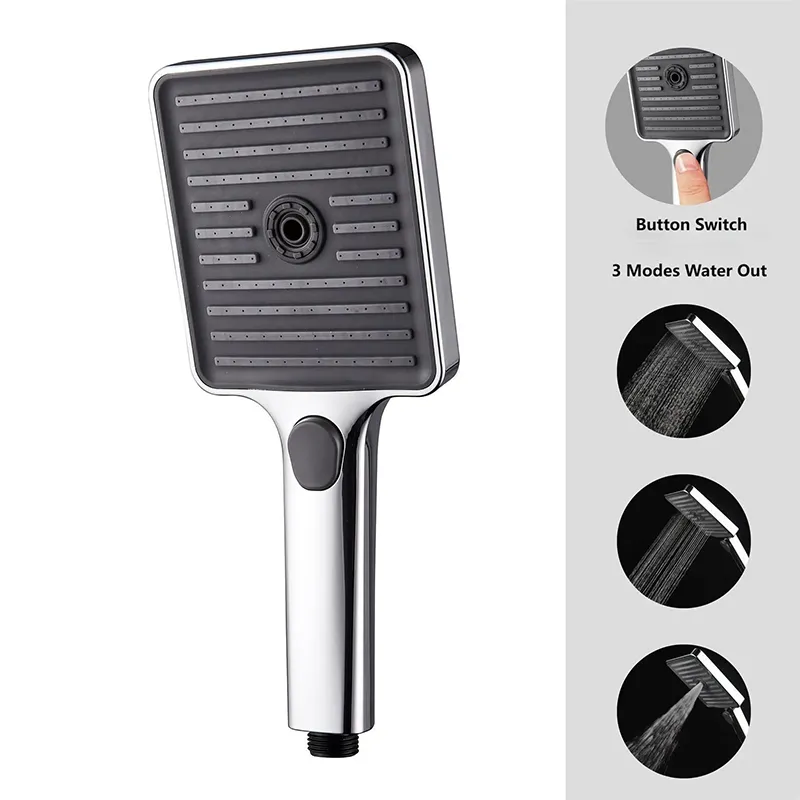
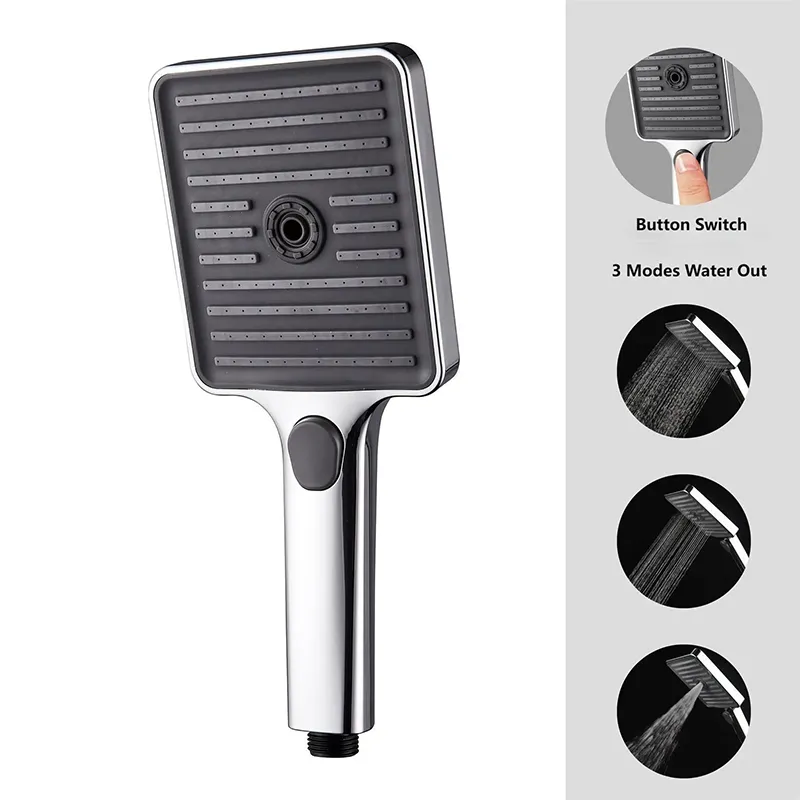
The SFC-HS0003 page lists silicone fine nozzles, larger outlets and horizontal spray strips with stepless control. Its correct pattern depends on control position.
Clean the exact construction
A fingertip and a chemical soak are not equivalent
For Huanyu flexible silicone outlets
The EC-HS60002 and SFC-HS0003 pages describe flexible silicone outlets that release attached scale when rubbed. Start with the least invasive action: run the shower and massage the affected tip with a finger.
That action targets the deposit at the outlet without exposing the whole plated body, selector and seals to a cleaner.
For other designs and heavier deposits
Use the model's care sheet. Delta, for example, tells owners to wipe its Touch-Clean spray holes and gives a 50/50 white-vinegar and water method for more difficult deposits on other Delta heads. That is Delta's product guidance, not a universal instruction for every finish and internal material.
Do not copy the strongest method you find online onto an unidentified coating, adhesive, seal or plated surface.
The factory sees distribution, not just flow
An even spray needs a controlled test condition
A homeowner usually looks at the water. In production, we also need to know the inlet condition, pressure, mode and collection area. Otherwise a sample at high pressure and another at low pressure can look different even when both are built correctly.
An early NIST shower-head test method measured both pressure-flow dependency and radial and circumferential spray distribution. Its sector rig collected water in rings and angular sections. The method makes a useful point for everyday diagnosis: total flow and where that flow lands are separate measurements.
Huanyu's equipment page lists water-flow, spray-uniformity and noise testing. It also lists sealing and pressure equipment that simulates 0.3 to 1.0 MPa.
- Same model Compare samples with the same face and internal structure.
- Same mode Record control position before judging an outlet zone.
- Same pressure Keep the inlet condition fixed while comparing distribution.
- Same time Collect long enough to compare sectors rather than one splash.

Shortcuts that create new faults
Do not repair a crooked jet with unrelated work
Do not pierce flexible tips
A metal pin can enlarge, nick or tear a silicone opening. Rub a flexible nozzle and use the approved chemical method only when needed.
Do not pry out an inlet insert
A screen, washer, regulator and retainer can look similar from the outside. Photograph the order and identify serviceable parts first.
Do not tape a nozzle problem
Thread tape may help a specified threaded joint seal. It cannot correct a stream that leaves one nozzle sideways.
Do not force the selector
A control that will not index needs a model-specific inspection. Extra force can break the button, rack or distribution plate.
Do not leave every head in vinegar overnight
Concentration, contact time, finish and internal materials differ. Follow the exact care sheet rather than extending another brand's advice.
Do not blame supply pressure for one jet
Building pressure reaches the common inlet. One abnormal outlet points to a much smaller affected area.
Know where DIY stops
Replace the head or move the diagnosis upstream?
Replace or service the shower head when
- the same nozzle stays crooked after approved cleaning;
- a flexible outlet is torn, cut or permanently deformed;
- one mode still fails while another works normally;
- the face plate, body or internal channel is cracked;
- strong hose-only flow proves the restriction is inside the hand shower.
Use replaceable model parts when the manufacturer supplies them. Do not transplant a nozzle plate or selector from a similar-looking head without a confirmed match.
Check the hose, valve or plumbing when
- every mode is weak and open-hose flow is also weak;
- several fixtures changed at the same time;
- hot water is weak but cold water is normal;
- the shower arm moves at the wall or water appears behind the trim;
- flow changes sharply when another fixture operates.
Concealed valve work, a moving wall connection and whole-building pressure faults belong with a qualified plumber or the water supplier.
For product matching and development
Send Huanyu the spray map, not only "the pressure is bad"
Include the model, inlet pressure if known, selected mode, front photo and a short video taken near the face. Mark whether one nozzle, one sector, one mode or the whole spray is affected.
Huanyu can compare that evidence with the intended outlet layout. Our current range includes self-cleaning silicone nozzles, central and peripheral spray zones, push-button controls and stepless distribution designs. Our equipment page lists flow, spray-uniformity, noise, sealing and pressure checks.
Questions people ask next
FAQ about sideways and uneven shower spray
Why is one shower head nozzle spraying sideways?
Scale, grit or damage at that nozzle can make water leave one side of the opening faster. Rub a flexible silicone tip while the water runs. If approved cleaning does not change the stream, inspect the outlet for a tear, nick or permanent deformation.
Why is my shower head spraying unevenly after cleaning?
Loosened debris may have moved into another nozzle, an inlet screen or an internal channel. Test every spray mode and check whether the weak area stays in the same physical zone. Rinse only serviceable parts and follow the model's assembly order.
Can low water pressure cause an uneven shower spray?
Low available flow can leave an entire spray weak or prevent some modes from filling fully. It is less likely to explain one isolated sideways jet. Compare all modes, then test a handheld shower with the head removed from the hose.
Can I use a needle to unclog shower head nozzles?
Do not push a needle into flexible silicone nozzles because it can cut or enlarge them. Rub flexible tips with a finger. For hard outlets or internal passages, use only the tools and method approved for the exact model.
Why does only one shower head setting spray badly?
One bad setting points toward the selector, distribution plate or passages that feed that mode. Move the control fully into position without forcing it. If cleaning serviceable outlets does not help, use model-specific service instructions.
When should I replace a shower head with an uneven spray?
Replace or service it when approved cleaning does not restore the pattern, an outlet is torn, the face or body is cracked, or one mode remains faulty while others work. First confirm that normal flow reaches the open hose or shower arm.