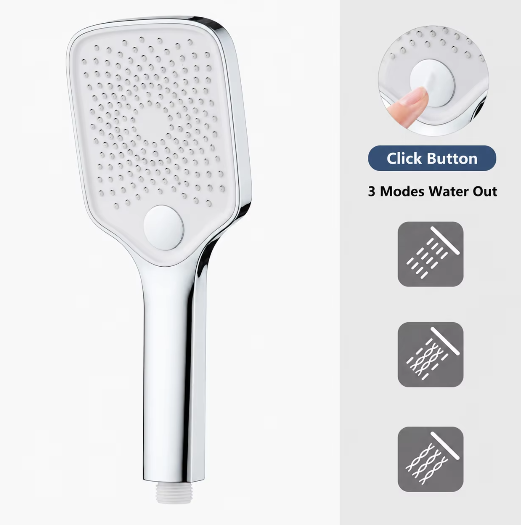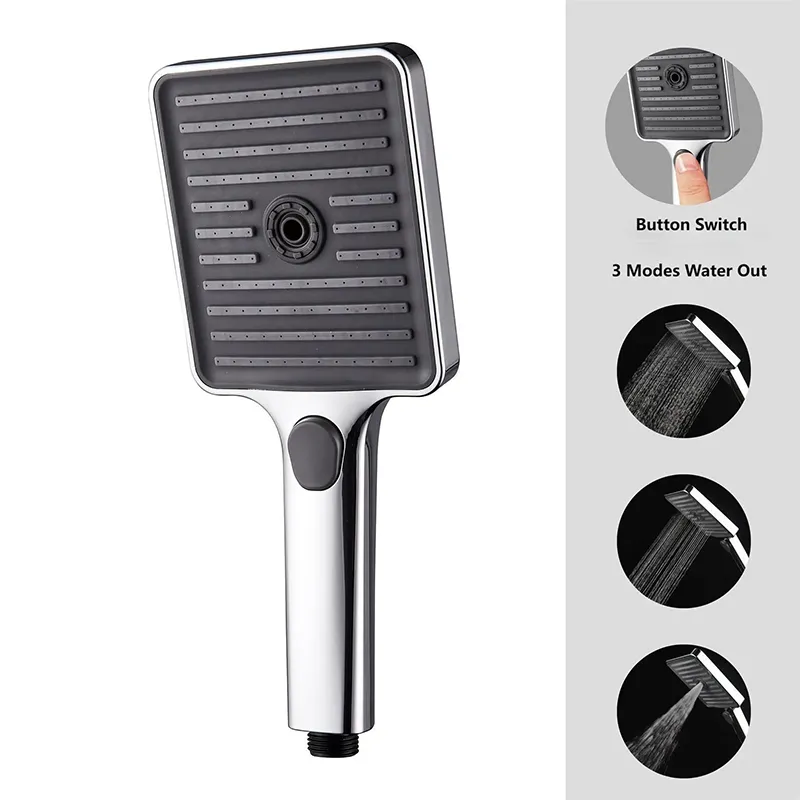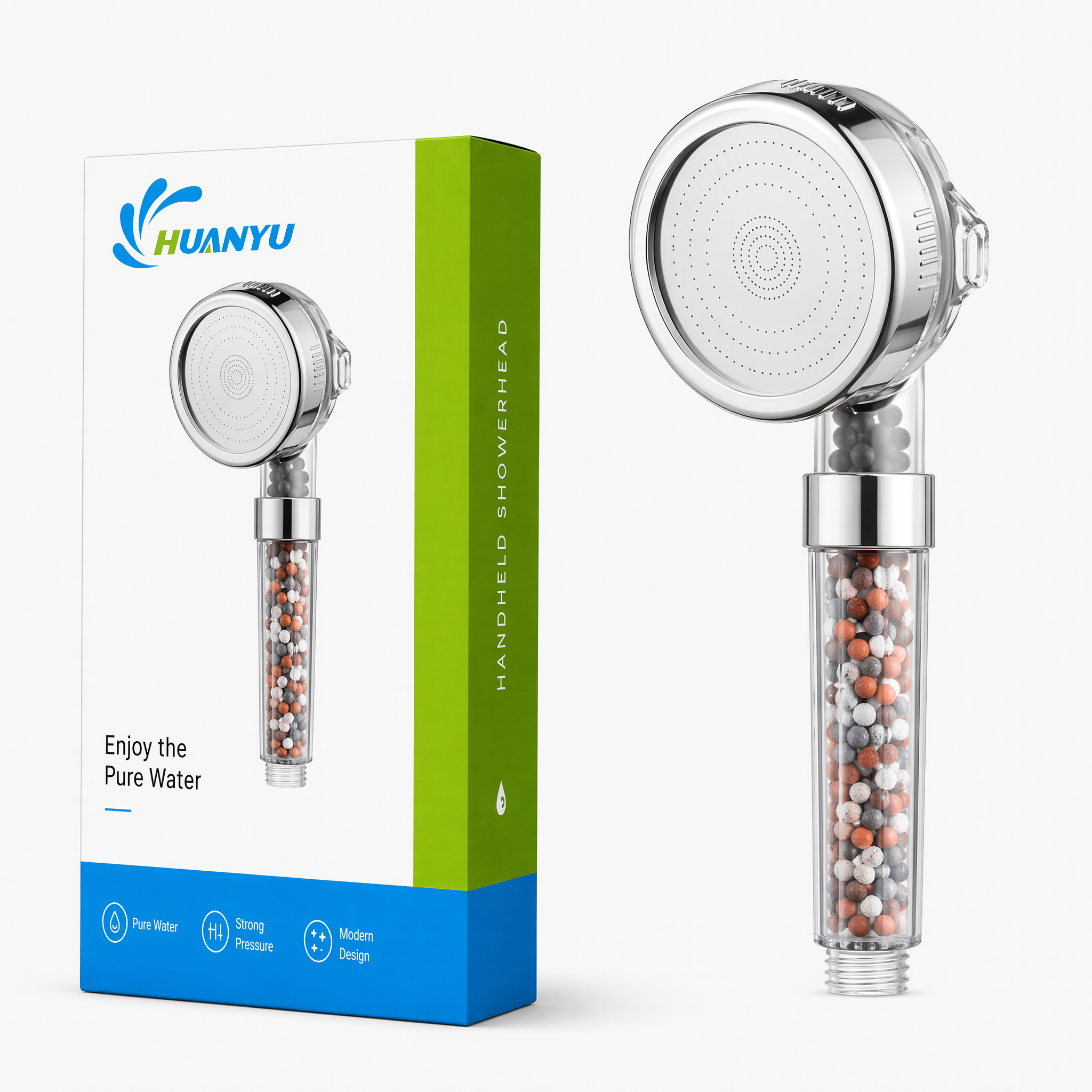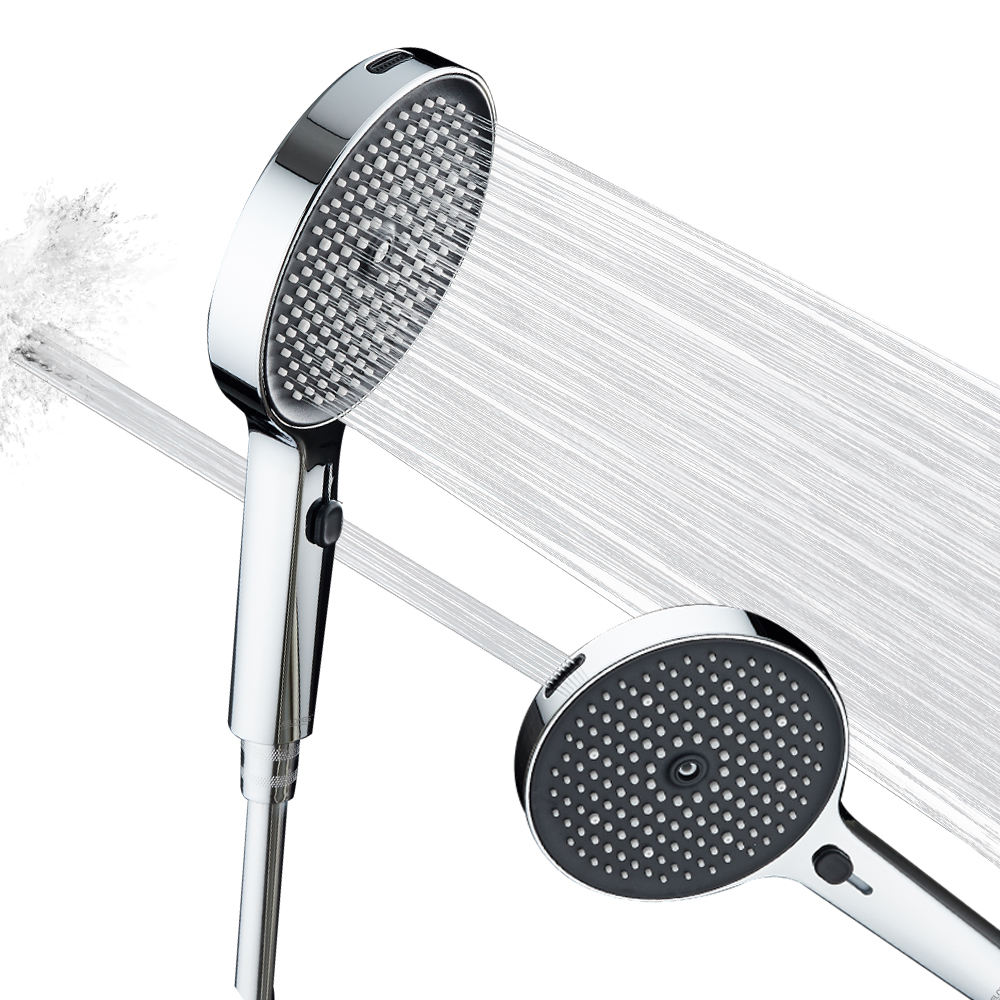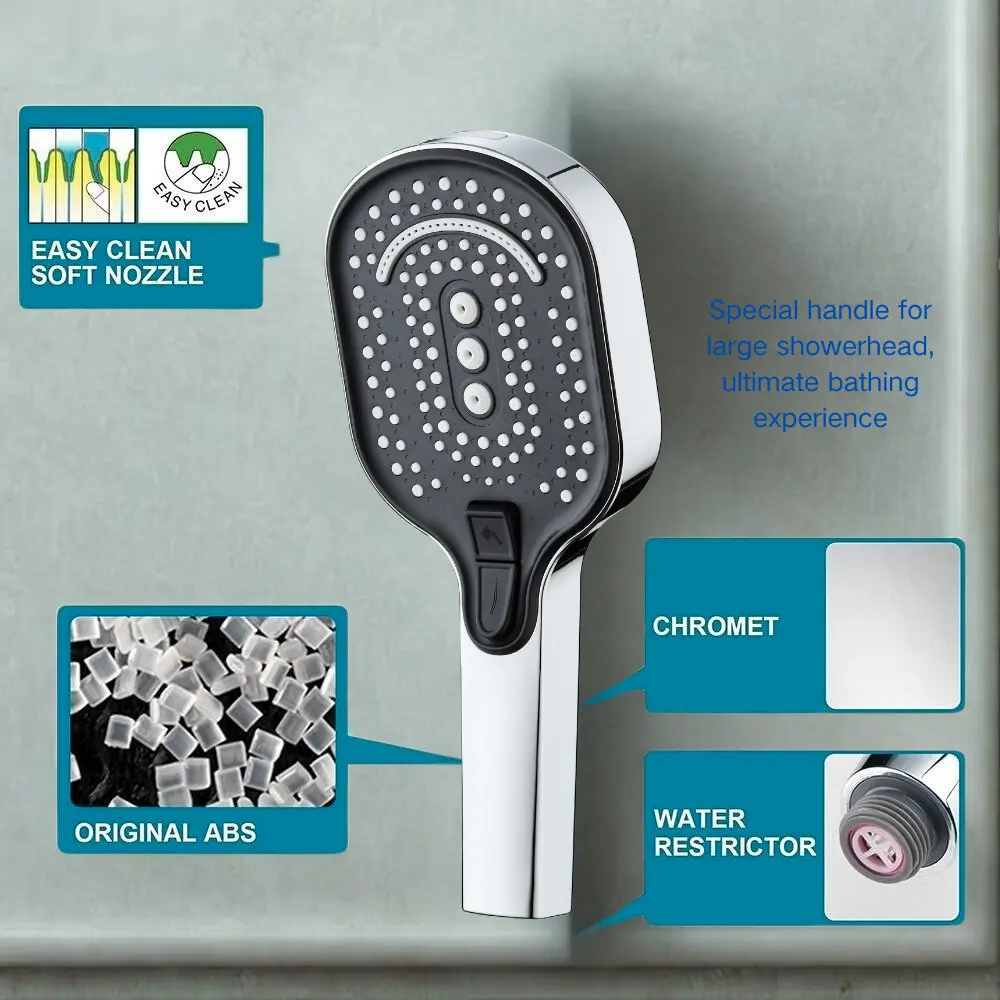

A chrome surface can cover ABS, zinc alloy, brass or stainless steel. The useful question is not whether the shower head looks metallic. It is whether each material is doing the right job.
Yes. A well-designed ABS shower head can be a good choice, especially for a handheld unit where low weight and complex internal water paths are useful. It is not automatically less reliable than a metal head. Resin quality, molded structure, inlet design, seals, coating adhesion and pressure testing matter more than the word "plastic" alone. Metal remains useful where rigidity, thin profiles, machined threads or a heavier feel are priorities.
Plastic shower heads have a reputation problem because very cheap products and well-engineered products can both carry the same short material label: ABS. That label tells you the resin family. It does not tell you the grade, wall structure, molding control, weld quality, threaded interface, finish system or test result.
The same problem exists on the metal side. "Metal shower head" might mean a stainless steel rain plate, a brass body, a die-cast zinc shell or a mixed assembly with polymer water channels. These are not interchangeable constructions.
From our factory perspective, the strongest answer is simple: choose the material for each component, then test the assembled shower head. An ABS hand shower with a reinforced body and a brass inlet can be more sensible than an unnecessarily heavy all-metal wand. A large overhead plate may benefit from the stiffness and thin profile of stainless steel. Neither decision can be made from shine alone.
The first shopping mistake
Chrome is a finish, not proof of metal
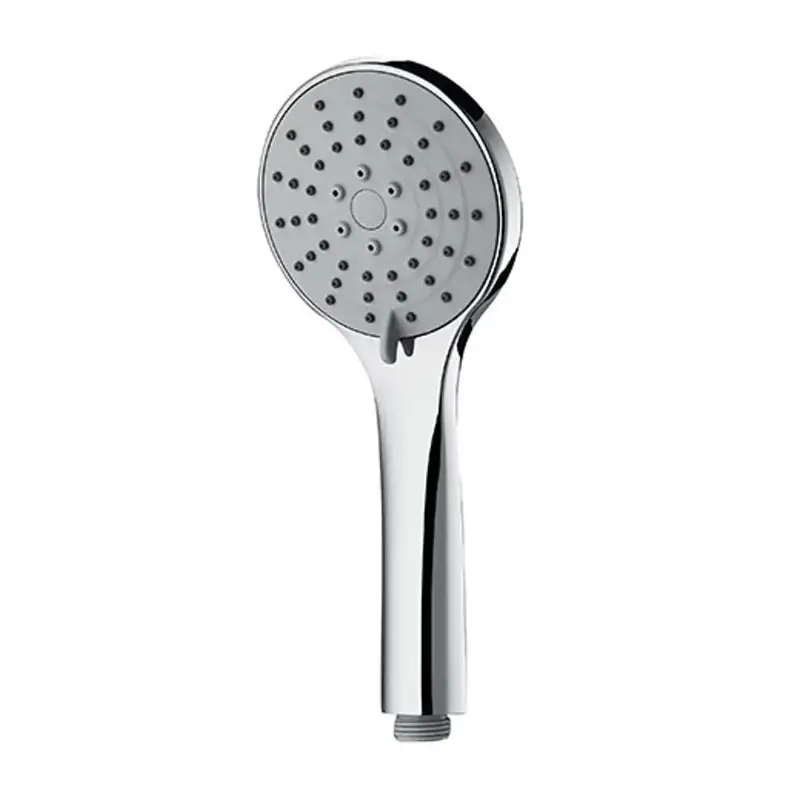
A mirror-like chrome shower head may have an ABS substrate. Chrome can also be applied over metal. Brushed nickel, matte black and other appearances create the same confusion: the visible surface and the structural material are separate specifications.
This distinction matters when you compare weight, crack risk, corrosion behavior and cleaning instructions. A plated ABS shell will not form iron rust under a scratch, but its decorative layers can still lose adhesion or show wear. A metal substrate can be strong while its coating still stains, scratches or reacts badly to an aggressive cleaner.
Do not classify a product by color. Read both the surface and material fields. Huanyu's SFC-HS0003 page, for example, identifies a chrome surface and an ABS body, then separately identifies a brass G1/2 inlet.
- Appearance
- Bright chrome
- Substrate
- Must be declared separately
- Water joint
- Check thread and insert material
- Spray face
- Check nozzle material and service access
- Evidence
- Look for coating and assembled-product tests
ABS, stainless steel, brass and zinc
What each shower head material does well
There is no honest one-to-four ranking. Each material solves a different manufacturing problem. The right comparison includes how the part is formed, where it sits and what happens if the shower head is dropped, tightened, cleaned or exposed to warm water every day.
Where it earns its place
Injection molding can produce curved handles, ribs, internal passages and control housings with fewer heavy pieces. Low mass is useful for a wand that people lift, angle and return to a holder.
What deserves inspection
Wall thickness, weld lines, joints, screw bosses and the inlet need attention. Over-tightening a weak plastic thread can start a crack. Decorative plating also needs its own adhesion and corrosion checks.
Where it earns its place
Formed stainless sheet suits slim overhead faces and rigid covers. A correctly selected grade forms a passive chromium oxide film that supports corrosion resistance.
What deserves inspection
"Stainless" is not one grade or an immunity claim. Grade, forming, welds, crevices, surface condition, chlorides and cleaner exposure all change performance. World Stainless notes that chloride-bearing water can cause pitting or crevice attack.
Where it earns its place
Brass is commonly used in valves, fittings and threaded plumbing parts. The Copper Development Association explains how its machinability supports precisely formed parts. This makes a brass inlet insert valuable even when the outer body is ABS.
What deserves inspection
Brass describes a family of copper-zinc alloys. The exact alloy, water-contact requirement and destination-market rule still matter. A yellow color is not a complete material declaration.
Where it earns its place
Die-cast zinc alloy can form detailed shells and add a substantial hand feel. It may be used for a handle or decorative housing rather than the entire waterway.
What deserves inspection
Surface preparation, plating coverage and protection at edges matter. Ask whether the term refers to the shell, the inlet or the whole body. "All metal" can hide several alloys and polymer internals.
Stop judging one label
Judge the shower head in five zones
A mixed-material shower head is not a compromise by definition. It can be deliberate engineering. The useful question is whether each boundary handles its load, water exposure and motion.

- Outer body and faceCheck substrate, wall structure, seams, rigidity and weight. This zone controls handling and protects the water path.
- Inlet and threaded interfaceLook for the thread material, washer seat and sealing face. This zone receives installation torque and hose load.
- Internal waterwayIts geometry controls losses and distribution. A shiny shell tells you almost nothing about hidden channels.
- Selector or push buttonMoving parts need suitable material pairs, clean molding or machining, and cycle testing. Body material alone cannot predict control life.
- Nozzles and decorative finishFlexible outlets can simplify scale removal. The finish needs care instructions and test evidence separate from the substrate.
Three Huanyu examples
Real products are material systems, not blocks
These current product pages show three different ways to allocate materials. The point is not that one system wins every comparison. It is that a useful specification names the part as well as the material.
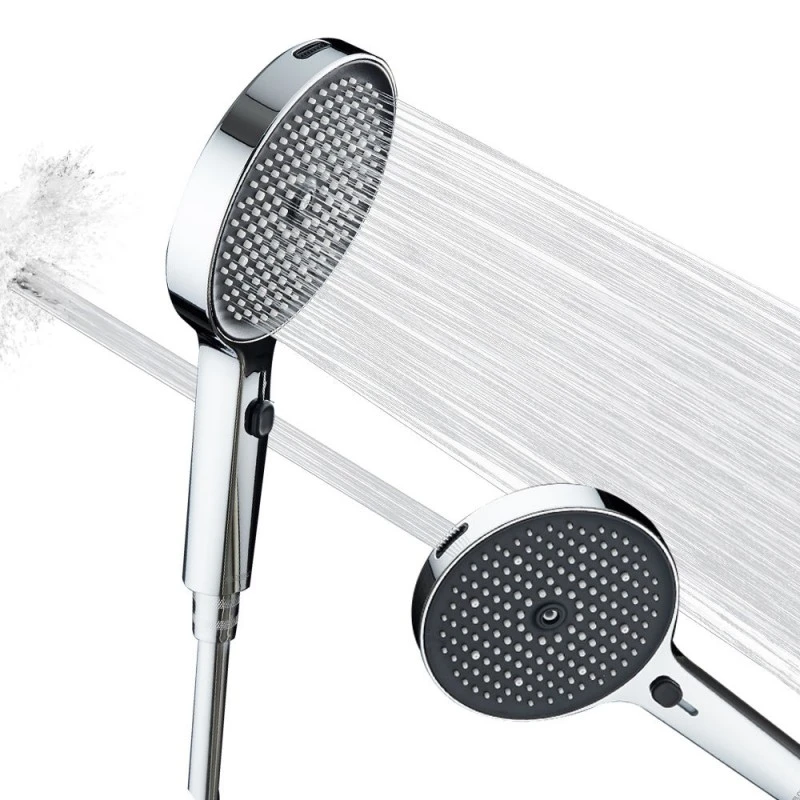
A declared ABS grade plus product tests
The page specifies Zhenjiang Qimei 707/757 ABS. It also records 10,000 button presses, 100 hours of continuous water flow and a neutral 96-hour salt-spray test. Those checks answer more than the resin name can.
ABS body, brass inlet, silicone outlets
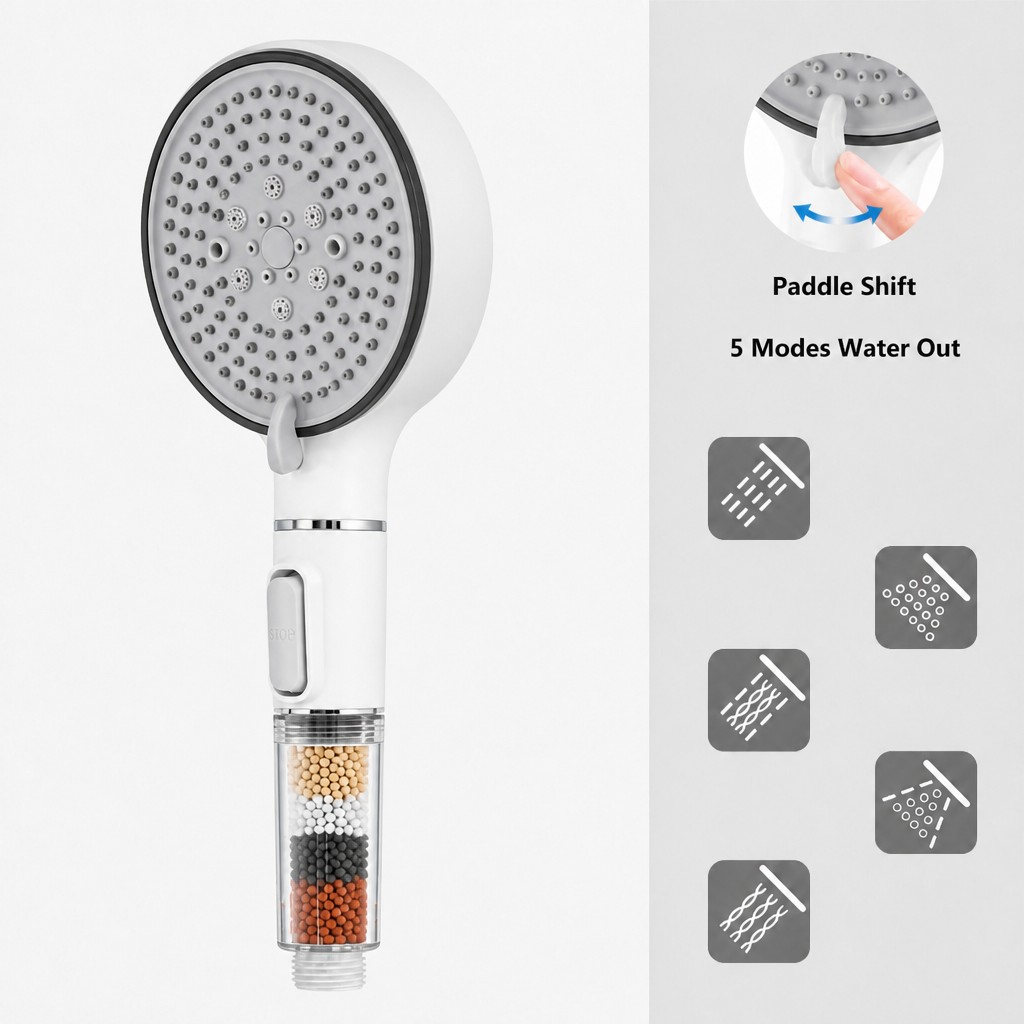
The product page lists a chrome-plated ABS body with a 20 micrometer multi-layer chrome system, a brass G1/2 threaded inlet and silicone nozzles. Each material has a separate job.
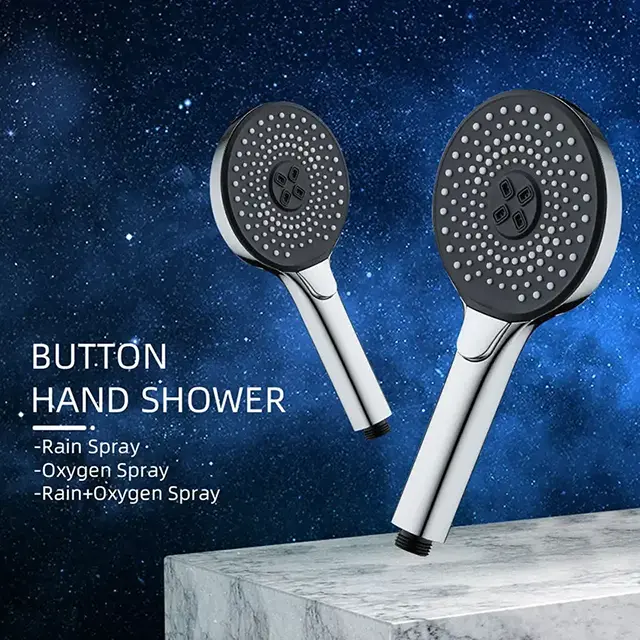
Four materials across four functions
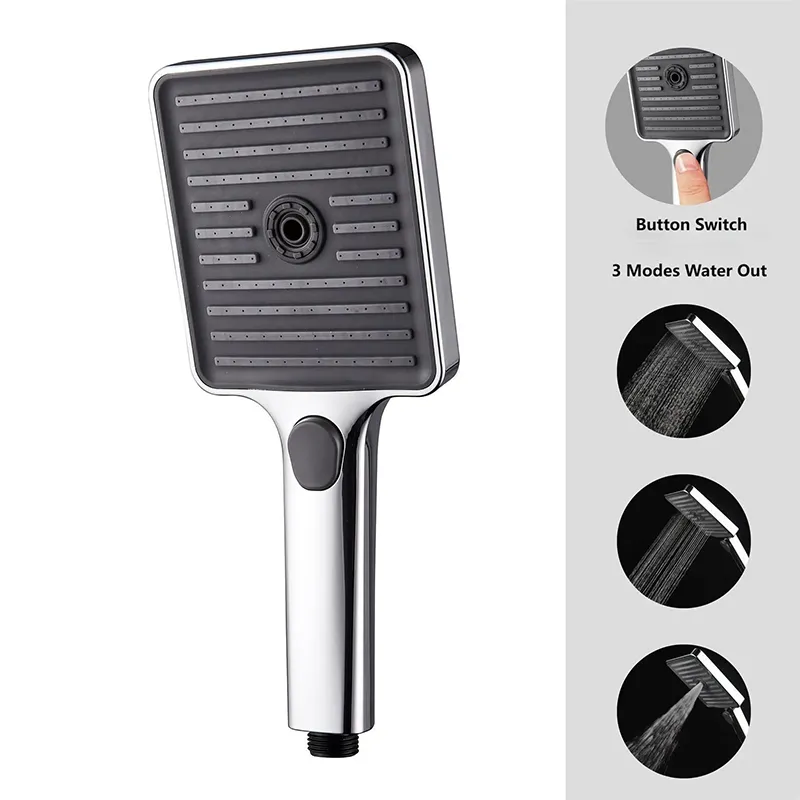
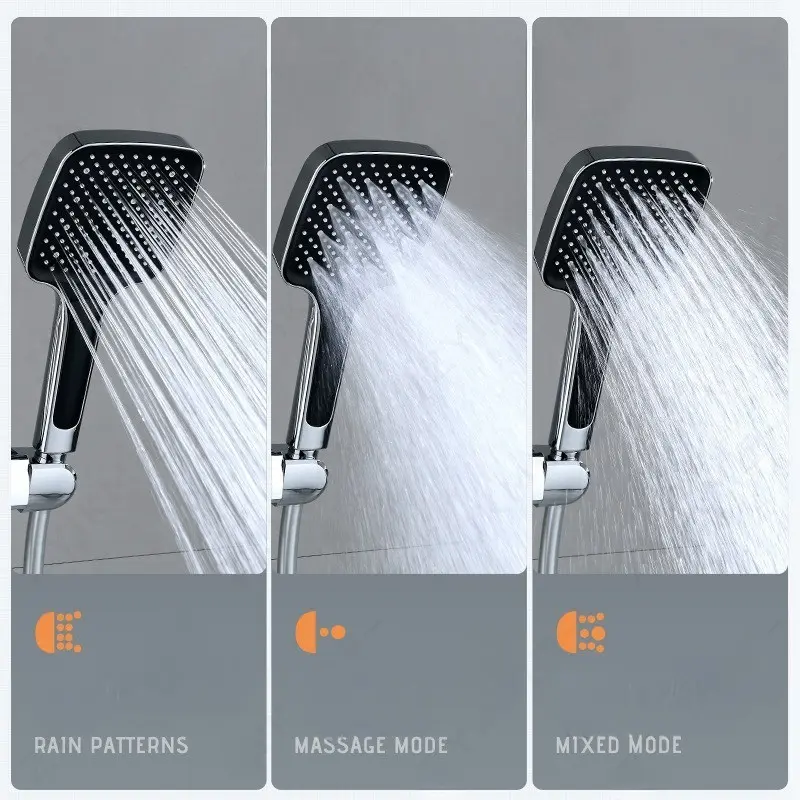
The BHS11005 page identifies an ABS panel body, liquid-silicone water outlets, a plated zinc-alloy handle shell and a nylon pulse outlet. Calling it only plastic or metal would conceal the design.
Our factory view
We do not approve a shower head from the resin name alone
Material selection happens before production, but product approval happens after parts become an assembly. A good ABS shell can still fail at a poorly controlled joint. A metal shell can still leak through a bad washer seat. A beautiful coating can still disappoint if preparation or cleaning compatibility is wrong.
Molding and machining
Huanyu's equipment page lists automatic injection molding for ABS shells and handheld handles, plus CNC lathes and milling machines for metal bodies, valve cores and connectors.
Plating and coating
The same page lists chrome, matte black and brushed nickel plating lines, anodizing equipment and automatic spray coating. The surface route must match the substrate.
Fit at every boundary
Threads, seals, selectors, nozzle plates and housings meet here. Dimensional consistency matters because mixed materials can only work when their interfaces fit.
Seal and pressure checks
Huanyu lists sealing and pressure equipment that simulates 0.3 to 1.0 MPa. This tests the assembled path rather than judging an isolated material coupon.
Flow, uniformity and noise
A structurally sound head still needs to distribute water properly. Huanyu lists water-flow, spray-uniformity and noise test equipment for this stage.
Model-specific validation
Cycle, continuous-flow, temperature or salt-spray checks should match the model and finish. Do not copy one model's test record onto another product.
Buy against a failure mode
Material matters most at the place under stress
A blanket question such as "Will plastic last?" is hard to answer. A location-based question gives you something to inspect.
| What you observe | Do not assume | Inspect instead | Why it matters |
|---|---|---|---|
| Crack near the inlet | All ABS bodies are weak | Thread material, insert, washer seat, tightening damage and holder load | The joint carries torque and bending that the face does not. |
| Chrome is peeling | The entire head is poor plastic | Surface preparation, plating stack, edge coverage, cleaner and abrasion | Finish failure and structural failure are different diagnoses. |
| Brown staining on metal | Every stainless grade behaves the same | Declared grade, welds, crevices, chloride exposure and care chemicals | Stainless performance depends on alloy and environment. |
| Button becomes stiff | A metal body would fix it | Selector path, moving material pair, deposits, seals and cycle record | The outer shell may not be part of the moving mechanism. |
| Nozzles clog | The body material caused scale | Nozzle flexibility, outlet size, retained water and cleaning access | Scale forms at the water outlet, not according to shell weight. |
| Hand shower drops from holder | Heavier always means higher quality | Wand mass, holder geometry, hose pull and wet grip | Extra mass changes handling and impact load. |
Choose by use, not status
When plastic or metal makes more sense
Handheld shower used by the whole family
Quality ABS is a practical starting point because lower weight can make lifting, aiming and returning the wand easier. Give extra attention to the inlet, holder fit, hose pull and wet-grip balance.
Large, thin overhead shower face
Stainless steel can provide a rigid, slim plate. Confirm the exact grade, weld and edge quality, mounting load, internal water distribution and local chloride conditions.
Threaded connection or compact valve part
Brass can be useful where a precise machined interface and pressure-tight geometry matter. Confirm the alloy and water-contact requirements instead of accepting "brass" as the complete specification.
Chrome look without a heavy wand
Plated ABS can provide the appearance with lower mass. Ask about the substrate, finish process, salt-spray or adhesion checks, and the exact cleaning method for that coating.
Premium weight as part of the experience
A zinc-alloy or brass shell may provide the feel you want. Make sure the weight does not overload the holder and that the product page states which components are actually metal.
Coastal or chloride-heavy environment
Do not rely on the word "stainless." Grade, crevices, temperature, cleaner and chloride exposure affect corrosion risk. Product-specific material guidance matters here.
Before you buy
What you can verify without a laboratory
- Read separate fields for surface and body material.
- Look for a component-level material breakdown.
- Check the inlet thread or insert description.
- Confirm the shower's weight works with its holder.
- Look for model-specific pressure, cycle and finish tests.
- Read the care method for the exact finish.
- Inspect product photos for joints, seams and exposed interfaces.
- Check whether the stated warranty applies to the exact model.
The cleaner contacts the finish before it reaches the substrate. That is why an ABS chrome head and a metal chrome head may share some surface-care limits even though their bodies differ.
Use the maker's instructions for concentration, contact time and tools. Do not turn a short wipe into an overnight soak. If the spray weakens, diagnose the outlets and water path before blaming the shell material. Huanyu's guides to increasing shower pressure and deciding when to replace a shower head separate local restrictions from structural failure.
Specify the material map
Ask Huanyu for more than "ABS" or "metal"
Huanyu works with ABS injection molding, CNC-machined metal components, chrome and other surface processes, automatic assembly, and an independent testing setup. Our published equipment covers sealing and pressure checks from 0.3 to 1.0 MPa, plus water-flow, spray-uniformity and noise testing.
Send the target shower type, weight, finish, inlet, spray control and market. We can discuss which material belongs in each zone and define the checks for the assembled model. That is a more useful product brief than asking for the heaviest shower head.
Questions people ask next
FAQ about plastic and metal shower heads
Are plastic shower heads good?
Yes, a well-designed ABS shower head can be light, practical and durable. Quality depends on the resin grade, molded structure, inlet, seals, finish and assembled-product testing. The word "plastic" alone does not reveal those details.
Is ABS a good material for a shower head?
ABS is useful for lightweight hand showers and complex molded bodies. It can form ribs, passages and control housings without the mass of a solid metal shell. Weak threads, poor molding or poor plating can still cause trouble, so part design and process control matter.
Which is better, a plastic or metal shower head?
Neither is universally better. Plastic often suits a light handheld body. Stainless steel can suit a slim overhead plate. Brass can be valuable for threaded inlets and valve parts. Compare the material of each component against its job.
How can I tell if a shower head is plastic or metal?
Read the product specification for both surface and substrate. Weight, tapping and magnet tests can mislead because products may combine several materials. Check the body, inlet, spray face and handle separately.
Can a chrome shower head be plastic?
Yes. Chrome is a surface finish and can be applied to an ABS substrate. A chrome appearance does not prove that the body is brass, stainless steel or zinc alloy. The material field should name the substrate.
Do plastic shower heads crack?
They can crack, especially at a weak or over-tightened threaded joint, but cracking is not inevitable. Resin grade, wall structure, molded quality, inlet design, installation torque, hose load and temperature exposure all affect the result.