
Chrome and matte black shower heads can deliver the same kind of spray. Their color does not set the flow rate or raise household water pressure. What changes in daily use is how the surface looks after water dries, which cleaning methods the finish permits, and how visible wear becomes at edges and frequently handled parts. Chrome reflects light and makes fingerprints easy to see. Matte black cuts glare but can make pale mineral residue stand out. Neither is automatically easier to maintain: the result depends on your water, the exact coating, the nozzle design, and whether you wipe the head after use. Compare those details before choosing a color.
I would keep chrome when matching existing fittings is the priority. I would choose matte black for its appearance only after checking a real sample under the room's lighting. In either case, easy access to the nozzles matters more to maintaining an even spray than the color of the shell.
A finish name tells you less than most product photos do
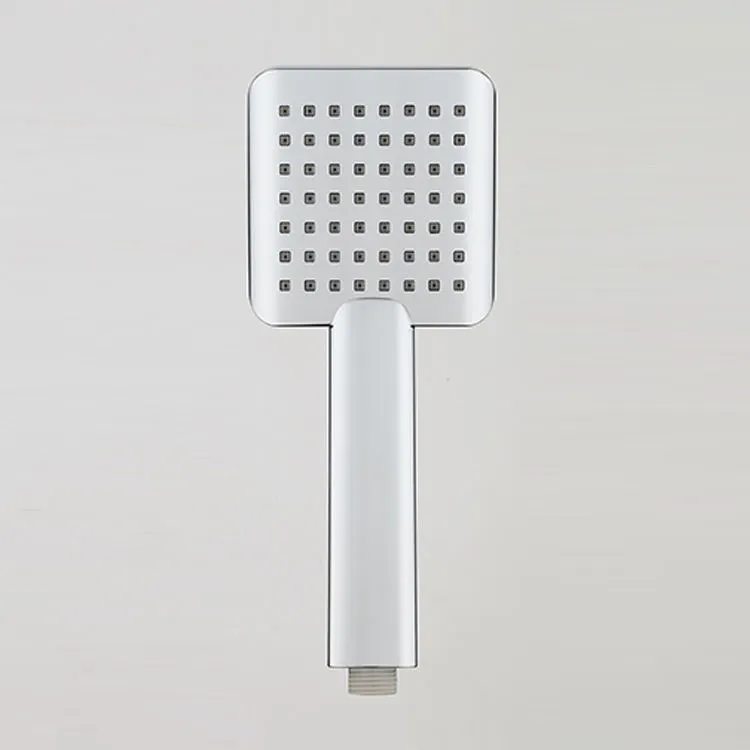
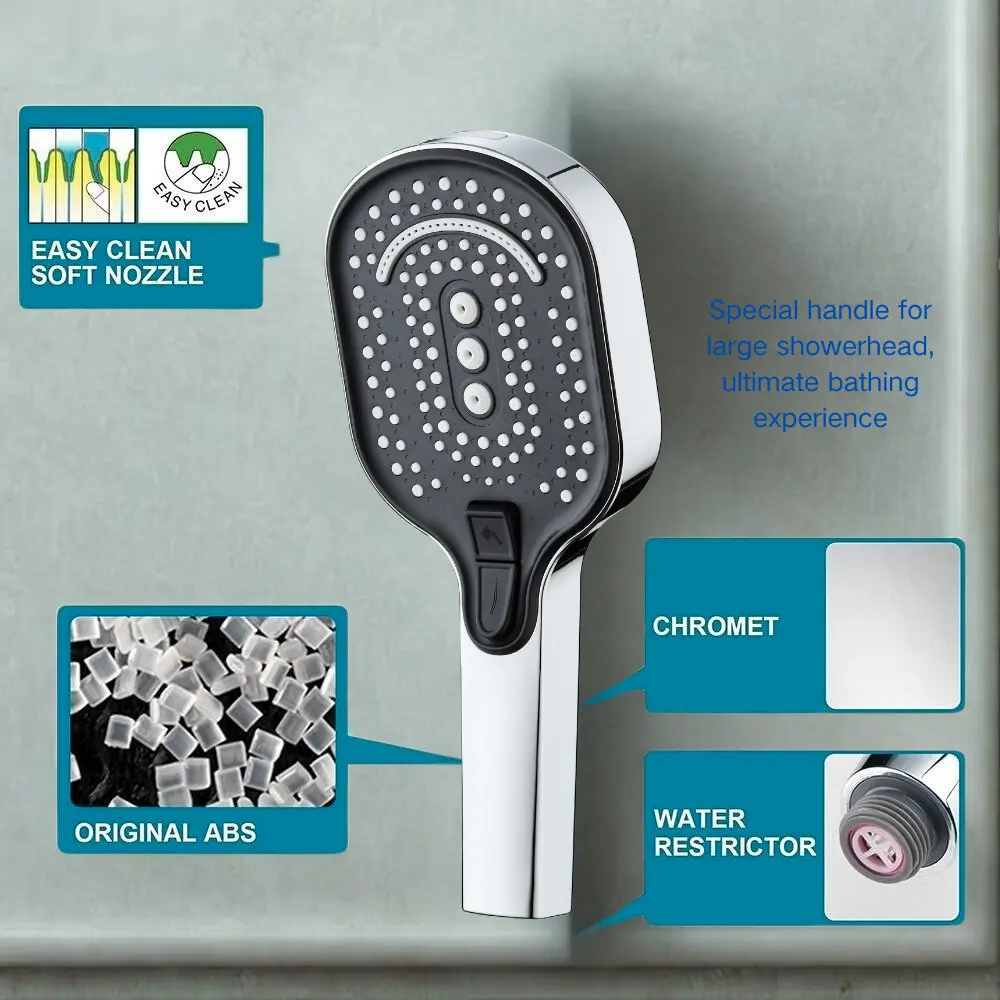
“Chrome” describes a bright exterior. It does not prove that the body beneath it is brass, stainless steel or any other metal. Huanyu's LHS12007 product page, for example, lists an ABS plastic body and a chrome surface. A shopper who judges that model by its shine alone would miss a basic specification. A light ABS hand shower can make sense for a handheld product; the visible finish and the load-bearing body answer different questions.
“Matte black” is also an appearance description, not a universal recipe. Huanyu's equipment page lists chrome and matte-black plating lines as well as spray-coating equipment. Its service page discusses appearance tracking after electroplating, painting and PVD. Those are process categories used by the company; they do not mean every black model receives every process. If a specification matters to you, ask for the finish route of the exact model and variant rather than relying on “black” in a catalog heading.
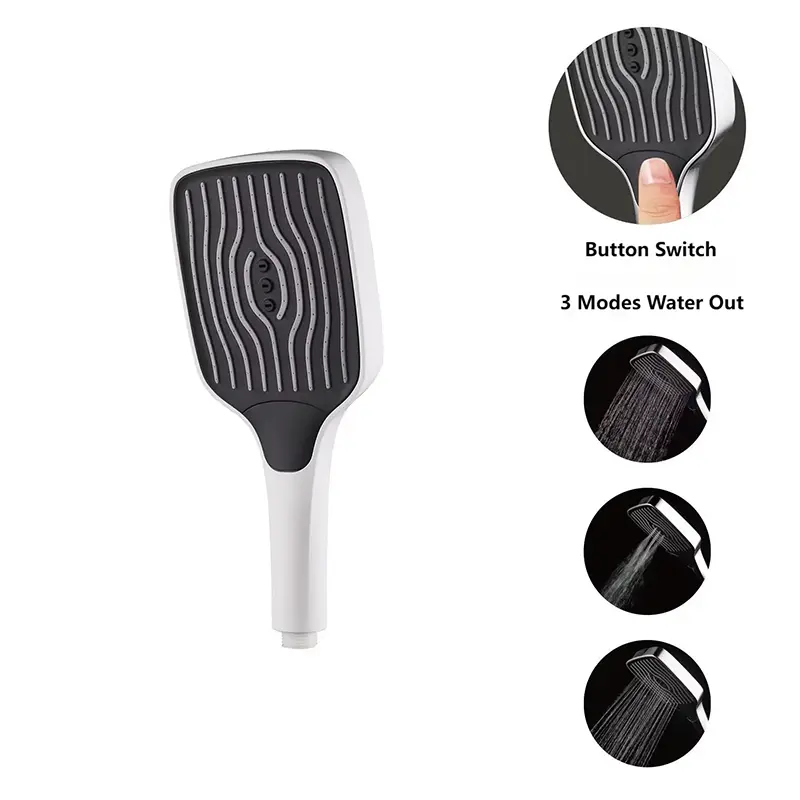
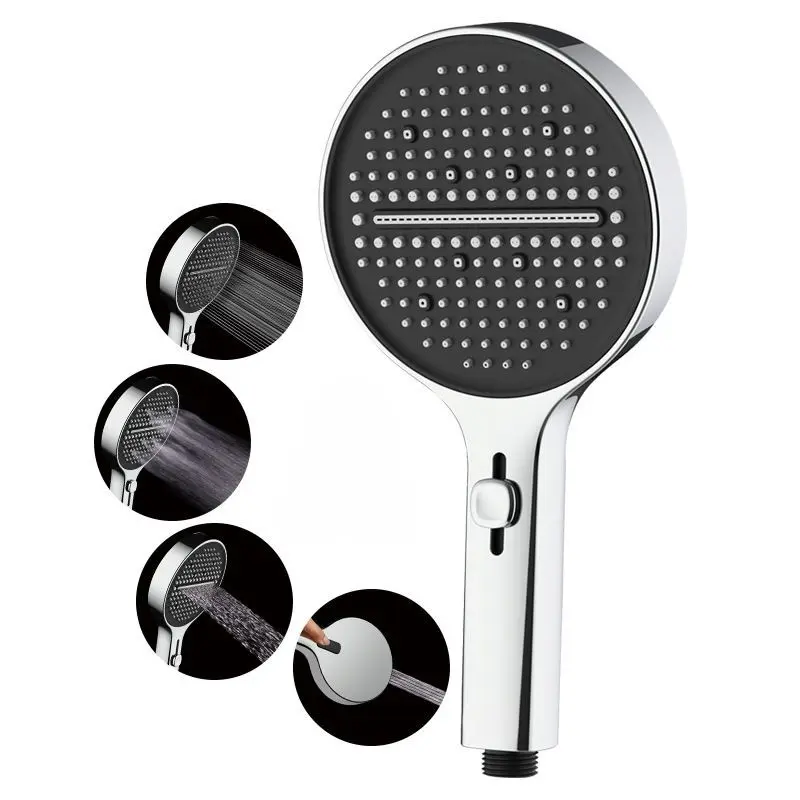
A third distinction is easy to miss: a black spray face is not the same as a matte-black body. The BHS11005 hand shower describes a glossy chrome-plated handle and frame paired with a matte-black silicone outlet area. It is a useful example of a two-tone design. It should not be pictured, quoted or ordered as an all-black shower head. When matching other bathroom hardware, specify which surfaces must be black: the handle, faceplate rim, holder, hose and wall connection may be separate components.
Ask for three fields, not one: body material, visible finish on each component, and spray-face or nozzle material. A finish swatch cannot replace those fields.
What actually changes during daily use?
A polished chrome surface acts like a mirror. Fingerprints, soap film and dried droplets can interrupt that reflection, especially under a strong bathroom light. A matte-black surface does not show the same sharp fingerprint pattern, but a pale dried deposit may contrast strongly with its dark background. That is a visibility difference, not evidence that one surface creates more minerals than the other. Your lighting, local water and cleaning habits can reverse the impression you get from a showroom sample.
| Decision point | Polished chrome | Matte black | What to check on the actual model |
|---|---|---|---|
| Appearance under light | Bright, reflective; small smears interrupt the mirror finish. | Low-glare, dark; pale deposits may stand out. | View a real sample under your bathroom lighting. |
| Water residue | Dried drops can appear as spots or cloudy patches. | Dried minerals can appear as light marks on a dark field. | Find out whether your water is hard and whether you will dry the surface. |
| Touch points | Fingerprints are often visible after handling. | Fingerprints may be less obvious, while rubbing and edge wear need attention. | Inspect the grip, selector and contact points after normal use. |
| Cleaning | Usually simple to wipe, but not immune to chemical damage. | Often easy to wipe, but the safe cleaner depends on its coating. | Use the finish-specific care instructions, not a generic internet recipe. |
| Water delivery | Determined by the water path, spray design and supply. | Determined by the water path, spray design and supply. | Compare flow, spray force and coverage at the same test conditions. |
Do not read the table as a durability ranking. It describes questions to investigate. Two chrome heads with different substrates or plating systems may age differently. The same is true of two black heads. Installation matters too. A handheld unit is touched, returned to a holder and sometimes knocked against tile. Those contact patterns differ from a fixed overhead head. The finish most exposed to handling is not necessarily the large front plate shown in the marketing photograph.
Before ordering a group of fixtures, compare a physical sample after handling it with wet hands. Look at it both dry and under bathroom lighting. This is a better appearance test than comparing two studio images with different exposure, retouching or backgrounds. If your concern is ongoing cleaning labor, ask for the care sheet and inspect the hose and holder as part of the set.
Hard water changes the cleaning job, not the chemistry of the finish
A black head can look chalky while a chrome head looks cloudy in the same bathroom. The underlying cause may be the same. The U.S. Geological Survey explains that water hardness is mainly the amount of dissolved calcium and magnesium in water. When hard water dries or is heated, deposits can remain on fixtures and inside equipment. Chrome does not remove these minerals; matte black does not create them.
For a useful reference point, USGS classifies water hardness as 0 to 60 mg/L calcium carbonate equivalent for soft water, 61 to 120 mg/L for moderately hard water, 121 to 180 mg/L for hard water, and above 180 mg/L for very hard water. These are water classifications, not ratings for shower-head finishes. A national hardness map cannot tell you the precise condition at your own tap. Your local water supplier or a home water test is more useful when planning maintenance. Source: USGS, “Hardness of Water.”
Separate three jobs that are often mixed together. First, wipe external droplets before they dry if you want the surface to look clean. Second, clean soap film from the exterior using a method approved for that finish. Third, deal with mineral deposits at the nozzles if the spray turns uneven or starts shooting sideways. A product with flexible silicone nozzles may let you dislodge deposits at the outlet by rubbing the nozzle, but that says nothing about which liquid is safe on the surrounding coated body. The Huanyu self-cleaning model page describes soft silicone outlets that can be rubbed to remove residue.
In a hard-water bathroom, I would choose accessible, easy-clean outlets before choosing a color. That addresses the part whose deposits can distort the spray. I would choose matte black only if I also liked its appearance after normal use, rather than relying on a clean showroom sample. Chrome remains a sensible choice when matching existing hardware matters more than hiding fingerprints; neither finish removes the need for nozzle care.
Coating route and test scope matter more than a color label
For a technical comparison, start with the substrate and surface route. Huanyu publishes chrome-plating and matte-black-plating equipment, plus coating equipment for non-metallic components. Its service process lists salt-spray checks after electroplated, painted or PVD semi-finished components arrive, followed by assembly checks for leakage, function and appearance. Those are different stages. A finish can pass an appearance or coating check while the assembled product still needs a leak and spray check.
Salt-spray data need their test method, exposure period, specimen and acceptance criterion. ISO 9227:2022 describes neutral salt spray, acetic acid salt spray and copper-accelerated acetic acid salt spray methods. The ISO abstract says the standard does not prescribe one exposure period or one interpretation for every product. It also warns that these tests are not designed to predict long-term corrosion resistance in service or rank unlike materials against each other. “More hours” is therefore not a direct translation into “more years in your bathroom.”
For a factory or project specification, request the exact model and finish variant alongside the relevant test report. Ask whether the specimen was a flat coated piece, a formed shell, a connector or a fully assembled head. Look at the locations that reveal processing problems: corners, openings, the back of the faceplate, selector edges and mating surfaces. A front photograph may hide these areas. The point is not to make a buyer into a lab technician. It is to stop an attractive color swatch from standing in for a complete product specification.
Flow and corrosion testing also answer different questions. Huanyu lists sealing and pressure equipment plus water-flow and spray-uniformity equipment on its equipment page. A surface test says nothing about whether a selector switches cleanly or whether the assembled joint leaks. If a supplier gives you one number as proof of everything, ask which failure mode that number actually measures. That single question usually makes the comparison more useful.
What I would inspect before approving either finish
At Huanyu, I would not choose between chrome and matte black from product photos alone. I would first check the body material, the finish used on that model, and the parts people touch most often: the handle, mode selector, faceplate edge, and hose connection. Our equipment page lists chrome and matte-black plating lines. Our production-tracking process also calls for salt-spray testing after surface treatment, followed by assembly checks for leaks, function, and appearance. That order matters. A good-looking finish cannot make up for a leaking connection, and color alone tells you nothing about the spray. Take our LHS12007 hand shower: its ABS body, chrome surface, and dual-zone spray are three separate specifications. I would compare those details on the exact models being considered before recommending either finish.
That inspection has a practical order. Start with a side-by-side list of components, not a single line saying “chrome” or “black.” Does the finish cover the handle, faceplate rim, holder and hose? Is the outlet panel silicone? Which pieces are likely to rub against the wall bracket? Then look at the finish around joins and openings, where a small defect is easier to miss in a full-product photo. Handle the sample with wet hands and return it to its holder several times. The object is to expose the contact points you will meet in normal use.
Next, operate the product. Change modes, run water and inspect the hose connection. A buyer comparing finishes may be tempted to skip this stage because it seems unrelated to color. It is precisely what prevents a finish-led decision from hiding an assembly problem. Huanyu's published process separates appearance tracking from assembly testing for that reason. I would keep the test notes for both variants under the exact model and finish name. If a matte-black version is available only as a customization option, its process and care instructions deserve their own confirmation; they should not be copied automatically from the chrome sample.
Does a matte-black shower head have less pressure than chrome?
No general rule connects exterior color with water pressure. Household supply pressure, restrictions in the hose or inlet, the internal water path and the outlet pattern are the relevant variables. A finish may accompany a different model, but that is a change of product, not a pressure effect caused by black pigment. If you replace a chrome head with a black head and the spray feels different, compare the two heads' flow ratings and spray structures before blaming the color.
The U.S. EPA WaterSense showerhead guidance evaluates performance through spray force, spray coverage and minimum flow across water pressures. It does not use finish color as a performance measure. For WaterSense-labeled products, EPA says the maximum flow is no more than 2.0 gallons per minute, and the product must satisfy its independent performance criteria. That EPA figure is a criterion for a label, not a claim that any Huanyu model has that label. The distinction matters when you see a catalog use terms such as “high pressure” without a comparable test condition.
To compare two heads fairly, use the same supply, hose, inlet condition and test pressure. Check the rated flow in the same units and at the same pressure. Then observe where the spray lands: a narrow central jet can feel forceful while covering less area; a broad rain setting can cover more skin but feel softer at one point. Huanyu's LHS12007 page describes a central focused zone and wider surrounding spray. That design information tells you more about the expected feel than its chrome finish does.
If the existing shower has suddenly weakened, diagnose the restriction before shopping by color. Check whether other outlets have changed, whether the hose is kinked and whether nozzles are clogged. The correct replacement question is “Which head gives the spray pattern and flow I want under my supply conditions?” Finish choice comes after that.
A cleaning routine that does not assume every coating is the same
First decide whether you are treating residue on top of the finish or damage to the finish itself. If a mark lifts with the permitted gentle cleaning method and the surface beneath remains smooth, cleaning has addressed that residue. If a chip, rough edge or discolored patch remains, more scrubbing is not the next step. Stop and inspect the affected component with the supplier. The appearance of a white mark alone does not identify its cause or justify an acid soak.
I separate nozzle maintenance from shell cleaning. Flexible outlets may allow gentle rubbing to clear a distorted jet, while the surrounding coating has its own care limits. Use the approved method for each surface; a removable deposit at the spray outlet is not permission to expose the whole handle, selector and connector to the same chemical.
- Identify the surface. Read the model's care instructions. Note whether you are wiping a coated shell, a silicone nozzle face or a separate metal connector.
- Remove fresh droplets first. Wipe the outside with a clean, soft cloth, then dry it. This prevents water from drying into visible marks without introducing a chemical.
- Clean light film gently. If the maker permits it, use mild soap and water on a soft cloth. Avoid abrasive pads and do not leave cleaner sitting around joints or buttons.
- Treat nozzle deposits separately. If the product has flexible nozzles and its instructions allow it, rub the outlets gently to loosen deposits. Do not scrub the surrounding finish simply because the nozzle is blocked.
- Rinse and dry. Remove any approved cleaner completely. If deposits remain, consult the model-specific instructions before using a descaler or soaking the head.
Cleaning frequency is a water-and-use decision. If your water leaves visible residue each day, a quick dry after showering may be less work than a periodic aggressive clean. If only one outlet sprays sideways, you may need to clear that nozzle rather than polish the entire shell. If the finish has already become rough, chipped or discolored, more force is unlikely to fix it. Stop scrubbing and ask the supplier about the component and its care limits.
Matte black bathroom fixtures pros and cons are often discussed as a style debate, but care compatibility belongs on the list. Chrome bathroom finishes also differ by product. Do not transfer a cleaning instruction from a faucet, towel bar or another brand's shower head to your hand shower without checking the actual finish.
Which finish fits the way your bathroom is used?
Choose the finish after you know what you are trying to avoid. If the main concern is fingerprints under bright task lighting, matte black may look calmer between wipe-downs. If the room is small and you want the head to reflect light and match existing chrome fittings, chrome may be easier to integrate. Those are visual judgments, not engineering guarantees. Bring a sample into the room when possible; a finish can look quite different beside warm tile, cool stone or dark grout.
For hard-water homes, I would prioritize easy access to the outlet face and a safe cleaning method for the exact coating. A dark body does not soften water. A shiny body does not shed calcium. Check your local water data and plan how you will clear the nozzles. If a family member already wipes the enclosure after each shower, adding a quick wipe to either head may be painless. If nobody will do that, expect visible residue and choose the appearance you can live with between full cleans.
For a hotel or shared bathroom, look past the front view. A handheld unit may be gripped repeatedly and placed in a holder at different angles. Check the back, the holder contact area, the mode control and the hose finish together. A mismatched chrome hose under a matte-black head may be intentional, but it should be a deliberate specification rather than a surprise after installation. Keep spare parts and care instructions aligned with the chosen variant.
| Your priority | First comparison to make | Why it helps |
|---|---|---|
| Less visible handling marks | Wet-hand sample test under your lighting | Shows fingerprints and grip-area smears as you will see them. |
| Hard-water maintenance | Nozzle access plus approved cleaner | Targets deposits without guessing about coating chemistry. |
| Matching a bathroom set | Head, holder, hose and wall connection | A single matching head does not make the entire installation match. |
| Reliable spray | Flow and spray-pattern details at like conditions | Prevents finish color from becoming a proxy for performance. |
There is no universal winner. The better choice is the specific model whose finish, construction and maintenance routine fit your bathroom. If two otherwise identical variants are available, compare those variants directly. If the black and chrome options are different designs, write down the structural differences before attributing any performance change to the finish.
Use the actual product listing, not a color thumbnail
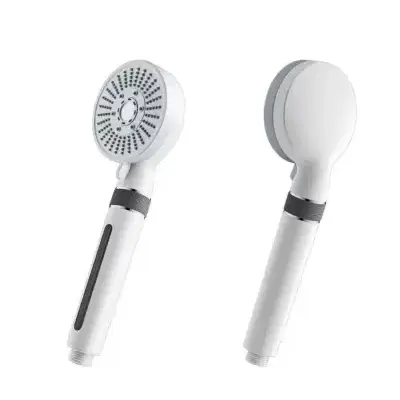
Huanyu's LHS12007 is a clear chrome example: the listing identifies an ABS body, a chrome surface and a dual-zone spray face. Those details let you discuss weight, finish and water delivery separately. The product image below documents that chrome-listed model; it is not evidence of a black variant of LHS12007.

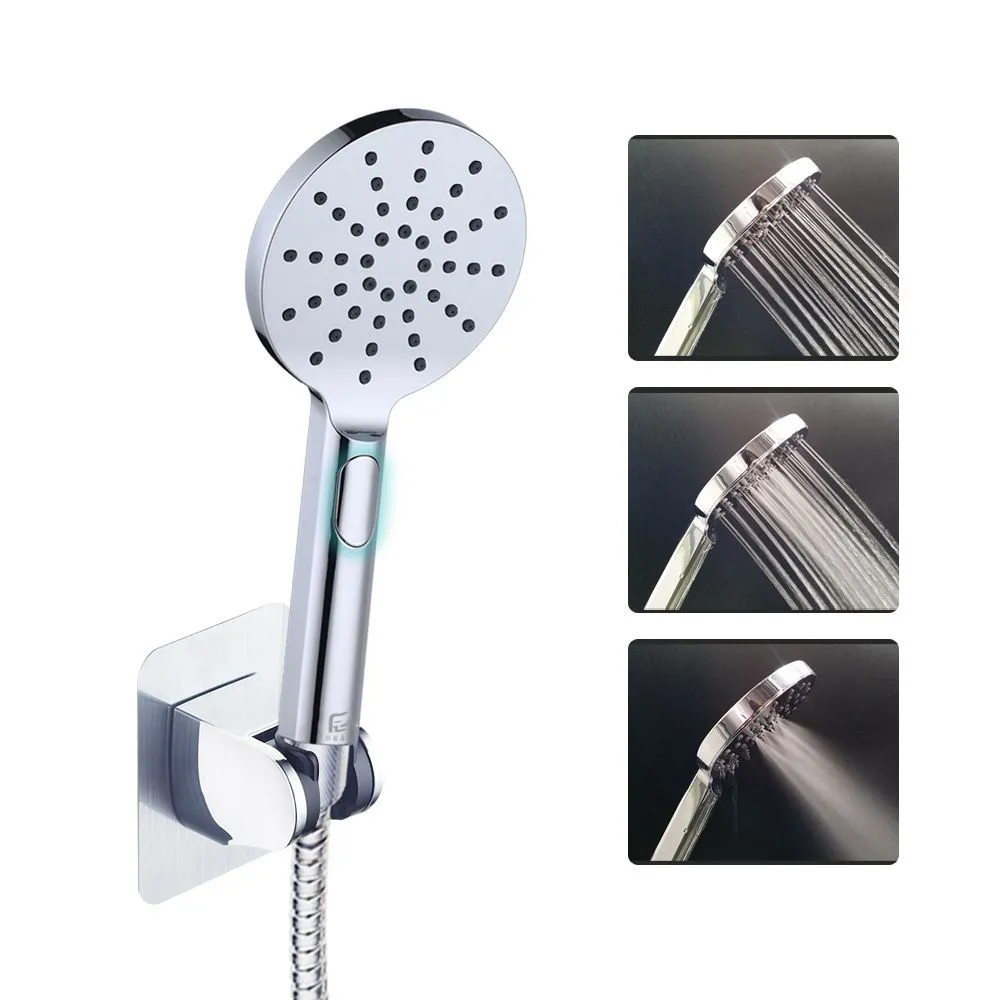
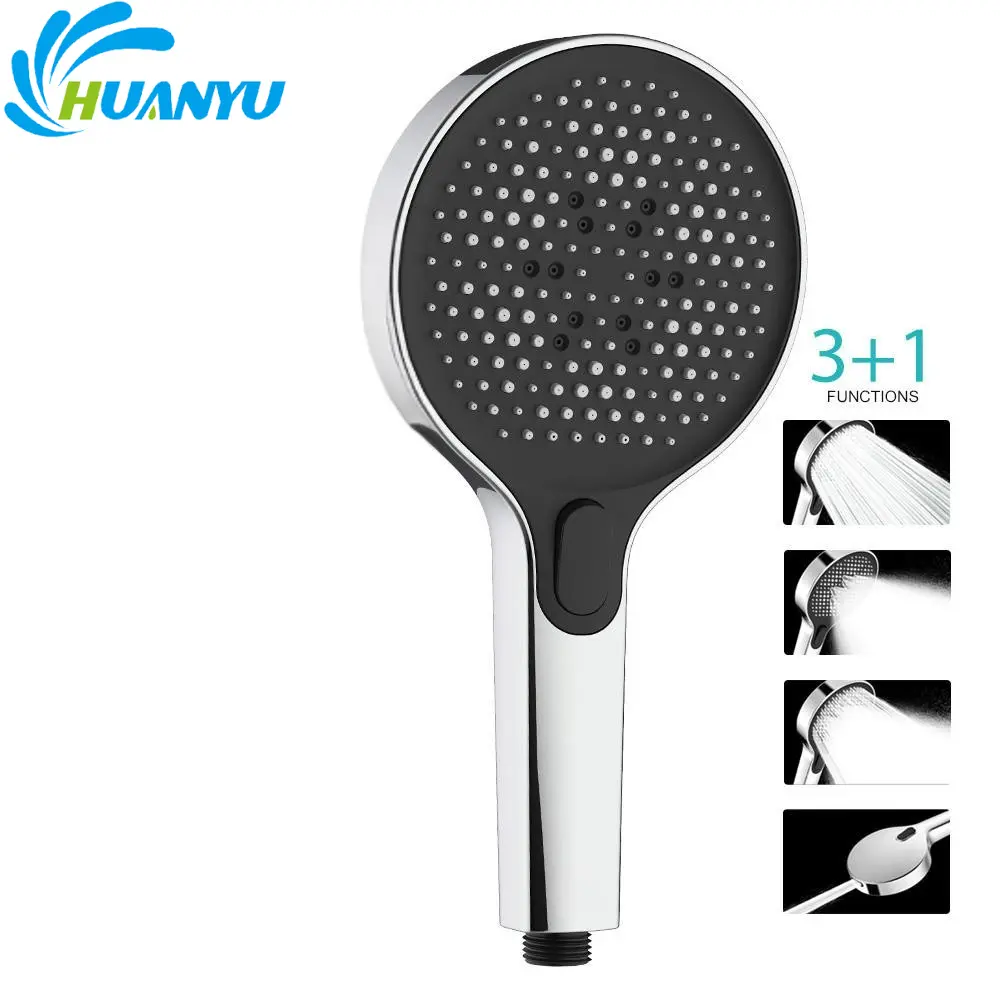
For a page that explicitly describes a black option, look at the BHS11003 Square Diverter Micro Bubble Hand Shower Head. Its specification table shows a chrome surface, while its product copy offers bright chrome, matte black and matte white color finishes. Read those statements together: the displayed product specification is chrome, and the text presents matte black as an offered finish option. Do not assume that a chrome product photo shows the black version or that every specification for one variant transfers unchanged to another.
A third useful reference is the BHS11005. It combines chrome-plated parts with a matte-black silicone outlet area. This is the right example when discussing two-tone construction, not an all-matte-black shower head. Its visible black panel also shows why “black” can refer to a nozzle component rather than a body coating. That distinction affects both a design match and the cleaning instructions you should request.
If you are specifying a consistent bathroom set, send the exact model reference and identify every visible component that should match. Ask for photos of the selected finish from more than one angle and confirm the material and care method for that version. Huanyu's service page describes color customization and photos or videos supplied for customer needs. That is more useful than assuming two swatches from a category page represent identical finished assemblies.
How to verify the finish before committing to a model
A finish decision should leave a traceable specification. Start with the exact model number, body material, finish on each visible component, sample photograph and care instructions. For a project order, add the test method and acceptance criteria that apply to that finish. Keep the same reference in the inquiry, approval sample and final order. This prevents a phrase like “black shower head” from covering several different constructions.
Huanyu describes appearance-process tracking, assembly testing and pre-shipment spot checks on its service page. Its equipment page lists surface-treatment, sealing/pressure and water-flow testing equipment. These are published company processes, not an independent ranking against another brand. Ask which records relate to the model you are considering. If the finish is a customization option, request the corresponding sample and care guidance rather than treating a different finish's listing as sufficient.
For readers comparing products for a home, the same principle is simpler: get the model-specific cleaning instructions before the first harsh cleaner touches the surface. For B2B buyers, add photographs of the handle, selector, rear shell, holder contact points and assembled hose connection. The front-facing render is usually the least informative view for checking the places people handle.
Compare a chrome model with a matte-black option
Send Huanyu the model reference, desired finish, destination market and any matching hose or holder requirements. Ask for the exact variant's material, finish route, care guidance and relevant inspection information. Huanyu's public contact details are info@nbhuanyu.com and +86-13857806071; the company lists its address as No. 366, Weier Road, Andong Town, Cixi City, Ningbo, Zhejiang Province. You can also use the contact page.
Questions buyers ask about chrome and matte black
The most useful follow-up questions are about maintenance and specifications, not a blanket durability ranking. Use the answers below to narrow the choice, then confirm the care requirements on the exact model. Product finish routes and water quality vary too much for one universal cleaner or one universal winner.
Does matte black show water spots?
It can. Pale mineral residue may be conspicuous against a dark surface. Chrome can also show dried spots, often as interruptions in its reflection. How noticeable either looks depends on lighting, water quality and how often you dry the head. USGS explains why hard water leaves deposits.
Is chrome easier to clean than matte black?
Not automatically. Look at how visible residue is and which cleaning methods the exact finish permits. Start with a soft cloth and water. If a mark remains, distinguish removable residue from a chip or surface change before escalating the cleaner. Color alone does not answer either question.
Does a black shower head reduce water pressure?
The black exterior does not reduce supply pressure. If two models feel different, compare their internal paths, flow ratings, nozzles and spray patterns under the same water conditions. EPA WaterSense evaluates spray force, coverage and flow rather than color.
Can I use vinegar on either finish?
Use it only if the instructions for your exact model and finish permit it. A chrome or matte-black label does not establish acid compatibility. Keep any approved nozzle treatment separate from surfaces it is not intended to contact, then rinse and dry as directed. Do not improvise a whole-head soak.
Is a black spray face the same as a matte-black shower head?
No. A black silicone outlet panel may be paired with a chrome handle and frame. Huanyu's BHS11005 listing describes that kind of two-tone construction. If you need an all-black installation, confirm the finish of the handle, holder, hose and wall connection separately.