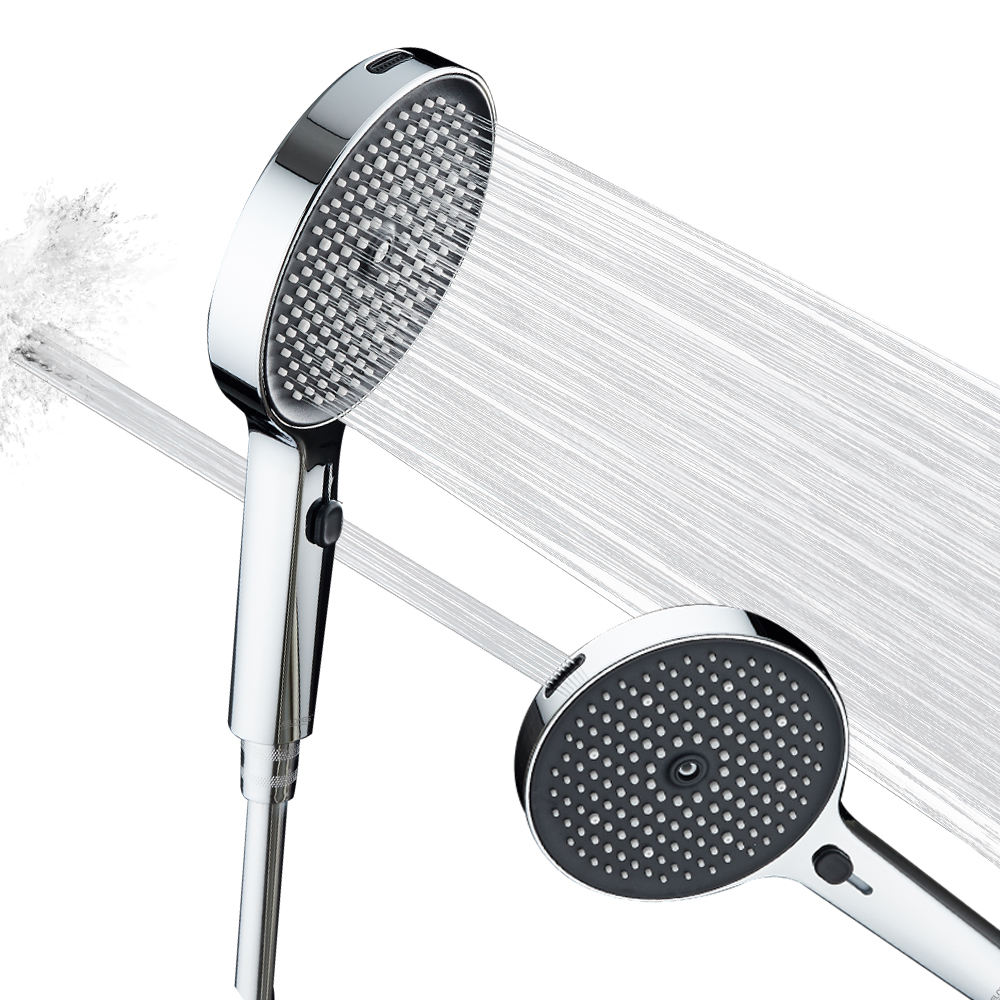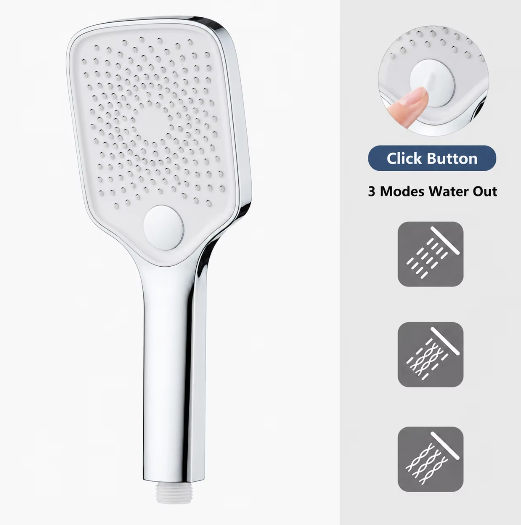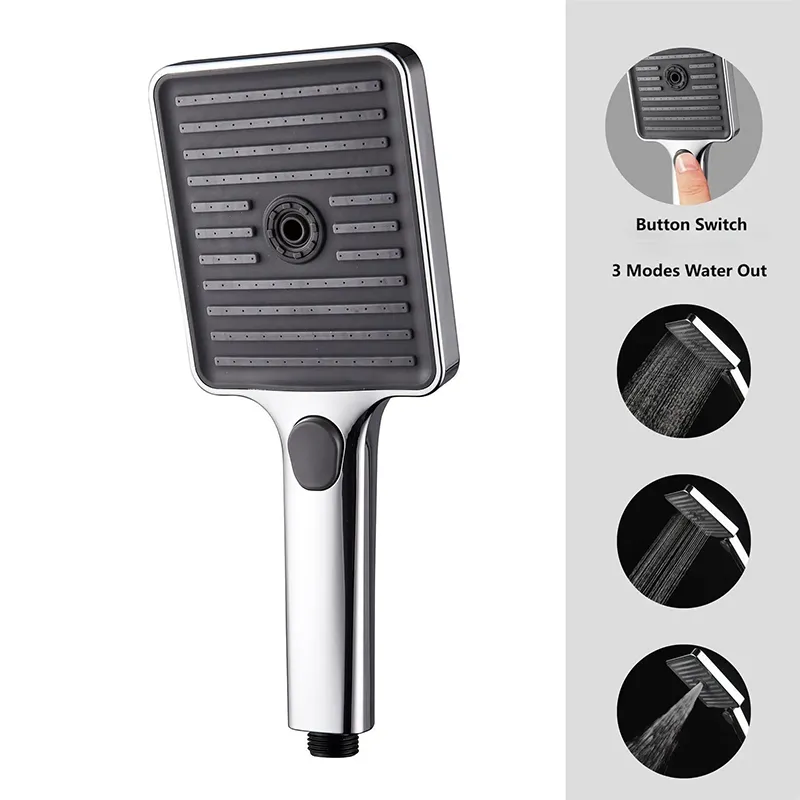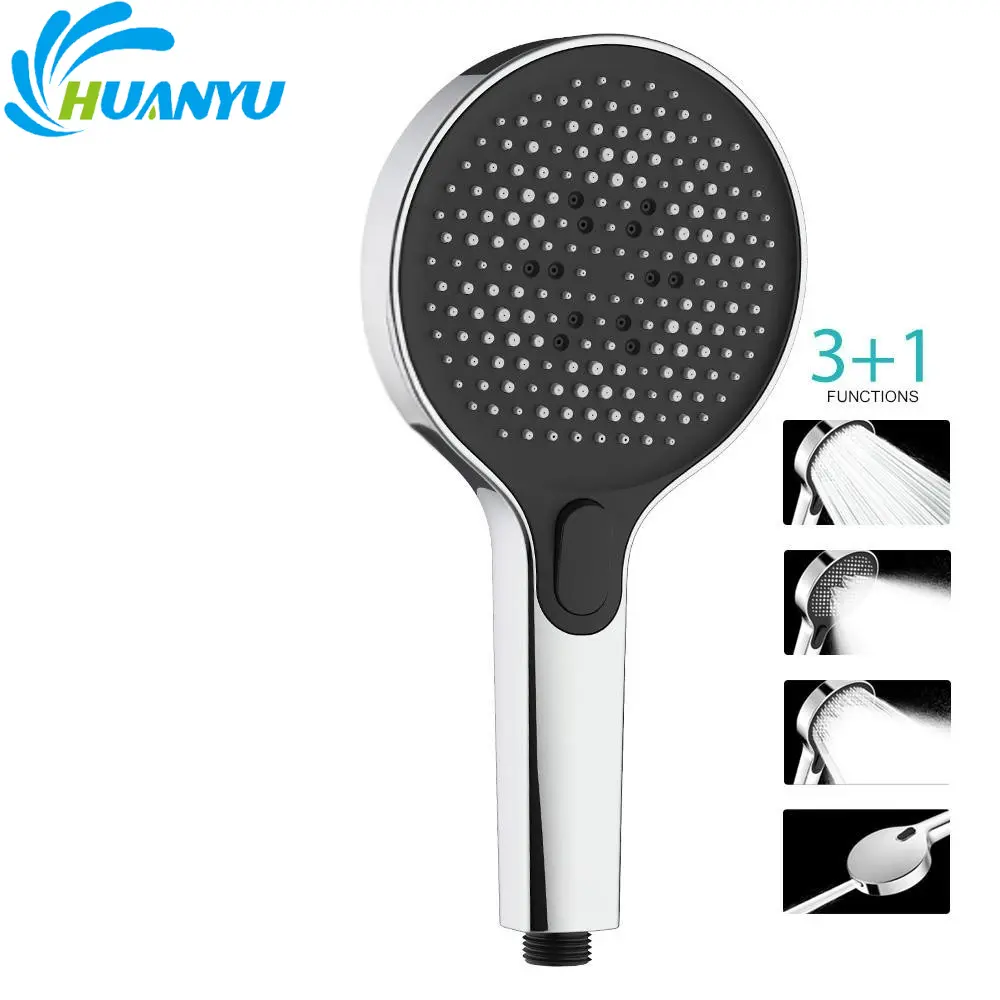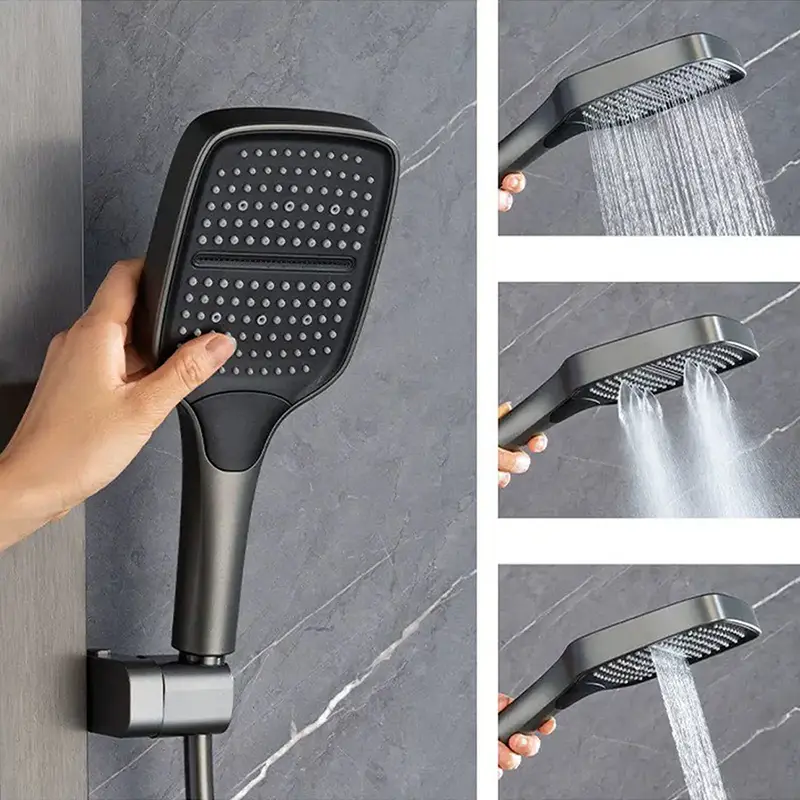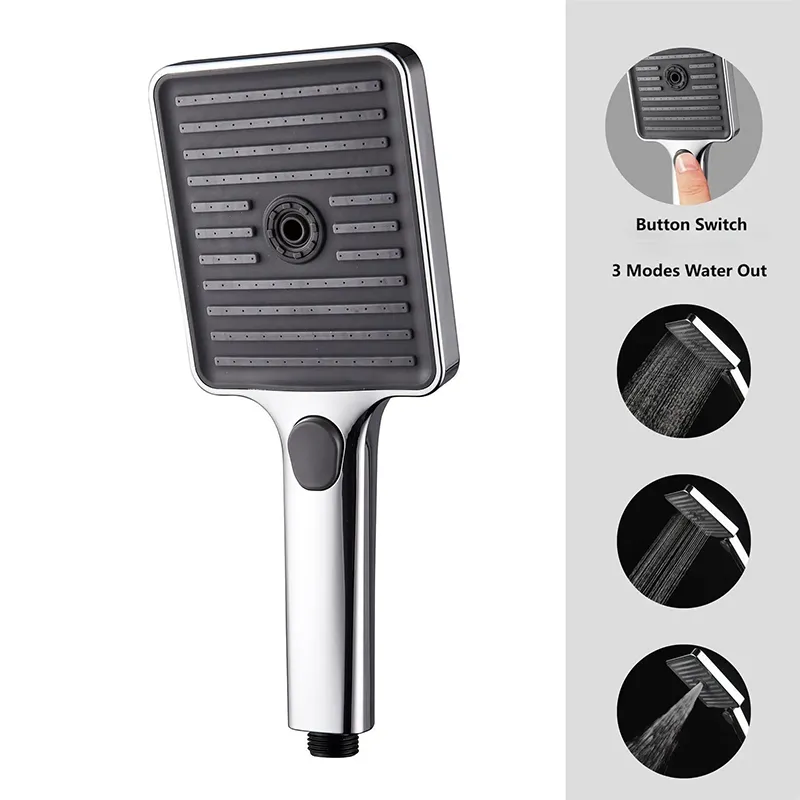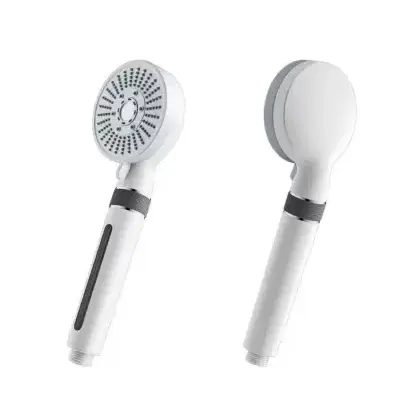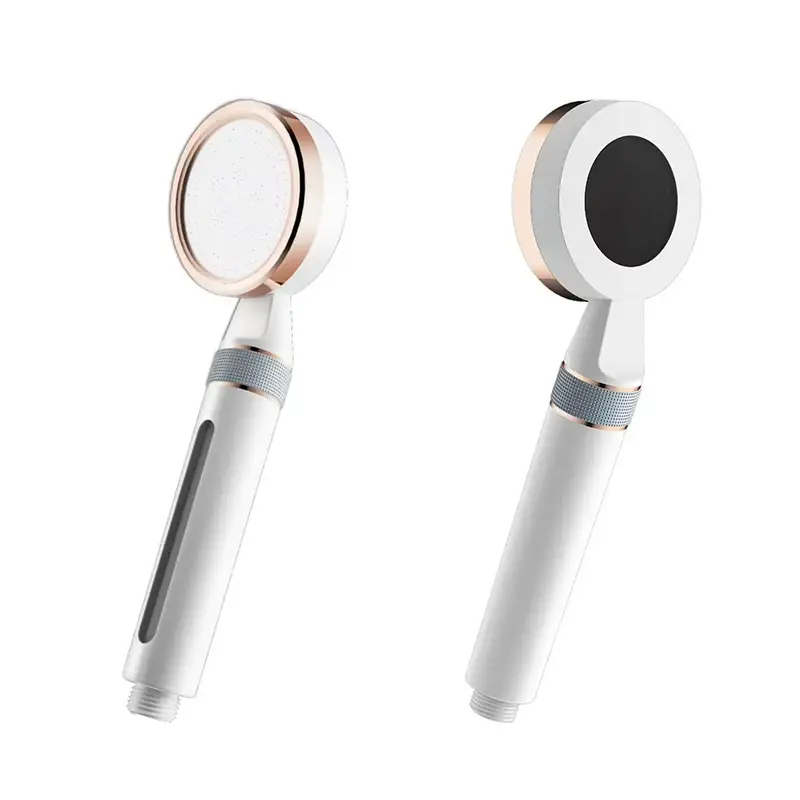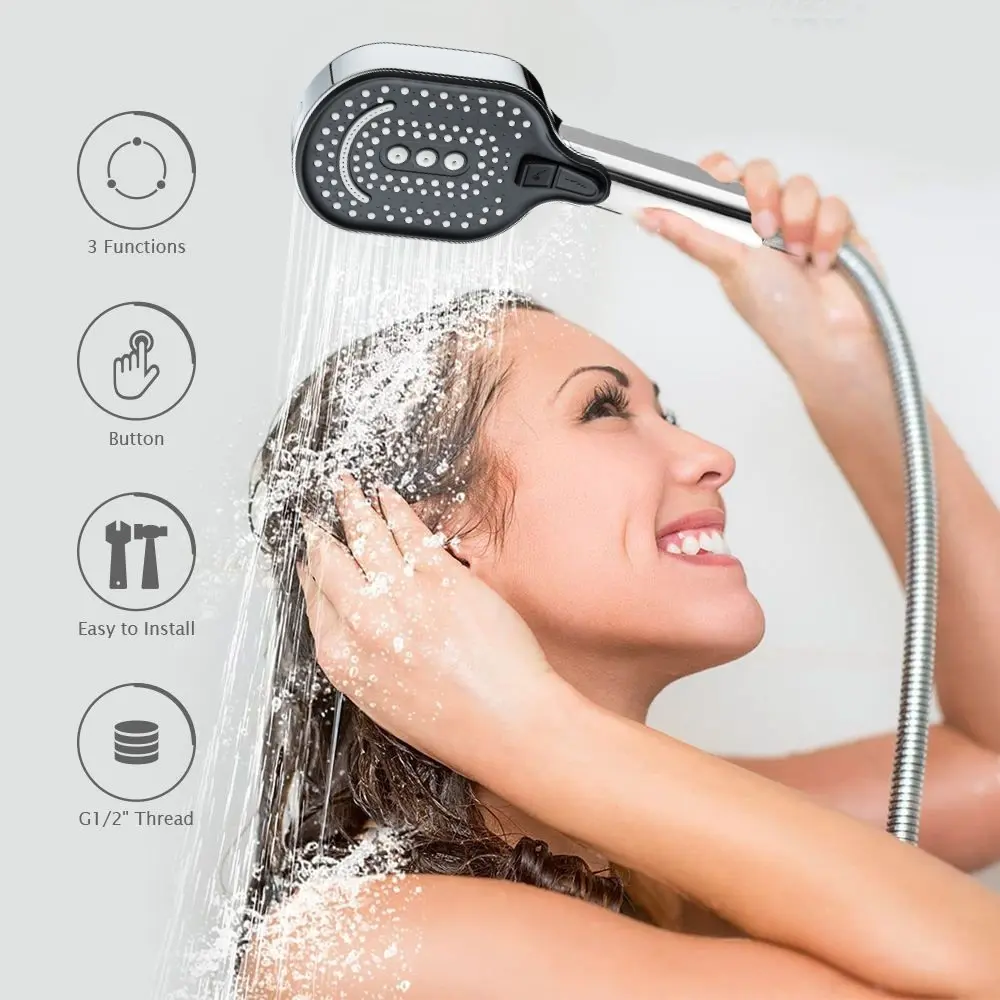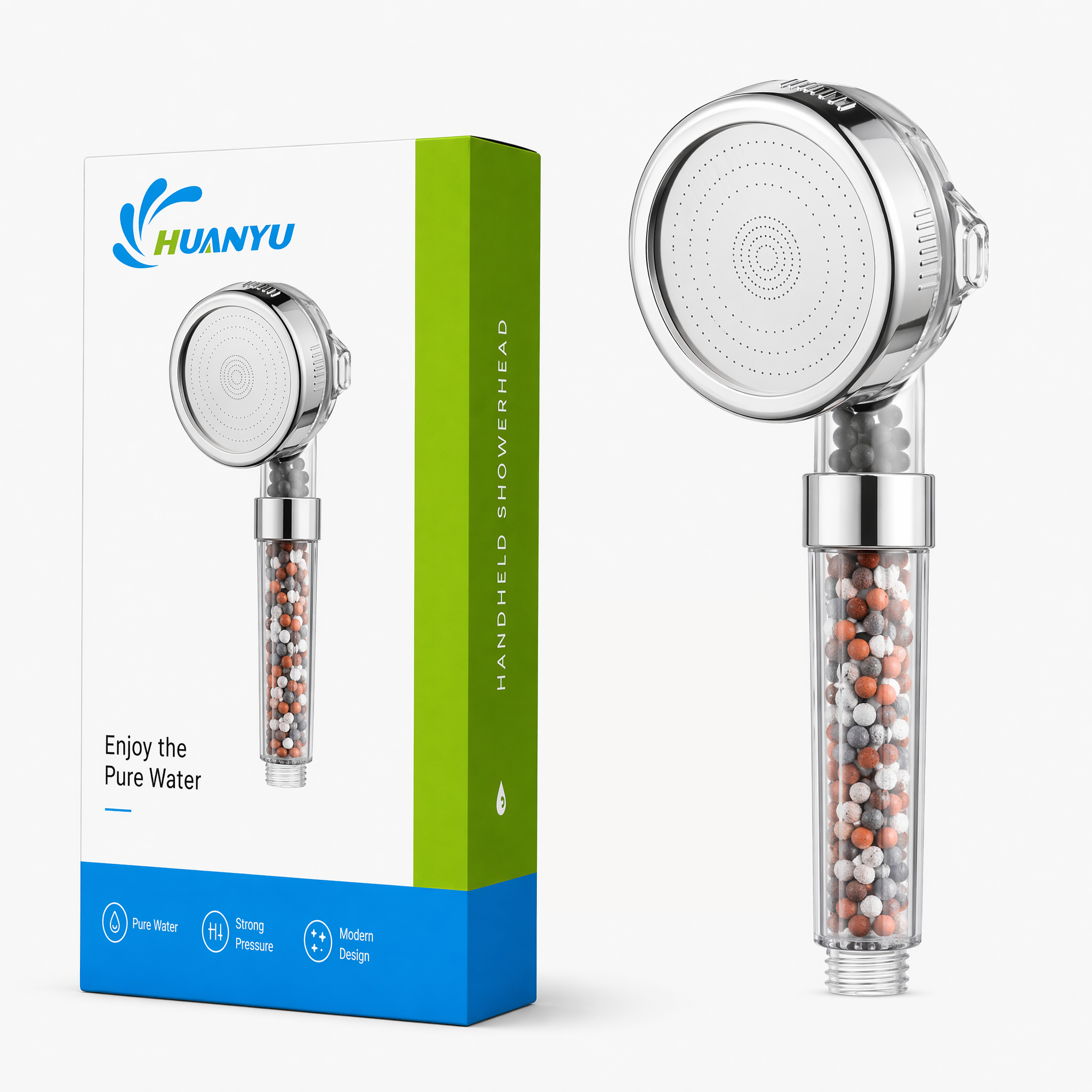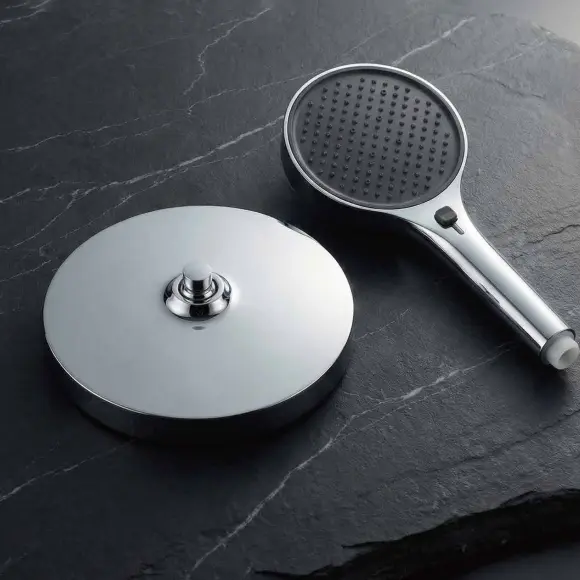

Square vs round shower head: does shape change the spray?
A square shower head is not automatically wider or softer. A round one is not automatically stronger. Shape controls the outline. The nozzle map and internal water path control what reaches your skin.
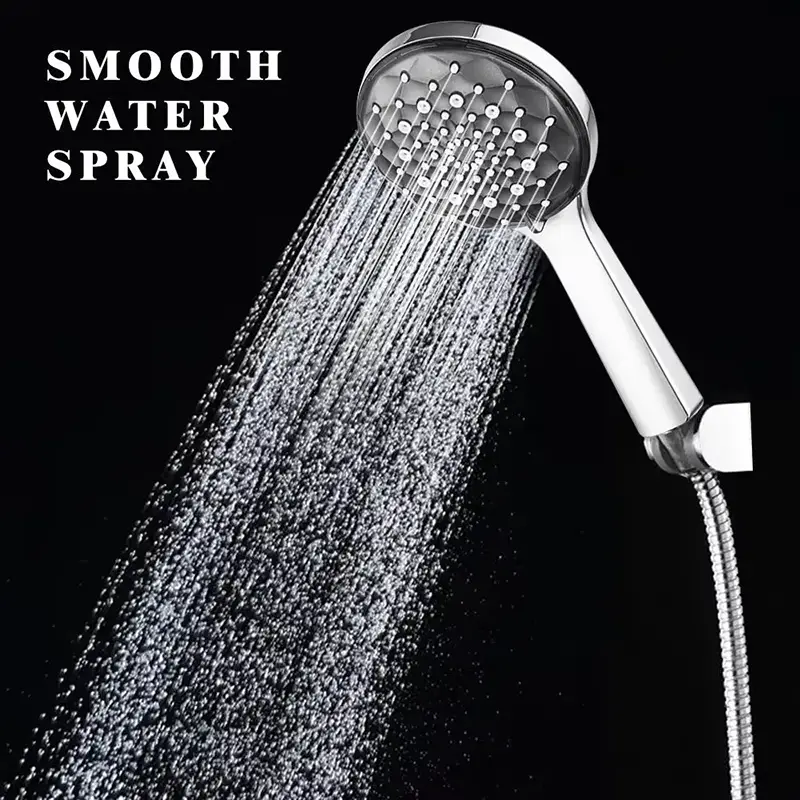
Choose square or round for visual fit and handling. Choose the spray by effective outlet area, nozzle spacing, active zones, face size and flow performance. Two heads with the same shape can feel completely different. Two heads with different shapes can feel nearly identical when their nozzle maps are similar.
The outline is visible. The water path is not.
Most comparisons begin with style: square looks modern, round looks classic. That part is fair. The problem starts when the outline is treated as a hydraulic specification.
At the factory, we cannot predict spray force from a silhouette. We turn the head over. We count the active outlets, inspect their diameter and angle, identify which zones open in each mode, then check how evenly those zones fill.
A compact square face with a small central group can produce a focused rinse. A large round face filled with outlets can produce broad rain. Reverse the nozzle layouts and the result reverses too.
Three shape claims that need a second look
Square means wider coverage
Only when the active outlets actually reach the corners and the face is larger. A square frame can surround a much smaller round or central spray zone.
Round means higher pressure
A compact active area can create a stronger local sensation, but a circular outline does not raise supply pressure. Outlet count and waterway restriction matter more.
Square corners always clog first
Scale forms where water remains and around restricted outlets. The frame corner has little effect if there are no nozzles there. Nozzle material and cleaning access are better clues.
Square or round: what usually changes and what does not
| Decision | Square shower head | Round shower head | What to verify |
|---|---|---|---|
| Visual style | Angular, architectural and easy to align with rectangular tiles or controls | Curved, softer and easy to pair with circular controls or traditional forms | Match the entire fixture family, not one head in isolation |
| Coverage | Can form a rectangular field when corner outlets are active | Can form a circular field around the user | Active spray width and edge uniformity |
| Pressure feel | Can be broad or focused | Can be broad or focused | Active outlet area, nozzle diameter and flow path |
| Handling | Edges give a clear orientation in the hand | A circular head has no visual top or side | Grip, balance, selector reach and bracket fit |
| Cleaning | Corners and straight edges take slightly more wiping | A continuous rim is quick to wipe around | Flexible nozzles, finish instructions and accessible gaps |
| Installation | Needs deliberate visual alignment when fixed in a bracket | Rotation is less visually obvious | Connector, hose, holder, weight and clearance |
GROHE treats shape, size and spray type as separate steps in its hand-shower guide. That separation is useful. The U.S. EPA also evaluates spray force, spray coverage and pressure compensation as distinct performance attributes for WaterSense-labeled showerheads. Neither framework suggests that outline alone describes performance.
Four nozzle maps can sit inside the same outline
Four measurements tell you more than square or round
A product photo shows the outer shape. It rarely shows how much of that face is actually working. Ask for these four measurements when two models appear similar.
Width or diameter
This tells you the physical envelope. It affects visual scale, handling and clearance, but it can include a wide inactive frame.
First nozzle to last
This is a better starting point for coverage. On a square head, record both horizontal and vertical span. On a round head, record the active diameter.
Measure by mode
A multi-function head may use the whole face for rain and only the center for jet. One face therefore has several effective spray areas.
Check at use distance
Angled outlets can spread wider than the face. Parallel outlets may keep a narrow field. Record the wet pattern where the user's body actually stands.
Do not convert those measurements into a promise before testing. Two nozzles at the same position can project differently because their outlet angle and stream formation differ. The measurements create a fair comparison; the live spray confirms it.
A real Huanyu pair: similar purpose, different geometry
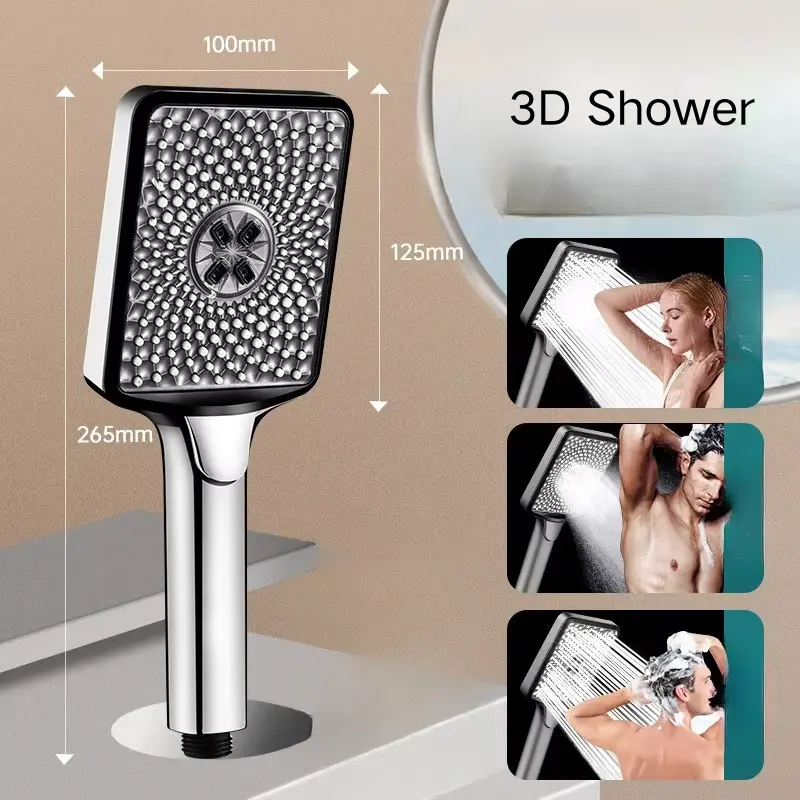
LHS12023 and LHS12024 are useful because both are chrome-plated ABS 3D hand showers. Their difference is not just square versus round. The visible outlet structures are different too.
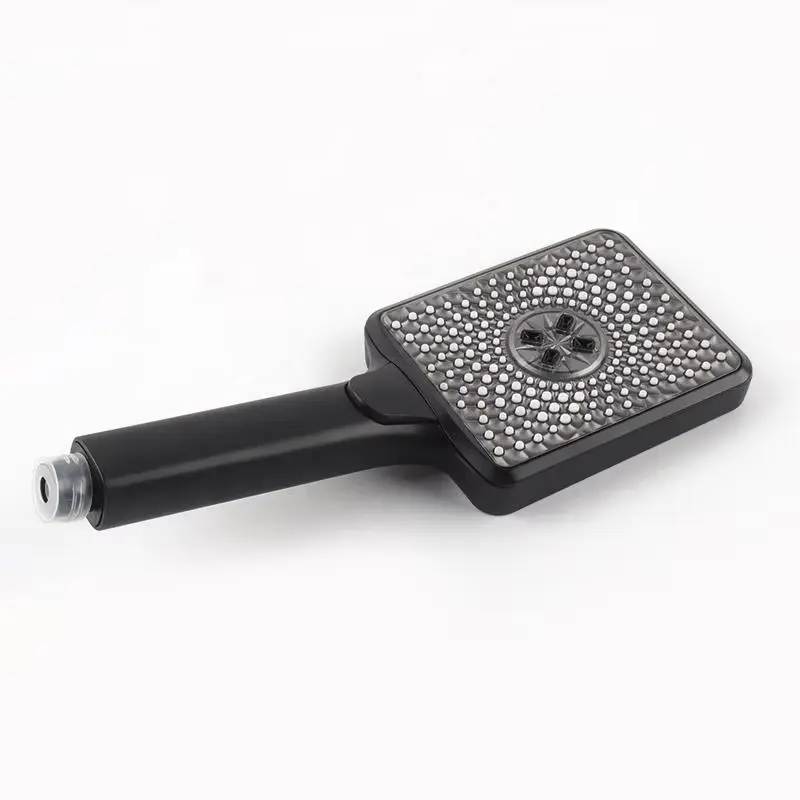
LHS12023: defined center inside a square face
The LHS12023 product page presents a 3D square face with a central four-way jet zone and surrounding textured outlets. The page lists a chrome surface, ABS plastic body and 270 by 100 mm overall size.
The key design choice is zoning. A square perimeter provides the visual language, while the center gives the product a clearly focused function.
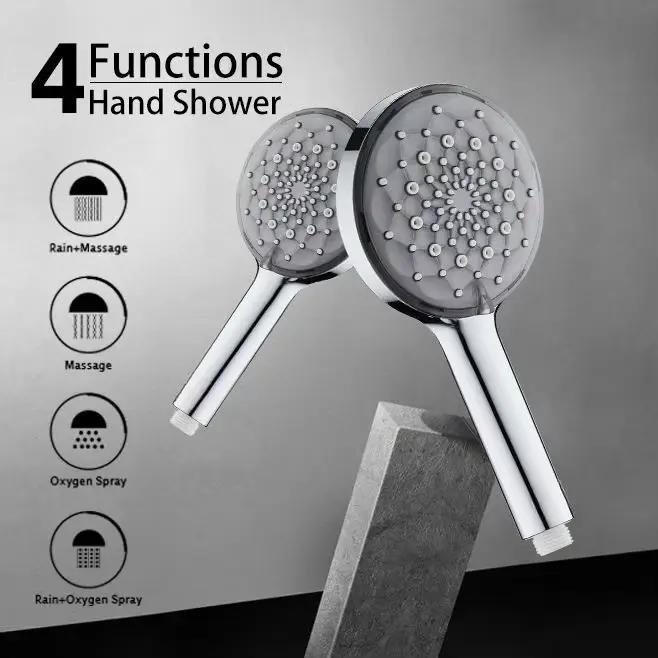
LHS12024: a circular face built around multiple paths
The LHS12024 product page presents a round 3D face with central and surrounding outlets for multiple spray paths. The page lists a chrome surface, ABS plastic body and 120 by 260 mm overall size.
Here, the round outline supports a broad visual field, but the selectable outlet paths decide whether the result is wide, concentrated or mixed.
These products should not be read as a controlled laboratory test of shape. Their face structures differ. That is exactly the point: shoppers rarely compare two products where shape is the only changed variable. Read the complete design, not one label.
Mounted versus handheld
The same head can behave differently in the bracket
Handheld photos are usually taken straight on. In a bathroom, the head often sits above shoulder level, tilted down and held by a bracket that can rotate.
That changes the decision. A square face makes tilt and rotation easy to see. A round face hides rotation, but its spray can still miss the intended area if the bracket angle is wrong.
Seven questions settle the square-versus-round decision
What is the active spray width?
Measure the water field, not only the plastic or metal outline. A wide bezel or decorative face can make a head look larger than its working outlet area.
Do the edge outlets fill evenly?
Broad coverage is useful only when the perimeter stays active. Look for weak corners on a square pattern and weak outer arcs on a round one.
Which pattern will be the daily default?
Multi-function heads may use only part of the face in jet or massage mode. Judge the mode you will use most, then treat the other modes as tools.
Does the head feel balanced in your hand?
Face size changes leverage. A large head can feel top-heavy even when its material is lightweight. Hold it at the normal showering angle and reach the selector with a wet thumb.
Will it sit correctly in the existing holder?
For a hand shower, connector size is only one part of compatibility. Check handle taper, bracket depth, hose clearance and whether a square head can rest without rotating against the wall.
How much visual alignment will bother you?
A square face makes rotation obvious. If the holder allows the head to twist, a slightly crooked square may look careless. A round face hides small rotational changes.
Can every outlet be cleaned without a tool?
Flexible nozzles and open spacing reduce routine effort. Inspect the perimeter and the gaps around raised 3D features, not just the easy-to-reach center.
Maintenance reality
Round is simpler to wipe. Nozzle access matters more.
A continuous round rim has no corners, so the exterior wipe is quick. A square rim needs an extra pass at each corner. That difference is real, but small.
The larger maintenance question is whether deposits can be released from the outlets without scratching the finish or deforming a nozzle.
At Huanyu, shape is checked as a performance system
Huanyu's current Equipment page lists water-flow and noise-testing equipment for flow performance, spray uniformity and noise level. It also lists sealing and pressure equipment that simulates 0.3 to 1.0 MPa. Those checks are more useful than declaring one shape universally better.
Our recommendation is deliberately unspectacular
Pick the shape that belongs in the bathroom. Then ignore it for five minutes.
Compare the active spray area, coverage at the edge, focused-rinse option, control reach, cleaning access and holder fit. If the round model wins those checks, buy round. If the square model wins, buy square. If both perform equally, the decision really is aesthetic, and there is nothing wrong with that.
For more context on hand-shower structures and controls, see Huanyu's guide to the types of hand showers. If the concern is weak supply rather than shape, use the separate guide on how to increase shower water pressure.
Compare the faceplate before choosing the silhouette
For an OEM or ODM hand shower, send Huanyu the preferred square or round outline together with target face size, spray zones, control method, finish, flow requirement and application. We can review the shape as part of the complete water path instead of treating it as decoration alone.
Frequently asked questions
Is a square or round shower head better?
Neither shape is universally better. Square and round heads can both provide broad rain, focused jets or mixed spray. Compare the active nozzle area, edge uniformity, face size, control, cleaning access and holder fit. Use shape mainly to match the bathroom design.
Do square shower heads have less pressure?
Not because they are square. Perceived spray force depends on the available flow, active outlet area, nozzle diameter and internal water path. A large square head with many active outlets may feel softer, while a square model using a small central zone can feel focused.
Do round shower heads provide more even water coverage?
They can, but outline does not guarantee uniformity. A round head needs its outer nozzles to fill evenly, just as a square head needs consistent coverage at its corners and edges. Examine the live spray pattern rather than assuming from the frame.
Are square shower heads harder to clean?
The square rim and corners take slightly more wiping than a continuous round rim. The bigger difference comes from nozzle material, spacing, finish-care requirements and access around raised features. Flexible, reachable outlets make either shape easier to maintain.
Can I replace a round hand shower with a square one?
Often yes, when the new hand shower matches the hose connection and fits the existing holder. Also check handle taper, bracket depth, product weight, hose clearance and rotation. A square face makes crooked alignment more noticeable.