
Rain, pulse, jet or mixed? Shower head settings explained
A six-function shower is not automatically better than a three-function model. What matters is how each setting changes the water path, what it feels like, and whether you will use it.
Rain spreads water across a wider area. Pulse changes the stream rhythm. Jet concentrates water into fewer outlets. Mist breaks it into finer droplets. Mixed runs two outlet zones together. Pause reduces or stops flow. The names are not standardized, so compare the active nozzles and the resulting spray instead of trusting the mode count.
The mode name is marketing. The water path is the product.
We can print "massage," "power," or "turbo" on a carton. None of those words tells you which outlets open.
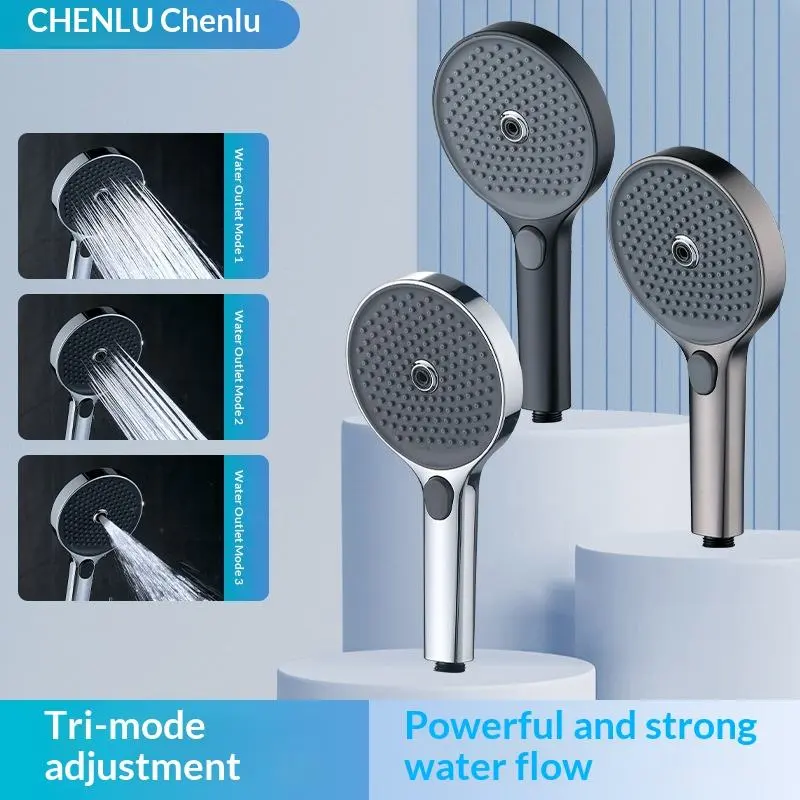
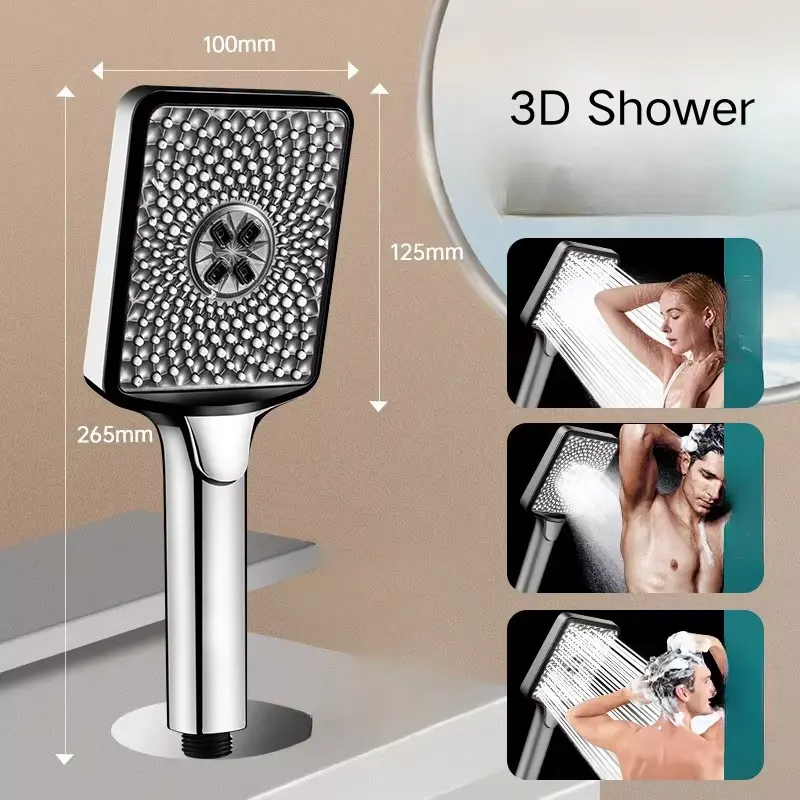
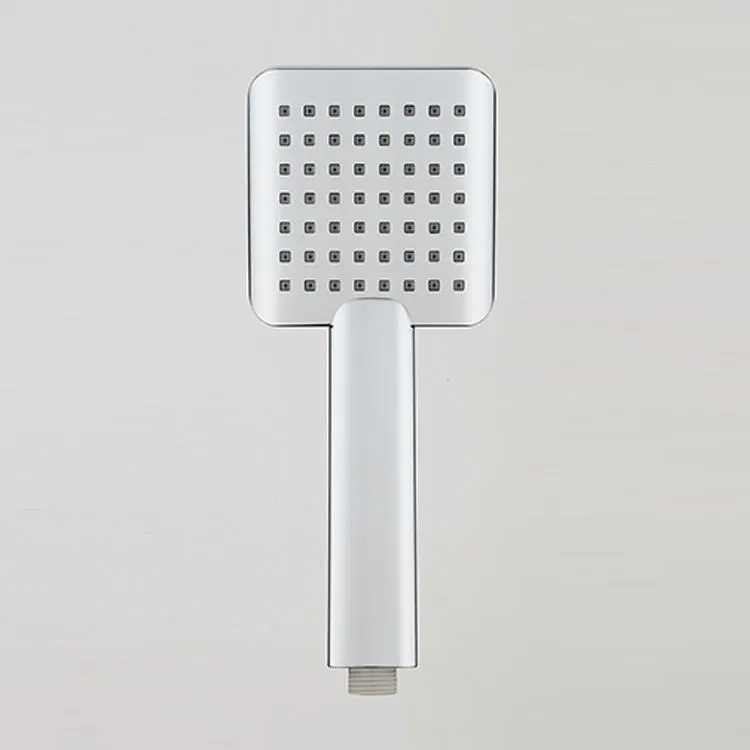
At the factory, we look at the faceplate first. A central group of large holes usually produces a focused stream. A wide ring of smaller outlets usually creates coverage. Open both zones and you get a mixed pattern.
This is also why two products can use the same name and feel different. Nozzle diameter, outlet angle, active area, flow rate, inlet pressure and the distance from the skin all change the result.
What the six common shower settings actually do
Rain
Many outlets operate across a broad face. The goal is even coverage, not a narrow point of impact. It suits routine rinsing when the faceplate fills evenly.
Watch: coverage at the edgePulse or massage
The stream changes rhythm or concentrates through a smaller zone. Some designs alternate water mechanically. Others use a fixed group of strong central jets.
Watch: rhythm and focusJet or power
Fewer outlets carry the available flow. The result is a narrow, directed rinse that can help with shampoo or cleaning the shower enclosure.
Watch: useful reachMist
Smaller droplets create a softer, lighter spray. It can feel cool sooner than a heavier stream and may produce more visible airborne moisture.
Watch: droplet driftMixed or hybrid
Two outlet zones run together. A common design combines broad rain with a concentrated center, trading some local force for broader coverage.
Watch: balance between zonesPause or stop
This is a control function, not a spray pattern. It reduces or stops flow while you soap or reposition the hand shower. Some products leave a small residual stream by design.
Watch: resume behaviorBrands create their own names for variations of these patterns. GROHE, for example, lists separate Rain, Jet, Massage, Drizzle and air-mixed spray types. Use those names for the specific brand only. Do not assume another product with the same word uses the same internal geometry.
Choose by task, not by mood words
| Setting | Outlet behavior | Best practical use | Main tradeoff |
|---|---|---|---|
| Rain | Broad outlet area | Everyday full-body rinsing | Can feel soft if the face is too large for the available flow |
| Pulse | Rhythmic or concentrated zone | Focused sensation on shoulders or back | The pulse may weaken at low flow |
| Jet | Few focused outlets | Fast rinsing and bathroom cleaning | Narrow coverage can feel sharp close to the skin |
| Mist | Fine droplets | Gentle wetting and a softer spray | More drift and quicker cooling |
| Mixed | Two zones together | Coverage with a stronger center | Available flow is divided between zones |
| Pause | Flow reduced or stopped | Soaping, shaving or repositioning | Not a substitute for closing the main valve after use |
The U.S. EPA's WaterSense program separates spray force from spray coverage because both affect user satisfaction. That is the right way to think about settings. One number or one label cannot describe the whole spray.
One faceplate can create three different patterns
Three mechanisms sit behind most multi-spray claims
Separate outlet zones
A diverter sends water to the center, perimeter or both. The faceplate makes the difference visible and easy to explain.
Indexed selector
Each button press or dial position moves a distribution plate to a fixed port. The sequence and return feel matter as much as the number of stops.
Stepless mixing
A sliding control moves the distribution plate continuously. The user can blend adjacent water paths instead of jumping between fixed positions.
A pause button may sit beside any of these mechanisms. Keep it separate in the specification. Buyers need to know whether a button changes the spray, controls flow, or does both.
Three Huanyu products show why mode count is incomplete
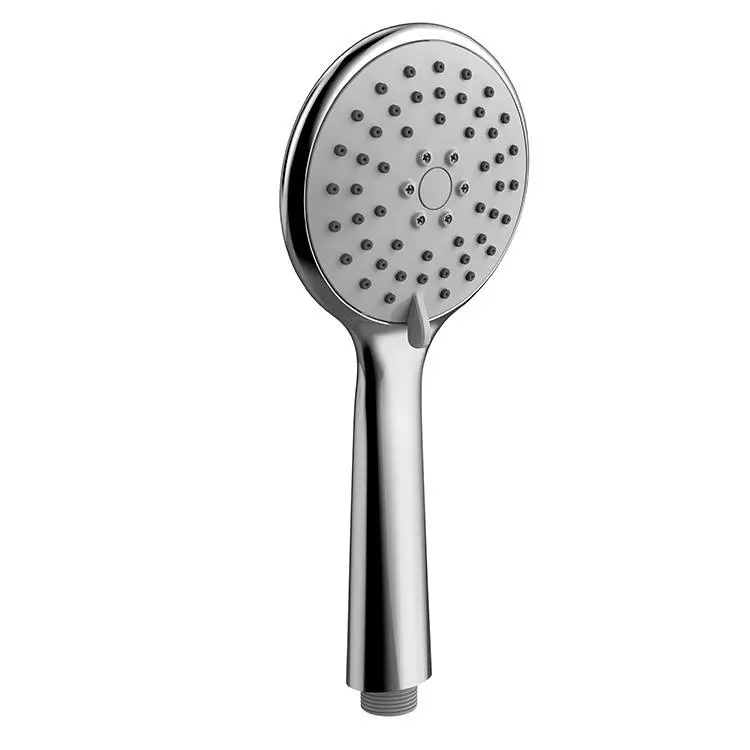
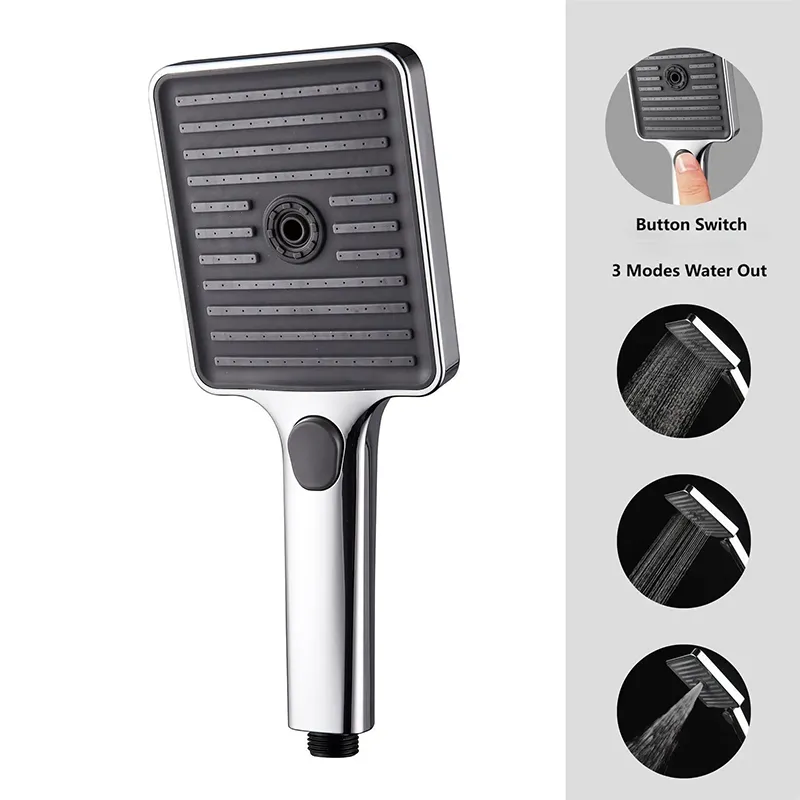
BHS11010: three named patterns from a divided face
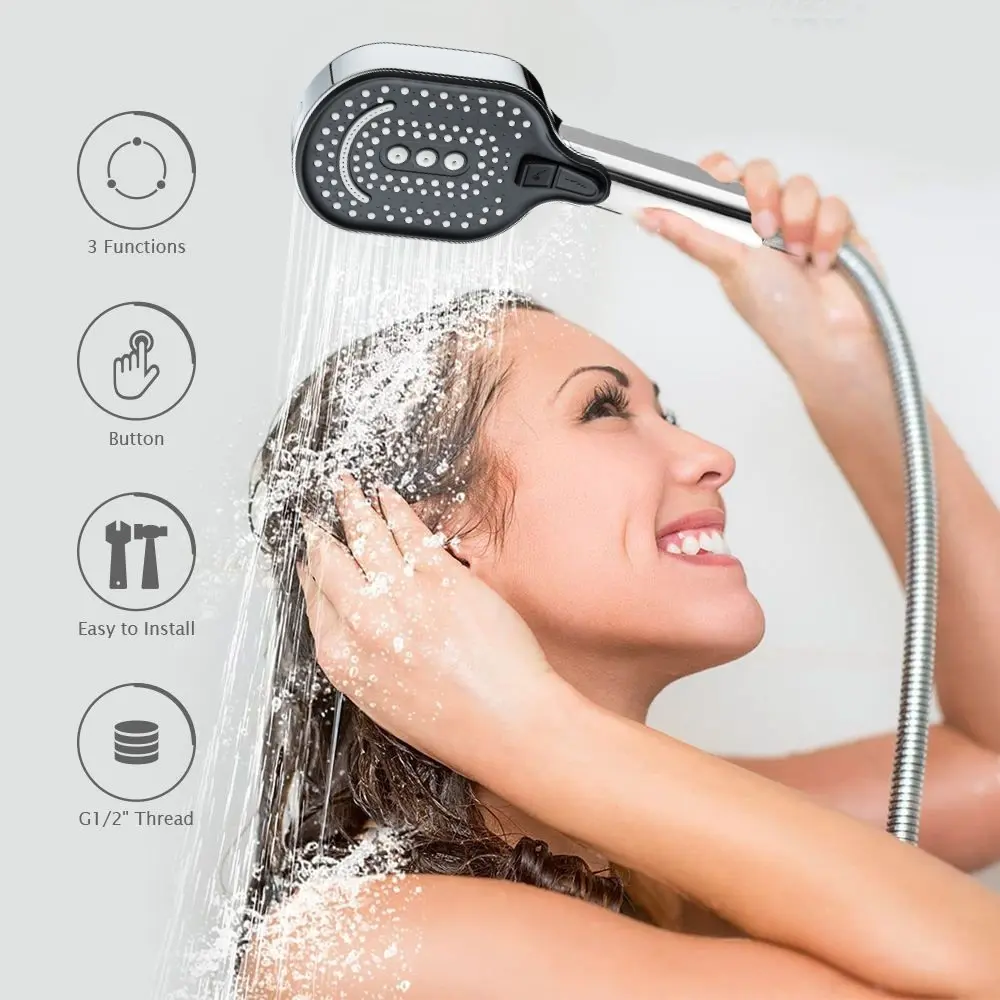
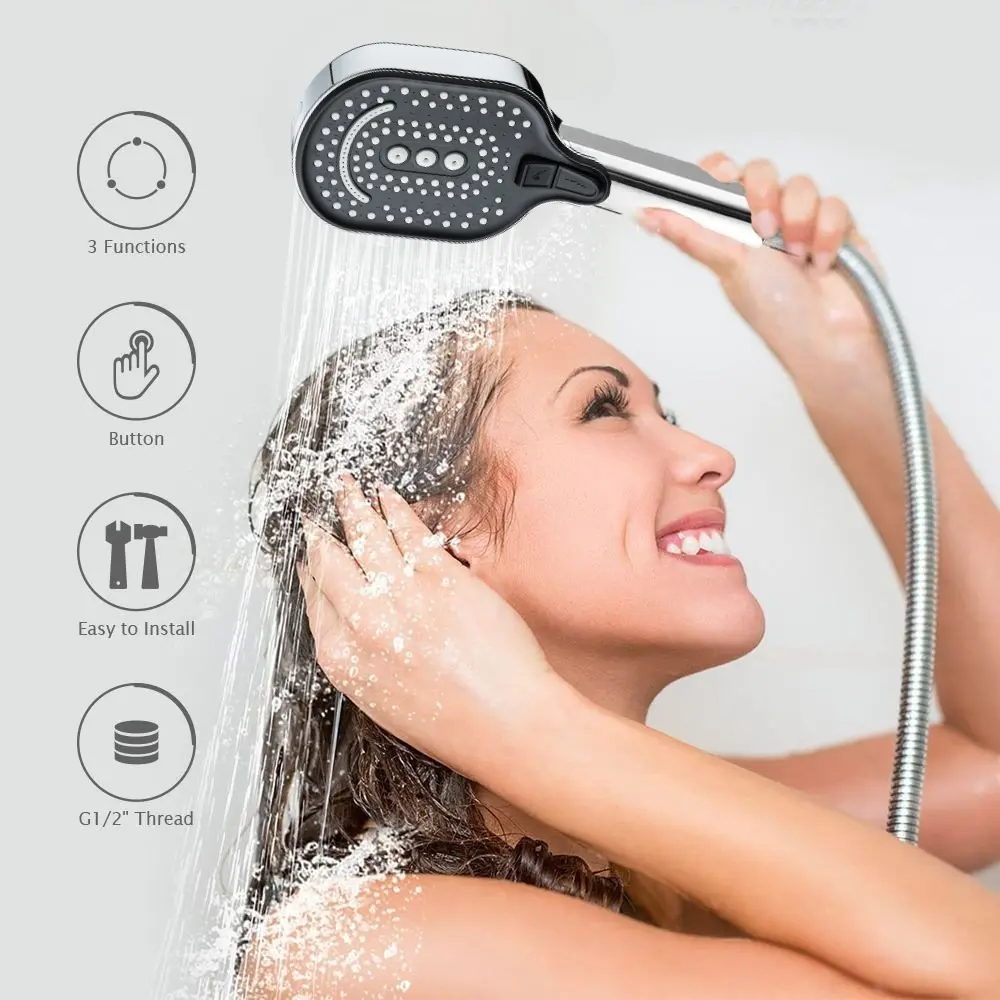
The BHS11010 product page lists rain, pulse and hybrid modes. It is a 140 mm ABS hand shower with a chrome surface, a one-button switch, soft silicone outlets and a standard G1/2 connection.
LHS12006: the nozzle map tells the story
The LHS12006 page describes six large central jets surrounded by smaller outer outlets. The page identifies center power, peripheral soft and dual-zone patterns. This is a 108 mm ABS hand shower with a chrome surface.
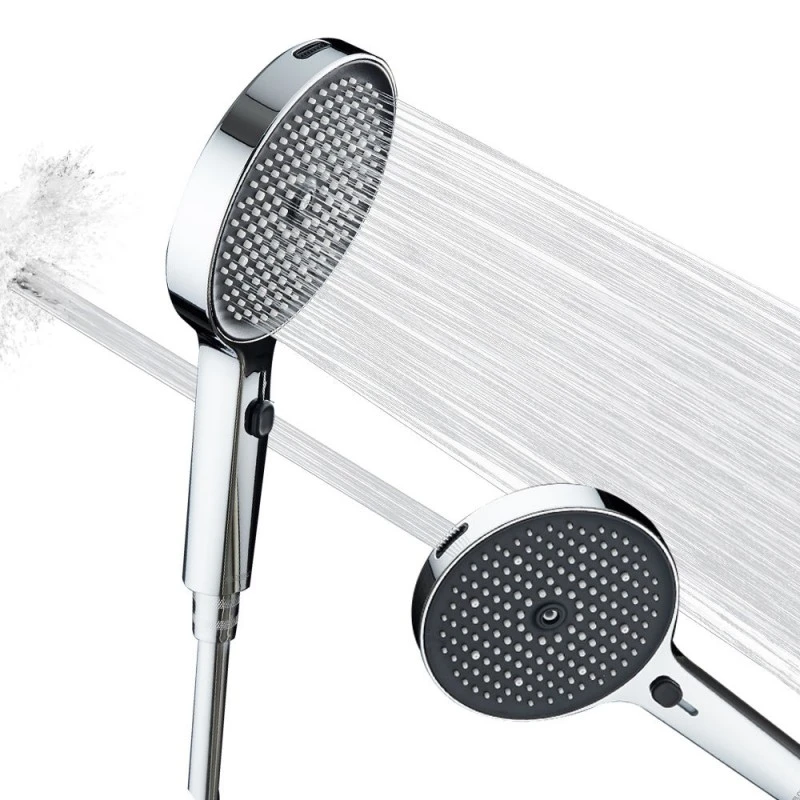
SFC-HS0001: continuous control changes the question
The SFC-HS0001 page describes a rack-and-gear linkage that moves a water-distribution plate. Its control slides between water paths rather than stopping only at fixed modes.
From our point of view, this can be more useful than adding another named setting. It lets the user find a balance between coverage and concentration instead of accepting the factory's preset split.
When a spray setting feels wrong, isolate the pattern first
Do not call the whole shower head "low pressure" until you compare every setting. A fault that appears in one pattern but not another usually points toward that pattern's outlet zone or selector path.
Start with the faceplate. Note which holes should run in the affected mode, then compare them with a mode that still works. These observations narrow the search. They are not a substitute for opening the product according to its service instructions.
The supply is reaching the hand shower. The affected outlet zone may be restricted, or the selector may not be opening that water path fully.
Inspect the active nozzles for deposits. Move the control through a complete cycle and confirm that it reaches a positive stop.
Broad rain coverage depends on many small outlets filling together. A few restricted nozzles create visible holes in the pattern.
Rub flexible silicone nozzles gently and rinse the face. Use the cleaning method approved for the product finish.
The selector may be stopping between indexed positions, or the two marketed modes may use nearly the same outlet area.
Watch the nozzle zones while switching. Judge a real change in the water path, not only the click or printed icon.
That position creates a different restriction or flow path. Noise can come from the selector, local geometry or an incompletely seated position.
Reseat the control and compare the same mode at a lower flow. Persistent noise belongs in a product-specific inspection, not a pressure guess.
This may be normal. Opening two zones divides the available flow across more outlets instead of concentrating it in one group.
Compare coverage and rinsing time. Do not treat lower impact as a defect if both zones fill evenly and the mode matches its design.
Match the setting to the job you repeat most
A mode is useful only when it solves a recurring task. From a product-development viewpoint, we would rather give one daily setting excellent coverage and add one clearly different tool than create several small variations.
Start with an even rain pattern
Choose the broadest setting that still fills at the edges under your normal water conditions. It should rinse the shoulders and torso without forcing you to keep moving the hand shower.
Add a focused rinse zone
A central jet or pulse zone can push through hair more directly than a very wide soft spray. Keep enough distance to avoid an uncomfortable point impact.
Compare rain with mist, not the label alone
Mist produces finer droplets, but those droplets can cool and drift sooner. A well-filled rain pattern may feel gentler and warmer while still rinsing more effectively.
Use reach and concentration
A handheld jet is useful when it sends a coherent stream toward corners, glass and the shower tray. The practical test is controlled reach without excessive splashback.
Favor a smaller active zone
A focused pattern can feel more decisive because fewer outlets share the flow. It does not increase the building's supply pressure, so check that the spray remains stable rather than relying on a "high pressure" name.
Treat pause as a control
A pause button can reduce unnecessary running while the hand shower is moved. Always close the main valve after use; the pause function is not the final shutoff.
How we would compare spray settings before choosing a model
Ignore the printed names for the first test
Run every position and write down which nozzle zones activate. If two positions use the same outlets and feel nearly identical, they are not adding much value.
Test at the pressure your bathroom actually has
A pulse that works at high inlet pressure may flatten at lower flow. A wide rain face may lose edge coverage. Do not judge only at the easiest condition.
Check the distance where people really shower
A jet can feel useful at arm's length and harsh at close range. Fine mist may drift before it reaches the body. Test a handheld both in the bracket and in the hand.
Switch with wet hands
Cycle every mode several times. The control should complete its travel and produce a repeatable spray. If it sticks or mixes modes unintentionally, use our guide to a shower head button that is not working.
Look at maintenance before novelty
Small outlets create attractive patterns but show restriction sooner when scale builds up. Flexible silicone nozzles make routine surface cleaning easier.
Choose one default mode
Most people will return to one setting. Make sure that setting handles the main daily rinse well. Treat the other modes as useful tools, not the reason to accept a weak default spray.
Six traps hidden behind a large mode count
For a wider view of product construction, controls and applications, see Huanyu's types of hand showers guide. It answers a different question: which hand shower category fits the project.
How Huanyu checks more than the label
Huanyu's current Equipment page lists water-flow and noise-testing equipment for flow performance, spray uniformity and noise level. It also lists sealing and pressure equipment that simulates 0.3 to 1.0 MPa. Those checks help us compare whether each selector position produces a stable, distinct water path.
Specify the water experience before asking for a mode count
For an OEM/ODM hand shower, send Huanyu the target coverage, focused-rinse zone, control method, inlet-pressure range, flow requirement, finish and packaging. We can compare a fixed three-mode layout, button-control design or stepless mechanism against the intended use.
Frequently asked questions
What do the settings on a shower head mean?
They change which outlet zones operate or how the water leaves the faceplate. Rain usually uses a broad area, pulse or jet concentrates water, mist creates finer droplets, mixed combines zones, and pause reduces flow. The names vary by manufacturer.
What is the best shower head setting for washing hair?
A full rain pattern with even coverage works for routine washing. A focused jet or power setting can rinse thick hair faster, but it may feel sharp at close range. Test the pattern at your normal water pressure.
Is massage mode the same as pulse mode?
Often, but not always. Some massage settings mechanically alternate the stream. Others simply use a concentrated central group of jets. Check the active nozzle zone and spray rhythm instead of relying on the name.
Does a mixed shower setting use more water?
Not necessarily. Mixed mode opens two outlet zones, but the shower head's flow-control design may keep total flow within the same rated limit. The available water is then divided across more outlets.
Is a five-function shower head better than a three-function model?
Only if the extra settings are distinct and useful. Compare coverage, spray force, low-pressure performance, switching and maintenance. Three well-separated patterns can be more practical than five similar selector positions.