
What is the black stuff on my shower head? Do not soak away the evidence
A dark film on the face, rubber crumbs at one connection and black grains in every cold tap do not share one cure. Find where the material enters the water path before you clean anything.

Black material on a shower head is not automatically mold. It may be a surface film, manganese staining, deteriorating rubber, activated carbon from a filter, pipe debris or damage to the finish. Wipe the dry face with white tissue, collect particles with the head removed, compare cold and hot water, then check another fixture. Those four observations tell you whether to clean the face, replace a hose or washer, inspect the hot-water system, or contact the water supplier.
I would not start with a vinegar bag. At a factory bench, cleaning first destroys the best evidence: where the material sat, whether it arrived with the water, and which part of the water path produced it.
Black is a poor diagnosis. Mold can have many colors, according to the U.S. Environmental Protection Agency. Manganese, rubber, activated carbon and pipe debris can also look black. A photograph alone rarely separates them.
The useful question is physical: did the material grow or collect on a wet surface, or did water carry it out of the plumbing? Make that split before choosing a cleaner.
Our view: if the black material appears in the water, treat it as a water-path problem until the head, hose and supply have been isolated. A spotless spray face does not prove the incoming water is clear.
A ten-minute evidence set
Collect four observations before you scrub
Turn off the shower and let the surface dry enough to handle safely. Keep each sample separate. Do not taste the water or identify unknown material by smell at close range.
Wipe before running water
Use white tissue on the face, seam and connection. A mark present before flow belongs to the exposed surface or a part that drained onto it.
Test with the head removed
For a handheld model, turn the water off, remove the head, control the hose, then collect a brief sample. Particles that remain have moved upstream of the head.
Compare cold and hot
Use the same clean white container. Hot-only material points toward the hot-water path. Material in both tests moves the check elsewhere.
Check another fixture
One shower narrows the source to local parts. Several cold taps, including an outside tap when available, point toward shared plumbing or the supply.
The material behaves differently
Match the black material before choosing a fix
| What you observe | Where it appears | What it may indicate | Next useful check |
|---|---|---|---|
| Thin film that smears | Face, nozzle roots, seams or nearby damp surfaces | Surface soil or biofilm; visible mold is possible when the wider area stays damp | Wipe the dry face, inspect grout and hose, then check bathroom ventilation |
| Black powder when rubbed | Fixture stains or particles at several outlets | Manganese, sometimes with iron | Compare other cold taps and ask a certified laboratory or water supplier about testing |
| Soft or elastic crumbs | One shower, often near a leaking nut, washer or hose | Degrading rubber component | Inspect the washer and hose lining; replace the damaged part |
| Hard, uniform coffee-ground grains | After a point-of-use or whole-home carbon filter | Granular activated carbon from a filter | Follow the filter maker's cartridge and flushing instructions |
| Hard, irregular dark flakes | Several fixtures or after plumbing disturbance | Pipe corrosion product, mineral scale or main sediment | Compare cold outlets and check utility notices before dismantling the shower |
| Finish-colored flakes | Edge, faceplate or handle coating | Coating damage rather than dirt | Stop abrasive cleaning and compare the flake with the exposed layer beneath it |
Location beats color
Move upstream one connection at a time
The Alameda County Water District asks whether a condition occurs at some or all taps, in hot or cold water, and only at first draw or continuously. That is a better diagnostic frame than naming a black substance from a photo.
A handheld shower offers useful isolation points. The face, head inlet, hose, wall outlet and mixed-water supply can be checked in order. Stop when the material disappears. The last removed part or the connection immediately upstream becomes the next inspection target.
- Face onlyInspect nozzle lips, seams and the room's damp surfaces.
- Head inletCheck the inlet screen, washer and accessible cavity only if the model permits service.
- Open hoseMaterial here excludes the spray face. Inspect the hose lining and both end washers.
- Hot water onlyUse the heater maker's instructions or a plumber. Do not treat the shower head as the source.
- Several cold tapsCheck water-utility notices and contact the supplier if discoloration persists.
Five paths, five different actions
What the common causes look like in practice
A slimy layer can be biofilm, but black does not name the organism
The U.S. Centers for Disease Control and Prevention describes biofilm as a slimy, glue-like material that lets groups of microorganisms stick to water-contact surfaces. The same guidance says to clean showerheads when buildup is visible and to follow the manufacturer's cleaning instructions.
If dark film also appears on grout, caulk or the holder, the room's moisture matters. EPA guidance is direct: clean visible mold from hard surfaces and correct the moisture problem. Cleaning one shower face while the surrounding area stays damp will not address that condition.
Black powder and repeated fixture staining move the check to the water
The Wisconsin Department of Natural Resources lists manganese, sometimes with iron, as one cause of black particles. Its practical clue is black powder left when the specks are rubbed. The agency recommends testing the water rather than confirming the cause by appearance.
If the same dark stain returns at more than one fixture, repeated shower-head replacement is poor diagnosis. Record which cold taps are affected and contact the water supplier or a certified laboratory.
Rubbery pieces need a replacement part, not a descaler
American Water's particle guide connects small oily or sooty black particles with deteriorating internal rubber hoses. It connects solid, rubbery particles with crumbling washers or gaskets, often at one fixture.
Inspect a handheld shower's hose and the flat washers at both ends. A washer can look intact around its rim while the inner edge softens and sheds. If the hose lining releases black material, replacing the head will leave the source in place.
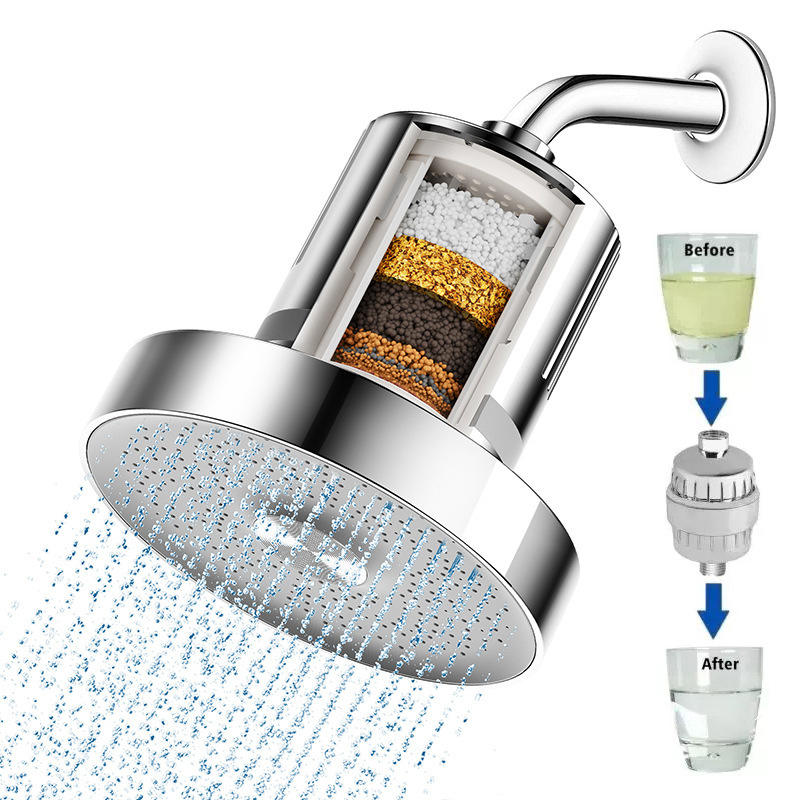
Hard, similarly sized grains point toward a carbon filter
Alameda County Water District describes hard black particles shaped like large coffee grounds as a sign of granular activated carbon from an installed filter. The practical response is model-specific: replace or service the cartridge and follow its maker's flushing method.
Timing matters. If the particles began immediately after cartridge installation, preserve a sample and review the filter instructions. Do not push loose carbon farther into small shower nozzles while experimenting with the cartridge.
Several fixtures or hot-only particles take the problem beyond the head
American Water separates utility-main disturbances from internal plumbing by distribution. Particles in all cold-water faucets suggest a shared supply disturbance. Particles at certain fixtures, or in hot water only, point toward internal plumbing.
If the black material appears only with hot water, follow the water-heater manufacturer's inspection and flushing instructions or call a plumber. Heater work involves stored hot water, pressure and energy. It is not an appropriate shower-head experiment.
Use the product drawing as the baseline
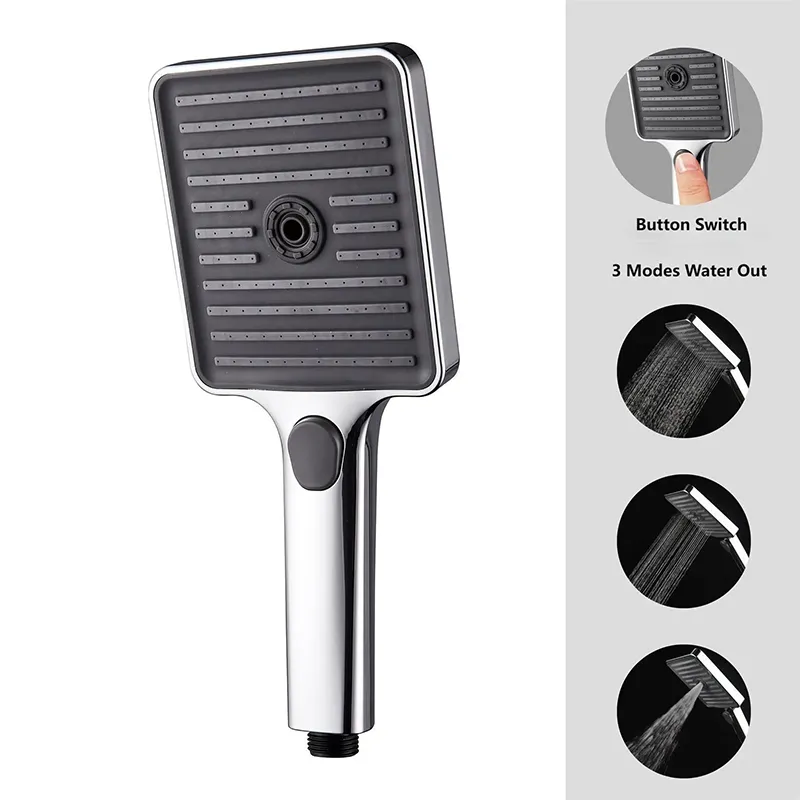
Dark nozzle material can be part of the design
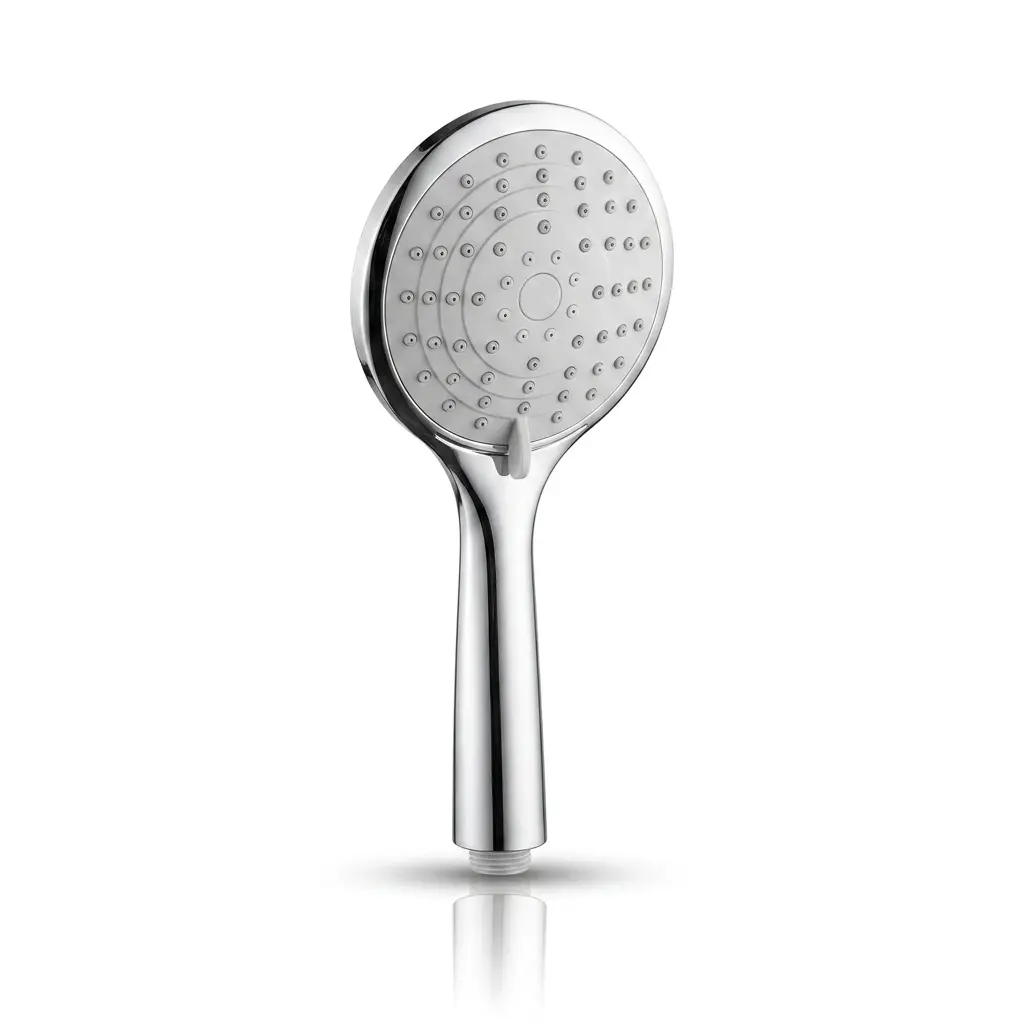
Before calling a dark circle residue, compare it with the original product image. Nozzle color, inner inserts and decorative rings can be intentionally black. Residue changes shape, spreads to new areas, wipes off or appears in the collected water.

Known dark components are not new contamination
Huanyu's page identifies 36 outer flexible silicone nozzles and a finer inner outlet structure. The black inner outlets have a regular, repeated shape. A new irregular film across them is a different observation.

Separate outlet zones make the residue map useful
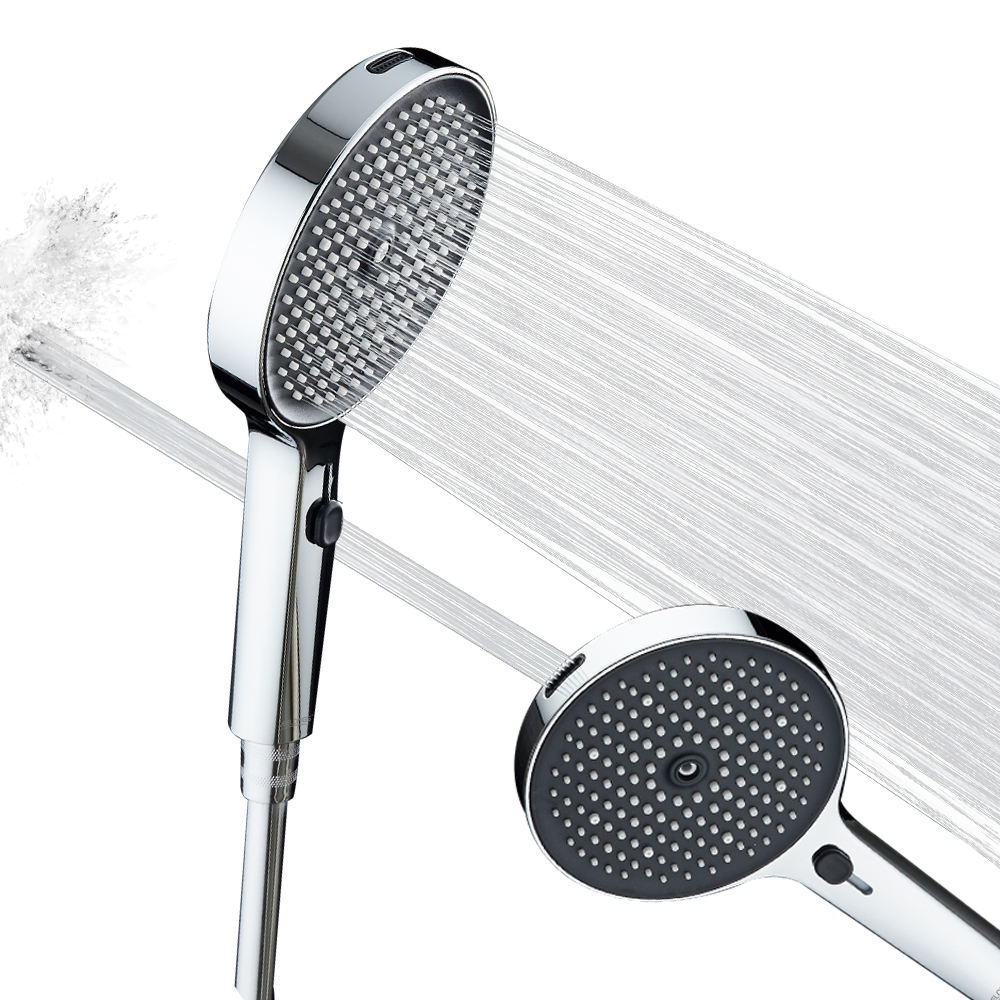
The BHS11006 page lists a 110 mm ABS body, chrome surface, soft silicone outlets and a central four-hole pulse structure. Residue on one outlet group should be recorded separately from particles found at the inlet.
A claim we keep narrow
Self-cleaning nozzles help with attached scale. They do not clean the supply water.
Huanyu's self-cleaning product pages describe flexible silicone outlets that can be rubbed to release attached deposits. That is useful at the nozzle lip. It does not repair a degrading hose, retain carbon from a failed filter or identify a dark film as harmless.
Act on the material you found
Clean a deposit. Replace a failing part.
Cleaning makes sense when the material is attached to a sound surface
For Huanyu models with flexible silicone nozzles, start by rubbing the affected outlet with a finger while water runs. Use the exact product's care instructions for the plated body and for any deeper cleaning.
CDC guidance says showerheads with visible buildup may need removal and soaking in a solution such as white vinegar, but it also says to follow the manufacturer. The last clause matters. A method approved for one finish, adhesive or seal should not become a universal overnight soak.
For visible mold on a hard surrounding surface, EPA advises detergent and water followed by complete drying. Fix the moisture condition as well.
Stop cleaning and change the repair path when
- the material is rubbery and a washer or hose is breaking down;
- hard carbon grains appear after a filter change;
- black flakes match a damaged surface coating;
- particles continue with the shower head removed;
- hot-only debris points toward the heater;
- several cold taps show the same condition.
The factory boundary
We test the product after the source condition is defined
A black-particle complaint cannot be reproduced from a product photo. The useful sample includes the exact model, inlet water condition, particle location, affected mode and whether the material remains when the head is removed.
Huanyu's equipment page lists water-flow, spray-uniformity and noise testing. These checks can compare the intended outlet distribution with an affected sample. They do not replace a water-quality test when the same particles reach several fixtures.
This boundary protects both sides of the diagnosis. A factory should own a defect in the head. A water supplier, filter maker, heater technician or plumber should own evidence that lies in their part of the system.

Finish at the correct owner
Shower head, plumber or water supplier?
Inspect the shower product
The mark is confined to the face, an outlet is damaged, the inlet screen holds debris, or the problem disappears when the head is removed.
Call a plumber or service technician
Particles remain at the open hose, occur only in hot water, a hose lining sheds, a connection leaks, or the heater needs inspection.
Contact the water supplier
Several cold taps show the same discoloration or particles, neighbors report it, or the condition follows a main break, flushing event or pressure change.
For Huanyu model diagnosis
Send the evidence before the cleaned product
Huanyu can compare the outlet layout and serviceable parts with the current model. Send a dry-face photo, a close view of the black material, the model or product link, and the result of the head-off test. State whether cold, hot or both water paths are affected.
Questions after the first inspection
FAQ about black shower-head residue
Is black stuff on a shower head always mold?
No. Black material may be surface film, manganese, deteriorating rubber, activated carbon, pipe debris or finish damage. Mold also comes in more than one color. Location, texture and the head-off water test provide better evidence than color alone.
How can I tell manganese from surface film?
Manganese may leave black powder when specks are rubbed and may stain more than one fixture. Surface film tends to stay on persistently damp faces, seams or surrounding bathroom surfaces. Appearance cannot confirm manganese, so use a certified water test or contact the water supplier.
Why do black specks appear only from my handheld shower?
A local washer, gasket, hose lining, filter or internal head part may be shedding. Remove the hand shower only when the water is off, control the open hose, then collect a short sample. Clear hose water moves the check into the head. Continued particles move it upstream.
Why do black particles appear only with hot water?
Hot-only particles point toward the hot-water path rather than the shower face. Follow the water-heater manufacturer's instructions or ask a qualified plumber to inspect the system. Do not open or flush a heater without the correct safety procedure.
Can I soak a shower head in vinegar to remove black buildup?
Only when the shower-head manufacturer permits that method for the exact finish and materials. Vinegar may help with mineral buildup, but it will not repair a degrading rubber hose, stop carbon from a filter or correct particles arriving from the plumbing.
When should I replace a shower head with black residue?
Replace or service the head when an outlet is damaged, the finish is peeling, an internal part sheds material, or approved cleaning cannot restore a serviceable surface. Do not replace the head for particles that continue from the open hose or appear at several fixtures.