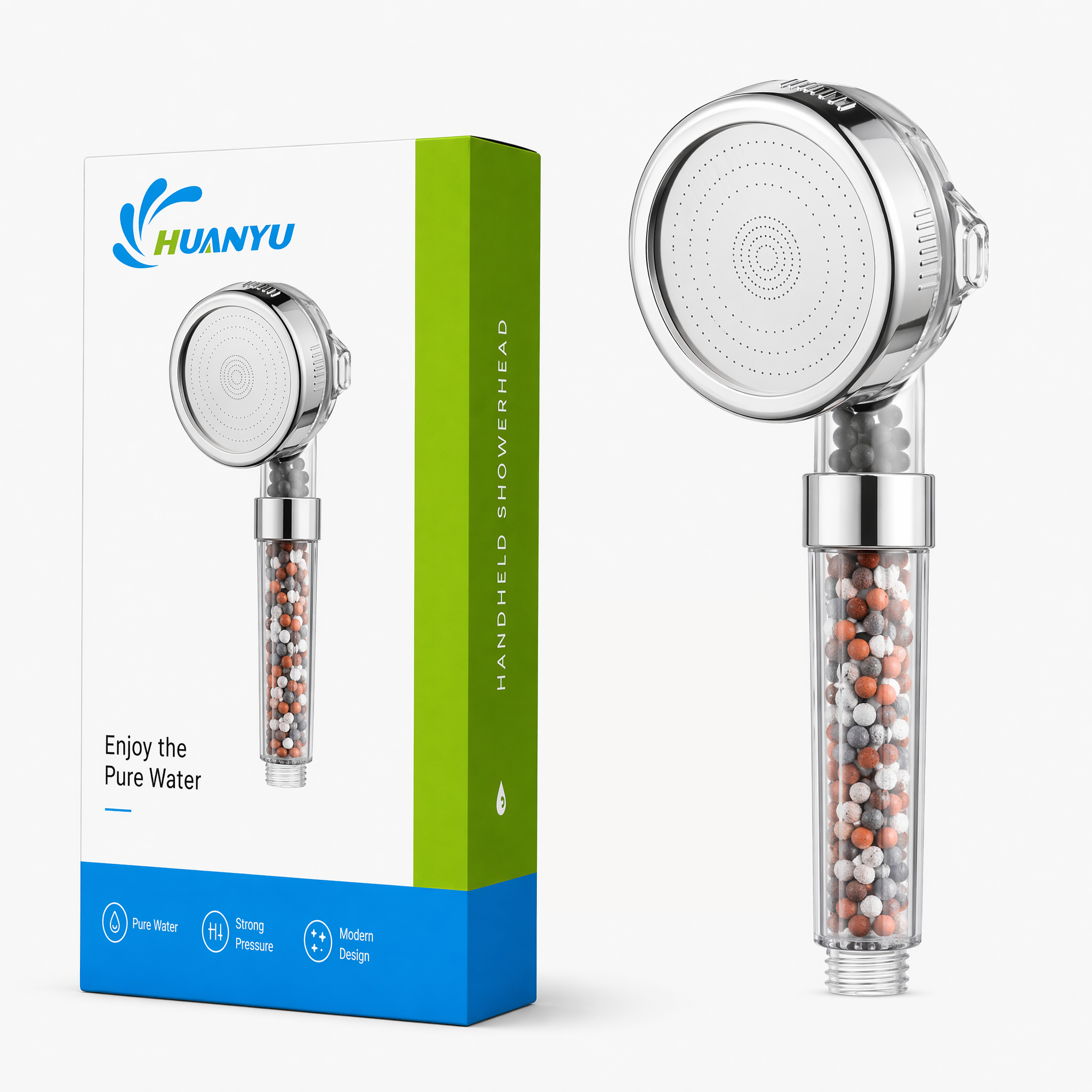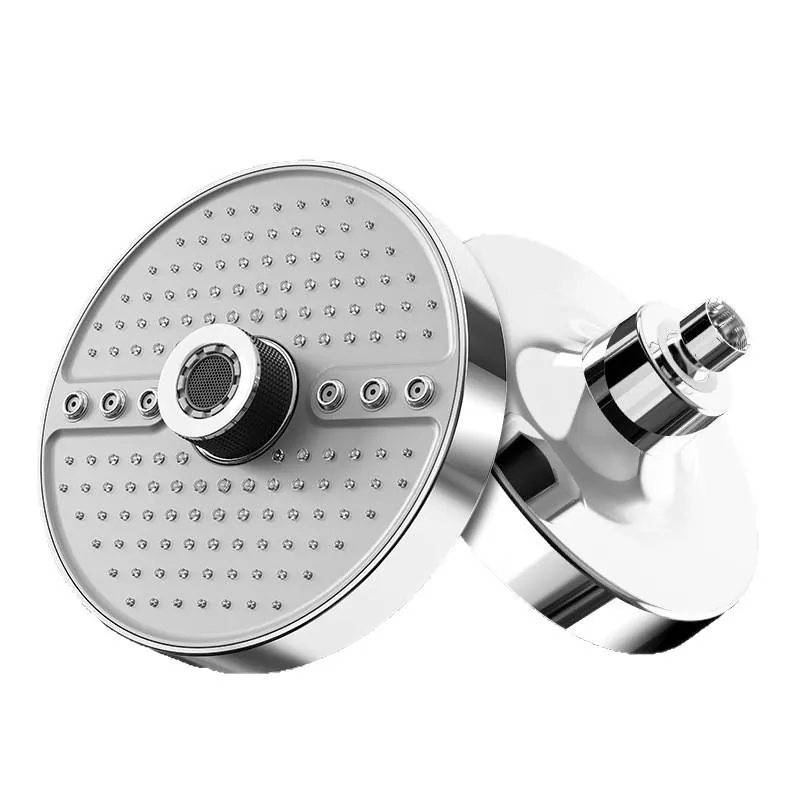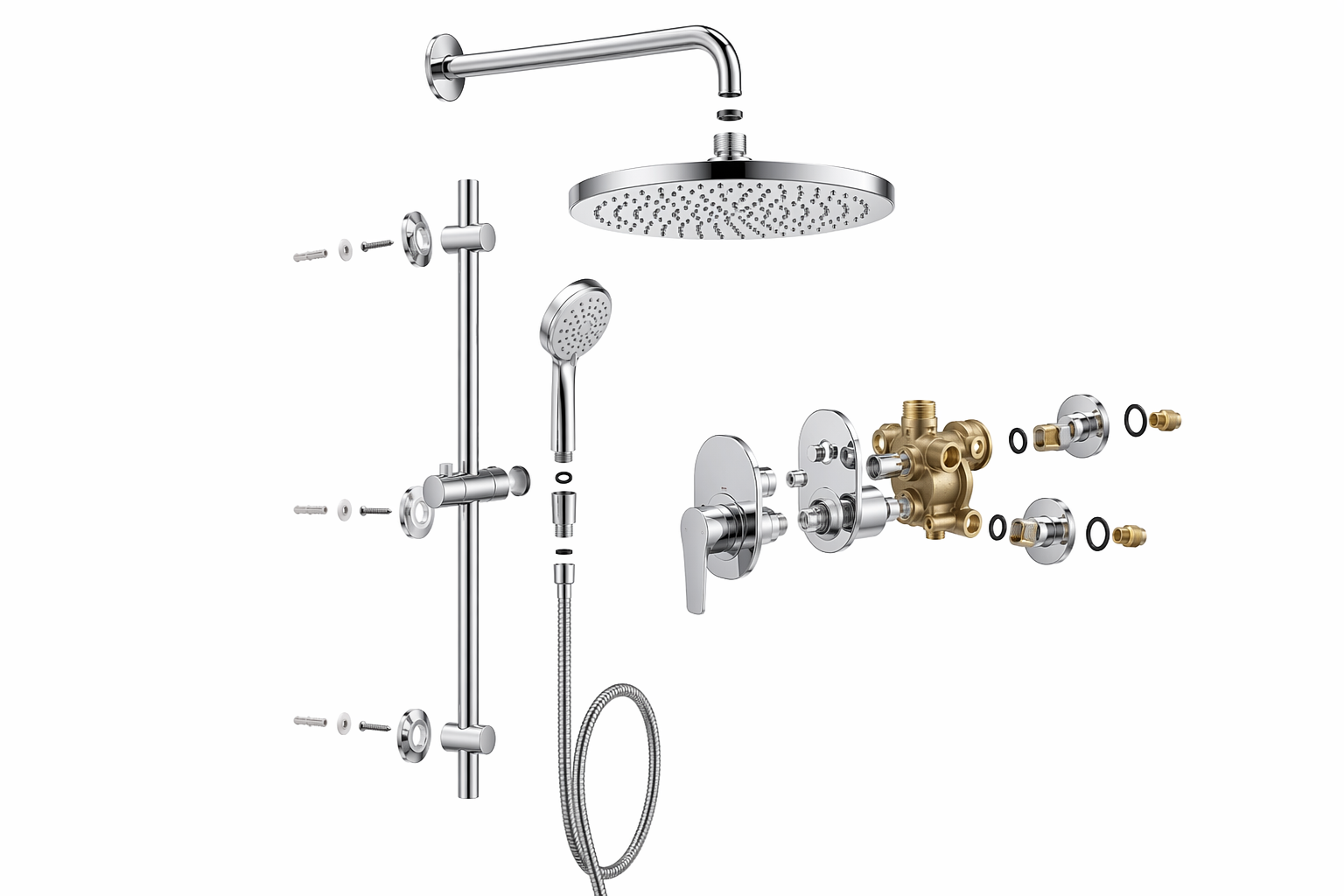

Choosing a China hand shower manufacturer comes down to five checks, in this order: what type of supplier they actually are (trading company, single factory, or factory group), whether they can hold a written specification, what they can prove in a laboratory rather than a brochure, what their real MOQ and lead time are, and which certificates they hold for your destination market. Price is the sixth check, not the first — and on a product where surface plating decides the return rate, it is the least useful one to lead with.
Every serious hand shower manufacturer you will shortlist sits within about three hours of the others, in one of three Chinese production clusters. That geographic concentration is why sourcing here is efficient, and it is also why supplier selection is harder than it looks: a hundred factories can quote the same product, and the quotations will land within a narrow band of each other.
The difference between them is not visible in the price. It is visible in the plating thickness after 96 hours of salt spray, in whether the button mechanism survives a life-cycle test, and in whether the factory can hold your specification on the fourth container as reliably as on the first.
This guide is the sourcing framework we would give a buyer who has never bought a shower from China before — written by a factory group, which means it is biased, but at least usefully so. We have put our own published numbers into it so you can benchmark anyone else against them.
Why China Makes Most of the World's Hand Showers
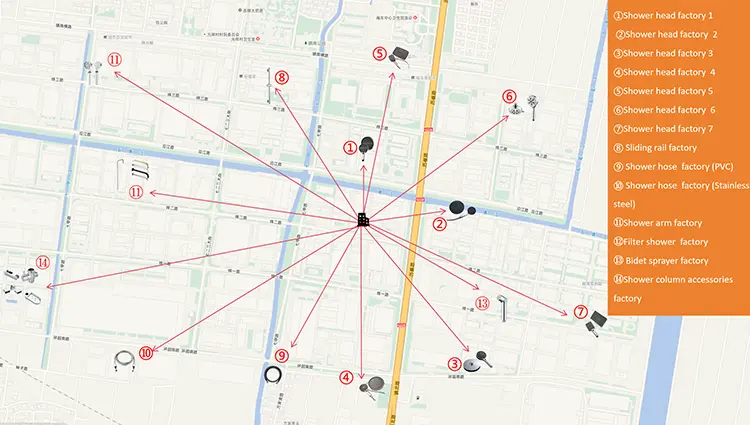
China's shower industry is anchored by three production bases, and they are genuinely different businesses rather than three versions of the same one.
| Base | Traditional strength | Typical buyer |
|---|---|---|
| Jiangmen (Guangdong) | Brass bodies, complete shower systems, higher labour cost structure | Premium brands, full bathroom sets |
| Xiamen (Fujian) | Large-scale export operations, strong branded-OEM history | International brands, large-volume programmes |
| Cixi (Zhejiang) | Hand showers and ABS bodies, dense component supply chain, low labour cost | Supermarket and DIY chains, importers, marketplace sellers |
Cixi is where the hand shower category concentrates, and it has changed considerably. For most of its history it sat at the low end of the bathroom chain, and the specification for a shower head was, effectively, "does water come out." Automation and in-house laboratories arrived late here — which is precisely why the region now offers an unusual value ratio.
We have written two longer pieces on this if you want the detail: one on China's three production bases and how the landscape is shifting, and one on how Cixi suppliers stratify into premium, mid-tier and price-warrior tiers.
The practical takeaway. If you are buying hand showers specifically — not full shower systems, not brass mixers — you are buying in Cixi whether you know it or not. Many suppliers in other regions subcontract hand showers here. Sourcing directly removes a margin layer and, more importantly, removes a layer between you and the person who controls the plating tank.
The Six Types of Hand Shower You Can Source
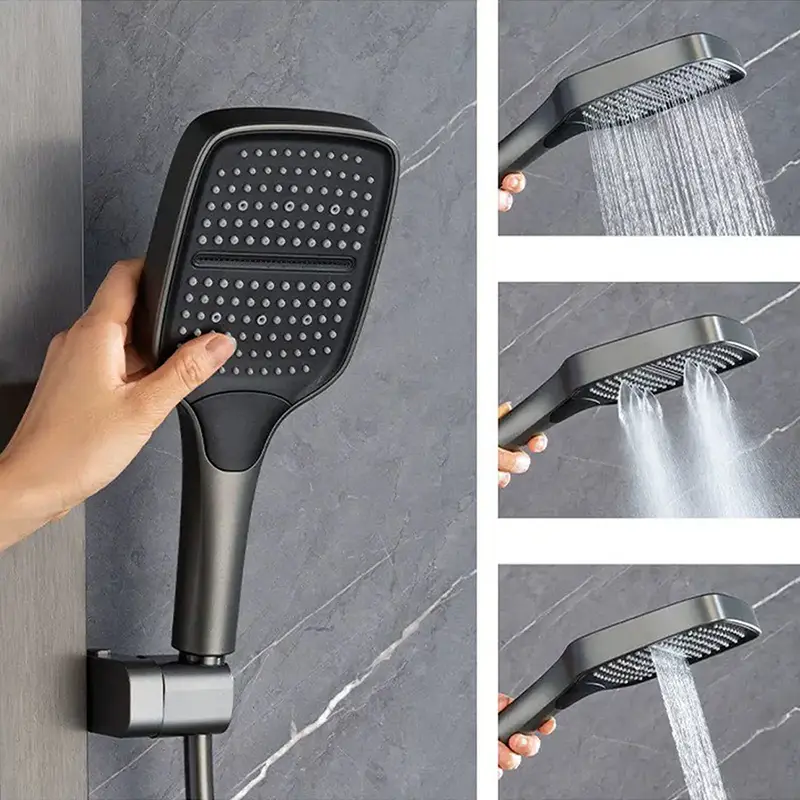
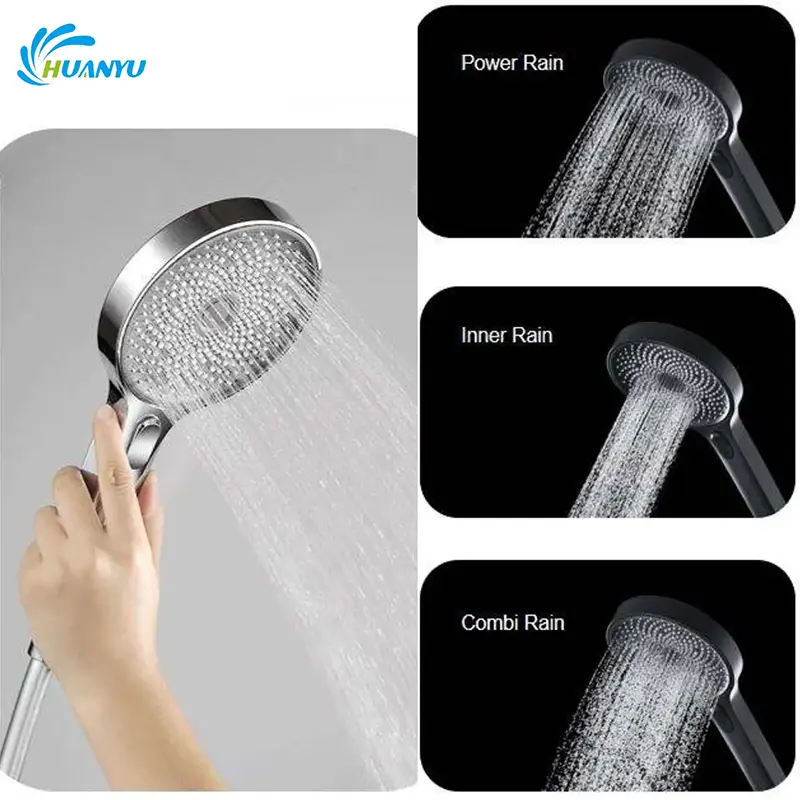
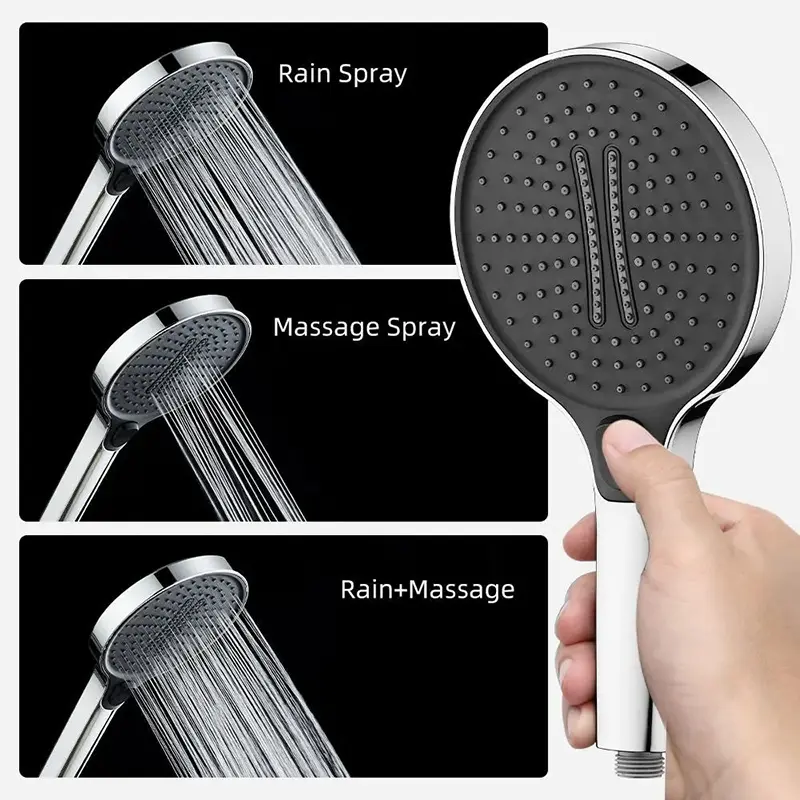
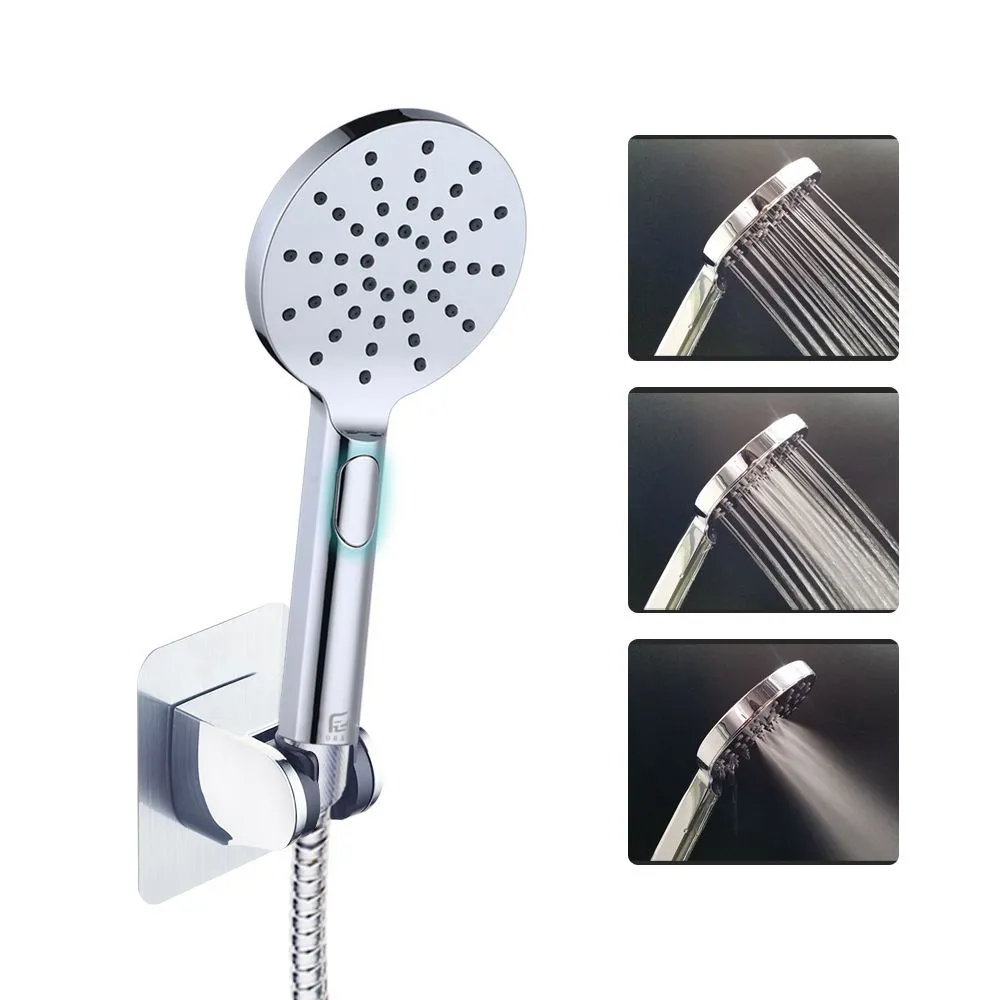
Before you contact a supplier, know which category you are actually buying. The six categories below map to genuinely different mechanisms, different tooling and different failure modes — not to marketing labels.
| Category | Mechanism | Best fit |
|---|---|---|
| Stepless | Continuously variable flow control — no fixed clicks between modes | Ranges that need a genuine feature story at retail |
| Self-cleaning | Flexible silicone nozzles that shed limescale under pressure | Hard-water markets; anywhere returns are driven by clogging |
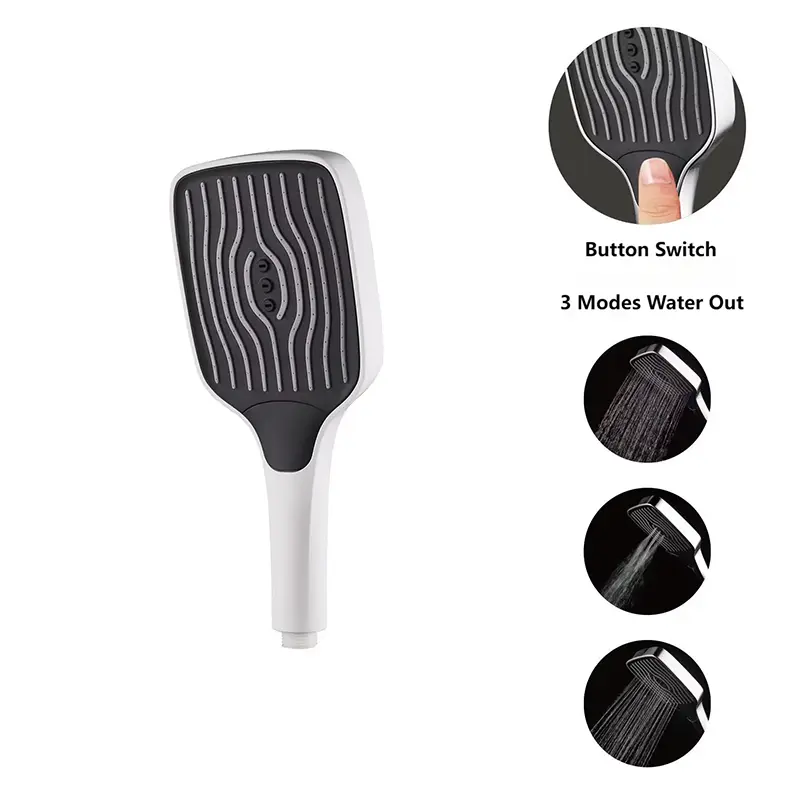
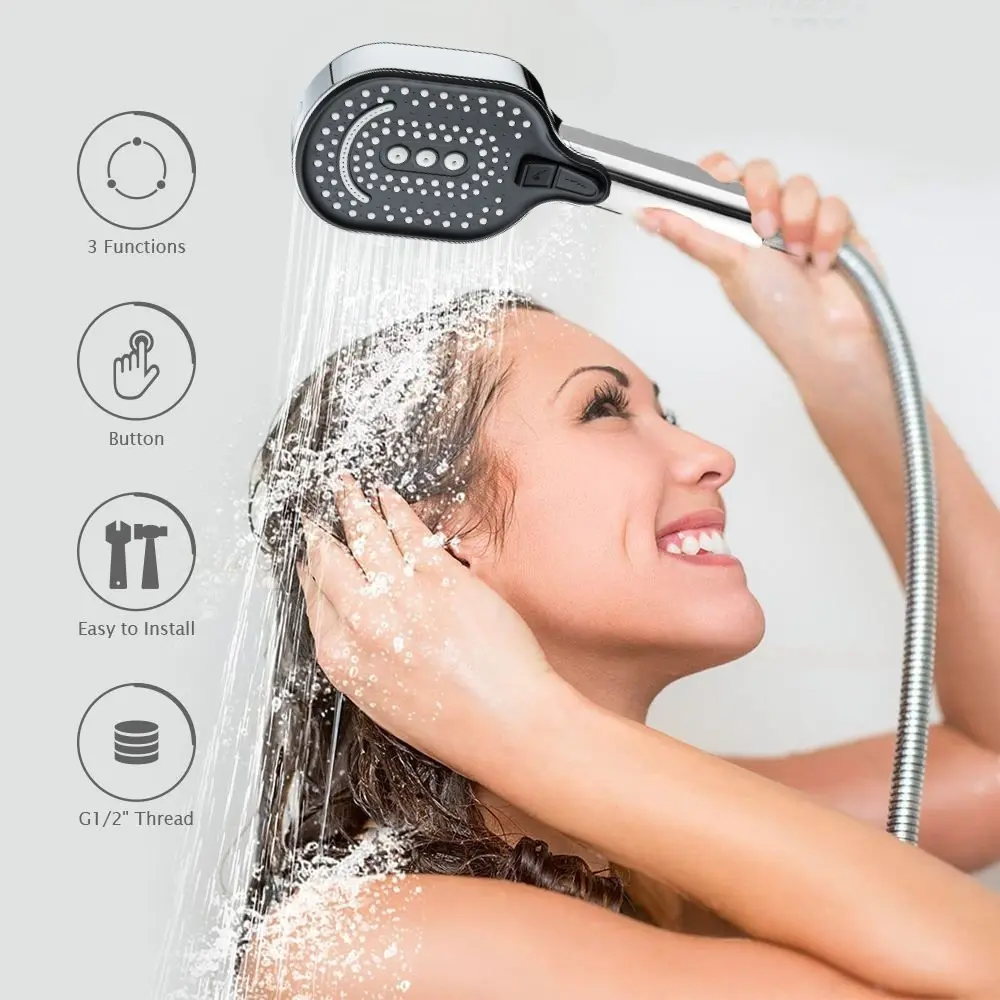
| Button control | Push-button mode switching, usually thumb-operated | Volume retail; the most intuitive multi-mode format |
| 3D | Multi-plane or dual-face water delivery | Differentiated listings; visual shelf appeal |
| Spa | Pressure-boosting and comfort-focused spray structures | Premium tiers; low-pressure plumbing markets |
| Regular | Conventional fixed-mode or simple multi-mode heads | Opening price points; project and hotel supply |
A ranging mistake we see constantly: buyers order six SKUs that are all, mechanically, the same product in six colours. That is a colour range, not a product range, and it competes on price by construction. Mixing mechanisms across price points is how you build a range a category manager can defend.
You can browse all six hand shower categories with current models, and we release a new product at the end of every month.
Trading Company, Factory, or Home-Factory Group?
This is the question buyers ask least and regret most. The label on the business licence tells you very little; what matters is who controls the moulds, the plating and the inspection.
| Model | What you gain | What you give up |
|---|---|---|
| Trading company | Wide catalogue, easy communication, cross-category sourcing | No control over production; quality claims are secondhand; margin layer |
| Single large factory | Direct process control, real capacity, own tooling | Narrow product range; higher MOQ; small orders deprioritised |
| Home-factory group | Low labour cost, small MOQ, colour flexibility, specialisation per workshop | Quality is only as good as the group's central inspection — this is the whole risk |
Huanyu is the third model, and we will be direct about what that means. Around 140 workers across 30 specialised factories, 80 production lines, each workshop making one type of product rather than everything. That structure is why our labour cost sits below a Guangdong factory's and why we can accept a 200-piece order at all.
It is also, honestly, where the model can fail. A factory group without central quality control is thirty different quality standards wearing one brand name. We handle that with a designated raw-material supply, one unified plating factory for all heads, incoming-parts inspection, in-process inspection, full and sampling inspection of finished goods, and packing inspection — plus our own equipment and laboratory rather than a rented test report.
Ask this question. "Do all of your shower heads come from one plating factory, or from several?" A group that plates in several places cannot hold a consistent salt spray result, no matter what the certificate says — plating is where hand showers fail, and it is the process most often subcontracted invisibly.
OEM, ODM or Private Label: Pick Before You Enquire
Deciding this before your first email saves weeks. The three models are not price tiers; they are commitments of different weight.
- Private label: the factory's product, your brand on the box. No tooling, fastest route, no exclusivity.
- ODM: the factory's design, customised in colour, finish, spray plate, hose and packaging. No new mould, distinct look, moderate exclusivity if contracted.
- OEM: your drawing, your mould, your design. Full exclusivity, longest timeline, real tooling commitment.
What to Specify Before You Ask for a Quote
Vague enquiries get vague quotations, and vague quotations get renegotiated after the deposit. A hand shower manufacturer can quote within one working day if — and only if — the enquiry contains enough to price. Here is the minimum.
- Target product: a link, a photo, a drawing, or a sample. A physical sample is worth ten emails.
- Quantity: per SKU, per colour. Not "a container" — the SKU split changes everything.
- Water outlet mode: how many functions, and which ones (rain, massage, jet, mist, aerated).
- Flow requirement: your market's limit in L/min or GPM, and the test pressure it is measured at. This is the single most commonly omitted line, and the one most likely to make a shipment non-compliant.
- Body material and finish: ABS chrome, matte black, brushed nickel, two-tone, soft-touch.
- Hose and bracket: length, material, connection thread. Or state clearly that the head ships alone.
- Destination market and required certification: state it up front, not after the samples are approved.
- Packaging: colour box, blister, hang tag, barcode, language of the manual.
Send those eight lines and you will get a real quotation. Send "please send price list for shower heads" and you will get a number that means nothing.
MOQ, Lead Time, Payment and Samples: Real Benchmarks
Rather than quoting an industry average — which nobody can verify — here are our own published terms. Use them as a benchmark to interrogate anyone else's.
| Term | Huanyu | What to check with any supplier |
|---|---|---|
| MOQ | 200 pcs regular colour; 500 pcs special colour | Is MOQ per SKU or per order? Per colour or per model? |
| Lead time | ~30 days first order; ~20 days repeat | Does the clock start at deposit, or at artwork approval? |
| Payment | 30% deposit, 70% against sight copy of B/L | Anyone demanding 100% before shipment is transferring all risk to you |
| Samples | Free; free freight for established customers | Sample charges are normal — but they should be credited against the order |
| Packaging artwork | Colour box design within 3 days | Who owns the artwork files afterwards? |
| On-time delivery | 93% last year; 96% target this year | A supplier claiming 100% is either lying or has never been busy |
| Warranty | 2 years, with compensation on defect | What is the claim procedure, and who pays return freight? |
| Capacity | 80 lines; 20 containers loaded per month | Ask for capacity in containers, not square metres. Floor space ships nothing. |
Two terms worth negotiating that buyers rarely raise. First, exchange-rate volatility during order execution: if the rate moves more than 5% against you, we reduce the balance payment accordingly, and absorb it when it moves the other way. Second, raw-material movement: once an order is confirmed, it is completed at the confirmed price. Ask any supplier to put both in writing.
Certification by Destination Market
Certification is where sourcing projects die quietly, usually three weeks before shipment. State your destination market in the first email.
| Market | Commonly required | Huanyu status |
|---|---|---|
| European Union | CE, RoHS, REACH; EN 1112 (shower outlets) and EN 1113 (shower hoses) are the reference product standards | CE and RoHS held |
| France | ACS (Attestation de Conformité Sanitaire) for products in contact with drinking water | ACS held |
| United Kingdom | WRAS approval or an equivalent Regulation 4 route | Not currently held — testing can be arranged on request |
| United States | Flow-rate limits vary by state; some states cap below the federal limit. WaterSense is voluntary but often demanded by retailers | Not currently held — testing can be arranged on request |
| Canada | cUPC listing is commonly requested by plumbing distributors | Not currently held — testing can be arranged on request |
We hold CE, RoHS and ACS certificates, and we will say plainly what we do not hold. Where a market requires something else, we send products to a laboratory for testing — but that has to happen before the order is confirmed, because a flow rate that fails a state limit is a design problem, not a paperwork problem.
The most expensive mistake in this guide. A supplier who answers "yes, we have all certificates" without asking which market you are selling into has told you something important. Ask for the certificate number, the issuing body and the scope — a certificate covers specific models, not a factory.
The Seven Quality Tests That Decide Your Order
Certificates prove a model passed once. Testing proves the factory can repeat it. These are the seven tests that actually determine whether your container arrives sellable, and any hand shower manufacturer worth shortlisting should run all of them under its own roof.
- Salt spray (NSS): corrosion resistance of the plated surface. Our standard is 96 hours, applied to every product without exception. This is the number that predicts your return rate two years after the sale.
- Electroplating thickness: measures the copper, nickel and chrome layers. Plating that is too thin rusts and peels — and it is invisible at inspection, which is exactly why unscrupulous factories cut here first.
- Flow testing: verifies water-pressure adaptability and comfort across the pressure range your market actually has. Also the test that keeps you compliant.
- Tensile and burst testing: confirms the head's sealing and safety under high water pressure.
- Hose burst testing: measures burst pressure, pressure-resistance time and expansion. Hoses fail more often than heads, and they fail wet, at night, in someone's bathroom.
- High-temperature testing: checks whether the plastic face cover, sealing ring, valve core and joint soften, deform, crack or leak at temperature.
- Life-cycle testing: cycles the mechanism to failure. On a button or stepless head, this is the test that separates a product from a prototype.
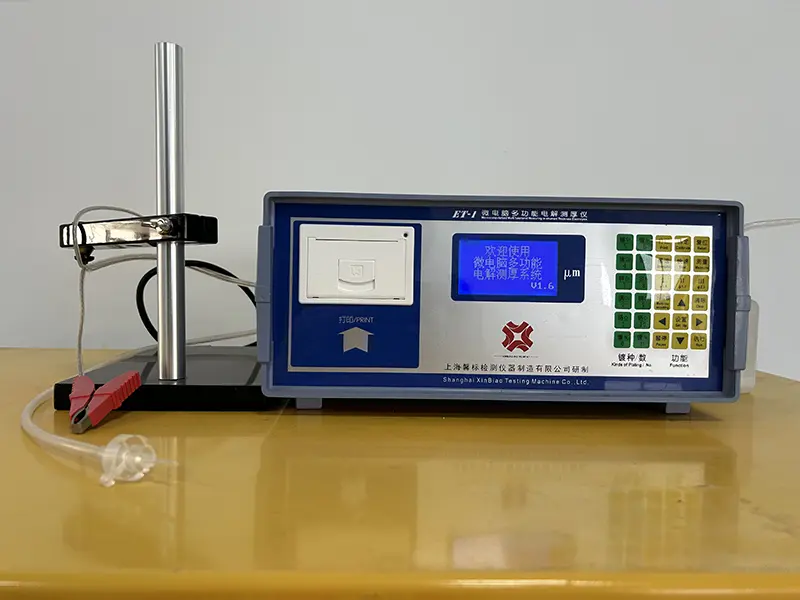
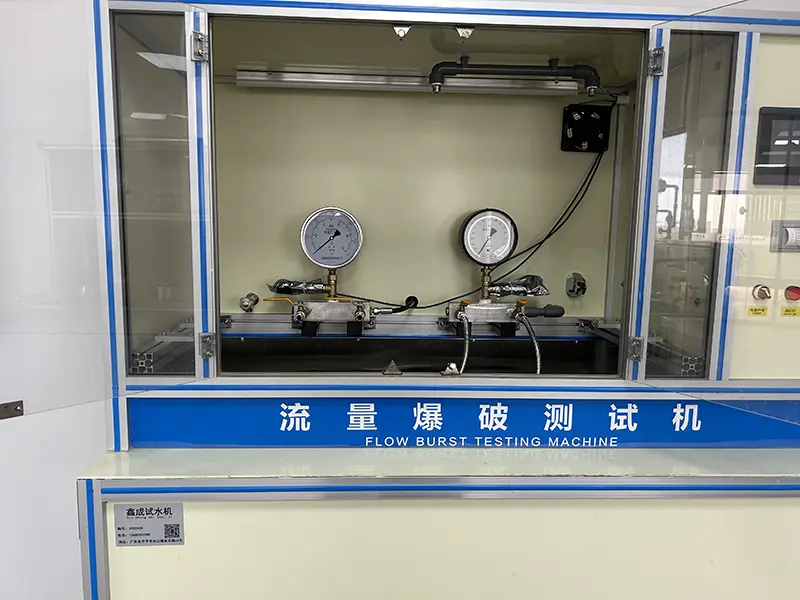
Traceability sits underneath all seven. Quality tracking, designated raw materials with incoming inspection, one unified plating factory, in-process inspection, full and sampling inspection of finished goods, then packing and packing-specification inspection. If a supplier cannot describe their chain in that much detail, they do not have one.
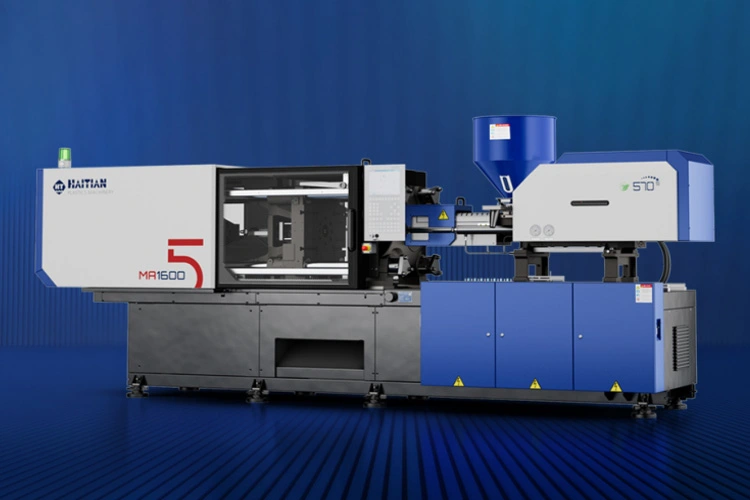
Inside the Huanyu home-factory group and quality laboratory, Cixi.
What Actually Drives the Price of a Hand Shower
We do not publish a price list, and any factory that does is quoting a product it has decided in advance — not yours. What we can do is tell you where the money goes, so you can read a quotation instead of just comparing it.
- Plating specification: layer count and thickness. The largest single quality-driven cost, and the easiest to hide. A cheaper quote is very often a thinner nickel layer.
- Body material: ABS is standard for hand showers; brass components raise cost sharply and are usually reserved for connectors and inlets.
- Function count: each additional spray mode adds tooling complexity, assembly steps and failure points.
- Mechanism type: a stepless valve costs more to build than a fixed spray plate, because it is a moving assembly that must survive a life-cycle test.
- Nozzle material: flexible silicone nozzles cost more than moulded plastic holes and are why self-cleaning heads survive hard water.
- Colour: special colours carry a higher MOQ, because a plating or coating run has to be justified.
- Hose and accessories: often quoted separately, and often where a headline price hides.
- Packaging: colour box, insert, manual, barcode. Ours ship in 5-ply corrugated cartons — cheaper cartons are a false economy the first time a pallet is dropped.
- Order volume and SKU split: twenty SKUs at 200 pieces costs more per unit than four SKUs at 1,000. Changeovers are not free.
How to compare two quotes properly. Ask both suppliers for the same three numbers: salt spray hours, nickel layer thickness, and life-cycle count for the mechanism. If one refuses and the other answers, you no longer have a price comparison — you have an answer.
Packaging, Consolidation and Getting It on the Water
The shipment is where a good order becomes a bad experience. Three things are worth setting up early.
Packaging minimums are separate from product minimums. Custom colour boxes carry their own MOQ, and a small multi-SKU launch will often fall below it. There are ways around this — a premium universal box with categorised product labels, or a refundable plate fee — and we describe how we solved exactly this problem for a client launching 30 SKUs at 100 pieces each in our note on small-batch packaging.
Consolidation saves more than freight. We regularly receive goods from a customer's other suppliers into our warehouse and load them together. We can also handle onward payment to those suppliers on a customer's behalf. If you are buying towel bars, floor drains, shelves or bins alongside showers, say so — one bill of lading is easier to finance than four.
Port position matters less than people think, but it is not nothing. We are one hour from Ningbo port, and about two hours from Hangzhou and Shanghai. That gives options when a vessel rolls.
How to Audit a Hand Shower Manufacturer Remotely
Most buyers will never visit the factory before the first order. That is fine — a remote audit done properly catches most of what a walkthrough would.
- Ask for a live video call from the plating line, not a pre-recorded factory film. Ask them to walk to the salt spray cabinet and open it.
- Request a test report with a date and a model number on it, not a certificate PDF. Certificates are per model; reports are per batch.
- Send a two-sample request with a deliberate spec conflict in it — for example, a flow rate that will not work with the requested spray plate. A real engineering team catches it. A trading company forwards it.
- Ask who they already supply. Named retail customers can be verified. We work with AUCHAN, B&Q, OBI and Leroy Merlin, and we expect buyers to check.
- Ask for the on-time delivery rate as a number. Ours was 93% last year, targeting 96% this year. A supplier who has never measured it will say "very good."
- Test the response time on a hard question. Not "what is your price," but "what nickel thickness do you plate to, and what happens if the salt spray fails at 72 hours?"
Points 3 and 6 do most of the work. They are the two that cannot be answered by a sales assistant reading from a folder.
Frequently Asked Questions
How do I choose a hand shower manufacturer in China?
Check five things in order: what kind of supplier they are, whether they can hold a written specification, what they can prove in their own laboratory, their real MOQ and lead time, and which certificates they hold for your destination market. Compare price last — on hand showers, a lower quote usually means thinner plating.
What is the minimum order quantity for hand showers from China?
It varies widely by supplier model. Our MOQ is 200 pieces in a regular colour and 500 pieces in a special colour, which is low because we operate as a home-factory group. Large single factories often set much higher minimums. Always confirm whether the MOQ is per SKU, per colour, or per order.
Where are most hand showers made in China?
China's shower industry is concentrated in three bases: Jiangmen in Guangdong, Xiamen in Fujian, and Cixi in Zhejiang. Cixi is the centre of hand shower production specifically, with a dense component supply chain and a large concentration of specialised workshops.
What certifications do imported shower heads need?
It depends on the destination. The EU commonly requires CE and RoHS, France requires ACS for drinking-water contact, the UK typically requires WRAS or an equivalent route, and Canada often requires cUPC listing. US flow-rate limits vary by state. State your market before the order is confirmed, not after.
Is a trading company or a factory better for sourcing hand showers?
A factory gives you process control; a trading company gives you catalogue breadth. A home-factory group sits between the two — low MOQ and colour flexibility, but only as reliable as its central quality inspection. Ask any group supplier whether all their shower heads are plated in one factory or several.
What quality tests should a shower head factory run?
Seven: salt spray, electroplating thickness, flow, tensile and burst, hose burst, high temperature, and life cycle. Our surface standard is NSS 96 hours, applied to every product. A factory that outsources these tests can report on quality but cannot control it.
How long does it take to get hand showers from China?
Our production lead time is about 30 days for a first order and about 20 days for a repeat order, plus ocean freight. If you are commissioning a new mould, add the full tooling cycle before production starts. Always confirm whether the lead-time clock starts at deposit or at artwork approval.
Can I get free samples from a hand shower manufacturer?
We supply free samples, and free freight for established customers. Sample charges are normal in the industry and not a red flag on their own — but they should be credited against your first production order, and you should confirm that in writing.
Where to Start
Sourcing from a China hand shower manufacturer is not difficult once you stop treating it as a price exercise. Decide your model first, write a specification a factory can actually price, name your destination market before samples are made, and interrogate the plating rather than the invoice. Suppliers who welcome those questions are a small subset, and that subset is your shortlist.
If you are at the beginning of this process, the fastest useful step is not a quotation. It is a sample of the mechanism you are considering, in your hand, with a test report attached.
Send us the eight lines
Target product, quantity, water outlet mode, flow requirement, material, hose, destination market, packaging. We quote within one working day — and we tell you when a spec will not work.
Request a Free SampleAbout Huanyu
Ningbo Huanyu Sanitary Ware Co., Ltd. is a hand shower manufacturer based in Cixi, Ningbo — the centre of China's shower industry. Our team has exported for over 6 years, building on more than two decades of family manufacturing experience, and we operate as a home-factory group: around 140 workers across 30 specialised factories, 80 production lines, and an in-house laboratory with our own quality inspection team. We have produced 600+ shower products for supermarket, DIY and distributor customers including AUCHAN, B&Q, OBI and Leroy Merlin, and we hold CE, RoHS and ACS certification with a 96-hour NSS salt spray surface standard on every product.
Talk to us: send an inquiry or WhatsApp +86 138 5780 6071.